
Canopy API
API for real-time access to Amazon data on products, prices, reviews, and sales.
Overview
Canopy API Neural Network Description
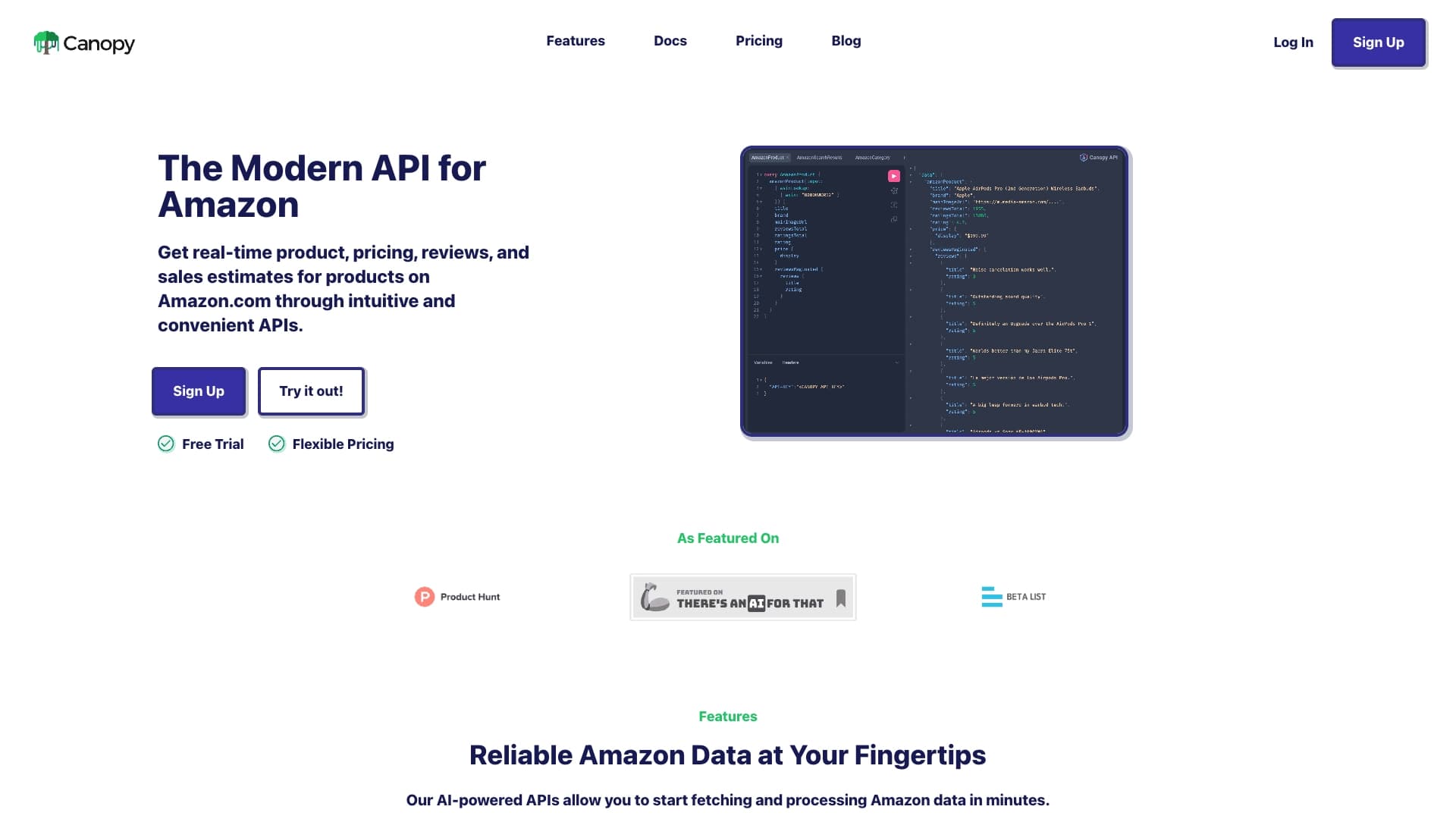
Canopy API is a software interface that provides developers with a single access point to structured Amazon data. Instead of crawling marketplace pages and extracting information yourself, you receive ready-made data through a modern REST or GraphQL API.
The service automates the collection and processing of information about products, prices, reviews, and sales dynamics. The key feature is the use of AI processing to structure raw data into understandable formats. This eliminates the need to maintain your own parsers and scraping mechanisms, which often break when the site structure changes. Canopy API handles the technical complexity, allowing developers to focus on building applications and analytics rather than on data collection infrastructure.
Canopy API Features
| Feature | Value |
|---|---|
| Type | API tool for working with Amazon data |
| Categories | API and integrations, Web scraping and parsing |
| Interfaces | REST and GraphQL |
| Website | www.canopyapi.co |
| Catalog publication date | December 5, 2025 |
| Distribution model | Not specified |
Who is the Canopy API neural network suitable for?
Developers building integrations
The primary target audience is developers who need programmatic access to product data, prices, reviews, and sales estimates from Amazon. If your project requires up-to-date marketplace information, Canopy API eliminates the need to write and maintain your own scrapers. This is especially relevant for those who want to avoid manual parsing and complex workarounds.
Teams building analytics tools
The service is suitable for teams creating internal dashboards for competitor monitoring, assortment analysis, or verifying the effectiveness of changes to product listings. The tool is also in demand when developing SaaS solutions that require a reliable and scalable source of Amazon data.
How to use the Canopy API neural network?
Connecting via API
To get started, you need to register on the service website and obtain an API key. After that, you can send requests to REST or GraphQL endpoints, specifying the necessary product or category parameters.
Integration into applications and dashboards
The data obtained can be integrated into your own internal tools, analytics systems, or user dashboards. Since the service delivers structured information in real time, you can build reports on prices, sales, and reviews based on it without additional processing.
Key Features of Canopy API
Access to product data
Through a single API interface, you get complete product information: name, description, current price, sales dynamics, and stock level estimates. Data is updated in real time, allowing you to track changes in the market situation.
Review collection and analytics
The service not only collects review texts but also processes them using AI. Sentiment analysis of reviews (positive, negative, neutral) is available, as well as the search for recurring issues mentioned by customers. This helps identify weaknesses in a product or competitors.
Real-time AI data processing
Built-in algorithms automatically structure raw Amazon data into convenient formats. This speeds up integration and allows solutions to scale — from simple monitoring to full-fledged analytics platforms.
Advantages of Canopy API
Single modern interface
Instead of working with multiple unofficial data sources, you get one unified REST and GraphQL interface. This simplifies development, documentation, and code maintenance.
No manual parsing
The main advantage is the complete absence of the need for manual parsing and complex workarounds. You don't need to track changes in Amazon's HTML structure, write regular expressions, or deal with CAPTCHAs and blocks.
Reduced load and ease of scaling
The service removes the burden of collecting and storing raw data from your infrastructure. Solutions based on Canopy API scale easily from internal tools for a single team to full-fledged SaaS products serving many clients.
Disadvantages of Canopy API
Detailed information about the service's disadvantages is not disclosed in available sources. As with most paid API services, potential limitations may include dependence on the stability and policies of the service itself, as well as possible costs at high request volumes. Exact data on limits, pricing, or terms of service has not been published in open sources.
What problems does Canopy API solve?
Competitor monitoring and assortment analytics
The service allows you to track changes in prices, product availability, and sales dynamics among competitors. Based on this data, you can analyze your own assortment and make decisions about purchasing or pricing.
Building internal dashboards
The structured data obtained can be conveniently displayed on internal monitoring dashboards. This gives teams a clear view of key Amazon business metrics without manual data collection.
Listing optimization
Canopy API helps verify the effectiveness of changes to a product listing. By analyzing sales dynamics and review sentiment before and after edits, you can improve listing rankings and conversion.
Canopy API Pricing
Official information about pricing for using Canopy API is not available in the provided data. The cost likely depends on the volume of data requested, request frequency, and the chosen pricing plan. For current pricing offers, it is recommended to contact the service team directly or visit the official website www.canopyapi.co.
Canopy API Terms of Use
Detailed terms of use, including license agreements and privacy policies, are available on the service's official website. Typically, API usage is governed by an agreement that establishes rules for the permissible use of collected data, request frequency limits, and the responsibilities of the parties. It is recommended to carefully review the documentation before starting integration.
Canopy API Availability
The service is available to registered users through the website www.canopyapi.co. The catalog publication date is December 5, 2025. The distribution model (free, freemium, or paid subscription) is not specified in open sources. To get started, registration and obtaining API access keys will be required.
How Canopy API differs from alternatives
The main difference between Canopy API and classic scraping tools lies in its approach to data handling. Many alternatives simply provide raw HTML data, requiring the developer to process and structure it themselves. Canopy API solves this problem on its side using AI processing.
Instead of returning raw information from Amazon pages, the service delivers ready-made structured objects in JSON formats via REST or GraphQL. This makes integration faster and more reliable — you don't need to maintain your own code to work with the unstable structure of a third-party site. This approach distinguishes the service from simple parsers and makes it more suitable for building serious products and analytics systems.
Conclusion
Canopy API is a practical tool for developers who need reliable and convenient access to Amazon data. The service solves the main problem — eliminating the need for manual parsing by offering a unified interface with AI data processing. This allows you to effectively tackle competitor monitoring, assortment analysis, and listing optimization tasks. Thanks to modern technologies and a scalable architecture, Canopy API is suitable both for small internal projects and for building full-fledged SaaS solutions.
Frequently asked questions
See also

AI-powered affiliate marketing optimization platform.
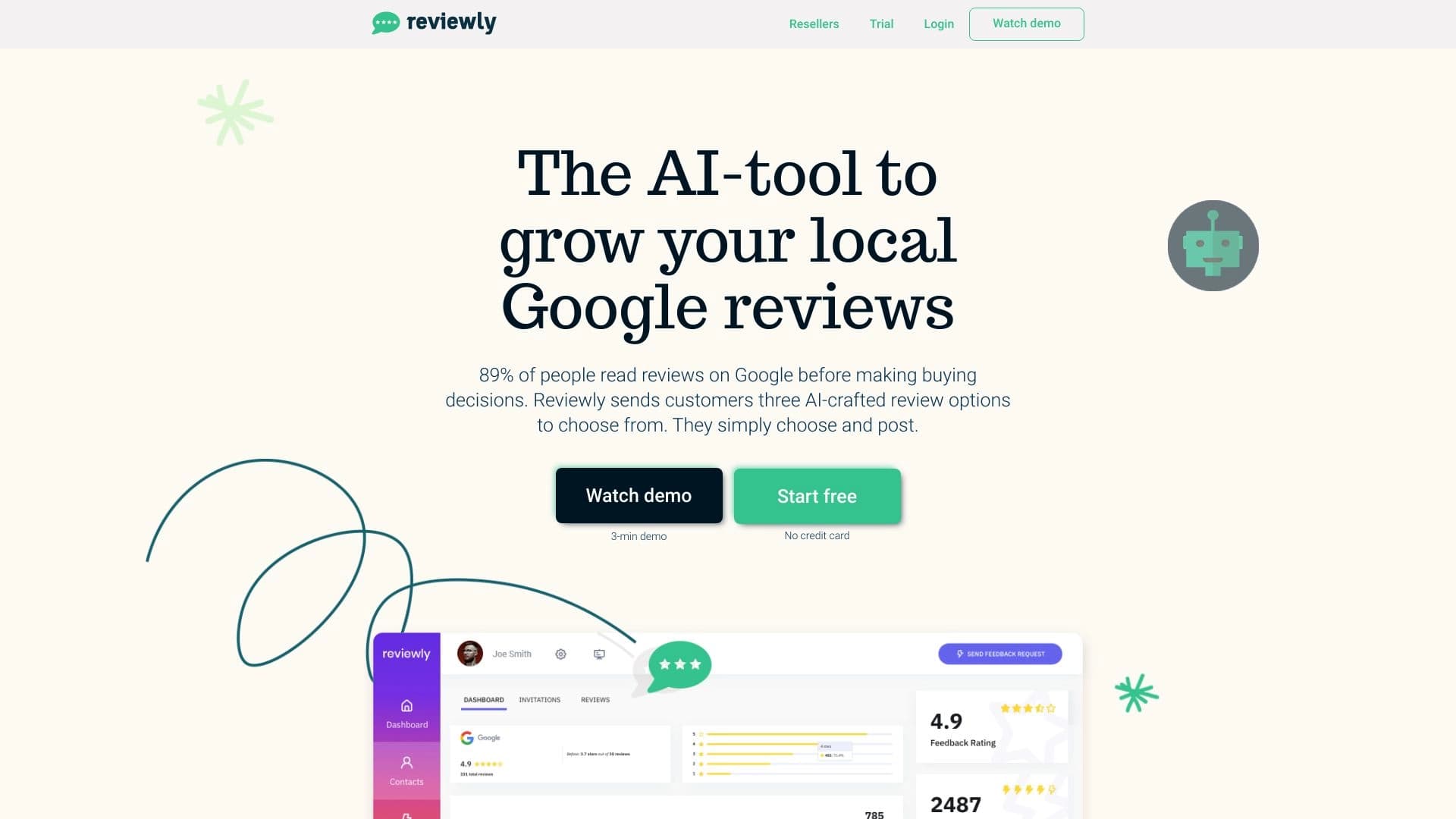

An artificial intelligence platform for automation Managing reviews on Google.


Service for creating advertising audiences based on analyzing user photos from social networks.

AI tool for optimizing tenders applications and responses to requests for proposals.
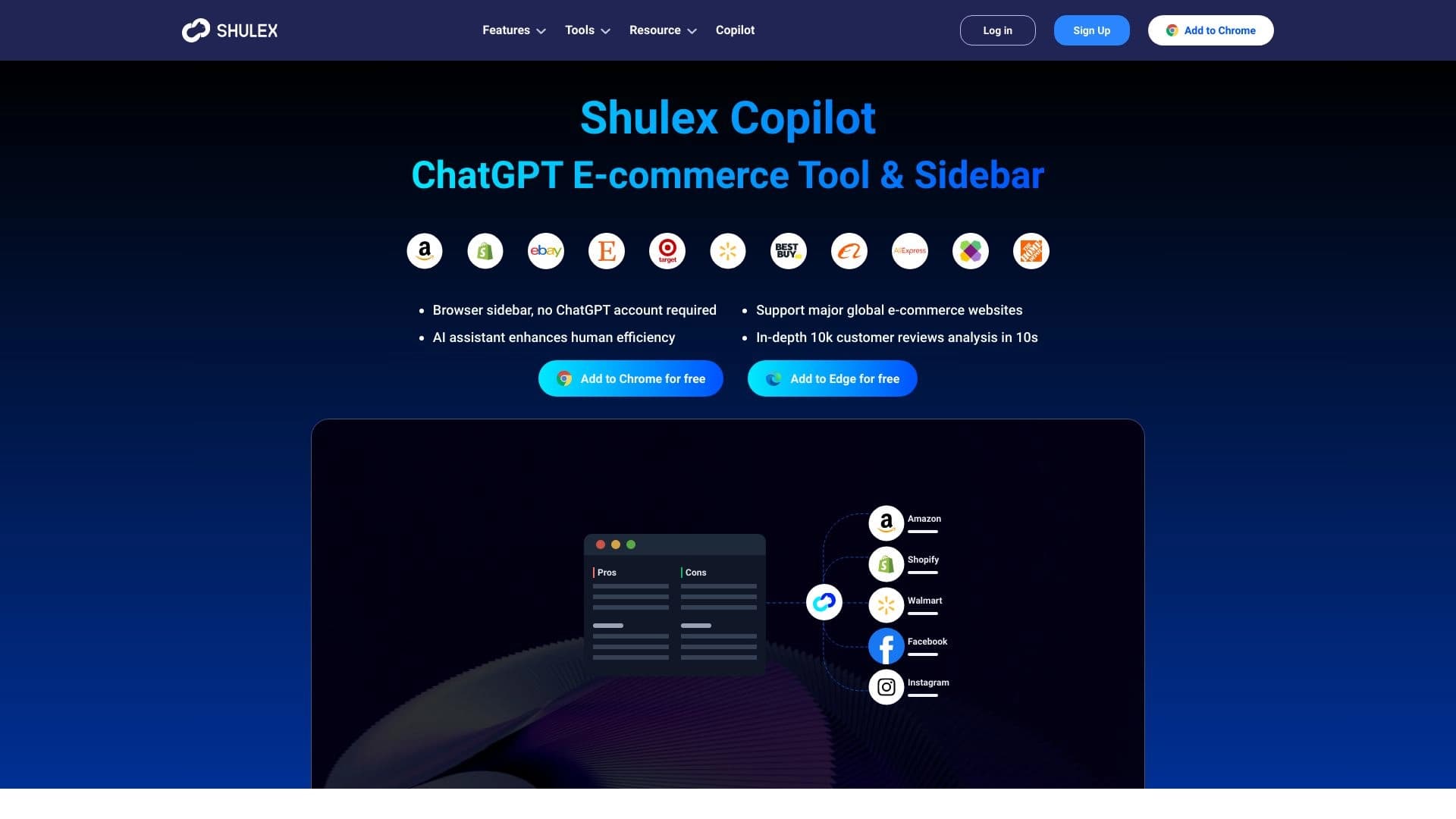
AI assistant for e-commerce that helps analyze customer reviews and optimize product listings.

Collaborative email platform and team communications tool.


Online AI speech synthesis platform that allows generating audio with voices of famous characters and celebrities.


AI-powered platform for automatically creating SEO-optimized content for multichannel sales.