

Backengine
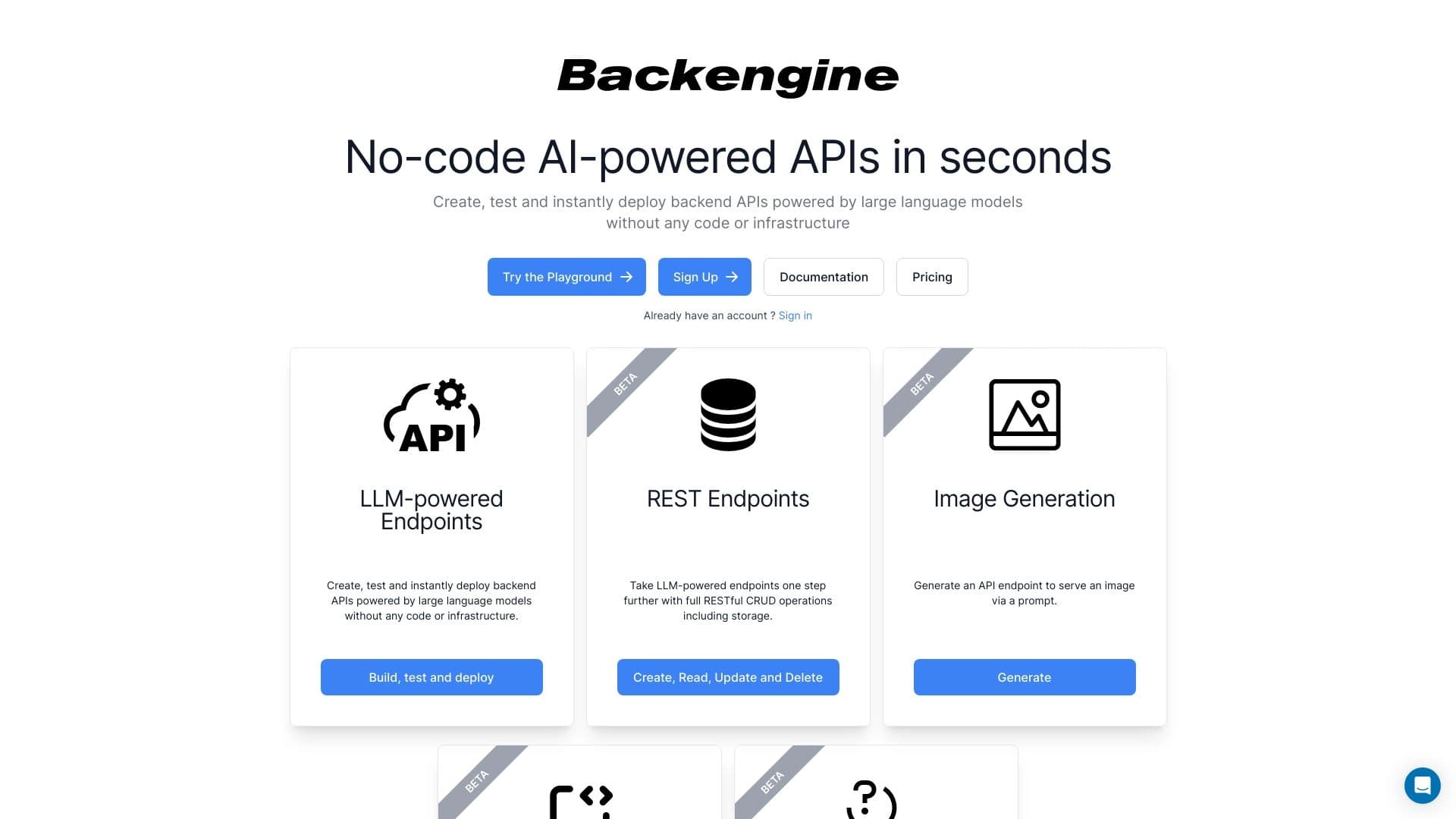
No-code platform for creating web applications from a text description.
Overview
Backengine Neural Network Description
Backengine is a no-code platform that turns a text description of your idea into a ready-to-use web application. Instead of setting up servers, designing databases, and writing frontend code, you simply formulate your task in natural language — for example, "create a customer feedback collection service" — and the neural network assembles the project on its own.
The platform automatically generates a backend based on PostgreSQL and a frontend using Next.js. Users are not locked into a "black box": the project can be refined through visual settings or by directly editing the code. This approach makes Backengine a convenient tool for rapid prototyping, building internal corporate dashboards, and testing business ideas without involving a development team.
Backengine Features
| Feature | Value |
|---|---|
| Type | No-code application generator |
| Categories | No-code tools, website and landing page builders, AI development, AI-powered website generators, AI API design |
| Developer | ERA Technologies Ltd. |
| Free tier | Available (for a limited group of beta users) |
| Monthly visits | 16.3K |
| Distribution model | Web platform, invitation-based registration |
Who is Backengine suitable for?
Entrepreneurs and business owners
Backengine allows you to quickly test a hypothesis without significant investment in development. If you have an idea for a SaaS service or an internal tool, you can get a working prototype in minutes and show it to partners or early customers.
Marketers and designers
Professionals without a technical background often face a barrier when trying to build digital products. By describing the required functionality in words, a marketer can get a landing page with a lead capture form or an interactive catalog without involving a programmer. Designers, in turn, can use the platform to create interactive prototypes that are then handed off to development.
Product managers and startup founders
For those who want to quickly test several ideas in parallel, Backengine makes it possible to create MVPs without having to assemble a development team each time. This is especially useful at the product validation stage, when speed matters more than perfect code.
How to use Backengine?
Step 1: Describe your idea
Go to the platform's website and describe in words what application you want to build. The more precise your description, the closer the result will be to your expectations. For example, instead of "chat," it's better to write "a service for exchanging messages within a team with the ability to create channels by project."
Step 2: Launch generation
The neural network will assemble the project on its own: create a PostgreSQL database, set up the API, and generate the frontend using Next.js. The entire process takes a few minutes, and you get a fully functional application that you can immediately open in your browser.
Step 3: Customize it to your needs
The finished project can be configured without code: change the color scheme, add new pages, adjust the structure. If you have programming skills, nothing prevents you from editing the code directly or integrating third-party services via API.
Key Backengine features
Instant database setup
Instead of spending weeks on infrastructure configuration, you get a working PostgreSQL database within minutes of generating your project. The platform handles configuration, security, and server availability on its own.
Ready-made API and frontend
Backengine generates not just a static page but a full-fledged backend with an API and a Next.js interface. This means the application is ready for real use, not just for demonstration.
Flexible no-code customization
The platform's interface allows you to change the appearance and functionality through visual settings. Refining the project doesn't require contacting a developer — any user can handle basic tasks.
Expansion and integrations
The project can be further developed: connect third-party services, change business logic, and manually refine the code. The frontend is stored on GitHub, which simplifies collaboration and makes it easy to migrate the project to another hosting provider if needed.
Backengine advantages
Time savings
The platform's main advantage is speed. A working application with a database, server, and interface appears in minutes, whereas traditional development would take weeks. This is critical at the idea validation stage.
Accessible without programming skills
Backengine opens up the possibility of creating applications for people without a technical background. There's no need to find a developer, explain the task to them, and wait for the result.
Ready-made infrastructure
The platform handles deployment, hosting, and security configuration. Users don't need to understand server configuration or worry about scaling — everything works out of the box.
Backengine limitations
Constraints for non-standard tasks
The algorithm performs best with typical scenarios. If your business logic is unique and requires non-standard solutions, implementing it through a text description can be challenging. Manual code refinement by a programmer may be required.
Platform dependency
The database is hosted on Backengine's servers, which creates a certain dependence on the ecosystem. While data can be modified directly, fully migrating the project is not always easy — it requires time and technical skills.
Imperfect task understanding
The neural network doesn't always interpret requests correctly. Sometimes the result contains bugs or doesn't match expectations, requiring additional iterations and refinement. This is especially noticeable with complex formulations or conflicting requirements.
What tasks does Backengine solve?
Rapid SaaS MVP creation
If you want to test the demand for a software product, Backengine lets you build a minimum viable version in a short time and launch it for early users.
Building internal corporate dashboards
Companies often need tools for task management, accounting, or analytics. Backengine is suitable for creating such internal services without involving external contractors.
Creating social services and chats
The platform allows you to generate communication services — from simple chats to full-fledged social platforms with profiles and activity feeds.
Building collaboration tools
Backengine can be used to create task boards, planning calendars, document management systems, and other tools that improve team productivity.
Backengine pricing
Free access
The platform is currently in beta testing. Access is free for a limited group of users who have submitted an application and received an invitation. The free tier's capabilities are limited but sufficient for getting familiar with the platform.
Professional tier
Cost: 6500 RUB per month. The tier includes a fully functional application with the complete stack and personalized configuration. Suitable for individual projects requiring a larger volume of resources.
Business tier
Price: 12000 RUB per month. Designed for teams and businesses: extended capabilities, support, integrations, and additional features for collaborative work. After the beta testing period ends, full access will cost approximately 70 USD per month.
Backengine terms of use
To use the free tier, you need to register on the platform and submit an application to participate in beta testing. In the application, you need to describe your project — the platform administrators review each application and decide whether to grant access. Once approved, the user receives an invitation and can start creating applications.
It's important to note that beta testing implies limited functionality. Some features may be unavailable, and the platform's stability during the testing period is not guaranteed at the level of a commercial product.
Backengine availability
The platform operates as a web service and is accessible through a browser on the official Backengine website. No special software installation is required. Access is currently granted by invitation: you need to leave your email address and describe your planned project to get on the beta tester list. After the testing period ends, access will be expanded to everyone. Publication date: November 7, 2025.
How Backengine differs from alternatives
Focus on a full-fledged product, not a landing page
Many no-code builders focus on creating showcase pages or simple forms. Backengine, on the other hand, generates a complete application with a database, authentication, and server-side logic. This is a fundamentally different level — you get a working tool, not just a "business card."
Freedom to customize
Unlike many platforms that lock the project within their own ecosystem, Backengine allows you to refine the code manually. The frontend is stored on GitHub, giving you the ability to migrate the project to another hosting provider or continue development with your own team at any time.
Hybrid approach
The platform combines the simplicity of text descriptions with the ability to fine-tune via code. This sets it apart from "pure" generators that don't provide access to the source code, as well as from traditional frameworks that require deep technical knowledge from the start.
Conclusion
Backengine is a no-code platform for quickly creating web applications through natural language descriptions. It relieves users of the need to configure infrastructure and write code while still allowing project customization to fit their needs. The platform is well-suited for prototyping, building internal dashboards, and testing business ideas, though it has limitations when implementing non-standard tasks and creates a certain dependency on its ecosystem. If you need to quickly get a working product without diving deep into technical details — Backengine could be the right solution for you.
Frequently asked questions
See also
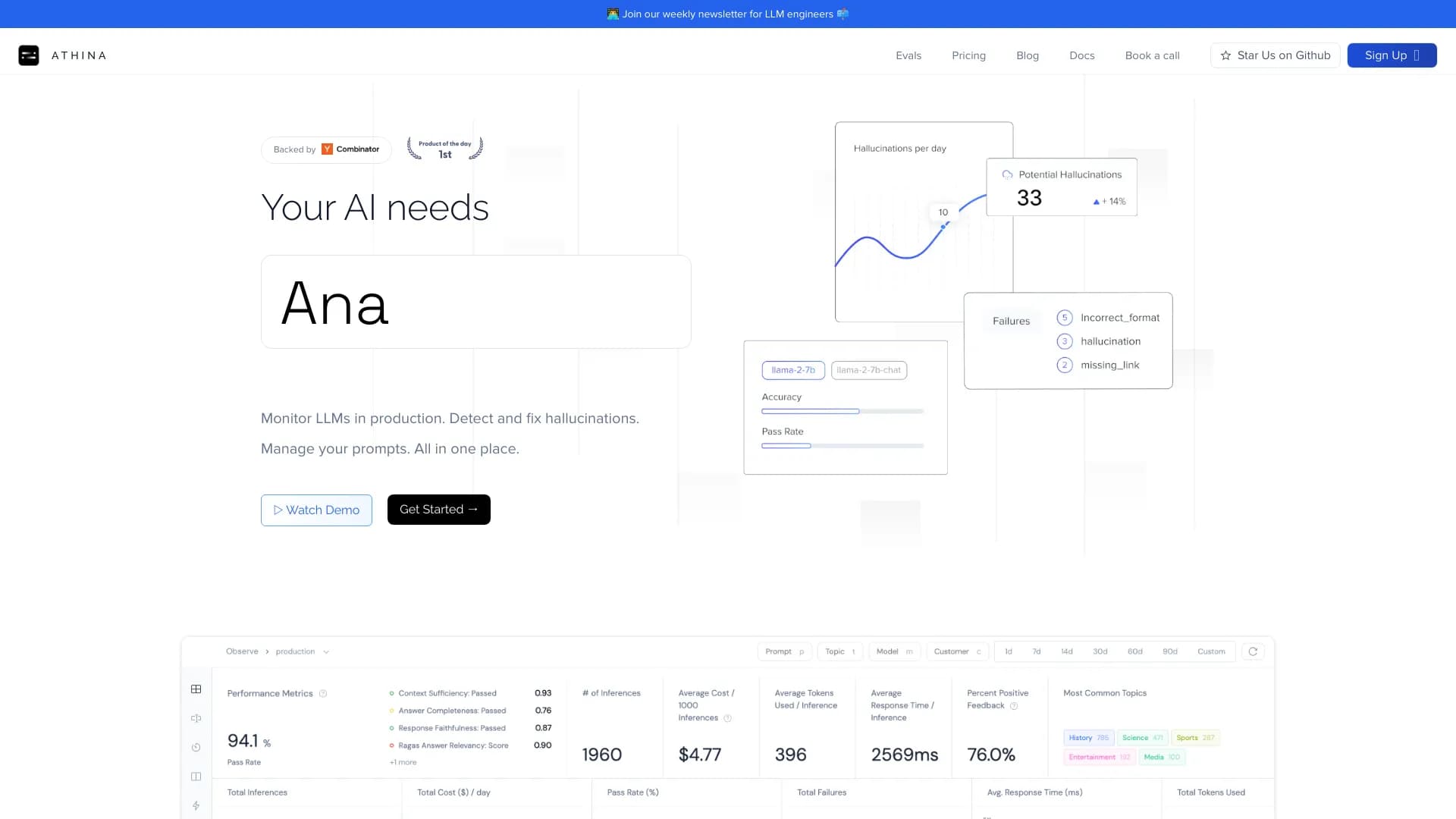

Platform for developing, monitoring, and evaluating AI applications based on large language models.

AI agent for integrating data from various sources and managing knowledge within organizations.
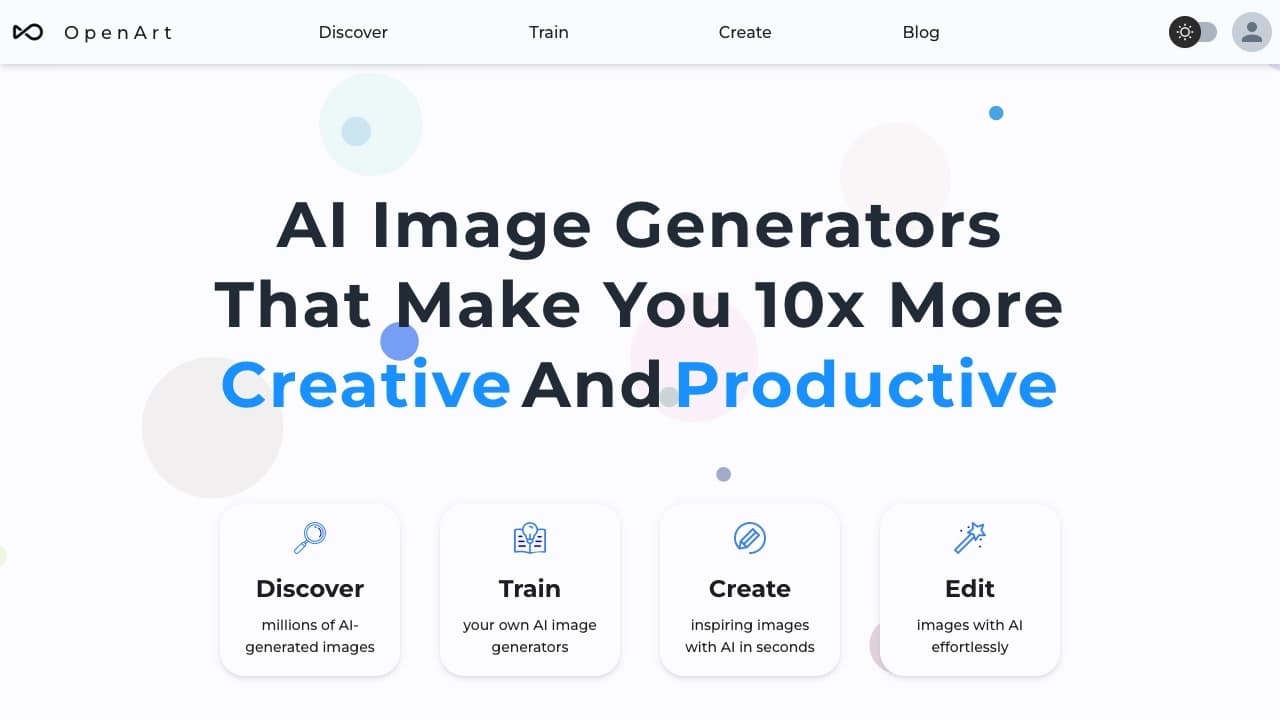

AI-powered platform for generating and editing images and videos.
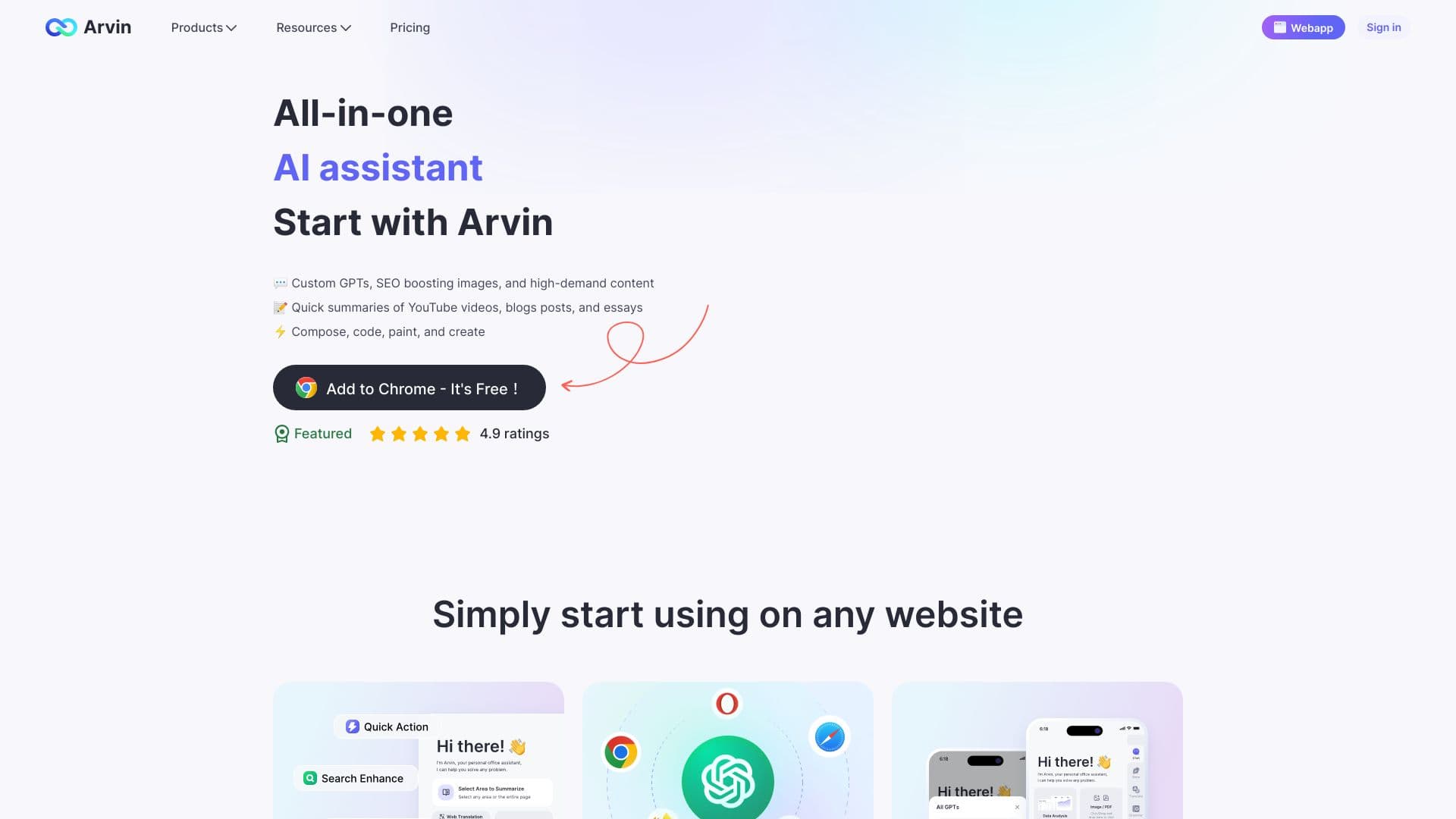
Browser extension and web service with AI assistant features: answering queries, summarizing videos and documents, and translating text.


Online Image Editor AI-based preservation of character style and processing Text commands.

Multimodal AI agents for automating customer service and sales via chat, voice, and video.

A tool for generating 3D models based on text descriptions, images, or sketches.
AI logo generator that creates unique variations in minutes.