

Apify Product Matching AI
Tool for automatically finding and matching identical or similar products across different marketplaces.
Overview
Apify Product Matching AI is a specialized AI service designed for automatically finding and matching identical or similar products across various marketplaces and online stores. The tool is built on the Apify platform, known for its web scraping ecosystem.
The technology combines two key components: web scraping to collect up-to-date product data and machine learning algorithms for subsequent analysis. The neural network compares names, prices, descriptions, characteristics, and other attributes of items, determining the degree of their correspondence to each other. This allows automating routine comparison processes and obtaining accurate results even with large data volumes.
The service can scale from a few thousand to over a million product pairs, and thanks to built-in integration with the Apify API, it can be easily embedded into existing business processes and analytics systems.
Apify Product Matching AI Features
| Feature | Value |
|---|---|
| Type | AI service for product matching |
| Category | Web scraping and parsing, e-commerce marketing |
| Platforms | Web, Chrome Extensions |
| Website | apify.com |
| Publication date | December 30, 2025 |
| Developer company | Apify |
| Distribution model | Freemium |
| Number of ready-made scrapers in the ecosystem | Over 5,000 |
| Scalability | From 1,000 to 1,000,000+ product pairs |
| Integration | Apify API, as well as LangChain and LlamaIndex frameworks |
| Security standards compliance | SOC2, GDPR, CCPA |
Who is Apify Product Matching AI for?
Data analysts and market researchers
Professionals working with large volumes of product information can quickly match items across platforms and identify pricing anomalies. The tool allows building samples for market research without manually going through catalogs.
Business owners and sales managers
Entrepreneurs managing online stores or marketplace accounts use the service to control their own assortment. Regular competitor monitoring helps adjust sales strategies and maintain up-to-date prices on all items.
Developers and technical specialists
Thanks to the open API and support for popular artificial intelligence frameworks, developers can embed the product matching mechanism into their own applications and trade automation services.
Marketing departments of e-commerce companies
Employees responsible for competitive analysis and pricing use the tool for systematic data collection on competitor offers and for making informed pricing decisions.
How to use Apify Product Matching AI?
Working with the service does not require deep technical knowledge, although basic understanding of web scraping principles may be needed to configure complex scenarios.
Registration and tool selection
The first step is creating an account on the Apify platform. After registration, you need to go to the catalog of ready-made tools ("Actors") and choose the one suitable for product matching. The Apify ecosystem has over 5,000 pre-built solutions, among which it is easy to find the one you need for your task.
Configuration of parameters
After selecting the tool, you will need to configure its parameters: specify source data websites, set matching criteria (names, prices, characteristics), and define the product categories of interest. Settings can be saved for future use.
Running and analyzing results
Run the task on Apify's cloud infrastructure — the service will automatically collect data and perform matching. Results can be exported in a convenient format (CSV, JSON, and others) and analyzed or transferred to your own analytics system via the API.
Key functions of Apify Product Matching AI
Automatic product matching
The tool independently finds equivalent or similar items across different platforms. It analyzes not only names but also prices, descriptions, characteristics, and other product attributes, ensuring high matching accuracy.
Competitor and assortment monitoring
The service allows tracking changes in competing stores' catalogs: new items appearing, price changes, description updates. This provides a complete picture of the market situation for making management decisions.
Dynamic pricing
Thanks to access to real-time competitor prices, the tool helps build a dynamic pricing strategy. Collected data can be automatically transferred to trading systems via the API for instant price adjustments.
Scaling and integration
The service works reliably with both thousands and millions of product items. Integration via the Apify API allows connecting the tool to existing processes without significant modifications.
Advantages of Apify Product Matching AI
Quick implementation and resource savings
Unlike building your own product matching system, using a ready-made solution from Apify requires less time and money. There is no need to develop architecture, maintain infrastructure, or train models — everything is already implemented and tested.
Real-time operation
The tool ensures up-to-date data on prices and product availability at any given moment. This is critical for competitor monitoring tasks and building price intelligence systems.
Reliable infrastructure and security
Apify's cloud infrastructure independently handles scaling, proxy management, authentication, and billing. The platform complies with high security standards: SOC2, GDPR, CCPA.
Open toolkit and ecosystem
Users have access to open libraries and frameworks, including Crawlee for web crawling and browser automation. Integration with AI frameworks LangChain and LlamaIndex opens up additional data analysis capabilities.
Disadvantages of Apify Product Matching AI
No mobile applications
Currently, native iOS and Android apps are not available in the App Store or Google Play. The service is managed exclusively through the web interface and browser extensions.
Documentation study required
Detailed pricing information is located on separate pages of the website, which requires additional research. While users with a basic skill level can use ready-made tools, programming is required to create custom solutions or fine-tune data collection mechanisms.
What tasks does Apify Product Matching AI solve?
Finding products across different stores
The main task of the service is finding equivalent or similar products across various marketplaces and online stores. This is necessary for market analysis, assortment planning, and evaluating your own positions.
Collecting data on prices and availability
The tool regularly collects up-to-date data on product prices and availability from competitors. Such information is necessary for promptly responding to changes in supply and demand.
Building price intelligence systems
Thanks to automation and scalability, Apify Product Matching AI serves as a foundation for building full-fledged price monitoring mechanisms. Competitor price data is used to develop an optimal pricing policy.
Monitoring competitor assortment
Companies can track changes in competitors' assortments: which items appear, which disappear, and which change characteristics during transactions. This helps to adapt their own catalogs in a timely manner.
Apify Product Matching AI Pricing
Free plan
Apify offers a free plan that does not require a bank card to activate. Users receive $5 in internal balance, which can be spent on using ready-made tools from the Apify Store or launching their own Actors. Community support is also available on the free plan.
Paid plans
Paid subscriptions start at $39 per month for the Starter plan and increase from there: Scale costs $199 per month, Business — $999 per month. All paid plans are billed monthly. Payment is made by bank card. Lifetime licenses are not available.
Pricing flexibility
Detailed information on all available features for each plan is available on the official Apify website. Users can choose the optimal option depending on data collection volumes and the required frequency of task runs.
Terms of use for Apify Product Matching AI
Free access
No bank card is required to register for the free plan. The initial balance of $5 allows you to test the service without additional investment: launch ready-made tools or test your own Actors.
Paid subscription
Switching to paid plans is possible at any time through your personal account. Linking a bank card is required to set up a subscription. Payments are charged monthly according to the selected plan.
Technical requirements
Basic programming knowledge may be required for full use of the service. This is especially relevant when creating custom automation tools or non-standard configuration of existing ones. Users without technical training are recommended to use ready-made Actors from the catalog.
Apify Product Matching AI Availability
Platforms and interface
The tool is available through the web interface on the official website, as well as through Chrome browser extensions. Standard mobile applications are not provided.
User geography
The service is aimed at international users. The largest share of clients is in the United States (21.08%), followed by India (16.97%). Next come Brazil (4.45%), the United Kingdom (4.33%), and Germany (3.92%). The tool is available worldwide.
Ecosystem and integrations
The Apify platform is positioned as a comprehensive solution. The ecosystem offers over 5,000 ready-made web scrapers (Actors), allowing many related tasks to be solved with a single tool. It is also possible to create custom automation tools using extensive documentation.
How Apify Product Matching AI differs from alternatives
Ecosystem of ready-made solutions
The platform's main differentiator is the availability of over 5,000 ready-made Actors for web scraping. Instead of building tools from scratch, users can adapt existing solutions to their tasks, significantly reducing implementation time. The closest alternatives to the service are ParseHub, Scrapinghub (Scrapy Cloud), and Octoparse.
Integration with AI frameworks
Unlike many competitors, Apify provides built-in integration with popular artificial intelligence frameworks — LangChain and LlamaIndex. This makes the platform more attractive to developers using modern machine learning technologies.
Cloud infrastructure
Apify handles scaling, proxy usage, authentication, and billing, providing a ready-made cloud infrastructure. Competitors like ParseHub, Scrapinghub, and Octoparse offer comparable capabilities but fall short in terms of tool openness and ecosystem breadth.
Security and standards compliance
The platform complies with modern data protection requirements: SOC2, GDPR, CCPA. This is an important advantage for companies working with personal customer data and needing to meet regulatory requirements.
Conclusion
Apify Product Matching AI is a comprehensive tool for automatic product matching across various marketplaces, combining powerful web scraping and machine learning capabilities. The service suits both specialists without programming experience who use ready-made solutions from the extensive ecosystem, and developers who have access to flexible customization tools and integration with modern AI frameworks. Thanks to scalability from thousands to millions of items, real-time operation, and cloud infrastructure that handles reliability and security, the service becomes a practical choice for e-commerce companies engaged in competitive analysis, assortment monitoring, and price intelligence. The free plan allows testing the functionality without initial investment, while paid plans enable scaling usage as the business grows. The main limitations remain the lack of mobile applications and the need to study documentation for full use of all platform capabilities.
Frequently asked questions
See also

A platform for content creators that combines link management, email marketing, an online store, and analytics in a single visual editor without coding.


AI-powered service for automatically creating “faceless” short videos for TikTok, YouTube Shorts, and other platforms.
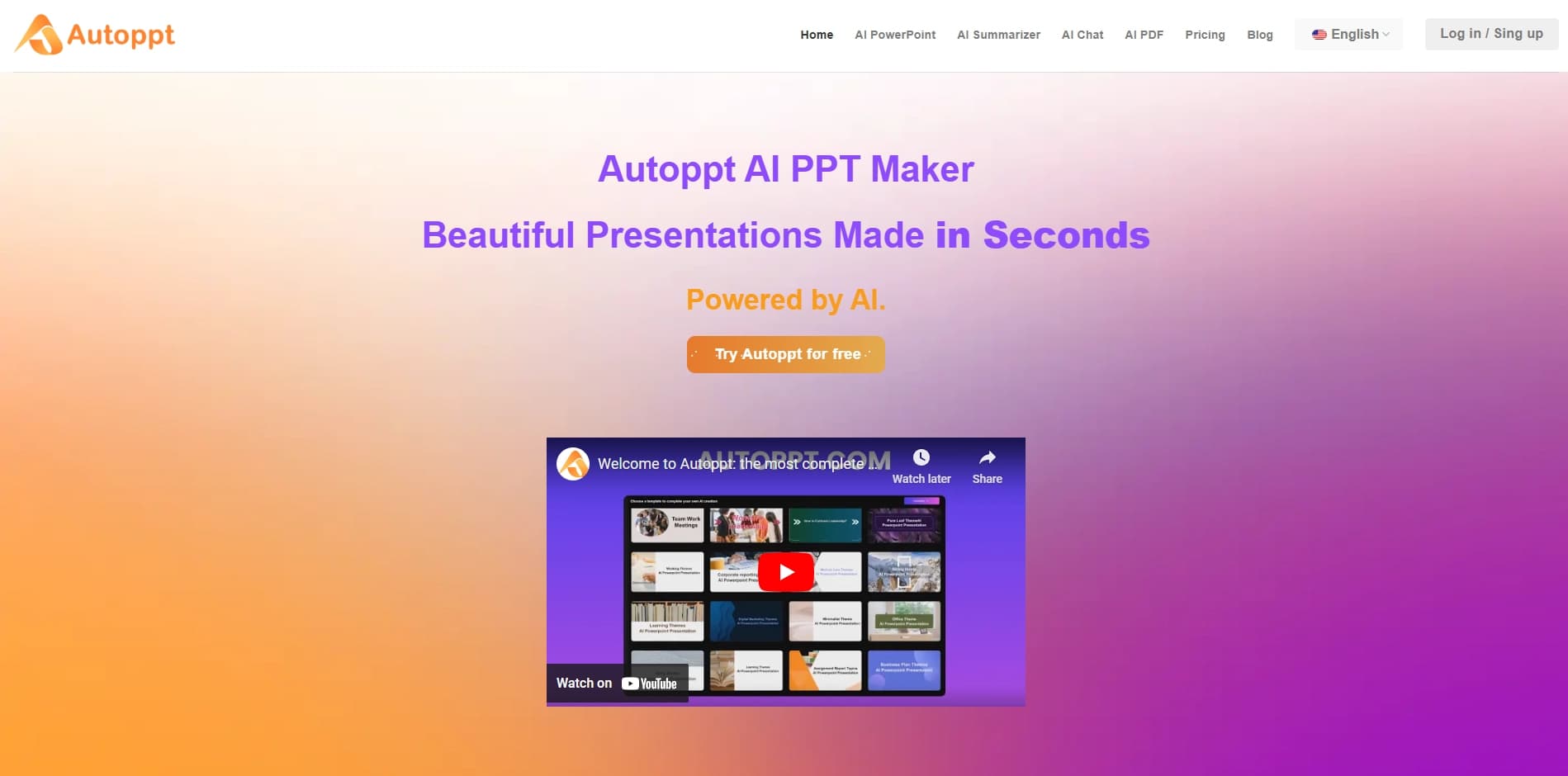

Online AI-powered service for quickly creating presentations based on a given topic or an uploaded document.
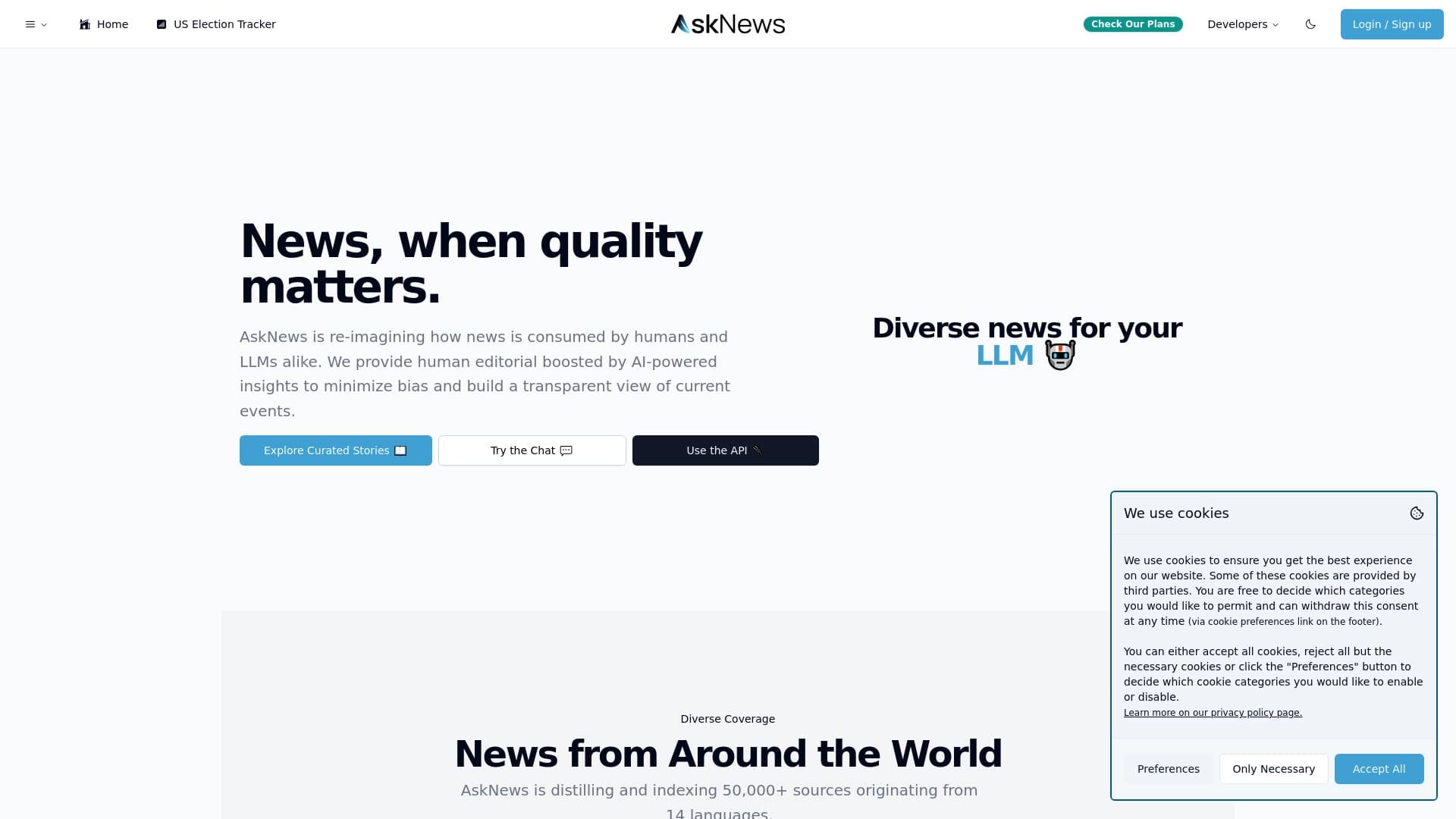
A platform for aggregating world news using AI to analyze and reduce bias.
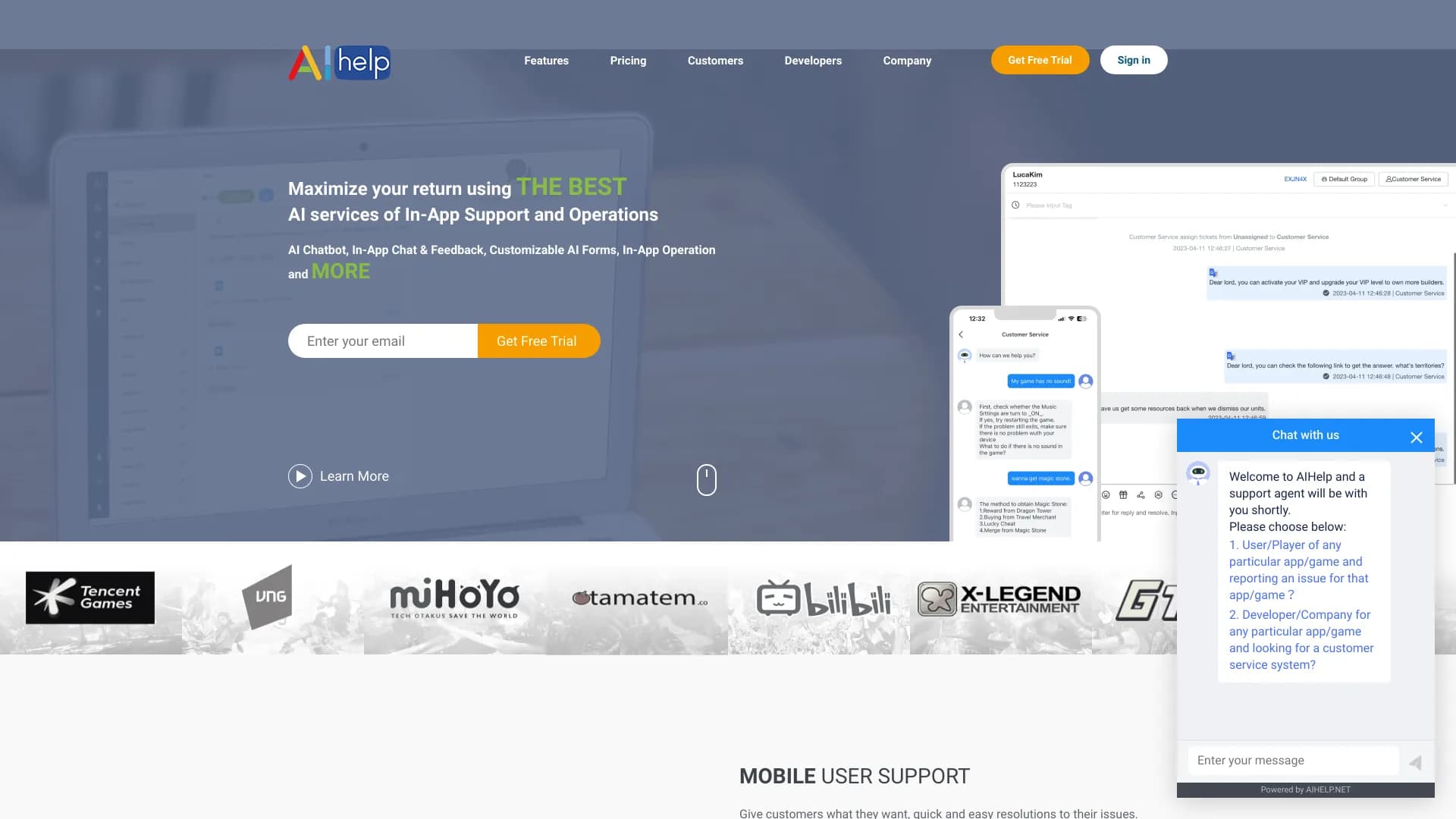

AI platform for user support in applications, including a chatbot and ticketing system.
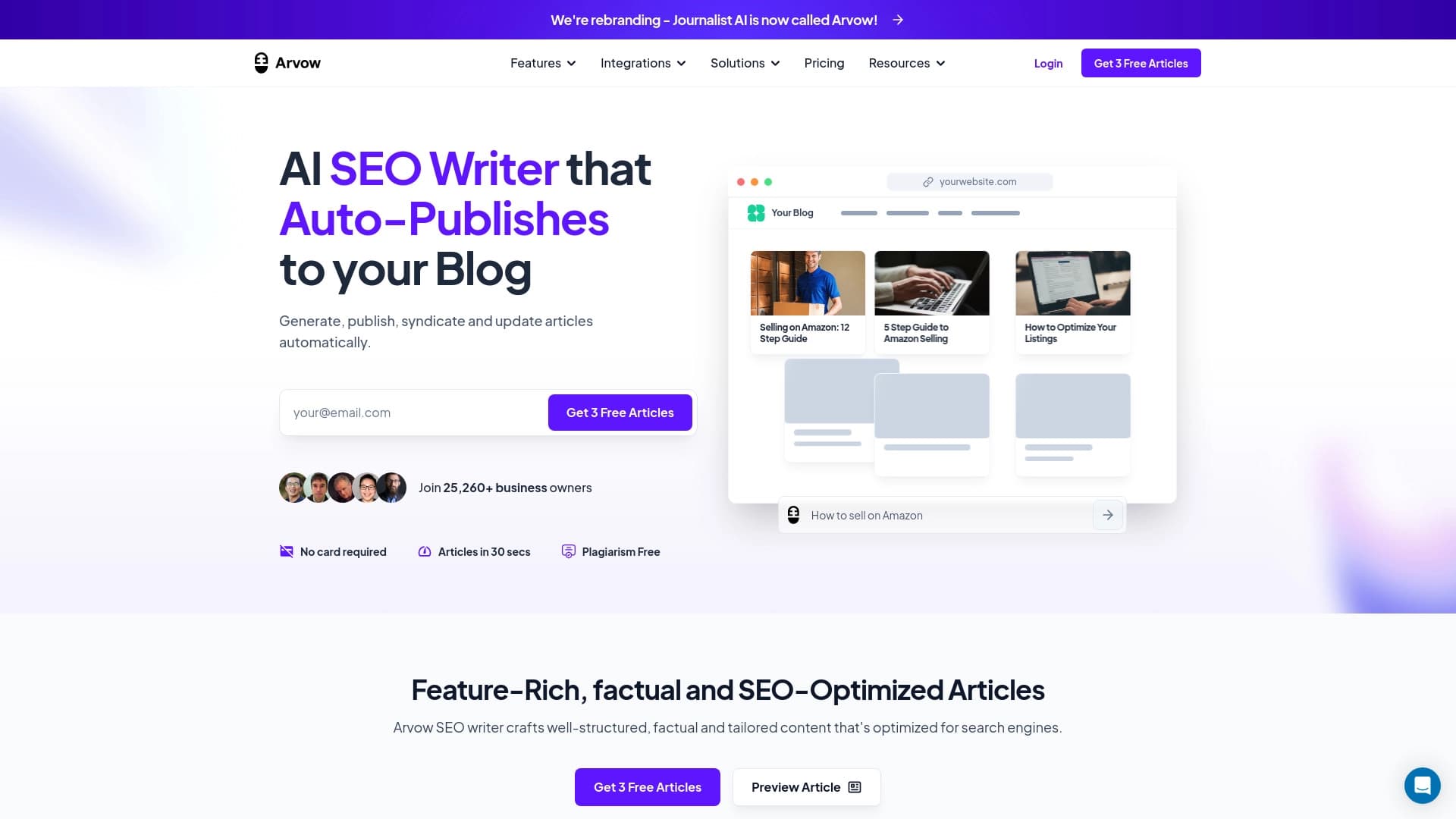

Neural network for generating SEO-optimized articles and automating blog management.

AI assistant for automating retail tasks and optimizing call center operations.

AI toolkit for video generation and editing, including avatars, lip-sync, and voice cloning.