
Agentic Seek
Autonomous AI agent for automating web research: searching, navigating websites, extracting and summarizing information.
Overview
Agentic Seek Neural Network Description
Agentic Seek is an autonomous AI agent designed for full automation of web research. Instead of manually opening dozens of browser tabs, the user formulates a high-level goal, and the system independently performs searches, navigates websites, extracts the needed data, and summarizes it.
The platform is built on OpenAI language models (GPT family) and a proprietary set of tools that together cover the entire research cycle: from a search query to a final report. A key feature of Agentic Seek is its ability to create specialized subagents. Each subagent is responsible for a specific part of the overall task: some search for sources, some extract data, some verify facts. This allows parallelizing work and covering a large number of sources in a short time.
The system supports iterative refinement: agents can return to already processed data, correct it, and supplement it as new information arrives. This approach ensures the relevance and completeness of the final summary and reduces the risk of missing important details.
Agentic Seek Characteristics
| Characteristic | Value |
|---|---|
| Tool type | Autonomous AI agent for web research |
| Base models | OpenAI language models (GPT) |
| Architecture | Multi-agent (the system creates specialized subagents) |
| Key capabilities | Search, website navigation, data extraction, information summarization |
| Operating mode | Iterative result refinement |
| Extensibility | Integration of custom action handlers and API connectors |
| Management interface | Web interface for monitoring agent activity |
| Transparency | Built-in logging, configurable prompts, audit trail |
| Launch date | Not specified |
| Distribution model | Not disclosed |
Who is Agentic Seek suitable for?
Market analysts and researchers
The tool will be useful for competitive intelligence and marketing analysis professionals. Agentic Seek can collect data on competitors, prices, product updates, and market trends from multiple websites, saving hours of manual work. The final summaries can be used to prepare reports and support decision-making.
Academic researchers and students
For those working with large volumes of scientific publications and online sources, the platform automates the process of collecting and initially analyzing information. Instead of hours of reading, you get a structured digest on a given topic, while still being able to trace how the agent arrived at certain conclusions thanks to the action log.
Teams working with large data volumes
Departments that regularly require monitoring of numerous web resources — such as compliance, marketing, or product management teams — can use Agentic Seek for large-scale data collection. The ability to add custom action handlers and API connectors allows the tool to be embedded into existing workflows and adapted to specific company tasks.
How to use Agentic Seek?
Setting a goal
The first step is to formulate a high-level research task. Instead of listing specific websites and keywords, the user describes what information they want and why. For example, instead of "find iPhone 15 prices at three carriers," the user formulates "compare current prices and purchase terms for iPhone 15 at major carriers." The system itself determines what to search for and how to structure the result.
Monitoring agent activity
After launching a task, the user observes the process through the web interface. There, in real time, you can see which subagents are active, which websites they are visiting, and what intermediate results they are obtaining. This is important for quality control: if necessary, you can intervene and adjust the research direction.
Reviewing final reports and logs
Upon completion, Agentic Seek generates a final summary. To verify data accuracy and result reproducibility, a full action log is available. It records all agent steps, their decision logic, and information sources. This makes the conclusions transparent and auditable.
Key Features of Agentic Seek
Autonomous web search and navigation
The agent does not just send a query to a search engine; it independently follows links, studies website structures, and moves between pages. It can find the necessary sections even on complex navigation portals and extract relevant data from various formats.
Information extraction and summarization
The system "pulls" key data from web pages (text, tables, figures) and transforms it into concise summaries. Summarization occurs based on the context of the entire task, not individual pages, allowing a holistic picture of the topic to be obtained.
Iterative refinement and subagent collaboration
Unlike one-off queries, agents can revisit their own results. If contradictions or gaps are discovered while analyzing a new source, subagents return to previous steps and update the data. The multi-agent architecture allows different aspects of the task to be explored in parallel and combined into a single report.
Agentic Seek Advantages
- Significant time savings. Automating the entire research cycle eliminates manual work with the browser, bookmarks, and data copying.
- Scalability. The platform can process large volumes of web pages, making it suitable for serious research projects where manual data collection is physically impossible.
- Transparency and controllability. The built-in action log allows you to understand the agent's logic and adjust it if necessary. This reduces the risk of errors and facilitates result verification.
- Configuration flexibility. Developers can extend functionality through custom action handlers and API connectors, adapting the tool to unique organizational requirements.
- Reduced human workload. Using the tool for routine information gathering allows employees to focus on analysis and interpretation rather than mechanical data searching.
Agentic Seek Disadvantages
- Dependence on base model capabilities. Result quality directly depends on the level of OpenAI language models. Errors or interpretation inaccuracies are possible on complex or ambiguous tasks.
- Extensibility limitations. Although the tool supports integration, configuring custom handlers and API connectors requires development skills, which can be a barrier for non-technical users.
- Lack of public information on pricing and terms. Currently, official data on prices and distribution model is not disclosed, making it difficult to assess accessibility and potential implementation costs.
What tasks does Agentic Seek solve?
- Competitive intelligence. Systematic collection and analysis of information about competitors' actions, products, and strategies from their official websites, press releases, and industry portals.
- Academic research. Accelerating the collection of scientific articles, data from open databases, and repositories, followed by the formation of topic reviews.
- Marketing and market analysis. Monitoring prices, promotions, customer reviews, and market trends to support informed decisions.
- Large-scale data collection. Extracting information to build databases, populate CRM systems, or generate analytical reports from numerous heterogeneous web sources.
Agentic Seek Pricing
As of the time of writing, public information about Agentic Seek pricing is unavailable. The project's website and official sources do not list pricing plans or subscription costs. The distribution model (closed product, SaaS platform, or corporate license) is also not disclosed. For current pricing information, it is recommended to contact the platform developers directly.
Agentic Seek Terms of Use
Official terms of use for Agentic Seek have not been published publicly. Licensing restrictions, data processing rules, user requirements, and privacy policy are unknown. Given that the platform operates on the OpenAI API, standard OpenAI language model terms of use may apply. However, this is only an assumption — exact terms must be clarified with the provider.
Agentic Seek Availability
Information about Agentic Seek availability is limited. The platform is described as a web service, implying a web interface for access and agent monitoring. However, it is not specified whether the project is public, in beta testing, or available by invitation only. There is also no data on the service's geographic availability or supported interface languages.
How Agentic Seek differs from alternatives
The main difference between Agentic Seek and most search or scraping tools lies in the autonomous multi-agent research model. The user sets only a goal, not a specific action algorithm. The system independently breaks the task into subtasks, assigns subagents, and coordinates their work without constant human intervention.
The second important difference is the iterative nature of work. Classic parsers execute a one-time query, whereas Agentic Seek repeatedly returns to data to refine and supplement it. This makes the final result more complete and resilient to changes in source websites.
Finally, the priority on transparency sets the platform apart from competitors' "black boxes." A detailed action log and web monitoring interface allow the entire data acquisition path to be traced, which is critical for tasks requiring verifiable results and compliance with quality standards.
Conclusion
Agentic Seek is a promising tool for automating complex web research. Its multi-agent architecture, ability to iteratively refine data, and emphasis on process transparency make the platform a strong solution for analysts, researchers, and data professionals. However, for a full assessment, potential users currently lack key information: there is no public data on pricing, terms of use, or service availability. If the developers promptly provide this information and ensure ease of configuration, Agentic Seek has every chance to take a prominent place in the niche of intelligent data collection tools.
Frequently asked questions
See also
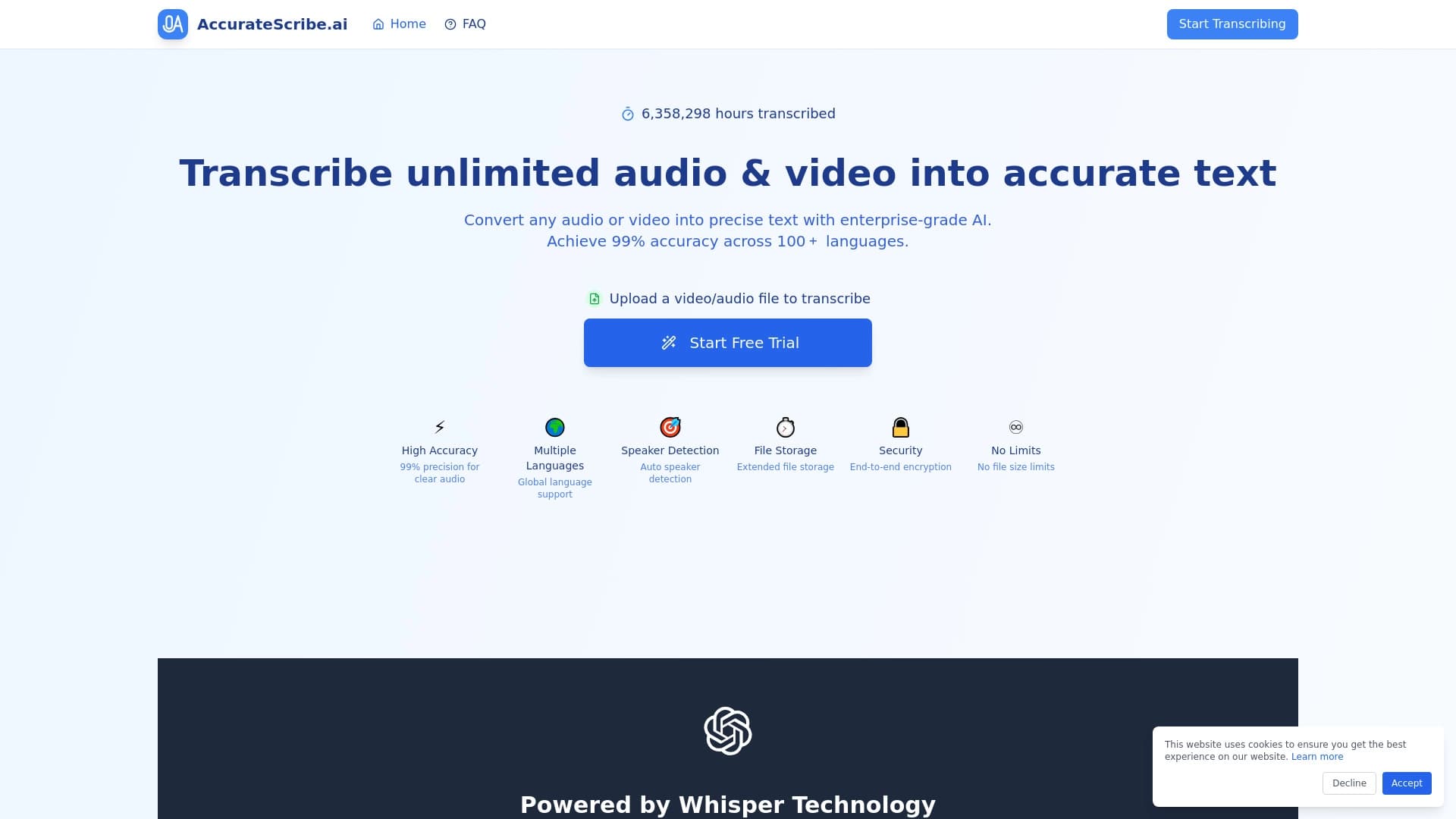

Service for automatic transcription of audio and video into text with support for over 100 languages.
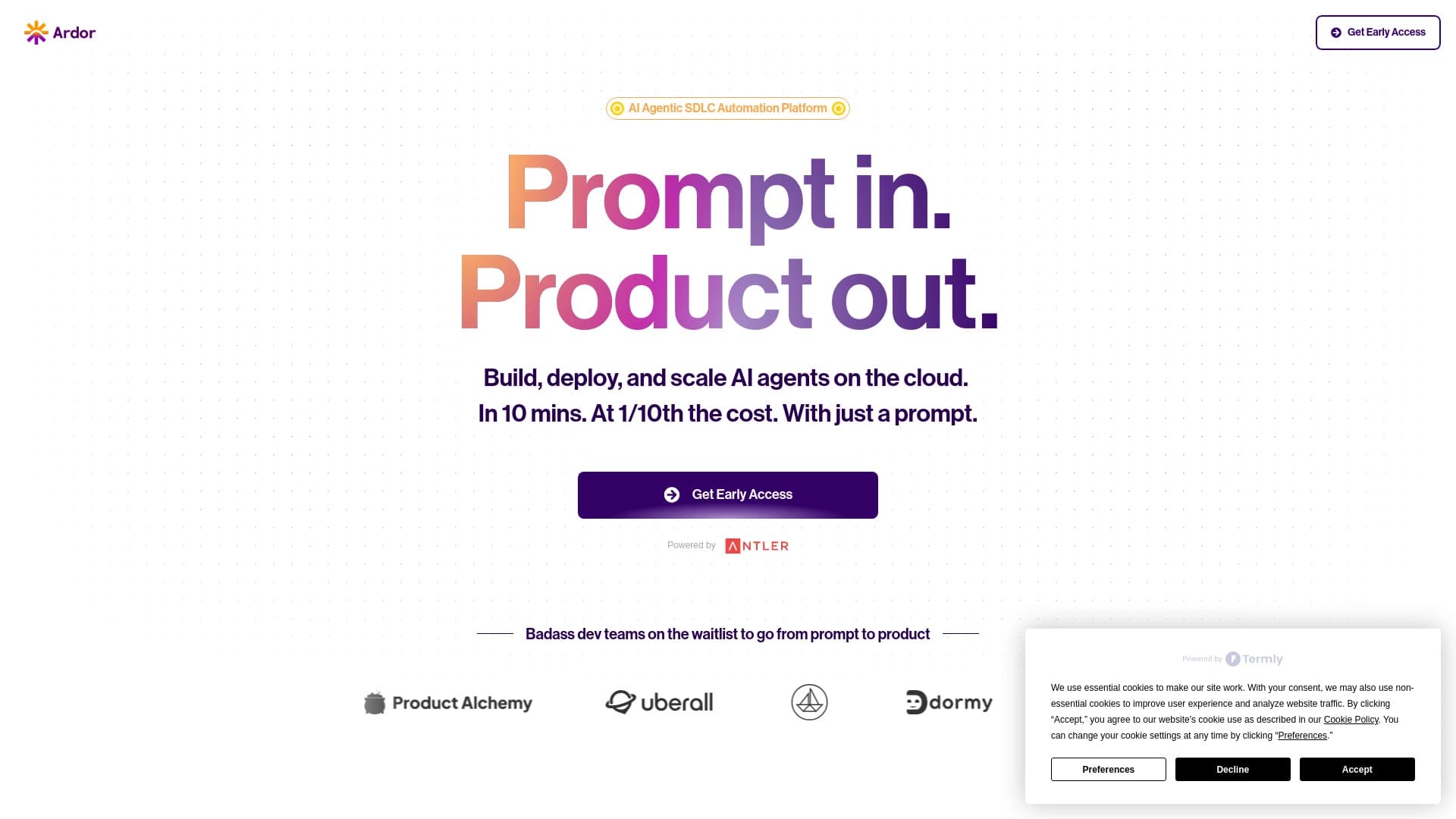

A platform for automating software development using a visual builder for AI agents.
An intelligent assistant for lawyers that accelerates the search and analysis of legal information.
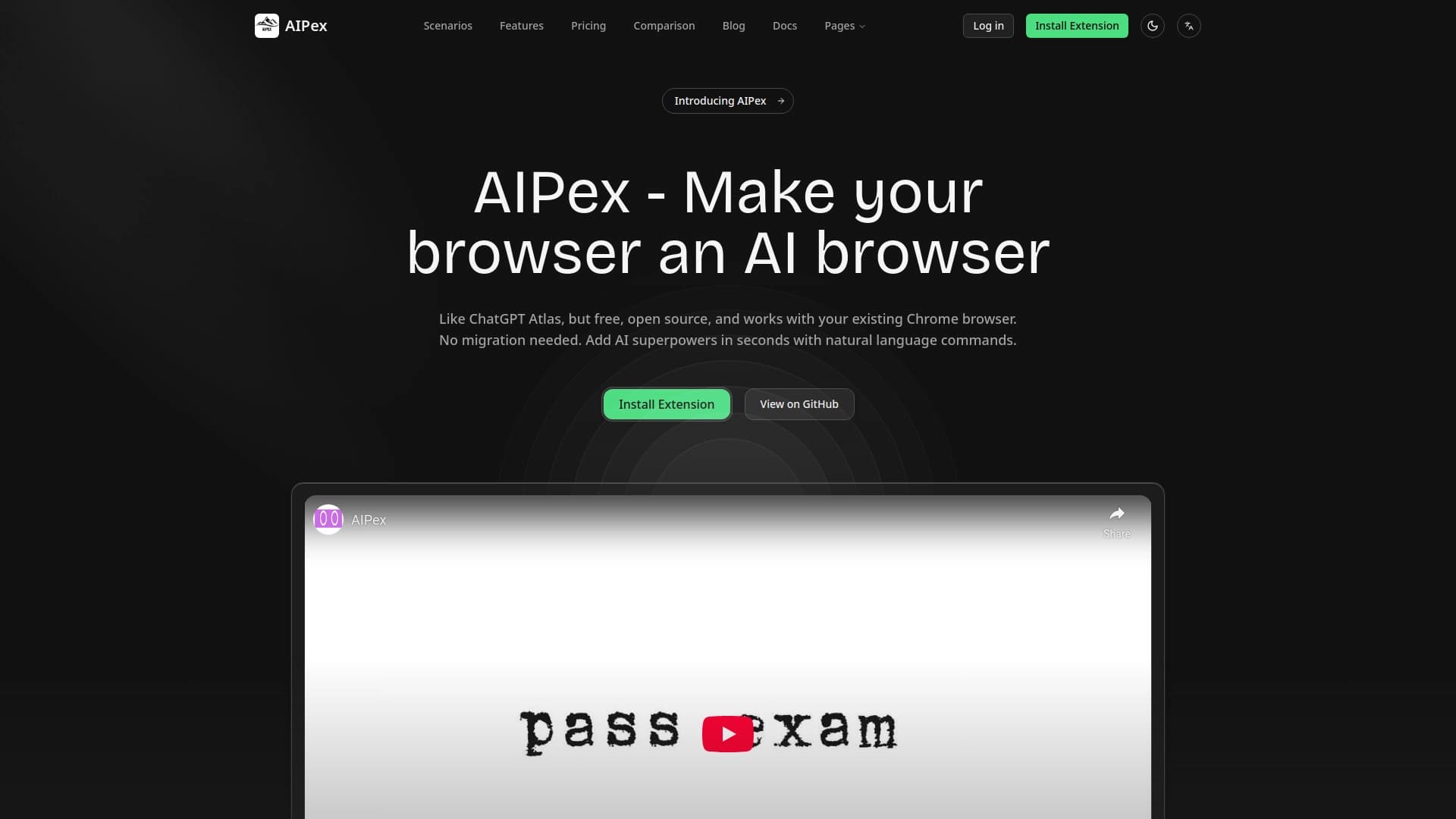

Chrome extension that helps manage tabs, history, and bookmarks with an AI assistant.


AI-powered virtual clothing try-on service.

Online AI tool for creating deepfakes and editing images.
An online service that lets you chat with PDF documents: ask questions and get concise answers with source attribution.

Free web tool from Google that uses machine learning to turn rough sketches into neat icons and illustrations.