
InsightFace
Open-source computer vision library for face analysis, recognition, and detection.
Overview
InsightFace
Description of the InsightFace neural network
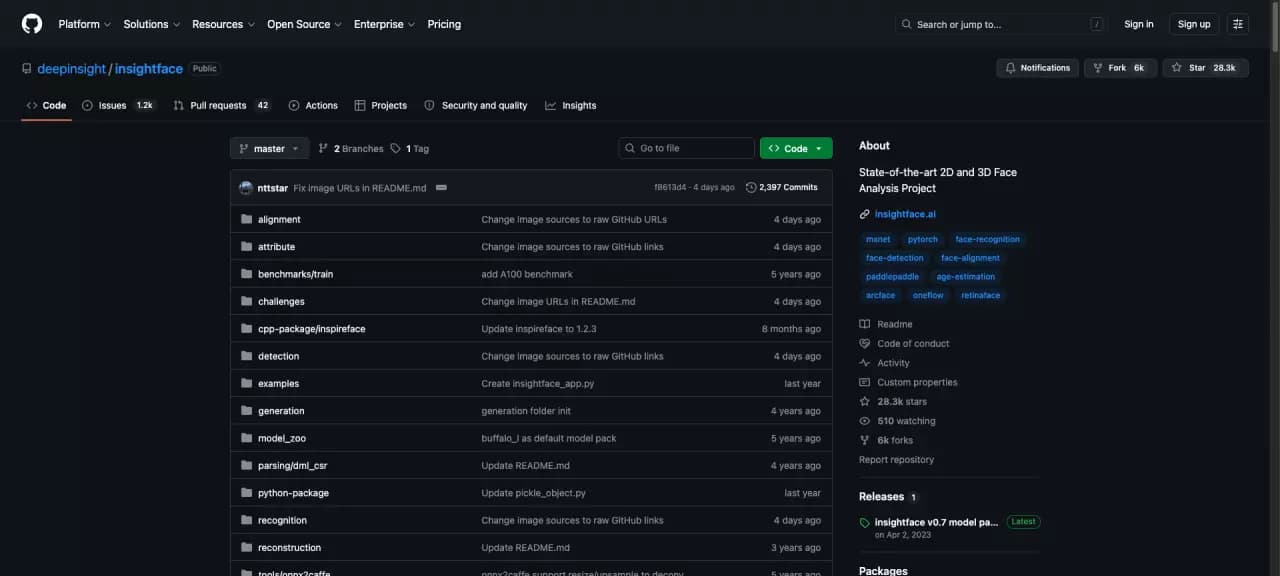
InsightFace is an open-source computer vision library designed for face analysis, recognition, and detection. It is built on the PyTorch and MXNet frameworks and combines state-of-the-art algorithms, including the ArcFace and RetinaFace architectures. The project provides developers with ready-made tools and pipelines for training models, evaluating them, and deploying them in production. The library code is distributed under the MIT license, but some pre-trained models are available for non-commercial use only.
InsightFace Characteristics
| Characteristic | Value |
|---|---|
| Type | Open-source library |
| Category | Opensource, Developer tools, Image editing, Free |
| Business model | Free |
| Frameworks | PyTorch and MXNet |
| License | MIT |
| First catalog publication date | 02-04-2026 |
Who is the InsightFace neural network for?
Developers and researchers in computer vision
InsightFace is primarily aimed at developers building face analysis applications. Thanks to PyTorch and MXNet support, the library integrates into existing machine learning pipelines.
Professionals implementing AI solutions
The tool is suitable for those who need ready-made pre-trained models with high accuracy. Lightweight architectures such as SCRFD make it possible to deploy solutions even on devices with limited computing resources.
Research community
Researchers can use the library to train their own models, run experiments with new architectures, and participate in benchmarks — InsightFace algorithms have repeatedly taken first place in NIST-FRVT, CVPR, and ECCV competitions.
How to use the InsightFace neural network?
Quick start via the Python package
To test models on your own images, simply install the InsightFace Python package. It provides a high-level API for face detection, recognition, and alignment.
Web demo for evaluation
The project website offers ready-made web demos that let you try face localization, recognition, and swapping functionality without installation or writing code.
Cross-platform C/C++ SDK
For embedding into production solutions, the InspireFace SDK for C/C++ is available. It provides cross-platform operation and is suitable for integration into mobile and desktop applications.
Core features of InsightFace
Face recognition
The library supports ArcFace, SubCenter ArcFace, and PartialFC methods. These algorithms allow high-accuracy identification of a person from an image.
Face detection
Face detection in images is implemented using the RetinaFace and SCRFD architectures. SCRFD stands out among alternatives with high accuracy and minimal computational cost.
Face alignment
InsightFace offers two alignment approaches: SDUNets based on heat maps and SimpleRegression, which works through keypoint coordinates. This is necessary to bring images to a common standard before recognition.
Pre-trained models and pipelines
Models trained on MS1M, VGG2, and CASIA-Webface datasets are available. Ready-made evaluation pipelines for the IJB and Megaface benchmarks are also included, simplifying model quality testing.
Advantages of InsightFace
State-of-the-art algorithms
The methods implemented in the library hold leading positions in international competitions — NIST-FRVT, CVPR, and ECCV. This confirms their high effectiveness and relevance.
Free license for the code
The InsightFace source code is distributed under the MIT license, allowing you to freely use, modify, and distribute it in your projects.
Support for popular architectures
The library includes a wide range of architectures: IResNet, MobilefaceNet, InceptionResNet, and others. This provides flexibility in choosing the right trade-off between accuracy and speed.
Lightweight models with high accuracy
The presence of SCRFD and other optimized architectures makes it possible to achieve high accuracy even on resource-constrained devices, which is important for mobile and embedded systems.
Disadvantages of InsightFace
Restrictions on model usage
Training data and the pre-trained models trained on it are available only for non-commercial research. For commercial use of some models (for example, inswapper) or the InspireFace SDK, you need to contact the project authors.
Different licensing terms for code and models
Although the library code is open under the MIT license, the models themselves have stricter terms. This may create uncertainty for teams planning commercial deployment.
What problems does InsightFace solve?
Face analysis
The library solves three main tasks: face recognition (person identification), detection (finding faces in images), and alignment (bringing a face to a standard position).
Model training and deployment
InsightFace provides a complete workflow: from training custom models on arbitrary datasets to deploying ready-made solutions in a production environment.
Face swapping
Using pre-trained models such as inswapper, the library can swap faces in images and videos, which can be used in entertainment and research projects.
InsightFace pricing
The library is distributed free of charge. The project's business model is "Free." There is no charge either for using the code or for accessing pre-trained models for non-commercial purposes.
InsightFace terms of use
The library code is available under the MIT license, which permits free use, modification, and distribution. Training data and the models trained on it are allowed only for non-commercial research. For commercial use of specific models (for example, inswapper) or extended versions of the SDK, you need to contact the project authors.
InsightFace availability
InsightFace is an open project. The code is available in public repositories. You can install the Python package to work with the library. A cross-platform C/C++ SDK, InspireFace, is also available. For a quick evaluation of the functionality without installation, web demos are provided.
How InsightFace differs from alternatives
Focus on face analysis tasks
Unlike general-purpose computer vision libraries, InsightFace specializes specifically in working with faces: detection, recognition, alignment, and swapping. This provides higher accuracy and convenience for relevant tasks.
Support for two frameworks
The library works with both PyTorch and MXNet, giving flexibility in choosing your toolkit. Most alternatives support only one framework.
Leadership in benchmarks
InsightFace algorithms regularly take first place in NIST-FRVT, CVPR, and ECCV competitions. This difference indicates that the library uses the most modern and proven methods.
Separate licensing for code and models
Unlike many open-source projects, InsightFace clearly separates the terms: the code is free (MIT), while the models have restrictions on commercial use. This allows developers to use the code in any projects, but requires attention when choosing pre-trained models for commercial use.
Conclusion
InsightFace is an open-source face analysis library based on PyTorch and MXNet that combines state-of-the-art recognition, detection, and alignment algorithms. The project shows excellent results in benchmarks and takes first place in competitions, confirming the quality of the implemented methods. Despite restrictions on commercial use of some models, the library remains one of the best available tools for face-related computer vision tasks.
Frequently asked questions
See also
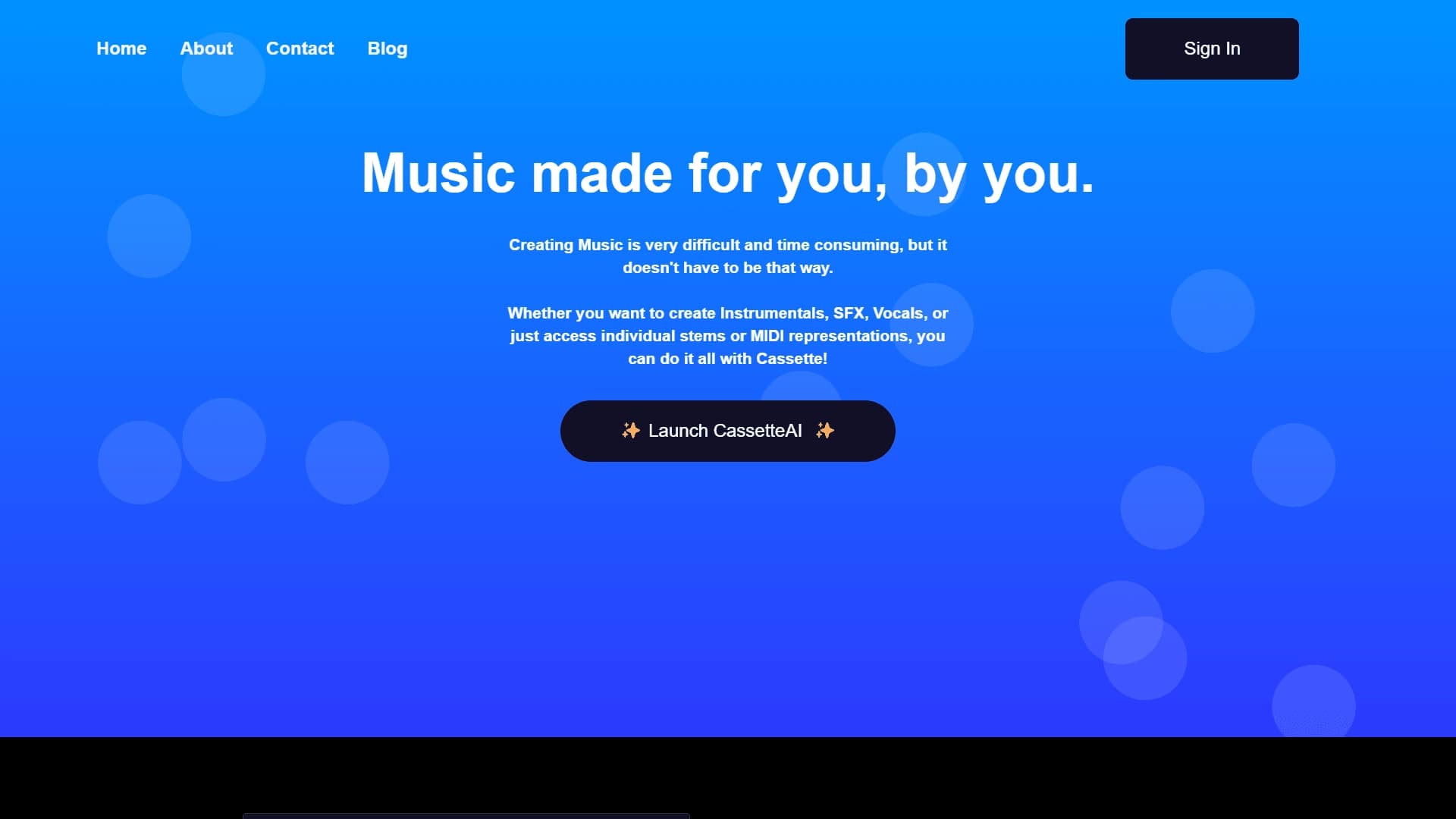
A service for generating music from text descriptions using latent diffusion models.
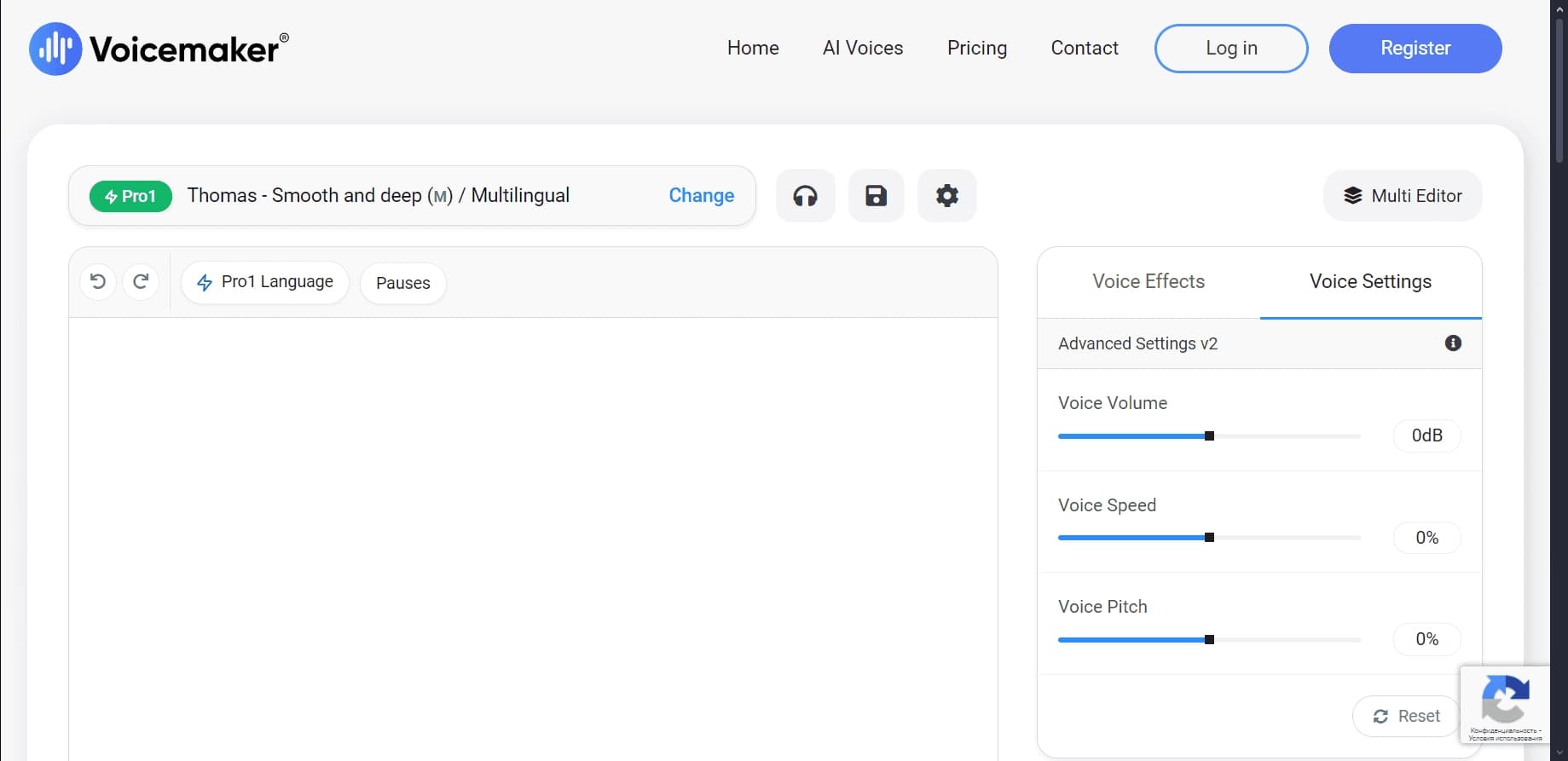

A text-to-speech service with hundreds of customizable voices in multiple languages.
A neural network for music generation that creates tracks from text descriptions, transforms audio and video into new compositions, and turns MIDI files into full-fledged arrangements.
Free online text-to-speech service with over 200 voices in multiple languages.
Online tool for generating drum loops and rhythmic patterns using a neural network.
Platform for automatic extraction and structuring of unstructured data from Amazon S3.
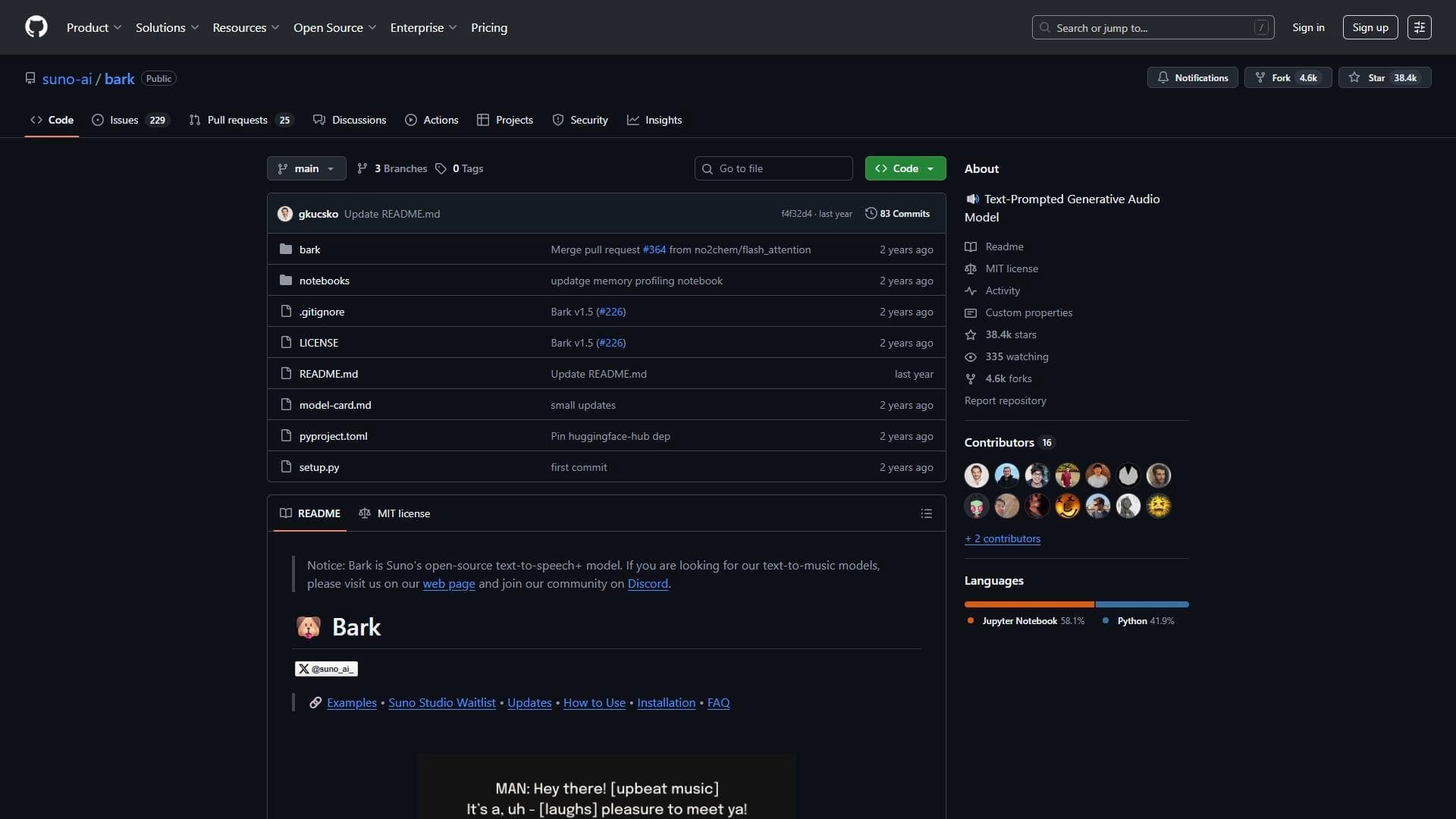

This is an open-source generative audio model for text-to-speech, music, and sound effects.

A platform for professional audio processing with AI features for track separation, mastering, and voice changing.