

CGDream
AI-powered image generation platform that combines 3D models with generative technologies to create illustrations from text, photos, or 3D objects.
Overview
content: CGDream
Description of CGDream neural network
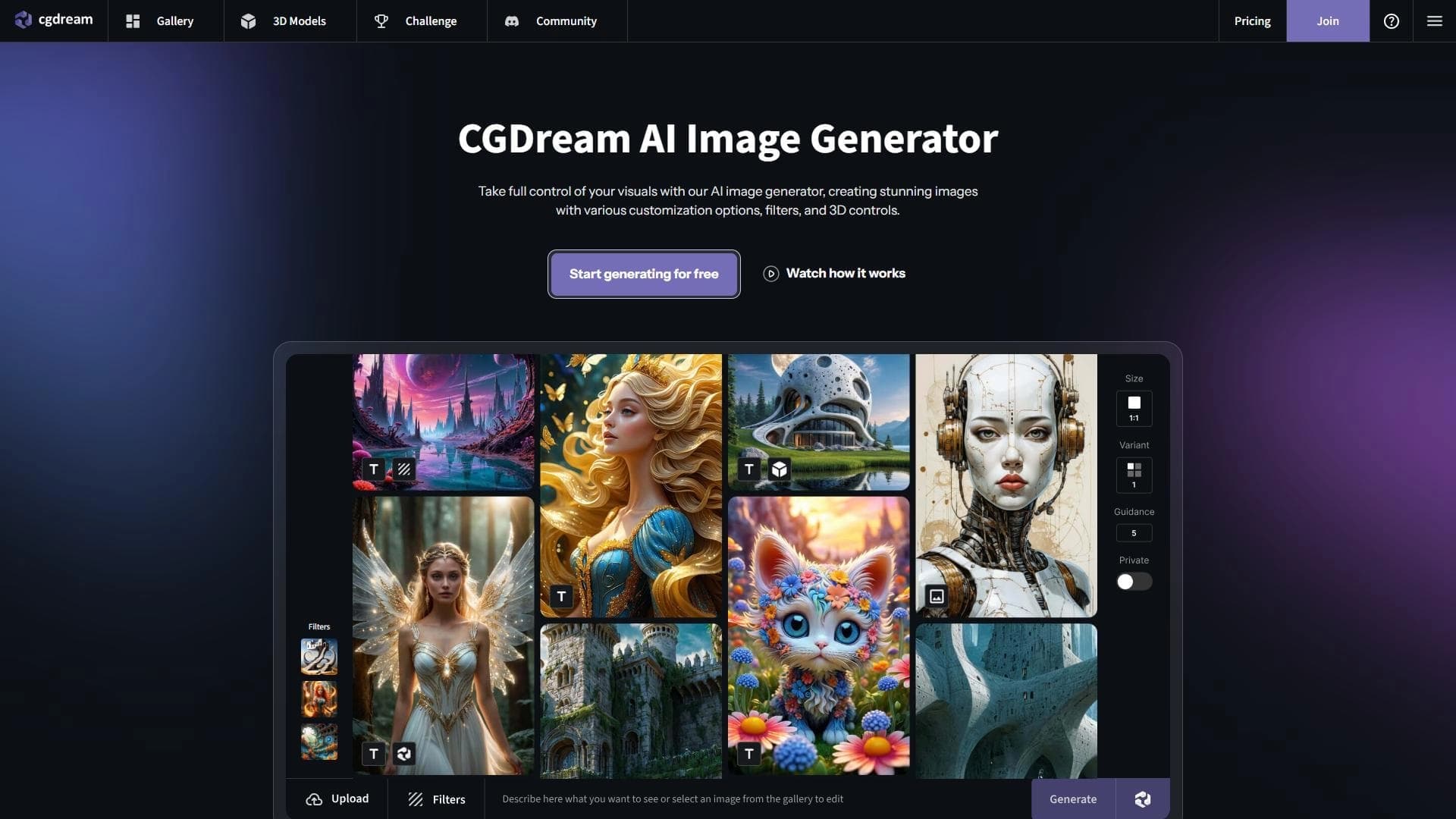
CGDream is an AI-powered image generation platform that combines 3D modeling capabilities with generative technologies. The service is developed by CGTrader studio and allows users to create images from a text description, an uploaded photo, or a 3D model, giving them control over the composition of the final result.
The service interface is quite simple, so both professional designers and artists and beginners can work with it. The main feature of CGDream is the combination of a classic 3D approach with generative AI, which makes it possible to obtain reproducible results instead of the random images typical of traditional generators.
CGDream features
| Feature | Value |
|---|---|
| Type | AI platform for image generation |
| Categories | Image generation, 3D models and objects, stylization and filters, 3D-to-2D |
| Developer | CGTrader |
| Input data | Text description, image, 3D model |
| Base model | Flux Dev |
| Generation speed | 5–20 seconds per image |
| Platforms | Web, Windows, macOS, Linux, API |
| Free version available | Yes (3000 credits per month) |
| Website | cgdream.ai |
Who is CGDream neural network suitable for?
Designers and artists
CGDream is primarily aimed at designers, artists, and illustrators who work with visual content. The ability to precisely control composition through 3D models makes the service useful for creating concept art and illustrations with a defined structure.
Professionals who need control over the result
The platform is suitable for architects who need project visualizations, marketers, and content creators producing materials for advertising and social media. Thanks to the reproducible result, users can accurately repeat a planned composition instead of relying on random generation.
Beginners without special training
Thanks to its simple interface, the service is also accessible to those who are encountering generative AI for the first time. Quick setup and a clear workflow allow users to get illustrations for projects and presentations without any special knowledge.
How to use CGDream neural network?
Getting started
The CGDream interface requires no special knowledge or preparation. All you need to do is register in the service to get access to generation: both the web version and desktop applications are available.
Main workflow
The user selects a 3D model from the built-in library, sets up the scene, and describes the desired result with a text prompt. The AI then generates an image with the specified composition. You can also create pictures directly from a text description or based on an uploaded photo.
Getting the final result
Generation speed ranges from 5 to 20 seconds per image. Additional post-processing tools allow you to improve the quality of the result — increase resolution, fix flaws, or refine individual areas of the image.
Key features of CGDream
Unique 3D-to-2D concept
The platform's key feature is rendering 3D models into 2D images. This approach allows precise control over composition and delivers reproducible results, unlike traditional generators that produce different images with each run.
Multimodal generation
The service supports several ways to create images: from a text description, from uploaded images, 3D-to-2D rendering, and conversion of 2D images to 3D. Users can quickly create product variations with different materials, colors, and shapes.
Customization and post-processing
Users have access to more than 300 unique filters for stylizing and refining images. The service also includes post-processing tools — an upscaler, inpainting, and flaw correction — and AI automatically improves text prompts.
CGDream advantages
Control over composition
The main advantage of CGDream is unprecedented control over image composition through the use of 3D models. The result is reproducible, which sets the platform apart from traditional generative AI tools that produce different images every run.
Access to a library of 3D models
Users get access to the free CGTrader library of 3D models. This opens up additional opportunities for working with and monetizing 3D content, and also allows users to quickly build scenes for generation.
Ethical approach and flexibility
The developers use 3D models only to control composition, not to train AI, which ensures an ethical approach to content. The service starts quickly, supports different formats, and is available on multiple platforms, including API integration.
CGDream disadvantages
Free plan limitations
The main drawback is the limited free plan: users get only 3000 credits per month. Extended features and larger generation volumes are available only on paid plans.
Delays under high load
On the free plan, there may be a queue for generation under high load. This can slow down work when the service experiences peak user activity.
What tasks does CGDream solve?
Product development and visualization
The service allows users to quickly create product variations with different materials, colors, and shapes, as well as visualize architectural and interior projects. This is convenient for designers and architects.
Marketing content and concept art
CGDream helps create marketing materials for advertising, social media, and catalogs, as well as concept art and scene visualization. Users can experiment with artistic styles and get illustrations for projects and presentations.
Generation from different source data
The platform handles the tasks of creating images from a text description, an uploaded photo, or a 3D model, combining all the main generation methods in one service.
CGDream pricing
CGDream uses a freemium model. There is a free plan that includes 3000 credits per month — enough for basic generation, but with limited functionality and possible delays under high load.
Premium plans are available for more active use. The maximum plan costs up to $60 per month and includes 90,000 credits. Detailed information about available plans and their contents should be checked on the official service website.
Terms of use for CGDream
Registration is required to use the service. The free plan is limited to 3000 credits per month, and under high load free users may face a queue for generation.
Extended features are available on paid plans. The exact terms of use and service rules are presented on the official website cgdream.ai.
CGDream availability
CGDream is available as a web version and as desktop applications for Windows, macOS, and Linux. An API is provided for developers to integrate into their own services. No regional restrictions are listed on the official website.
How CGDream differs from alternatives
The main difference between CGDream and traditional generative AI applications is reproducible control over the result through the use of 3D models. Ordinary generators create different images with each run, while CGDream allows users to maintain a given composition. The combination of 3D modeling and generative AI makes the platform hybrid and especially useful for professionals who need precise control. Integration with the CGTrader library additionally opens up opportunities for monetizing 3D content.
Conclusion
CGDream is a simple and accessible hybrid platform for image generation that combines 3D modeling and generative AI. It suits both designers and artists as well as beginners, allowing users to create images from text, photos, or 3D models with precise composition control. The service is especially useful for professionals who need reproducible results. The main limitations are paid extended features and possible delays on the free plan with a 3000 credit monthly limit.
Pricing
Frequently asked questions
See also
No-code platform for creating AI-powered 3D character animations.

3D model generator combining AI with a parametric engine for creating and customizing objects right in the browser.
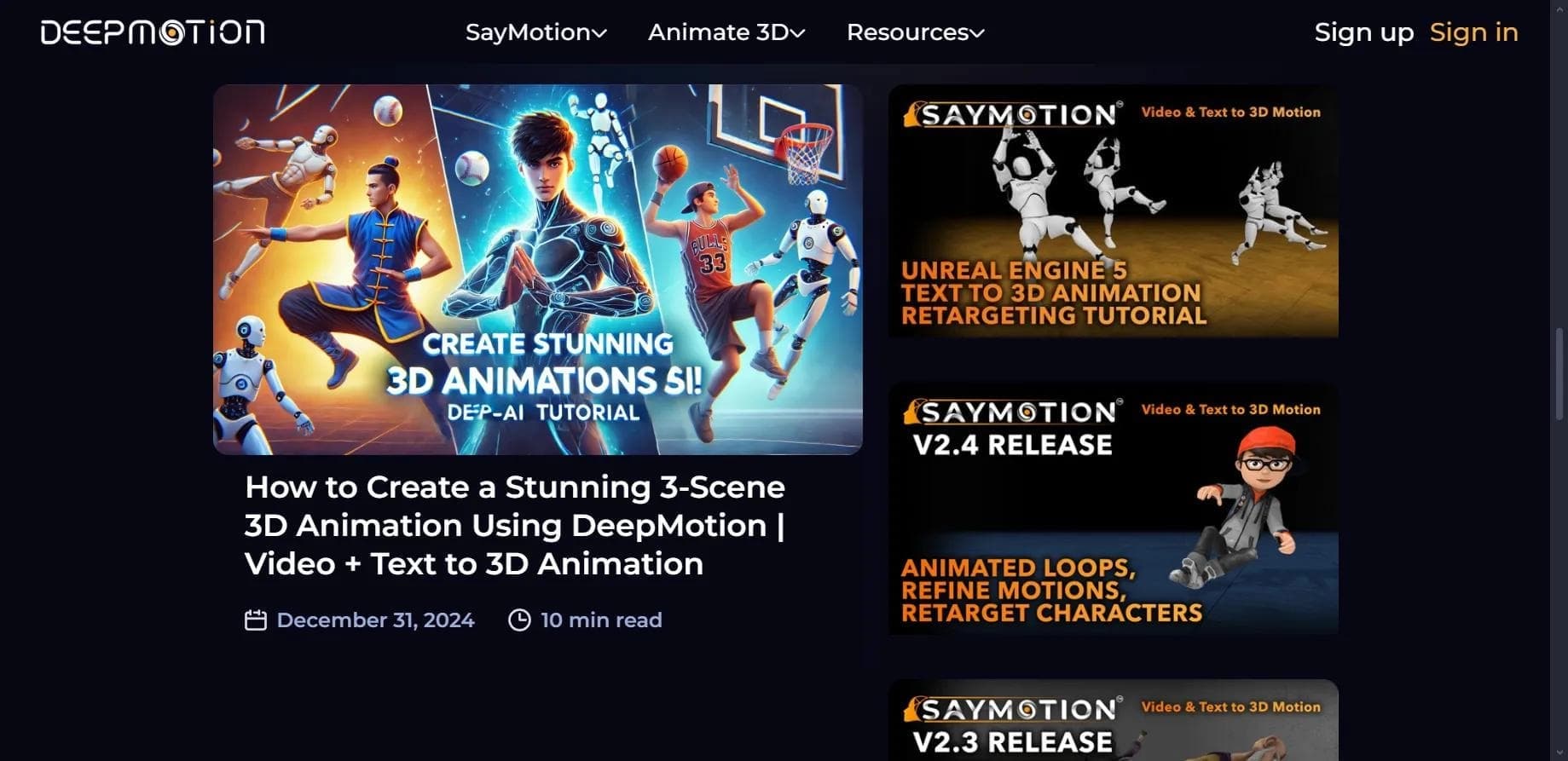

Web service for creating 3D animation based on video, text descriptions, or motion capture data without special equipment.

Browser-based platform for creating 3D objects, animations, and textures using AI from a text prompt.
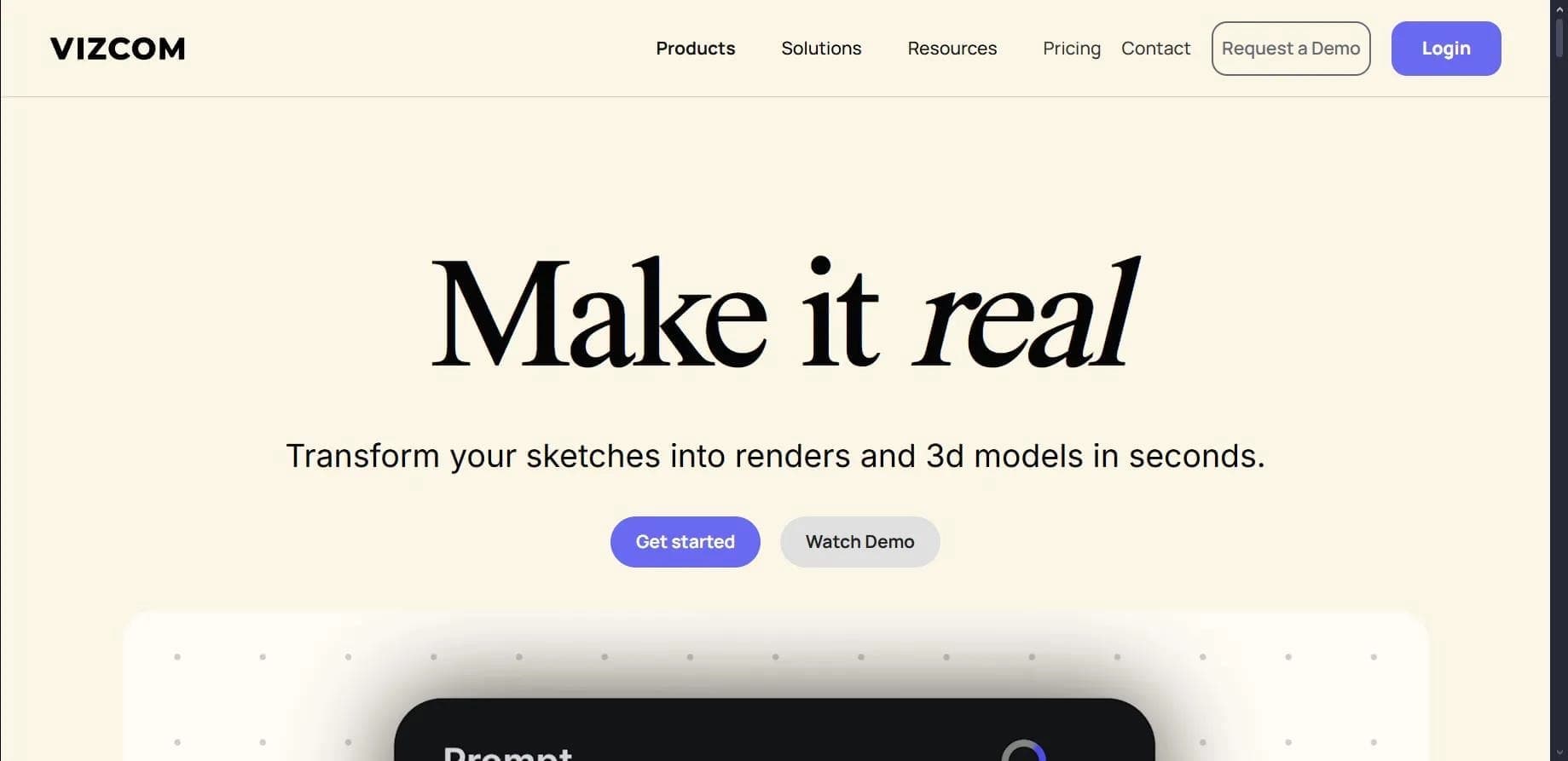

Platform for transforming sketches into photorealistic renders and 3D models.
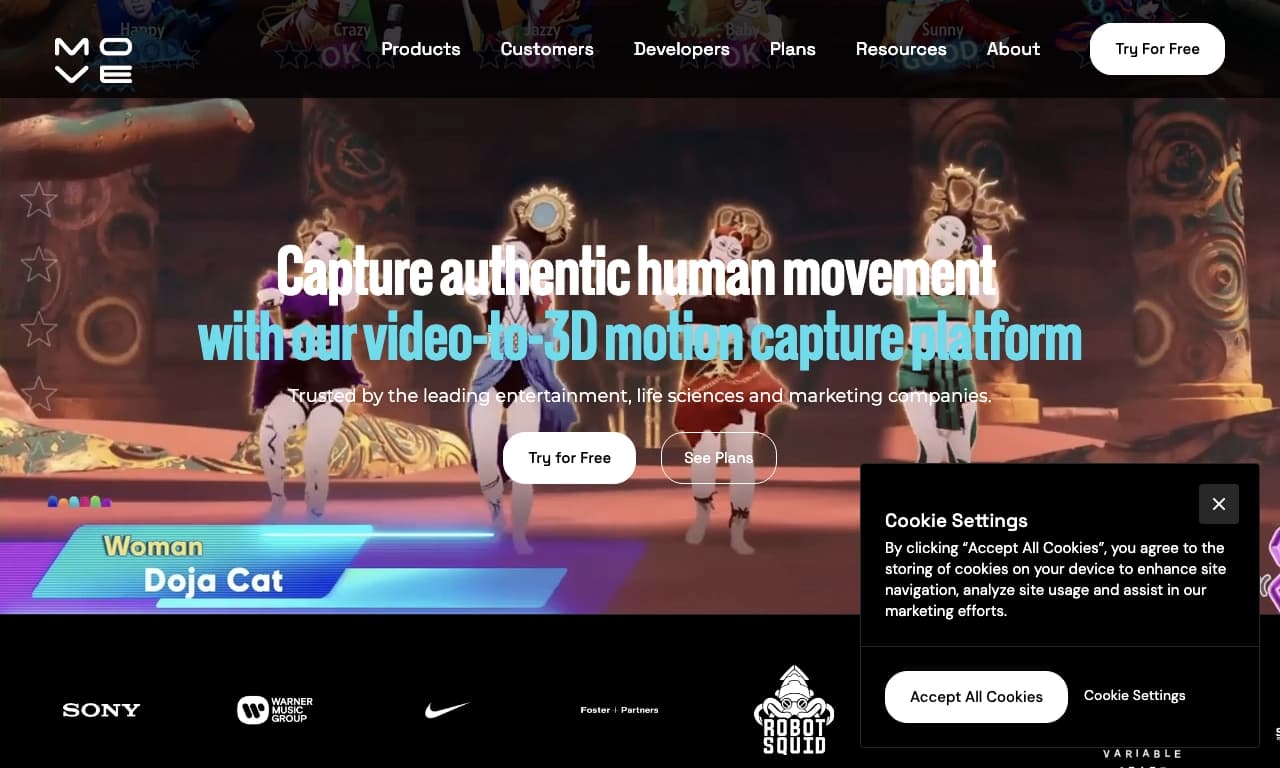

AI-powered tool for capturing human motion from ordinary 2D video recordings and converting it into 3D animation.
An AI-based web tool that turns ordinary 2D images into animated 3D scenes with a parallax effect.

Mobile app for creating detailed 3D models of real objects and scenes using regular video recording.