Ask Alice
A chatbot for discussing psychological issues and emotional experiences.
Overview
Ask Alice
Description of the Ask Alice neural network
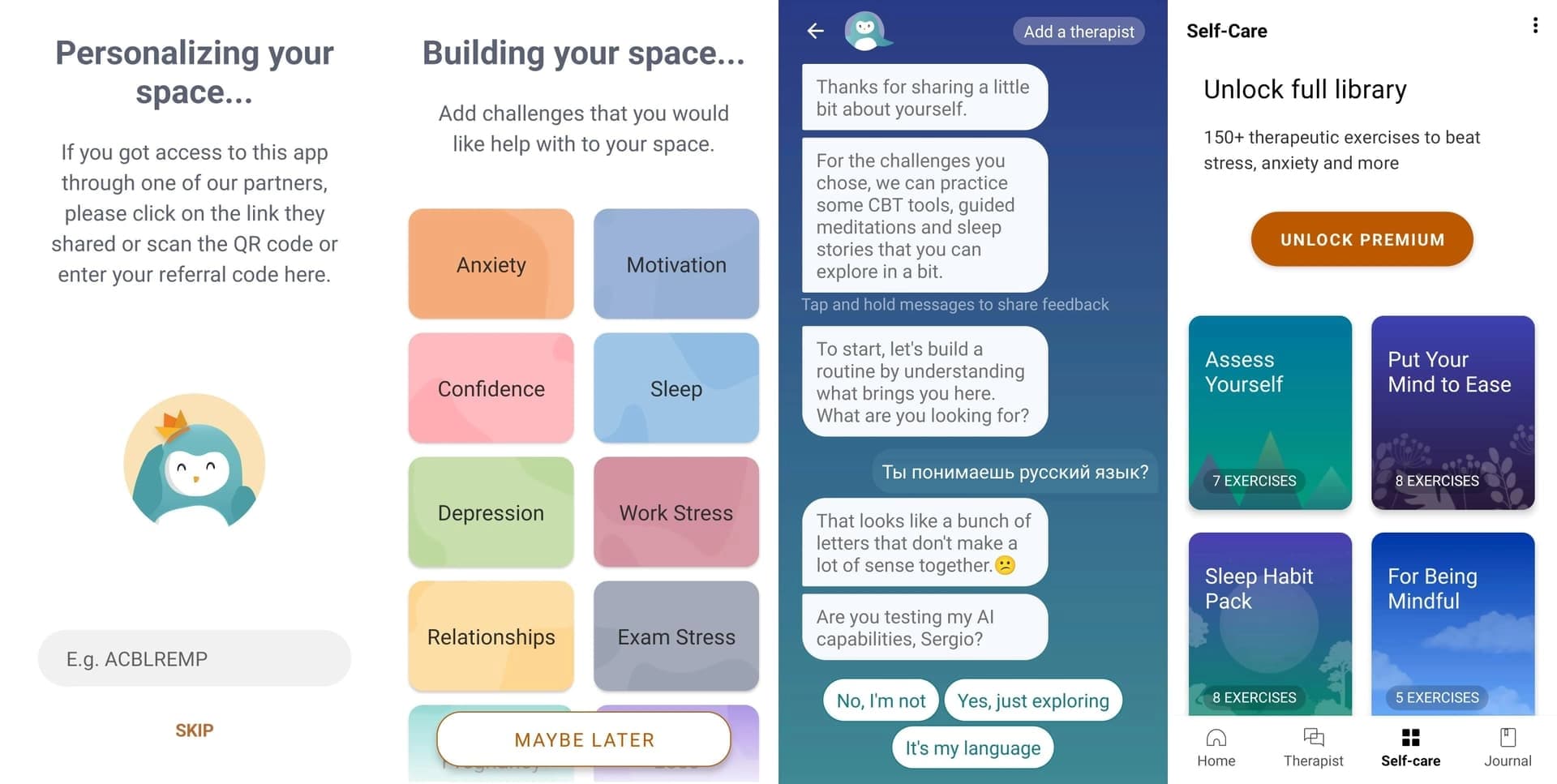
Ask Alice is a specialized AI assistant built on ChatGPT technology and designed for discussing psychological issues and emotional experiences. The tool is positioned as an accessible way to talk about what is troubling the user, without the need to book a session with a specialist or wait for the right moment.
Ask Alice's main task is to give a person a space where they can articulate their feelings, understand their current emotional state, and receive informational support on topics related to mental health. Unlike professional psychotherapy, this is a light and impersonal format of communication that helps relieve initial tension and structure one's experiences.
The neural network works as a chatbot, which makes it extremely simple and intuitive to use. The user communicates directly with the assistant, describing their situation or asking questions, and receives answers based on knowledge bases in psychology and emotional intelligence.
Characteristics of Ask Alice
| Characteristic | Value |
|---|---|
| Category | Mental health, Chatbots, Personal assistant |
| Base technology | ChatGPT |
| Interaction format | Text chat |
| Main purpose | Discussing psychological issues, emotional support |
| Target audience | People seeking an accessible way to talk about their experiences |
| Specialization | Psychology, emotions, mental well-being |
| Distribution model | Not specified |
Who is the Ask Alice neural network suitable for?
People experiencing emotional discomfort
Ask Alice is suitable for those going through a difficult period, such as stress at work, relationship difficulties, feelings of anxiety, or apathy. In such situations, it can be hard to start a conversation with loved ones or a specialist, and the chatbot can serve as a first step toward recognizing one's feelings.
Those who want to learn more about psychology
The tool is useful for people interested in psychology who want to gain information about emotional reactions, cognitive distortions, or ways of self-regulation. Ask Alice can explain basic concepts in simple language and provide examples.
Users who value anonymity
Since the conversation happens with a neural network rather than a person, there is no risk of being judged or misunderstood. This makes Ask Alice attractive to those who feel uncomfortable discussing personal topics even with close people.
How to use the Ask Alice neural network?
Starting a conversation
To get started, simply describe your situation or formulate a question in free form. For example, you can write about what is troubling you, what episode in your life triggered strong emotions, or simply ask how to cope with irritation.
Refining your request
To get a more accurate response, it is worth making your request more specific — indicate the duration of the state, its intensity, and contributing factors. The more context the assistant receives, the more relevant its recommendations will be.
Using it for reflection
Ask Alice can also be used for regular self-reflection — for example, summing up the day, analyzing your reactions to events, or tracking mood changes in a dialogue with the chatbot.
Key functions of Ask Alice
Support in difficult emotional states
Ask Alice can respond to messages about anxiety, sadness, disappointment, and other states. It can suggest grounding techniques, breathing exercises, or simply listen — depending on the user's request.
Explaining psychological concepts
The assistant helps make sense of psychological terms and concepts — for example, it explains what emotional burnout, panic attacks, procrastination, or toxic shame are and how these phenomena manifest in everyday life.
Self-help recommendations
Ask Alice can offer simple strategies for improving your emotional state: keeping a journal, changing activities, talking to loved ones, or reaching out to a professional psychologist when necessary.
Structuring experiences
Through guiding questions and clarifications, the assistant helps the user break a complex situation down into its components — separating facts from emotions, identifying triggers, and understanding what exactly causes discomfort.
Advantages of Ask Alice
Accessibility
Ask Alice is available at any time of day and does not require an appointment. A user can turn to the assistant at a moment of acute distress without waiting for a specialist's appointment.
Non-judgmental nature
The neural network does not judge the user, does not interrupt, and does not give advice in a directive manner. This creates a sense of a safe space for expressing even the most difficult feelings.
Ease of use
No special knowledge is required to get started — you just need to be able to formulate your thoughts in writing. The chatbot interface is familiar to anyone who has used messaging apps.
Informational support
Ask Alice can serve as an educational tool, helping the user better understand themselves and their emotional reactions through the lens of psychological knowledge.
Disadvantages of Ask Alice
Limited depth of analysis
Ask Alice is not a full replacement for psychotherapy. The neural network cannot recognize complex clinical cases, work with deep trauma, or provide long-term therapeutic support.
Lack of human contact
For many people, a vital component of psychological support is the living presence of another person — empathy, nonverbal cues, warmth. A chatbot cannot fill that need.
Risk of misinterpretation
Like any AI system, Ask Alice may misunderstand a request, especially if it is vaguely worded or contains complex cultural and personal contexts. This can lead to incomplete or inaccurate responses.
No emergency assistance
Ask Alice is not designed for crisis situations and cannot provide emergency support in acute conditions requiring immediate intervention by professionals. In such cases, specialized services are needed.
What tasks does Ask Alice solve?
Everyday emotional difficulties
Ask Alice helps cope with daily stresses — work conflicts, everyday fatigue, anxiety before important events. The assistant offers advice on emotional regulation and tension relief.
Clarifying feelings
People often experience mixed emotions and cannot accurately name what they feel. Ask Alice asks clarifying questions, helping to identify and name what you are experiencing — and therefore better understand it.
Finding information
Users can get answers to questions about stress symptoms, communication specifics, relaxation techniques, and other topics related to mental health.
Journaling practice
Ask Alice can serve as a daily tool for keeping an emotional journal, helping to record states and track their dynamics through the conversation.
Prices for Ask Alice
At the moment, no information is available about the cost of using Ask Alice. The source websites do not indicate whether the service is free, subscription-based, or uses a Freemium model. To find out current pricing, it is recommended to refer to the service's official resources or watch for updates in the tool catalog.
Terms of use for Ask Alice
The terms of use for Ask Alice are not described in detail in available sources. It can be assumed that the service requires an internet connection and a device with access to the chatbot, but the exact requirements for the browser, registration, or age restrictions are not disclosed. The distribution model — free, paid, or combined — is also unknown.
Availability of Ask Alice
Data on the geographic and platform availability of Ask Alice is limited. It is unknown whether the service has a web version, offers a mobile app, or is integrated into popular messaging platforms. The question of support for various languages and the presence of regional restrictions also remains open, so before you start using it, it is worth checking whether the service is available in your region.
How Ask Alice differs from similar tools
Narrow specialization
Unlike universal chatbots that answer any questions, Ask Alice focuses exclusively on psychology and emotions. This keeps the dialogue focused and prevents drifting into unrelated topics.
Based on ChatGPT technology
Through the use of modern language models, Ask Alice can conduct natural conversations, maintain the context of the discussion, and respond in a detailed and structured way — unlike simpler scripted bots with fixed response options.
Tuned for emotional intelligence
Ask Alice is designed from the ground up to work with feelings and experiences, which is reflected in the tone of responses, the choice of wording, and the techniques it suggests. Its specialized nature makes it more suitable for emotional requests than general-purpose voice assistants.
Conclusion
Ask Alice is an accessible and simple tool for those who want to discuss their emotional experiences and get basic psychological support in a chatbot format. It does not replace professional therapy, but it can be useful as a first step, a way to structure your feelings, or a source of information on psychological topics. Thanks to its accessibility and non-judgmental nature, Ask Alice helps users start a conversation about what really troubles them — even if for now it is not with a person, but with a neural network.