
5-day intensive vibe coding course by Google on building AI agents
Free five-day intensive from Kaggle and Google on building AI agents using the vibe coding technique.
Overview
5-day Google Vibe Coding Intensive: Building AI Agents
What is the 5-day Google Vibe Coding Intensive for Creating AI Agents?
This free five-day intensive is organized by Kaggle and Google. It focuses on building AI agents using vibe coding, an approach in which a developer interacts with a neural network in natural language, letting it generate and refine code. The course follows a “one day, one topic” principle: each day, participants dive into a new aspect of agent development.
The program covers the journey from the fundamentals of how agents work to deploying a finished solution in a production environment. Alongside theoretical blocks, the course includes hands-on exercises, communication with other participants on Discord, daily live streams, and Q&A sessions. The training ends with a capstone project; successfully completing it earns a certificate and a badge on your Kaggle profile.
Tool categories
- Education
- For developers
- AI assistants
Distribution model
Free
Features of the 5-day Google Vibe Coding Intensive for Creating AI Agents
| Feature | Value |
|---|---|
| Type | Course |
| Category | AI courses |
| Business model | Freemium (free) |
| Duration | 5 days, approximately 1–2 hours per day |
| Language | English (presumably) |
| Platforms | Kaggle, Google AI Studio, YouTube, Discord |
| Prerequisites | Python, basic understanding of AI |
Who is the 5-day Google Vibe Coding Intensive for Creating AI Agents for?
Developers with Python experience
The course is designed for those who already know how to program in Python and have at least a basic understanding of what artificial intelligence is. Having these skills lets participants focus on building agents rather than learning programming fundamentals.
Professionals familiar with AI
For those who have already worked with machine learning or AI models, the intensive helps organize their knowledge and learn to apply it in the context of vibe coding, a relatively new approach to development through natural language.
Who the course is not for
Complete beginners who are just starting their journey in programming and AI are gently redirected by the course authors to the previous version of the intensive. The current format assumes participants already have a solid foundation.
How to use the 5-day Google Vibe Coding Intensive for Creating AI Agents?
Preparing to take part
To start learning, you need an account on Kaggle and access to Google AI Studio. Registration for these services is free. After that, participants can sign up for the intensive and receive an email each day with that day’s assignments and materials.
Learning format
The course runs in a live format. Daily live streams on YouTube cover the topics of the day. Q&A sessions are also available, where you can clarify unclear points with the authors and other participants. There is also a Discord channel for informal communication and collaborative problem solving. All live stream recordings are saved, so you can learn at your own pace.
Completing practical assignments
Each day includes hands-on blocks that need to be completed in the Kaggle environment using Google AI Studio. The course ends with a capstone project, an independent assignment that demonstrates the skills you have acquired. Successfully completing the project earns participants a badge and certificate on their Kaggle profile.
Key features of the 5-day Google Vibe Coding Intensive for Creating AI Agents
Five-day learning structure
The intensive is split into five logical blocks, each devoted to a specific topic: from the basics of building agents to working with external APIs, agent-to-agent interaction, security, and finally deployment in a production environment.
Multi-platform live format
Learning is not limited to dry text. Participants receive daily emails with assignments, can communicate on Discord, watch live streams on YouTube, and ask questions during Q&A sessions. Recordings of all streams are available after each broadcast ends.
Final project with certification
Every participant who successfully completes the capstone project receives a badge and certificate displayed on their Kaggle profile. In addition, the course authors highlight the most active participants with merch and posts on Kaggle and Google social media.
Advantages of the 5-day Google Vibe Coding Intensive for Creating AI Agents
Completely free
Participating in the intensive requires no financial investment. All you need are accounts on Kaggle and Google AI Studio, which are also free.
Up-to-date and refreshed content
The second version of the course contains updated content compared with the first. This means participants get the latest methods and approaches to building AI agents with vibe coding.
Scale and community
The first run of this intensive brought together more than 1.5 million participants, making it one of the largest free AI courses. The massive Discord community lets you share experience, find answers to questions, and make useful contacts.
Recordings are saved
All live streams are recorded and remain available. This is convenient for those who cannot attend in real time or want to revisit difficult moments.
Drawbacks of the 5-day Google Vibe Coding Intensive for Creating AI Agents
Based on the available information about the course, it requires participants to already have Python skills and a basic understanding of AI. For complete beginners, the training will be challenging, and the authors recommend starting with a more basic version of the intensive. In addition, the language of the course is presumably English, which may be a barrier for Russian-speaking audiences.
What problems does the 5-day Google Vibe Coding Intensive for Creating AI Agents solve?
Teaching how to build AI agents using vibe coding
The main goal of the course is to teach participants to develop AI agents using natural language as the primary tool for interacting with code. This makes it possible to prototype and create working solutions faster.
Agent integration and interaction
The course covers connecting external APIs, setting up communication between agents, and having them work together. Participants learn to design systems in which multiple agents exchange data and perform distributed tasks.
Working with memory and context
One of the key topics is managing agents’ long-term state, memory, and context. This is essential for creating agents that “remember” previous interactions and can adapt to user behavior.
Security and testing
The course focuses on AI agent security, testing, and debugging. Participants learn how to avoid common vulnerabilities and make agents reliable.
Production deployment
The final block covers moving agents into a production environment: cloud deployment, monitoring, observability, and supporting running solutions.
Pricing for the 5-day Google Vibe Coding Intensive for Creating AI Agents
The course is completely free. All you need to participate is an account on Kaggle and access to Google AI Studio, both of which are also free. There are no hidden fees or paid modules.
Terms of use for the 5-day Google Vibe Coding Intensive for Creating AI Agents
To take part in the intensive, you need a registered Kaggle account and access to Google AI Studio. Registration on both platforms is free. The authors have not set any additional requirements, subscriptions, or paid conditions.
Availability of the 5-day Google Vibe Coding Intensive for Creating AI Agents
The course runs on several platforms at once. The main learning materials and assignments are hosted on Kaggle. Google AI Studio is used for hands-on work. Live streams and recordings are available on YouTube. Participant communication is organized on Discord. The language of the course is presumably English.
How the 5-day Google Vibe Coding Intensive for Creating AI Agents differs from alternatives
The main difference is the format: a five-day intensive with live streams, daily emails, and an active Discord community feels more like an intensive bootcamp than a classic online course with pre-recorded lectures. In addition, the course was developed with support from Kaggle and Google, ensuring a high level of expertise and access to up-to-date tools such as Google AI Studio. It is also important to note that the course is free, while many similar programs on building AI agents are paid. Finally, the focus on vibe coding (creating code through natural language) is a relatively new and rapidly growing technique, which sets this intensive apart from traditional machine learning courses.
Conclusion
The free five-day intensive from Kaggle and Google is a high-quality, up-to-date resource for developers already familiar with Python and basic AI concepts. It offers a structured deep dive into building AI agents using vibe coding, covering all the key stages from design and API integration to security and production deployment. The live format with live streams, Discord community, and feedback helps you learn effectively and stay motivated. Successfully completing the capstone project earns a Kaggle certificate, a useful addition to a professional portfolio. Given that the first version of the course attracted more than 1.5 million participants, this intensive can be considered a proven and in-demand way to quickly master modern approaches to AI agent development.
Frequently asked questions
See also
A sales automation platform that combines customer prospecting, deal management, and AI-powered forecasting.
AI editor for creating, editing, and publishing content with templates and prompts.

Financial platform with an AI assistant for managing accounting, taxes, and budgets.
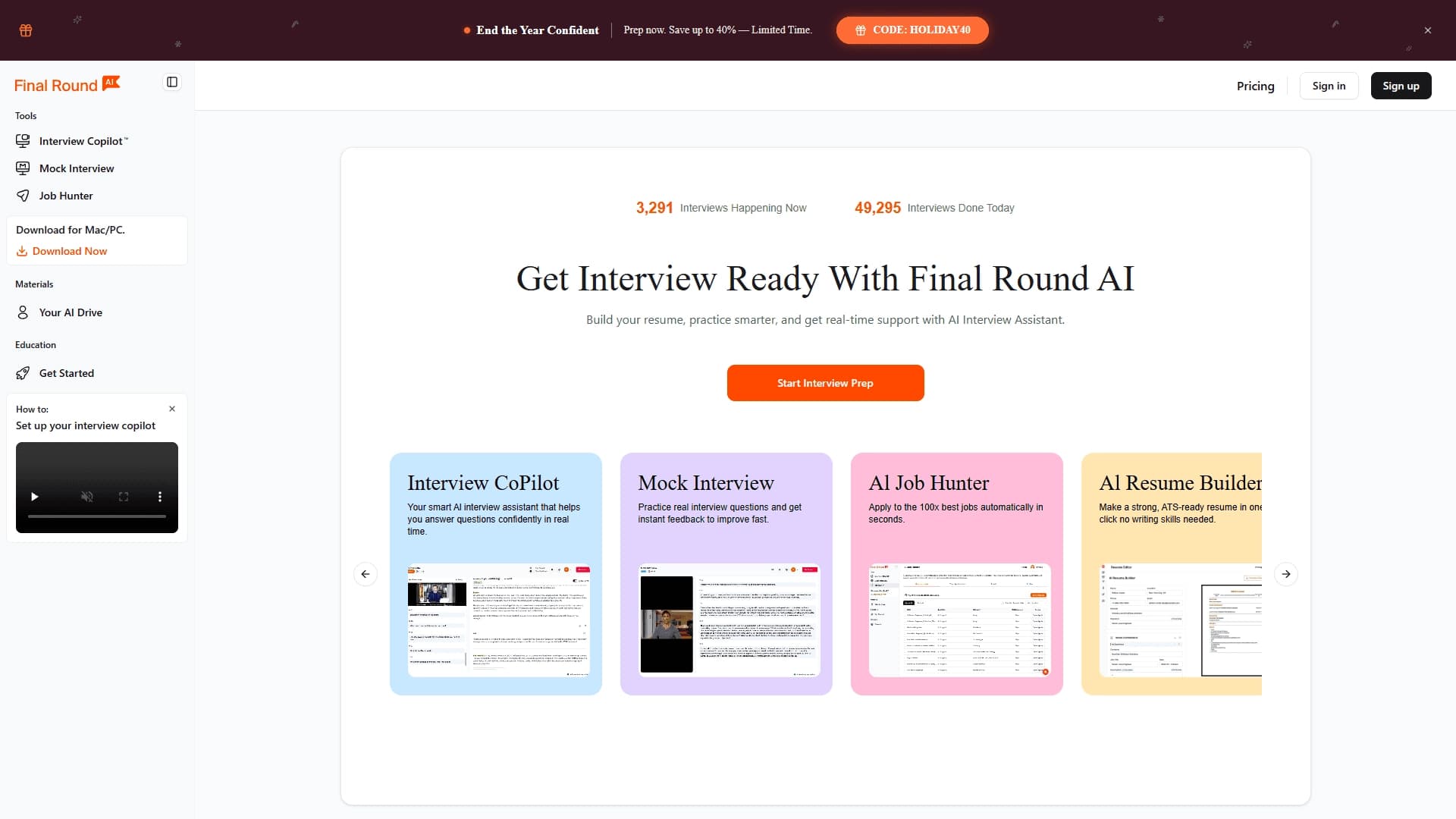
Platform for interview preparation with AI mock interviews and real-time support.
Enterprise language model platform focused on privacy and on-premise deployment.
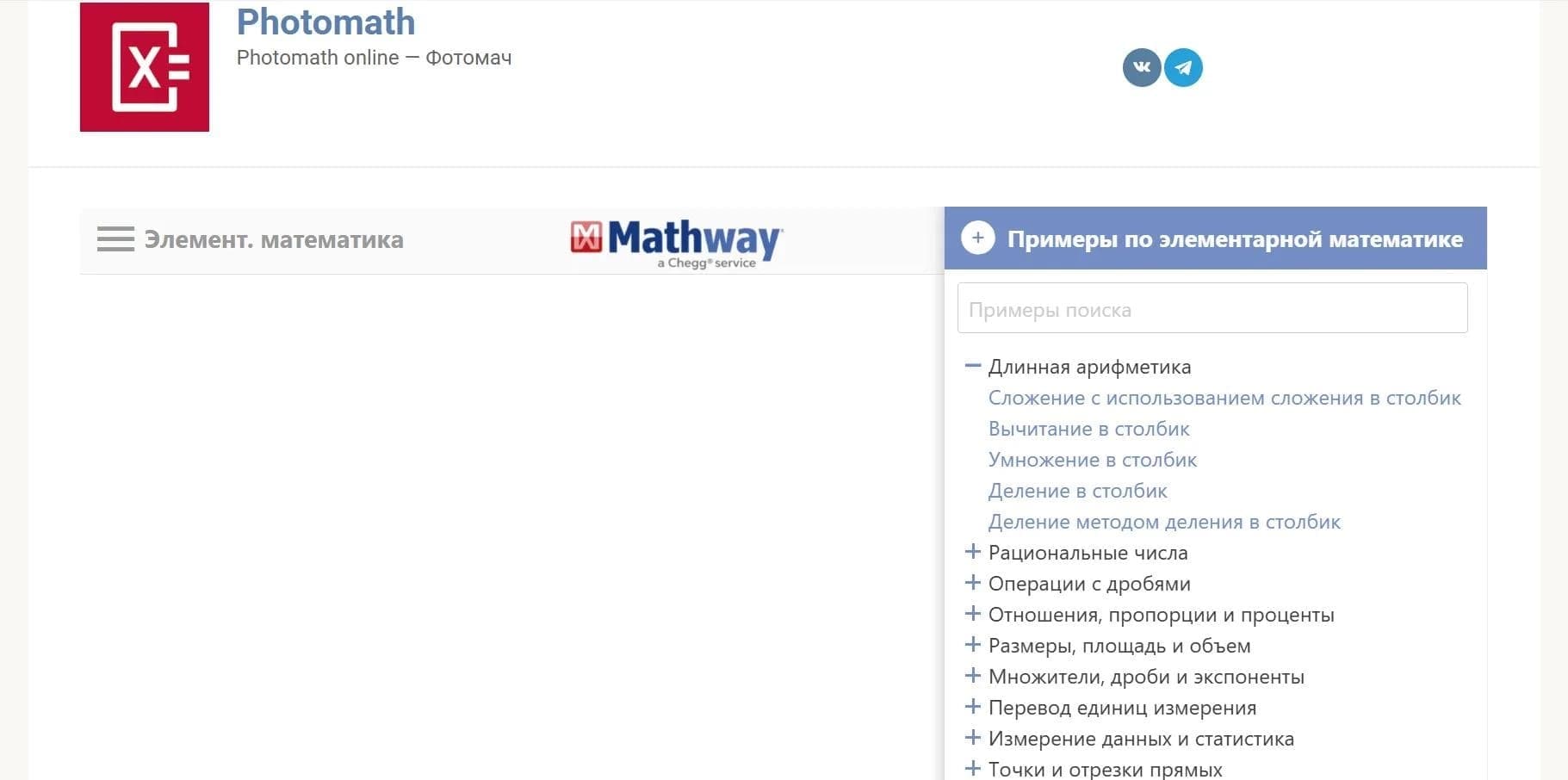

An app for solving math problems using a smartphone camera and step-by-step explanations.

AI-powered mobile app that helps with studying by analyzing text and photo queries.
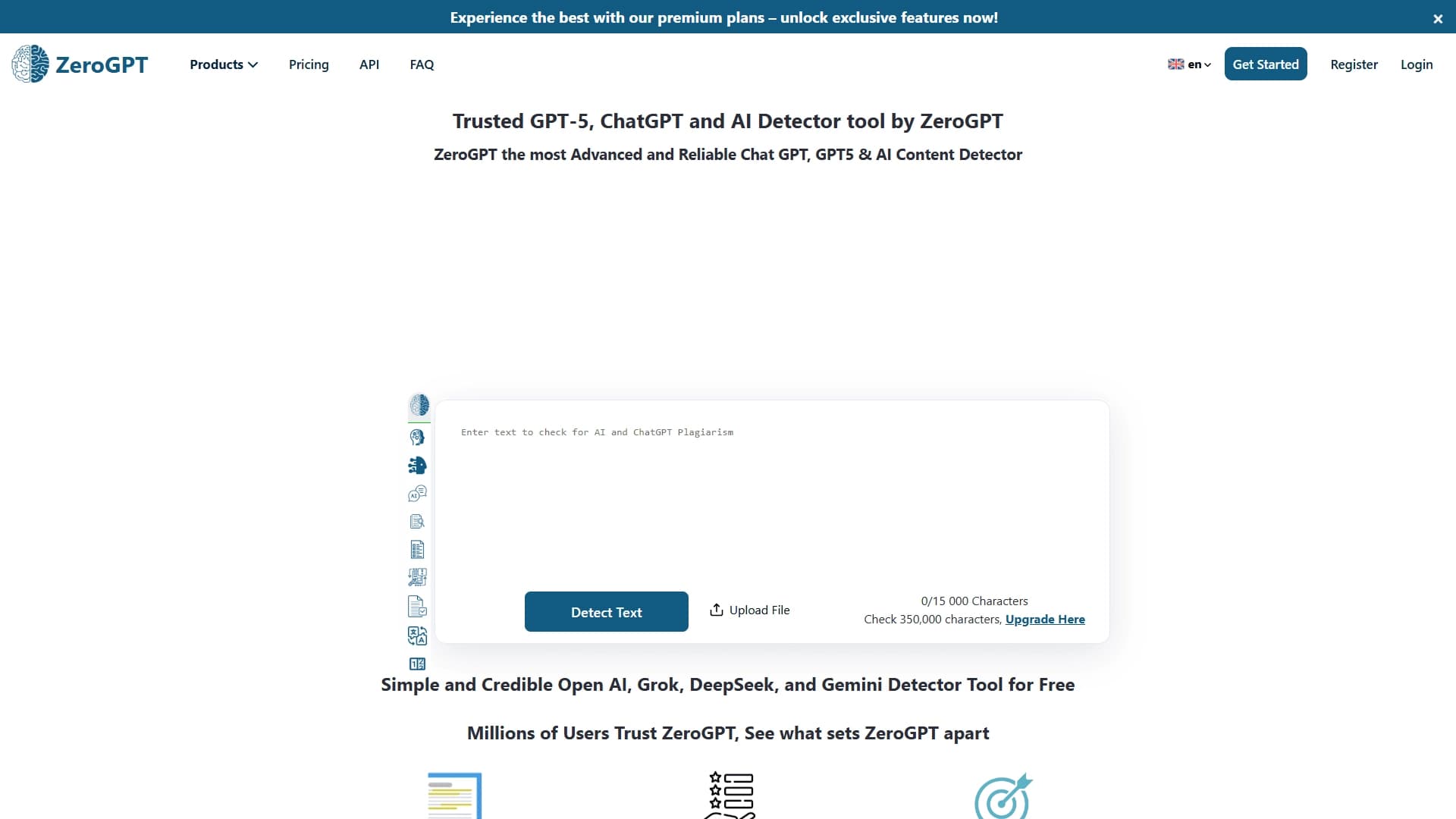

An online detector that determines whether text was created by a human or generated by neural networks.