
Instead of an introduction: two development philosophies
Programming today can be done in different ways. The classic path is writing code in an editor, then testing and deploying the project. The new approach is describing a task in almost plain language, and the tool itself turns it into a working AI agent or service. Both paradigms are actively evolving, and the choice between them depends on who exactly is going to build the product.
Wordware: a no-code AI agent builder
Wordware is a web environment where AI agents are assembled from clear text commands without traditional programming. It is designed for users without a technical background: the interface resembles a living document like Notion, where blocks of scenario logic can be rearranged and configured with the mouse. It includes branching, loops, and conditional transitions, so task complexity is not limited to simple question-answer scenarios. The platform works with multiple language models, giving you the freedom to choose the right one for a specific task. A finished agent can easily be turned into an API — deployment is done with one click right from the editor.
For non-technical users, this approach lowers the entry barrier to zero: there is no need to understand syntax and architecture; it is enough to articulate the logic of the work in words. At the same time, Wordware is not a toy: it allows building full-fledged assistants and data processors that can later be integrated into other systems.

Replit: a cloud IDE with AI on board
Replit is a cloud development platform where code is written, tested, and run directly in the browser. The project is accessible from any device, and built-in collaboration tools allow multiple developers to edit files in real time. The AI assistant built into the editor makes the environment even more productive: it analyzes the file context and provides inline suggestions as you type, helps generate entire blocks of code from a text prompt, explains unclear fragments, and suggests refactoring.
For a professional developer, Replit proves to be a convenient sandbox where you can quickly test an idea without setting up a local environment. Once the work is done, the application is deployed in a few clicks from the same cloud. Classic code remains the foundation, and AI only speeds up the routine — this approach is comfortable for those who already know how to program and want to keep full control over the source code.
Comparison and recommendations
If you put Wordware and Replit side by side, the main difference is obvious: the first platform hides code, the second makes it the central element. Wordware wins in ease of learning and speed of creating an AI agent prototype for a non-technical specialist. Replit, in turn, offers a familiar development environment with powerful autocomplete and the ability to fine-tune every detail of the application.
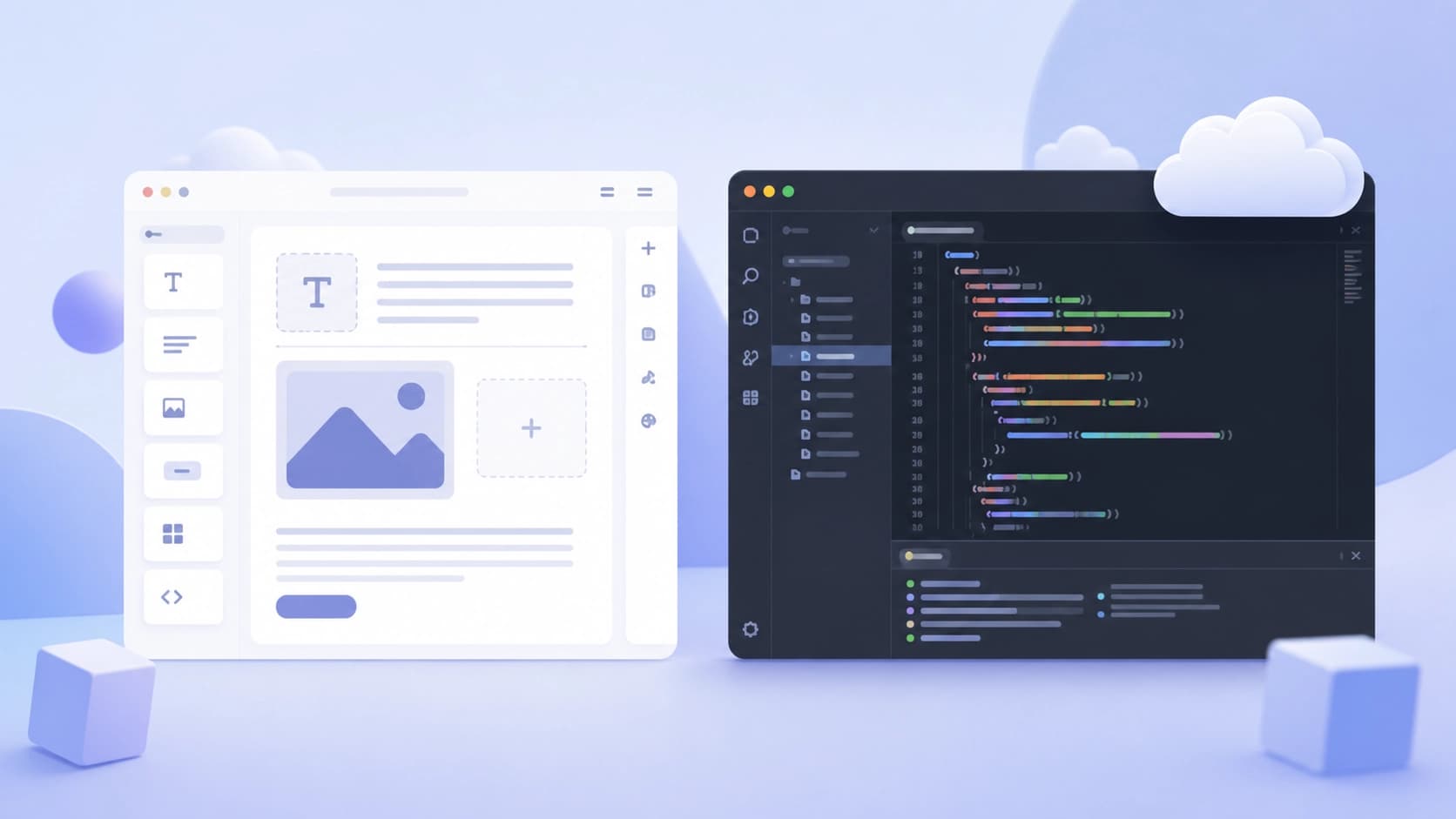
- Interface: Wordware resembles Notion and requires no learning curve; Replit is a standard IDE, familiar to anyone who writes code.
- Natural language power: Wordware is built entirely on natural language commands; Replit uses prompts for code generation, but the final result still requires programming skills.
- Autocomplete: Wordware has no advanced autocomplete — the focus is elsewhere; Replit provides contextual suggestions, refactoring, and explanations.
- Collaboration: Wordware is designed for cross-functional teams (analysts, product managers, developers); Replit is for collaborative code development with instant synchronization.
- Deployment: Wordware publishes an agent as an API in one click; Replit deploys an application from the cloud just as quickly.
- Entry barrier: Wordware is accessible without programming knowledge; Replit's barrier is higher — basic coding skills are required.
The conclusion is simple. If you are not a developer and want to build an AI agent that works on its own, choose Wordware. If your task is to write regular software or web services, and AI is needed as a smart assistant in the coding process, then Replit is the more appropriate choice.
Useful alternatives
There are other tools on the market that cover similar needs. For code autocomplete, it is worth looking at GitHub Copilot — it integrates with popular editors and also offers contextual suggestions. Among free options, Codeium stands out, as it can generate code and explain unclear parts. Among older tools, Kite is sometimes mentioned, but its development has stopped, and it is no longer a good bet for new projects. All of them fall more into the category of AI assistants for code, while the builder discussed above remains a niche no-code solution for creating agents.