What is Warp Factories
On August 18, 2026, Warp introduced the Warp Factories system — a ready-made "framework" for building AI code factories. The idea is to free teams from the routine of assembling their own infrastructure and give them a working environment for deploying agents. Essentially, it's an infrastructure layer that handles agent management and offers a clear roadmap for their adoption.
At the core of the system are classic software development stages: triage, specification, implementation, review, and verification. This approach resembles a typical software pipeline, but with an important twist — each step can be automated independently. The team decides where to bring in AI and where to keep a human in the loop. This allows for gradual adoption without overhauling the entire process at once.

Another advantage is the lack of tight coupling to a specific model. Warp Factories supports both Codex and Claude Code, and also allows connecting custom code models and wrappers. This "open" approach sets the system apart from closed platforms: teams can experiment and choose tools that fit their tasks without migrating to a proprietary stack.
Integrations and transparency for teams
Any development infrastructure needs to fit into existing processes, and Warp Factories understands this well. The system integrates with popular ticketing systems Linear and Jira, as well as corporate messengers Slack and Teams. Tasks flow into agents' work directly from the tracker, and results land where the team is used to communicating.
For managers and team leads, there's a monitoring dashboard. It allows assessing the factory's overall performance, comparing metrics across different configurations, and controlling token spend. The latter is critical: without such oversight, agent costs can quickly blow the budget. Additionally, the system supports self-improvement loops — it analyzes its own processes and, over time, automates operations that previously required manual intervention. This reduces the operational load on the team managing the factory.

Who needs this: a market perspective
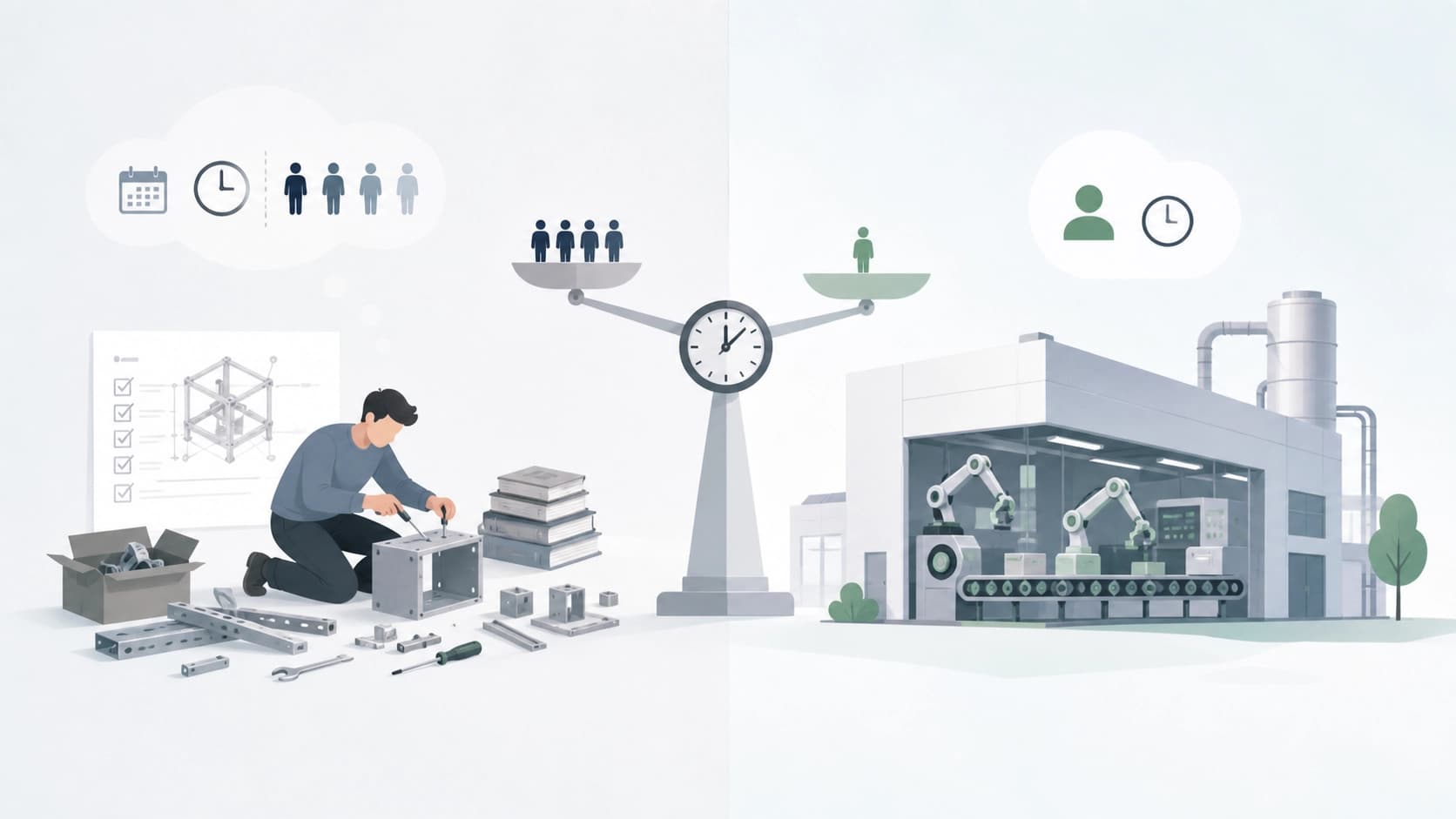
According to Warp CEO Zack Lloyd, the primary target audience for Warp Factories is small companies that lack the resources to build such infrastructure on their own. And that makes sense: building a "factory" in-house requires cloud deployment of agents, managing them, setting up the working environment, organizing memory between agents, and building eval systems. For a startup or a small product team, that's a huge undertaking — easier to solve with a ready-made tool.
Lloyd notes that Warp already automates 30–35% of its weekly tasks using its own agents and expects that share to grow. That said, Warp Factories isn't positioned as a replacement for engineers. It's more of a convenient wrapper that gives developers a simple way to interact with agents and scale their capabilities. Agents take on the routine, while people focus on what requires context and decision-making.
Interestingly, large companies have already moved down this path on their own. For example, Stripe built an internal "minions" system to automate tasks in its codebase, and Ramp uses a background agent to monitor already-deployed code. Now, thanks to Warp Factories, similar mechanics are becoming accessible not only to giants with large engineering teams, but also to companies that want to use AI without having to build their own platform from scratch.