
Temple — a temple-worn gadget by Deepinder Goyal: release dates, the Entropy metric, and open questions
The wearable tracker Temple attaches at the temple instead of the usual wrist and continuously monitors brain and body metrics around the clock. Preorders for a limited batch will open soon, with shipments planned for 2026; the manufacturer has not yet disclosed the price or specifications.
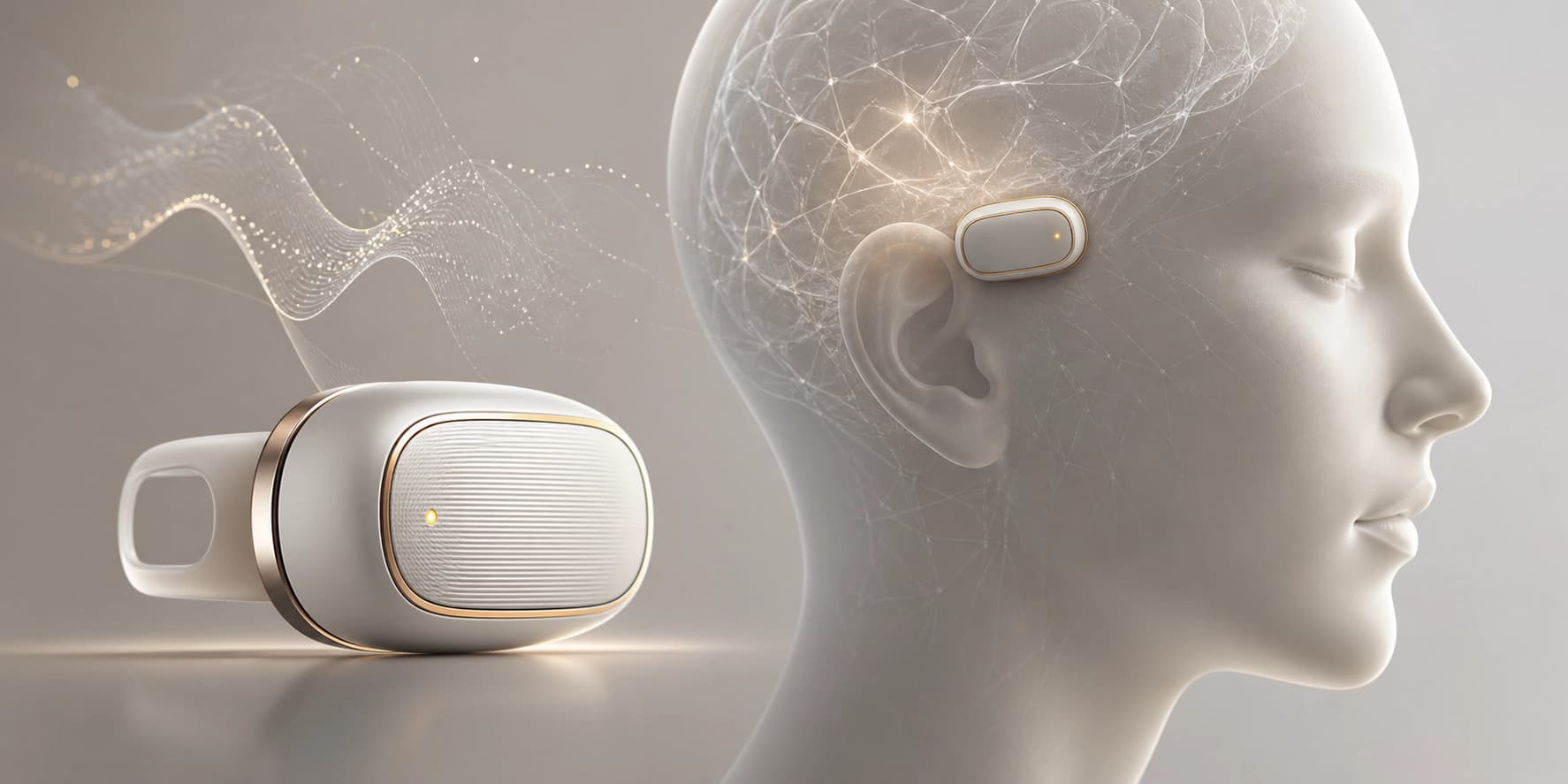
Idea: a sensor at the temple instead of a bracelet on the wrist
Most wearable trackers live on the wrist, and that's a compromise. The arm is almost always in motion, the signal arrives with interference, and there isn't much to measure beyond pulse and blood oxygen. Project Temple proposes moving the measurement point elsewhere — to the temple or forehead area.
The logic behind this decision rests on two arguments at once. First, blood vessels pass nearby. Second, this area is far more stable than an arm that gestures, types, and lifts objects dozens of times an hour. Hence the promise of a continuous stream of data — not only bodily, but also related to brain activity.
Project founder Dipinder Goyal says the gadget tracks cerebral blood flow, oxygenation, and heart rate right during everyday activities, not just in a lab on a couch.
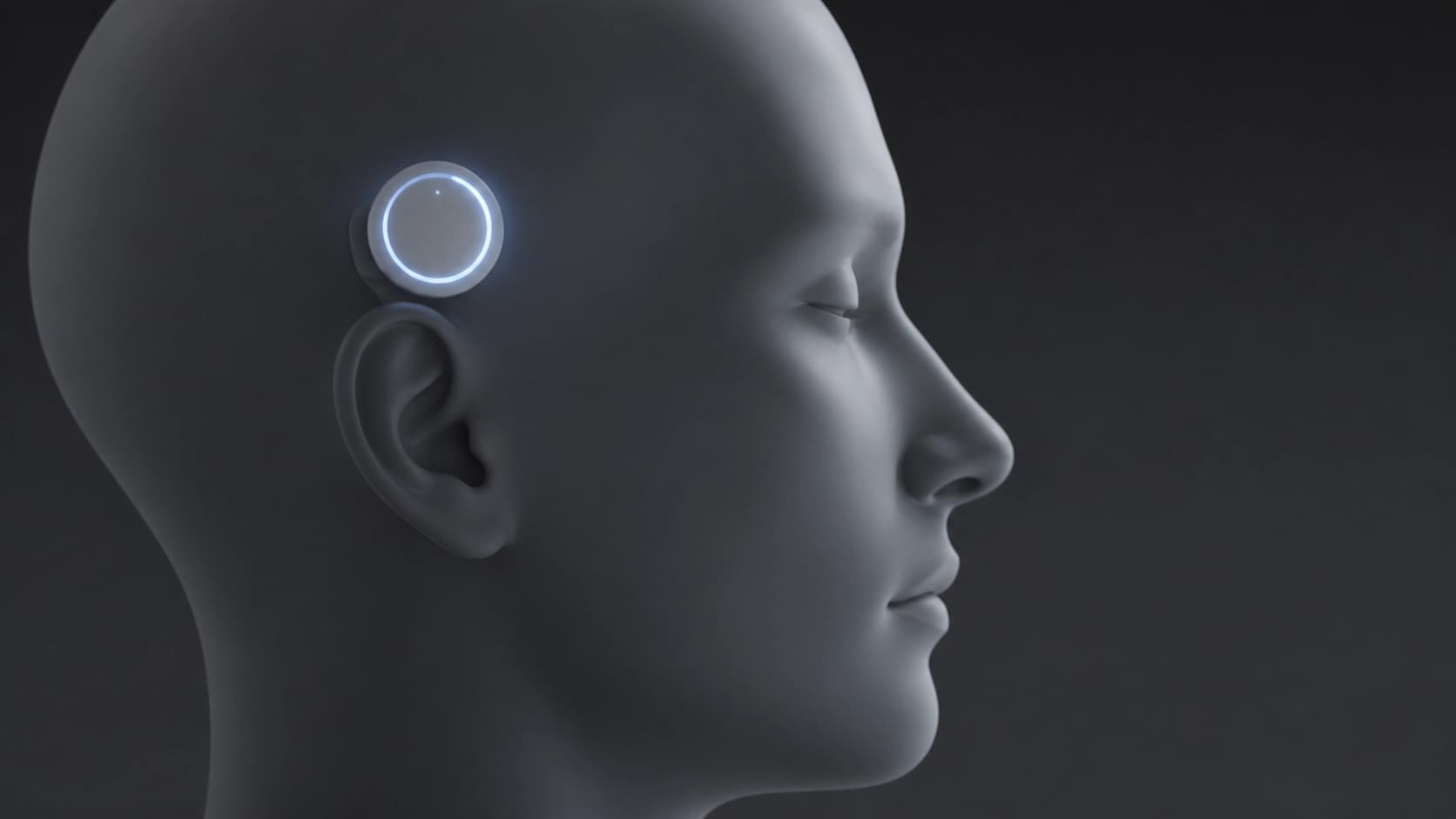
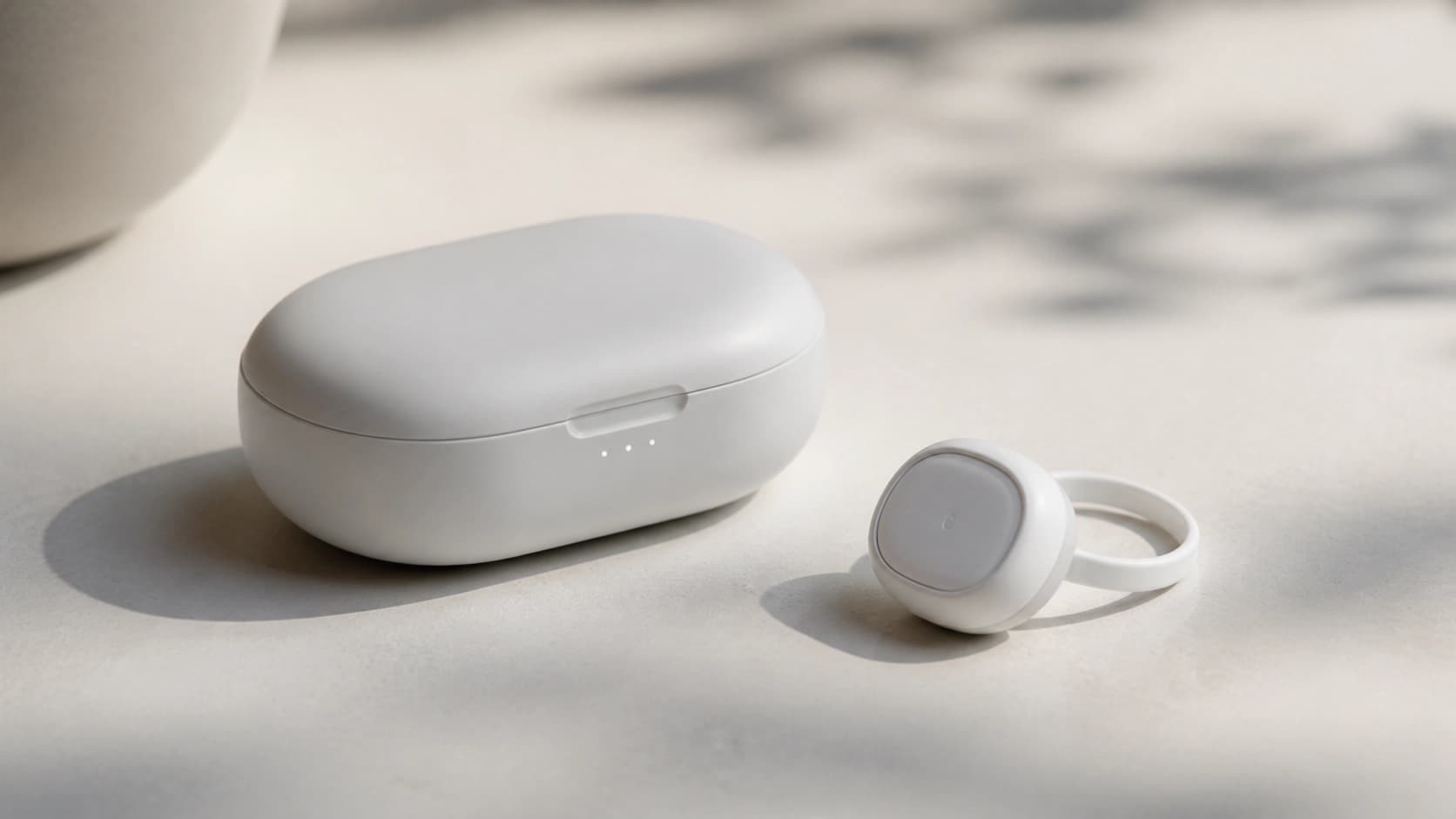
It's worth noting separately that the device has shrunk noticeably. According to Goyal, the new version takes up less than half the volume of the previous prototype. What the final casing looks like, how much it weighs, and how it attaches to the head — none of that is being shown publicly yet.
Timeline: 2026 and a queue for a limited batch
The launch is planned for 2026. The wording in the announcements diverges slightly: some say "in 2026," others say "later this year." So it's wiser to keep the date in mind as a guideline rather than a firm promise.
What's known more concretely: preorders for a limited series should open soon, and shipments are still planned for 2026. Early testing is already behind them — the first hundred units are being prepared for so-called founding users, that is, the very first users of the product.
The gadget wasn't tested only on employees. Among the testers are athletes, including badminton player P. V. Sindhu. For a device that measures load and recovery, this is a fairly logical proving ground: professional athletes have their routines and bodily responses mapped out minute by minute.
Entropy: one number instead of a dozen charts
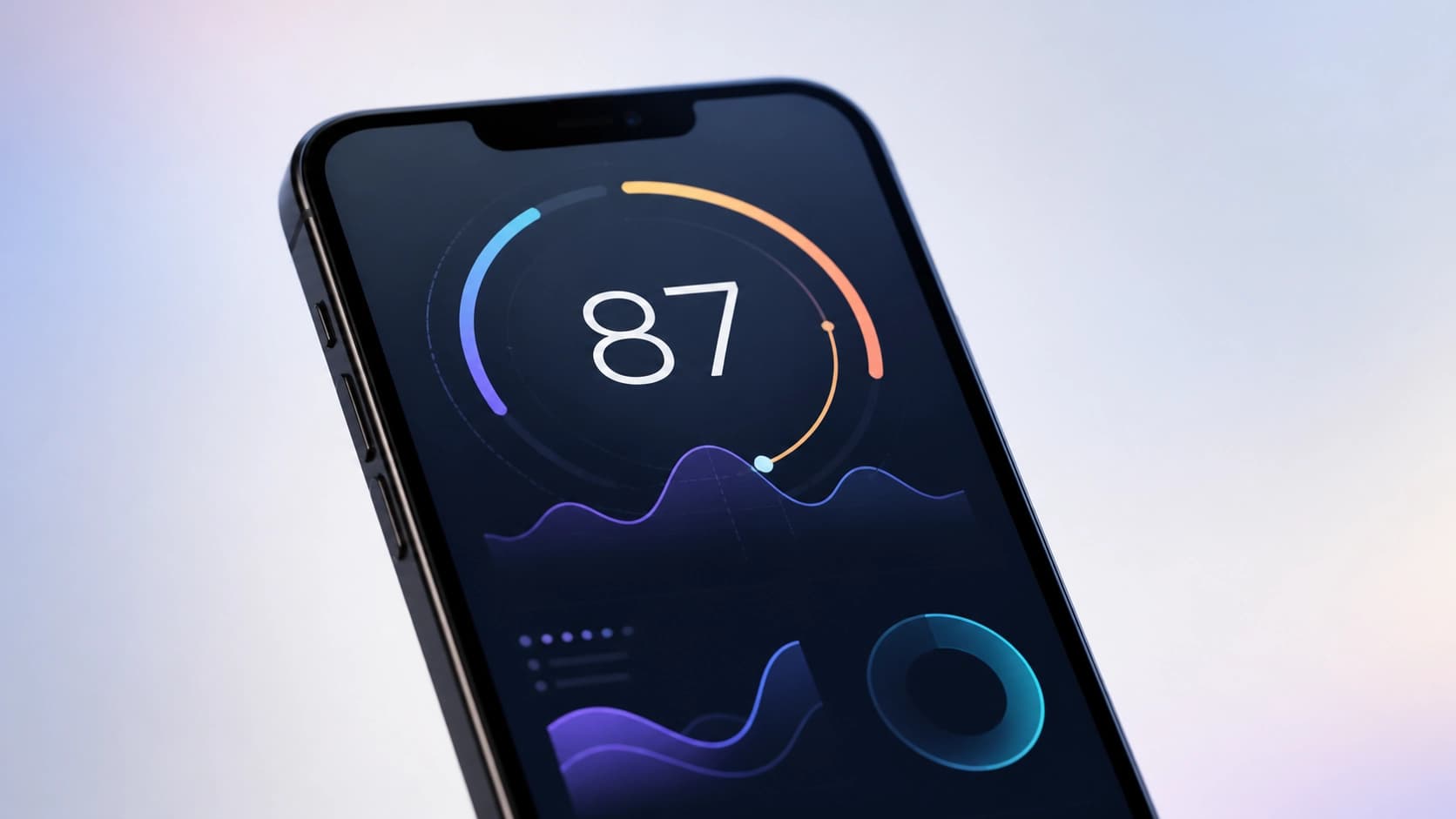
The project's main conceptual bet is its own metric called Entropy. It recalculates every second and lives on a scale from 1 to 250.
Goyal publicly announced the finding in mid-June 2026 — in a post where the biomarker first received the name Entropy™. He describes the metric itself as an indicator of the "real cost" of the body simply staying alive. The phrasing is unusual, but the essence lies in trying to reduce disparate physiological signals to a single number that can be read in real time without poring over charts.
The key claim is that the metric can supposedly only be obtained at the temple and nowhere else. If this is confirmed by independent research, we're looking not at another sleep tracker but at a bid for a new category of measurement.
Resting and Max: two numbers from one
Within Entropy, the metric splits into two levels. A low Resting Entropy is interpreted as a sign of efficiency — the body spends fewer resources on basic processes. A high Max Entropy, conversely, reads as a reserve of physical power.
For the user, this presentation is convenient: instead of raw pulse and oxygenation values, they get two clear numbers — how economically the body works at rest and how high it can climb under load.
What shifts the readings
The list of factors affecting the numbers is broad: sleep, stress, physical exertion, food, caffeine, meditation, and cold exposure. This is both the metric's strength and its vulnerability.
The plus is that it responds to lifestyle and gives feedback here and now. The minus is the very same thing: if literally everything affects Entropy, the user needs to understand what exactly they changed, otherwise the number turns into noise. Goyal shared screenshots of the app showing how the metric and pulse change during meditation and a cold shower.
Price, validation, and what they're not saying
The biggest open question is how much it will cost. Early estimates hovered around a thousand dollars, and more recent expectations are in the same range. The spread is substantial, and until there's an official price, it's worth being cautious about relying on these numbers.
The second topic is independent verification. For now, Entropy remains an internal company metric, so any of its merits rest on the developers' word. When an experiment turns into a mass-market product, the question of external research becomes not academic but reputational: the buyer is paying for a number that there's no way to check.
The third gap is technical specifications. Weight, dimensions, battery life, sensor accuracy, privacy of brain-activity data — there's almost no public information on these points.
The indirect context is telling too. The project raised funding at a valuation of around 190 million dollars and sums on the order of 54 million, while pivoting toward "brain" wearables. In other words, the bet on the temple isn't a side experiment but a deliberate turn in the entire strategy.
The bottom line
Temple is a rare case of wearable electronics trying to break away from the usual race to count steps and calories. The idea of a measurement point at the temple, a single Entropy metric, and the split into Resting/Max sound coherent, but you won't be able to test it on yourself until 2026.
What to watch next: the opening of preorders, the official price tag, the disclosure of specs, and the first independent tests. If the metric holds up under scrutiny from third-party labs, a new measurement standard could emerge for the wearable category. If not, it'll remain a beautiful interface with a number you really want to believe in.
Frequently asked questions
Related materials
All materials
Canonical Polynomial Invariants for Diagnosing RL Simulator Failures: Where Are They Actually Useful?
The study examines whether incorporating physical laws into learnable dynamics models is justified: invariants extracted from trajectories and reduced to canonical form using Gröbner bases yield modest forecasting gains, but prove powerful for diagnostics, enabling the localization of violated constraints and identification of specific erroneous parameters.
10 November 2026
AURA-Eval: How to Check Whether an LLM Agent Recognized a Risk and Changed Its Next Step
The framework evaluates LLM agents’ behavior not by their final verdict, but by how they respond to risk at key decision points: tool-call trajectories are interrupted, after which the model must continue reasoning and acting, while a panel of LLM judges assesses risk detection, the nature of the step, and its safety. Across 1,249 tasks drawn from 157 R-Judge trajectories, unsafe actions become more frequent among 20 models when no safe path is available, and removing oversight before execution turns 52.3% of initially safe cases into unsafe ones.
10 November 2026
Chern–Simons Reservoir Memory: Autonomous Connectivity Dynamics and Density Transport
The article explores how a reservoir preserves the history of input signals both in its density distribution and in its geometric degrees of freedom. A comparison of four mechanisms shows that current creates a separate connected component that alters the subsequent density response, while accounting for all measured features yields a small improvement in decoding pulse order.
10 November 2026