
Perplexity AI: how smart search with answers and links works
Here’s how Perplexity stands out from typical search engines: it pulls fresh data from the web, formulates concise answers, and shows its sources. We also cover pricing, key strengths, and typical use cases.

Perplexity AI is a search engine that combines the capabilities of traditional search and conversational AI. Instead of a list of links, it provides a ready-made answer to a question, and alongside it shows the sources it relied on. This saves the user time and gives them the essence right away.
What is Perplexity AI
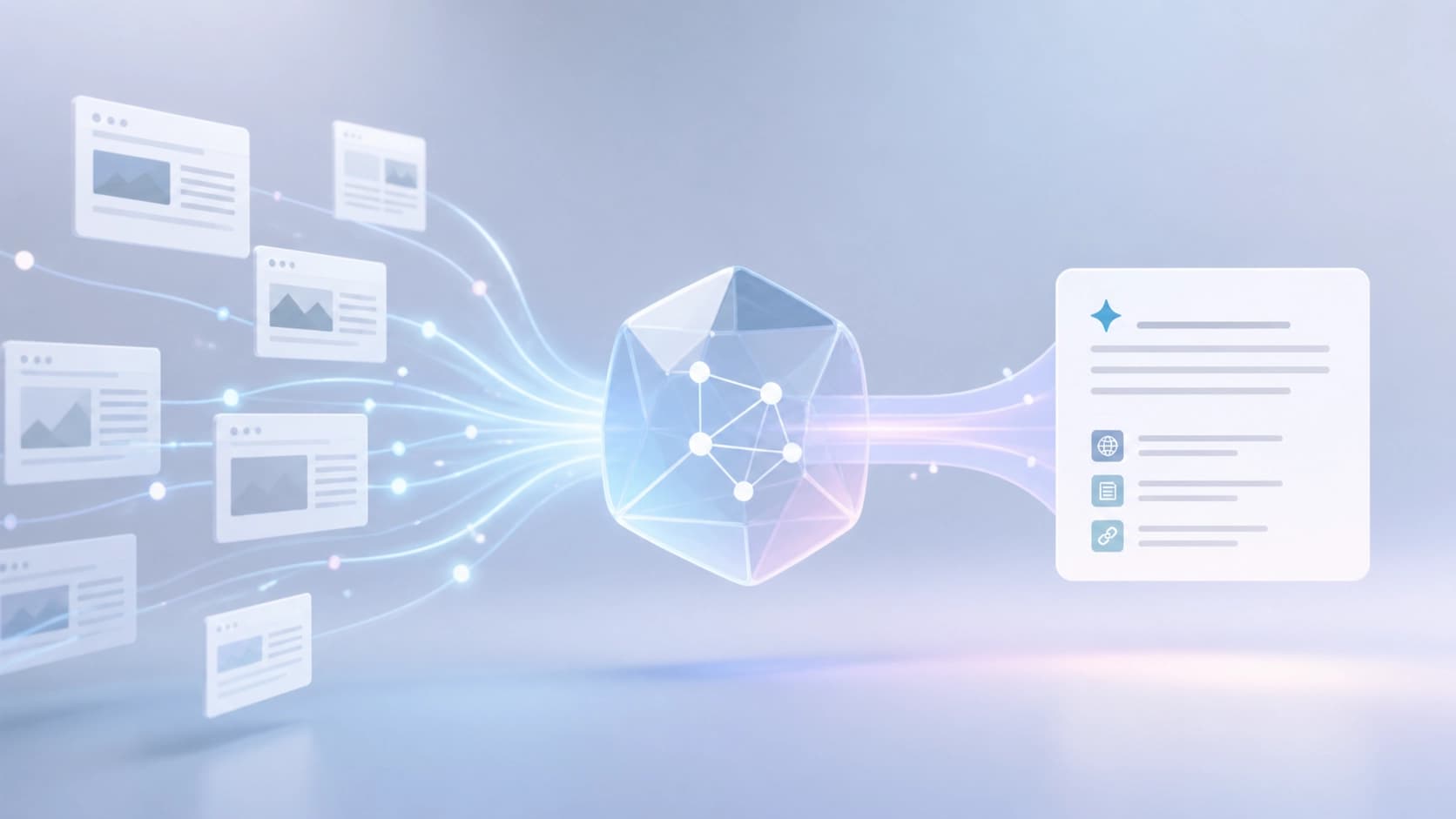
Perplexity AI is a search service based on large language models. It is often called a hybrid of Google Search and ChatGPT: from a search engine, it has access to a vast array of web pages and daily indexing; from a chatbot, it has the ability to formulate answers in natural language. The service can find fresh news and events because it regularly updates its database.
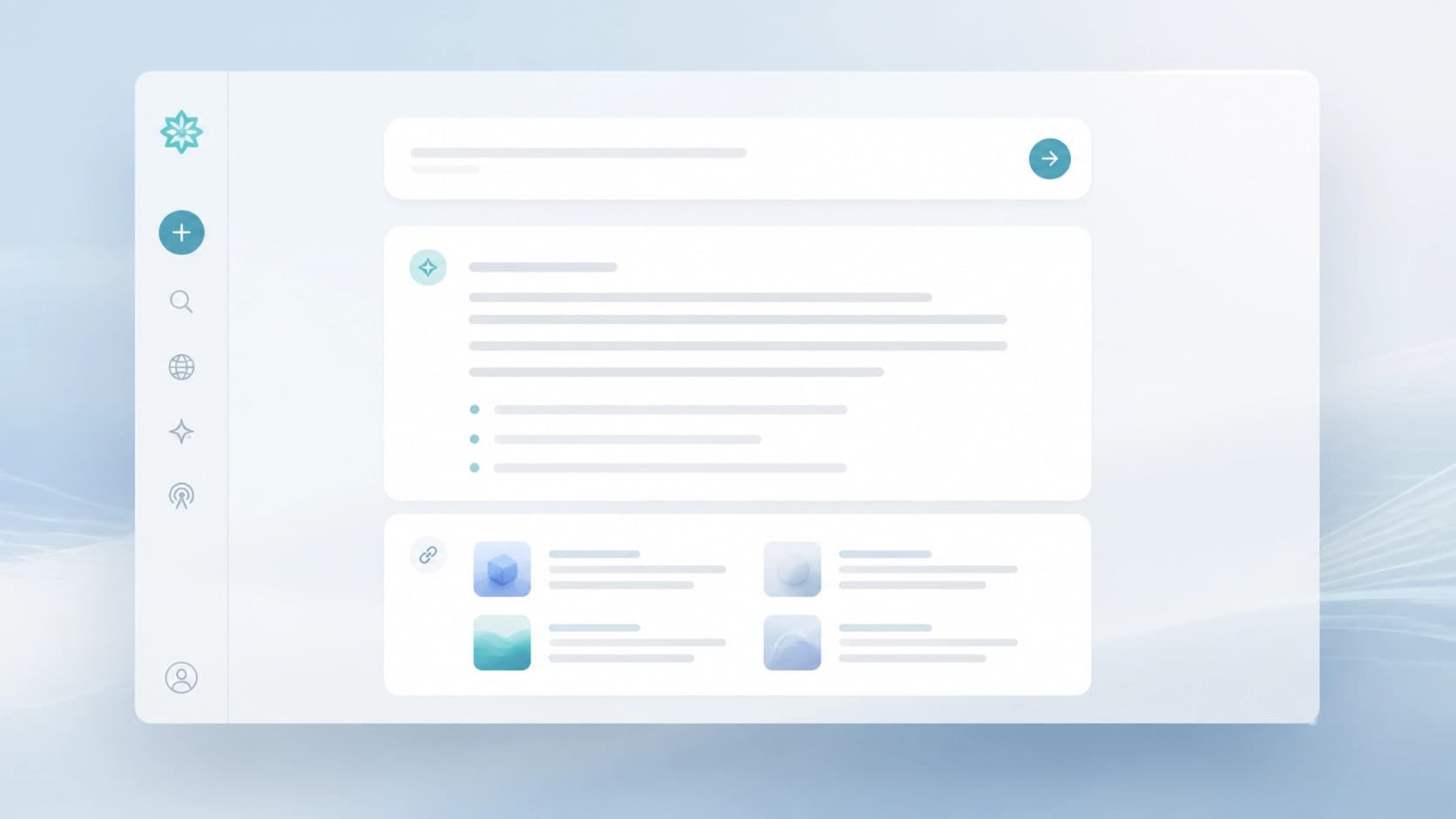
This is not just a list of links, but a concise summary with citations. The user can immediately go to the original source to verify information or explore details.
How smart search works
It is based on several language models: for example, GPT-4 and Claude 3, as well as proprietary in-house developments. They understand queries in conversational form and can process context — even if the question is phrased imprecisely, the AI will clarify details.
In the advanced Pro Search mode, the system asks clarifying questions to better determine what the user is looking for. Additionally, you can upload documents and images, and the model will take them into account when preparing the answer. This is convenient when you need to analyze a long report or compare data from multiple files.
The answer is not just a retelling of a single source, but a synthesis of information from different places. The system aggregates data, highlights the key points, and formats the result as coherent text.
What opportunities are available to the user
Perplexity AI provides real-time search, context understanding via NLP, summarization of long materials, and work with multiple sources simultaneously. The service interface is minimalist and clear, and features are constantly being expanded.
A separate option is image generation. It allows you to visualize results, for example, when you need to see a comparison table or clear infographics. This makes the answer even more illustrative.
Why it is convenient and what alternatives exist
The main advantage is the natural conversational format. The user interacts with the system as with an interlocutor and receives not raw links, but a ready-made answer with cited sources. Additionally, the service offers follow-up question suggestions, helping to dive deeper into the topic.
In the paid version, Perplexity Pro offers credits for inviting friends and an API for developers — this allows integrating search into your own projects. The choice between several LLMs, including multimodal ones, makes the tool flexible for different tasks.
Among the alternatives, it is worth highlighting ChatGPT from OpenAI and other conversational assistants. However, Perplexity AI stands out favorably because it always backs up its words with links to sources, which is especially valuable for researchers and anyone who is used to verifying facts.
Frequently asked questions
Related materials
All materials
Chern–Simons Reservoir Memory: Autonomous Connectivity Dynamics and Density Transport
The article explores how a reservoir preserves the history of input signals both in its density distribution and in its geometric degrees of freedom. A comparison of four mechanisms shows that current creates a separate connected component that alters the subsequent density response, while accounting for all measured features yields a small improvement in decoding pulse order.
10 November 2026
Diversity in the Input, Not in the Reasoning: Comparing Test-Time Augmentation Methods for LLMs
The study compares sources of variation in LLM inference—query paraphrasing, spelling changes, and image transformations—at an equal number of calls. Across six benchmarks, preserving meaning yielded the greatest improvement in accuracy, while character-level noise and simultaneous perturbations of two modalities were less useful.
8 November 2026
Neptuna: Comparing ML Architectures for Compressible Multiphase Flows with Discontinuities
Introducing Neptuna, a large-scale benchmark with 3 TB of computations for bubble collapse and droplet breakup under shock waves, evaluating convolutional, spectral, transformer, and pretrained PDE models. The takeaway: there’s no universal leader, while composite loss functions and SoftAdapt help better preserve interfacial boundaries and reproduce the spectrum more accurately.
6 November 2026