
OpenAI hands over keys to cyber models to trusted Daybreak integrators
OpenAI is opening access to its advanced cybersecurity models exclusively through certified Daybreak partners. These partners will be able to offer customers legal and controlled services in this field.

OpenAI continues to expand its line of cybersecurity products, and at the center of the new strategy are not so much the models themselves as the format of their delivery. Instead of a universal API for everyone, a closed partner scheme is emerging: access to cyber agents is granted to vetted integrators who are already deploying them at end customers.
Why OpenAI is changing its access model
For a long time, powerful language models for defensive tasks remained a point solution: they were connected to internal development processes, monitoring systems, and SOC teams. This approach provided control but significantly limited scale. Now OpenAI is selecting partners it trusts to deploy agents at clients — and this is not just a commercial move, but a shift in product logic.
Instead of configuring each client individually, a delivery channel for a ready-made "cyber employee" is emerging. The integrator takes on deployment, adaptation to the organization's policies, and ongoing support. OpenAI, in turn, retains control over who gets the models and in which scenarios they may be used.
How the agent works
The central role in this strategy is given to the Daybreak agent. This is not just another chatbot with advice: the entity can operate in a digital environment almost like a human. It opens security consoles, reads dashboards, runs queries against threat databases, analyzes logs, and finds root causes of incidents. When necessary, it takes over entire chains of actions — for example, when triaging CI/CD failures.
Among the typical tasks the agent handles automatically:
- initial alert triage and filtering out false positives;
- finding vulnerabilities in code and recommendations for remediation;
- preparing reports for compliance and audits.
At the same time, Daybreak operates strictly within the constraints set by the operator. It can perform a single action, show the result, and wait for confirmation, or run a multi-step process in automatic mode. A human stays in the loop: approving critical decisions and being responsible for strategy. In essence, OpenAI is shifting the focus from "a model that suggests" to "a model that works".

Why access is invite-only
Cyber tools are dual-use technologies. A powerful agent capable of conducting investigations becomes a weapon for attacks in the hands of malicious actors. That is why OpenAI is introducing a phased scheme: first, closed access for a limited circle of partners, then a careful expansion of the circle as experience accumulates.
Integrators undergo vetting and commit to strict rules: logging every agent action, controlling operations, and a limited set of allowed commands. In essence, the company is not just handing out keys to models, but licenses to work in a secure environment. This resembles traditional cybersecurity practice, where access to pentesting tools is granted only to vetted contractors.
What this means for the market
For businesses, this format means a shorter path to automating security. There is no need to maintain an in-house team of ML engineers to figure out deployment: the integrator brings a pre-configured solution for typical tasks. Positions that are hard to fill with people get covered faster, and routine operations stop piling up in the backlog.
The flip side is dependence on the contractor and the platform. Previously, you could switch API providers; now the agent is deeply embedded in company processes, and migration will become noticeably more expensive. Plus, the operating model itself changes roles: security analysts spend less time on hunting and more on overseeing automated agents.
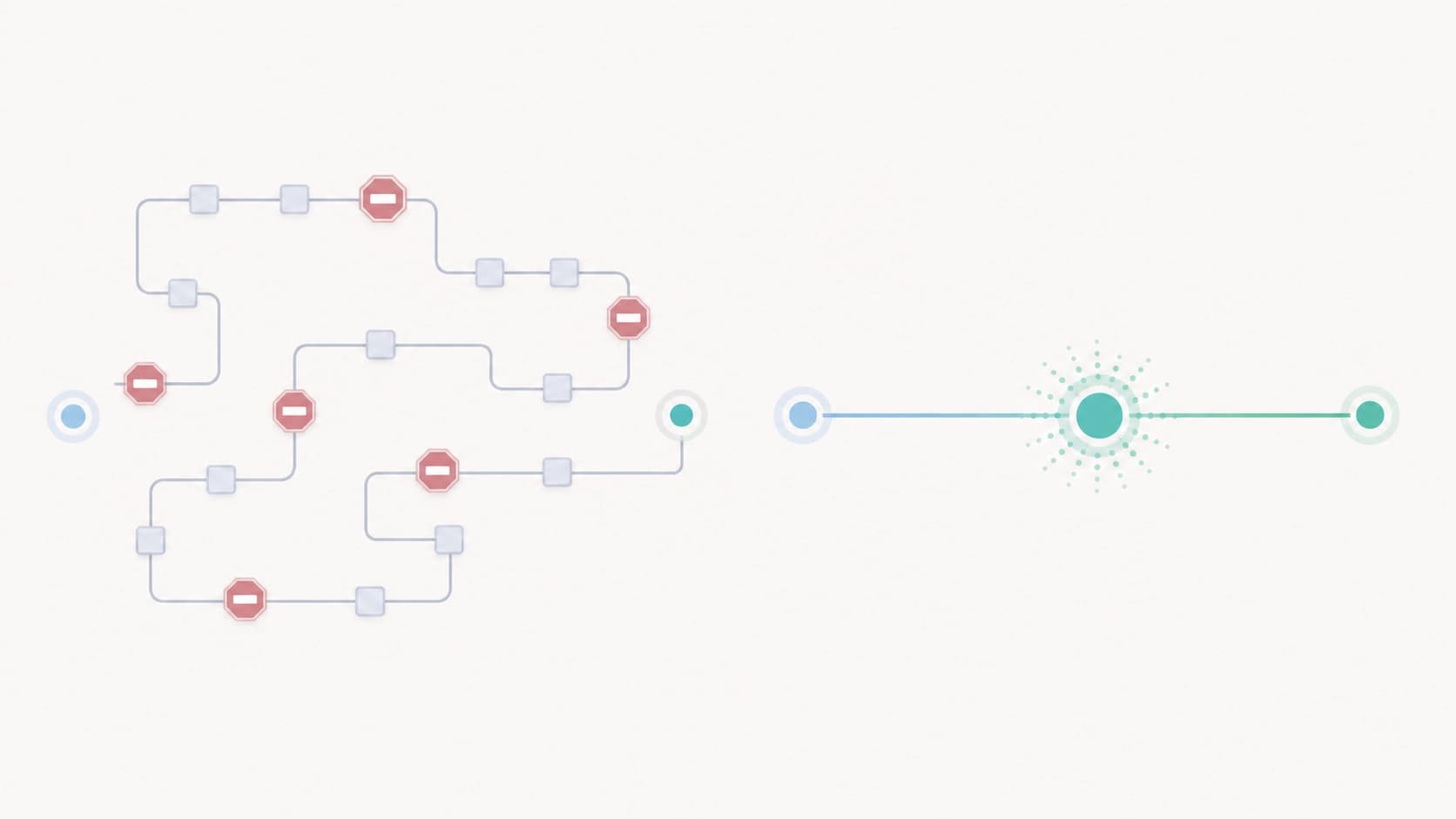
In the near future, the practice will likely be extended to adjacent areas: source code analysis, automated incident response, vulnerability management. The market is gradually getting used to the idea that AI in security is not a hint-giver but a full-fledged employee with limited authority. And handing over the "keys" through vetted channels is becoming a natural stage of this evolution.
Frequently asked questions
Related materials
All materials
Canonical Polynomial Invariants for Diagnosing RL Simulator Failures: Where Are They Actually Useful?
The study examines whether incorporating physical laws into learnable dynamics models is justified: invariants extracted from trajectories and reduced to canonical form using Gröbner bases yield modest forecasting gains, but prove powerful for diagnostics, enabling the localization of violated constraints and identification of specific erroneous parameters.
10 November 2026
AURA-Eval: How to Check Whether an LLM Agent Recognized a Risk and Changed Its Next Step
The framework evaluates LLM agents’ behavior not by their final verdict, but by how they respond to risk at key decision points: tool-call trajectories are interrupted, after which the model must continue reasoning and acting, while a panel of LLM judges assesses risk detection, the nature of the step, and its safety. Across 1,249 tasks drawn from 157 R-Judge trajectories, unsafe actions become more frequent among 20 models when no safe path is available, and removing oversight before execution turns 52.3% of initially safe cases into unsafe ones.
10 November 2026
Chern–Simons Reservoir Memory: Autonomous Connectivity Dynamics and Density Transport
The article explores how a reservoir preserves the history of input signals both in its density distribution and in its geometric degrees of freedom. A comparison of four mechanisms shows that current creates a separate connected component that alters the subsequent density response, while accounting for all measured features yields a small improvement in decoding pulse order.
10 November 2026