
Legato steps out of stealth mode with $12M and AI glasses that enhance hearing through the temples
Legato, a startup founded by former Bose employees, has revealed details of its development: Frames glasses with a patented hearing correction system built into the temples, designed for people with mild to moderate hearing loss and planned for launch in the fall. The company has raised $12 million from Neotribe Ventures, Listen, and Village Global, and is betting on AI separation of voices and background noise, open acoustics with sound leakage suppression, and sales through optical stores at a price noticeably lower than traditional hearing aids.
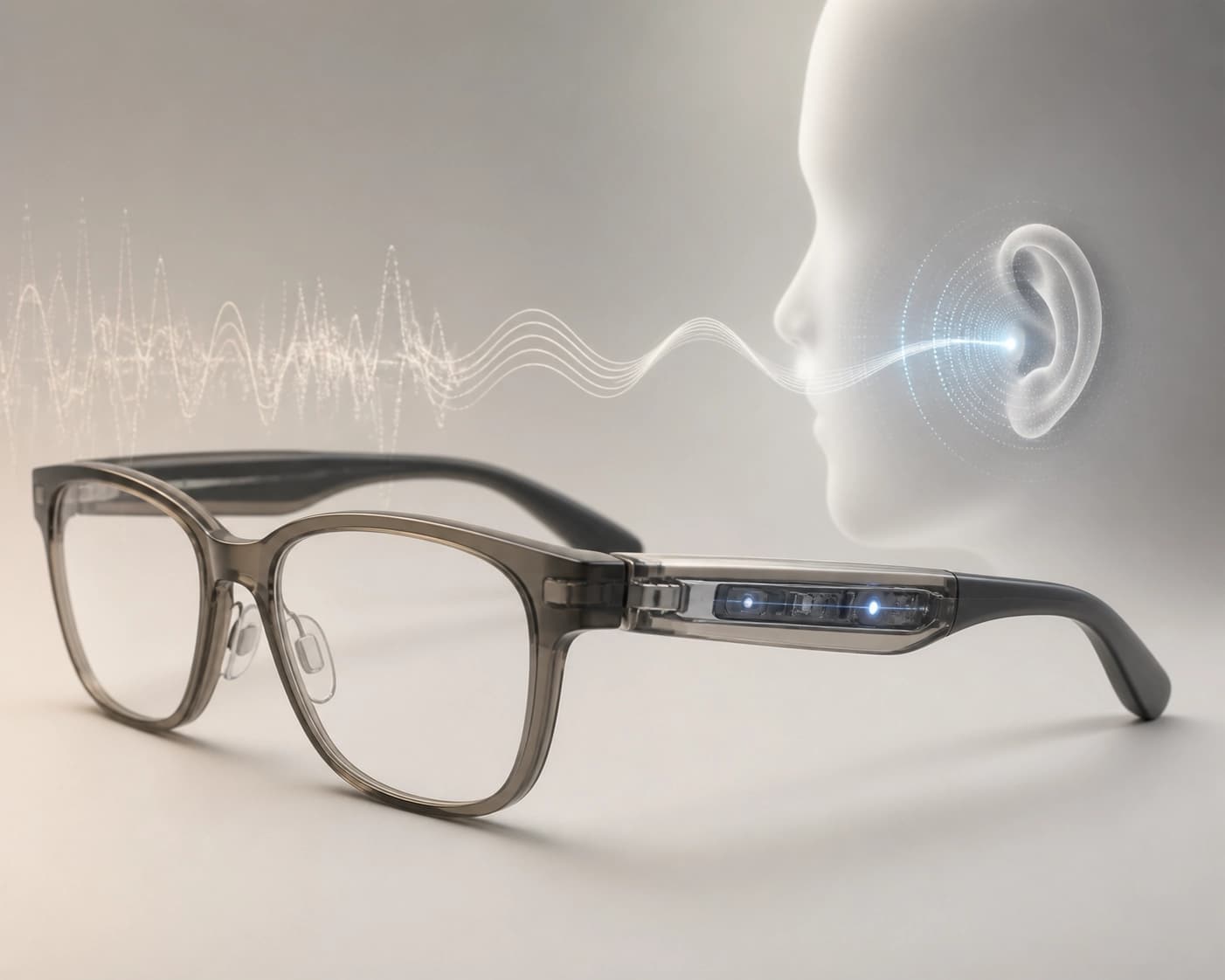
Coming out of stealth
Legato is coming out of stealth on Wednesday. The company is announcing $12 million in funding and showing its first AI hearing glasses.
Key facts:
- the product is called Legato Frames;
- hearing assistance technology is built into the temples of the frame;
- launch is expected later this fall;
- the product is designed to work throughout the day and in different places.
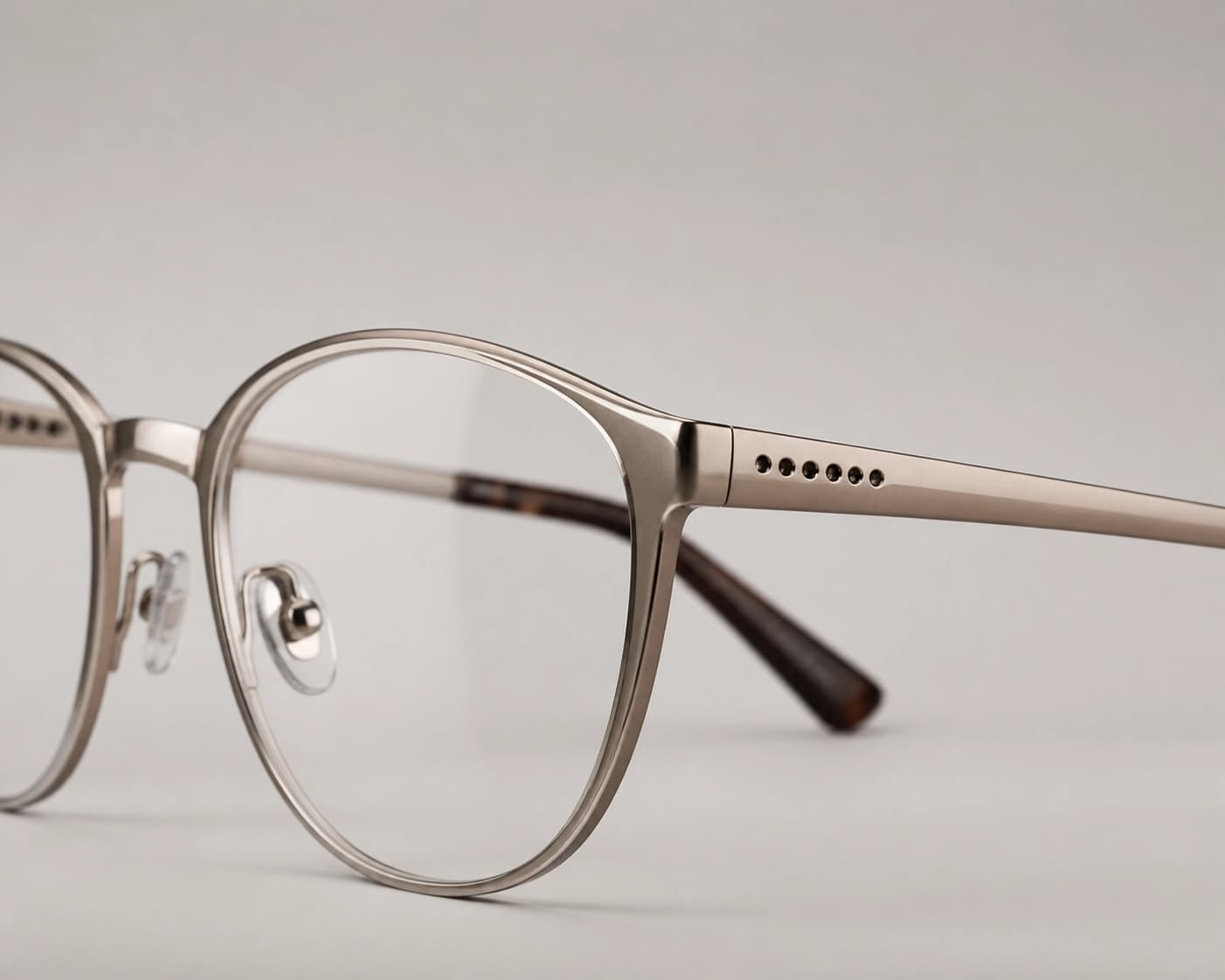
Practical reference point: this is not a hearing aid in the usual channel, but a device at the intersection of glasses and hearing assistance. The key parameters are the purchase channel and the price relative to traditional devices.
How the acoustics work
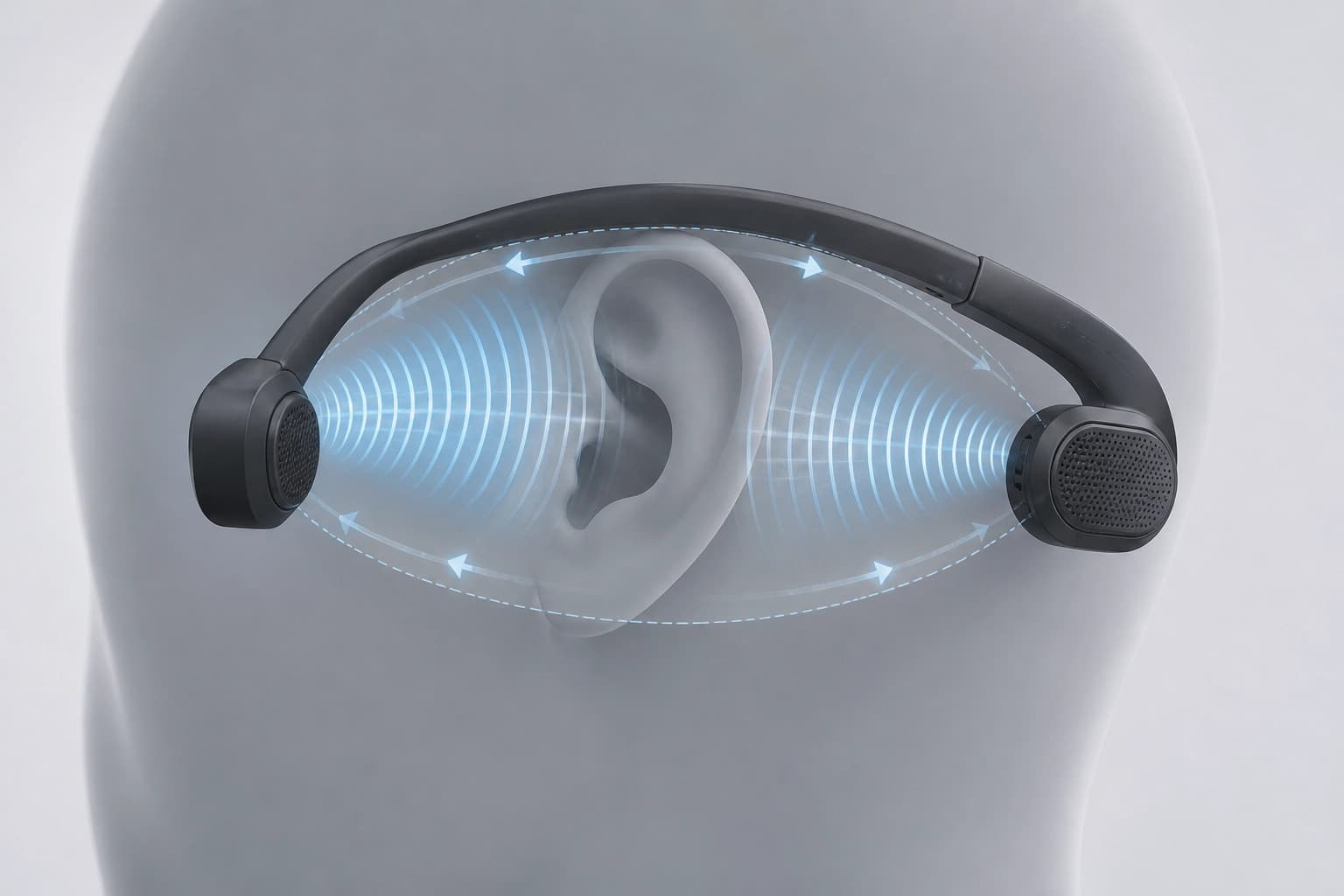
The glasses have an open design. Sound is not broadcast to those around the wearer. A dual dynamic system directs sound to the wearer. It cancels sound that leaks outward.
Key elements:
- open ear;
- two speakers;
- sound directed to the wearer;
- leakage cancellation;
- a 99% reduction in sound within just a few inches of the ear;
- a proprietary acoustic system, signal processing stack, and mechanical architecture;
- designed for 16 hours of wear.
The company aimed to make the glasses as small and light as possible. The criterion for comparison with earbuds: an open ear and directed sound. This distinguishes the device from traditional hearing aids, which close off the ear.
AI processing versus the traditional approach
Traditional hearing aids use directional microphones. They focus on sounds from a chosen direction. This works in quiet places. In noisy ones, such as restaurants, isolating speech is difficult.
Legato Frames use an AI system. It distinguishes background noise from voices. Only voices are amplified. The goal is to make conversations clearer without a cognitively exhausting experience.
| Approach | Principle | Limitation |
|---|---|---|
| Traditional hearing aids | Directional microphones focus on sound from a chosen direction | In a noisy environment, isolating speech is difficult |
| Legato Frames | AI distinguishes noise from voices and amplifies only voices | Launch is expected later this fall |
Conclusion: AI processing targets the main weakness of directional microphones — noisy environments. But real-world effectiveness can only be assessed after launch.
Who the product is for
The target audience is people with mild to moderate hearing loss. This is the largest segment of people with hearing loss. The company wants to make hearing assistance more accessible.
Problems the product solves:
- the cost of traditional hearing aids;
- comfort;
- stigma.
Hearing loss affects an estimated 50 million adults. Only 20% of people with diagnosed hearing loss seek treatment. The product should look and feel like regular glasses. It does not require controls to fiddle with.
Selection criterion: if discretion, simplicity, and avoiding complex setup matter, the product targets exactly this scenario. It is designed to work throughout the day and in different places.
Funding and team
The $12 million in funding came from Neotribe Ventures, Listen, and Village Global. Most of the funds went to product development and marketing.
Founders:
- Mehul Trivedi;
- Steve Romine.
They came from Bose. Trivedi led the creation of Bose Frames. Romine led the hearing aid division. Trivedi then worked at EssilorLuxottica. There he led smart glasses and worked on Meta Ray-Bans. Romine became COO of Audicus.
Trivedi studied the intersection of hearing technology and smart glasses. He found the technology, reached out to Romine, and in late 2024 they founded Legato.
Practical criterion: the team combines experience in wearables, hearing aids, and smart glasses. This explains the bet on a regular frame format rather than a medical device.
What this changes in the market
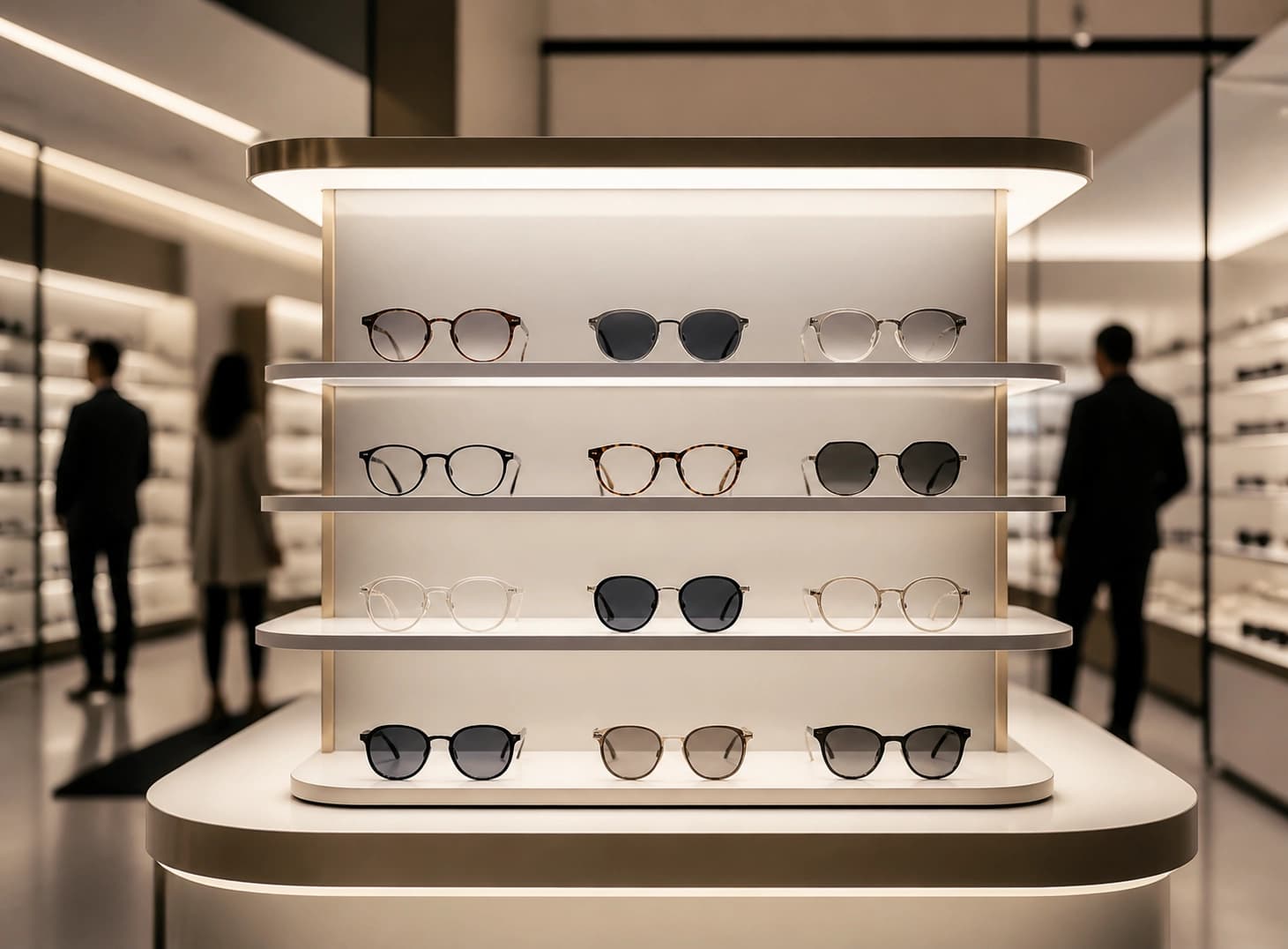
The product occupies a niche between regular glasses and hearing aids. It does not replace diagnosis or treatment. At launch, it will be available through opticians. This opens access to vision insurance.
Legato Frames target people with mild to moderate hearing loss. The company wants to make hearing as ubiquitous as vision.
Selection criterion: the purchase channel, insurance compatibility, and the absence of complex setup. Real-world performance in noise can be assessed after launch, when independent data becomes available.
Frequently asked questions
Related materials
All materials
WILSON: combining magnifications and patient slides for pathomorphological analysis and report generation
The preprint introduces WILSON, a vision-language model that encodes images of whole slides and series of slides from a single patient at different magnifications, rather than just a single “best” slide. Without task-specific fine-tuning, it outperforms specialized and larger slide models on a range of metrics while requiring substantially less compute, and its diagnostic descriptions received higher ratings from pathologists.
11 November 2026
Canonical Polynomial Invariants for Diagnosing RL Simulator Failures: Where Are They Actually Useful?
The study examines whether incorporating physical laws into learnable dynamics models is justified: invariants extracted from trajectories and reduced to canonical form using Gröbner bases yield modest forecasting gains, but prove powerful for diagnostics, enabling the localization of violated constraints and identification of specific erroneous parameters.
10 November 2026
AURA-Eval: How to Check Whether an LLM Agent Recognized a Risk and Changed Its Next Step
The framework evaluates LLM agents’ behavior not by their final verdict, but by how they respond to risk at key decision points: tool-call trajectories are interrupted, after which the model must continue reasoning and acting, while a panel of LLM judges assesses risk detection, the nature of the step, and its safety. Across 1,249 tasks drawn from 157 R-Judge trajectories, unsafe actions become more frequent among 20 models when no safe path is available, and removing oversight before execution turns 52.3% of initially safe cases into unsafe ones.
10 November 2026