Introduction
Choosing a video generator today is like finding a balance between technical power and artistic expression. Two major players stand out in the market: Kling AI from the Chinese company Kuaishou and Sora from OpenAI. Each has its own strengths, and the answer to "which is better" directly depends on your tasks.
Key Features
Kling AI is built on a Diffusion Transformer architecture combined with 3D VAE. This allows the model to reconstruct faces and bodies in three dimensions and achieve realistic physical simulation. The generator produces videos up to two minutes long, which is rare for such services. Access is open to everyone.
Sora is positioned differently: the focus is on deep text interpretation using advanced NLP algorithms. OpenAI deliberately does not open mass access — Sora is being tested by a limited circle of creators and experts. However, its strength lies in building complex multi-character scenes with emotional subtext.
Quality and Resolution
When it comes to technical parameters, Kling AI looks more confident: it generates videos up to 1080p at 30 frames per second. Detailed textures and believable simulations make it a good choice for professional content. Sora emphasizes dynamics and expressiveness in its videos, but in terms of image sharpness, it may still lag behind its competitor.
Complex Scenes and Physics
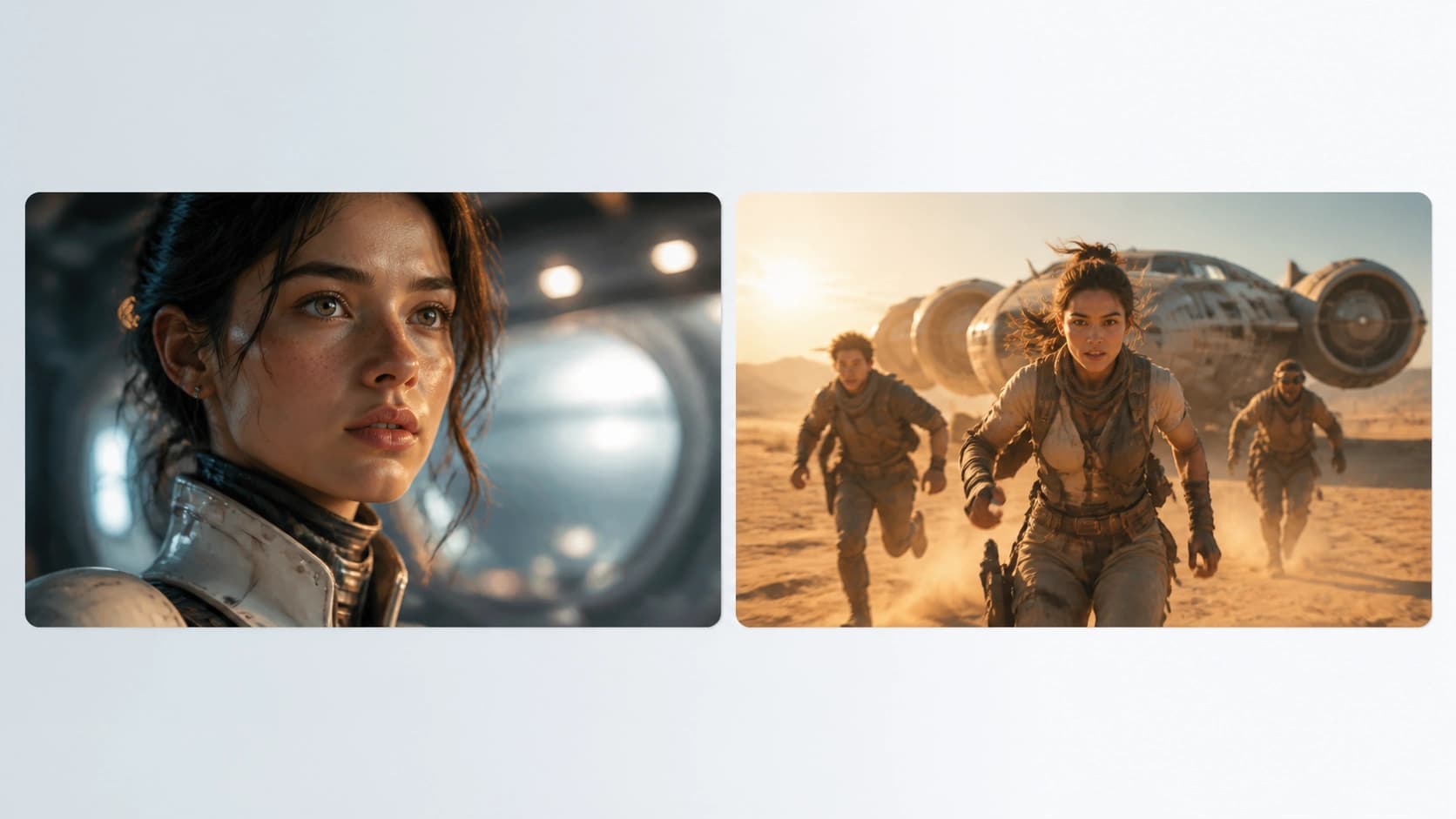
For scenes where realistic motion and object interaction matter, Kling AI uses a 3D spatiotemporal attention system. This helps accurately convey physical processes — for example, sports competitions. Sora, on the other hand, excels at interpreting complex text prompts and creating vivid emotional reactions. If the shot requires interaction between multiple characters with different personalities — Sora looks preferable.
Availability
A practical point: Kling AI can be tried right now thanks to open access. With Sora, things are more complicated — getting on the tester list is not easy, so for real projects it remains largely inaccessible.
How to Choose for Your Task
Summing up, here's a simple cheat sheet:
- For marketing videos with an emphasis on detail and sharpness, go with Kling AI.
- For short films with emotional depth, consider Sora.
- For sports events and scenes with physical interactions, Kling AI is again the more reliable choice.
- For scenes with complex character interactions — Sora.
Alternatives
Besides the two main contenders, there are other options on the market. Runway AI attracts with its simple interface and versatility. Modelscope Text2Video offers a balance between quality and accessibility. Vidu AI stands out with its high generation quality and ease of learning.
Conclusion
There is no universal winner. Kling AI covers the needs for professional high-resolution content with realistic simulation. Sora is the choice for those who need emotionally engaging visuals and narrative depth. Assess which type of tasks dominates your workflow, and confidently pick the tool that fits your scenario.