
How E2LLM Deploys Large Language Models on Heterogeneous Edge/Fog Devices
The framework groups weak nodes into replica sets and distributes token processing phases differently to efficiently utilize limited resources. In tests, this approach nearly halved average response time compared to the well-known Splitwise scheme.
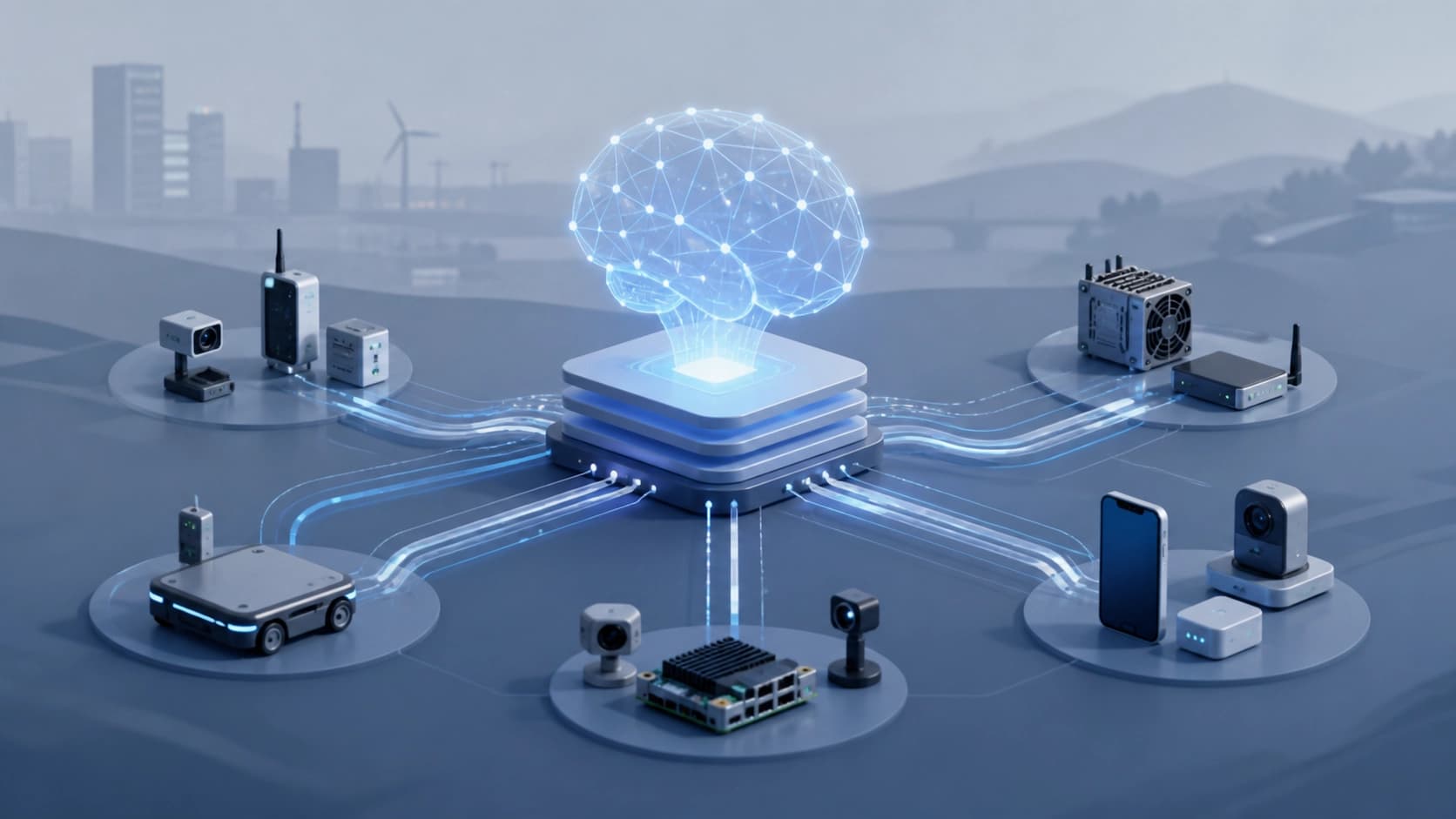
For LLM inference near the user, ready-made "heavy" servers are rarely available. Usually, it's a mix of edge devices, gateways, and fog nodes with varying memory and compute capacity. Deploying a model as if it always fits on a single device means turning a blind eye to reality: the model either doesn't fit, runs with unacceptable latency, or leaves expensive resources idle. The E2LLM framework offers a more pragmatic path for this.
Why the classic scenario doesn't work
Traditional approaches to serving LLMs often assume the entire model lives on one machine. In the cloud, this usually works, but in edge/fog environments, nodes are weaker and more heterogeneous. Some devices may have enough memory for the weights but lack compute power; others are fast but memory-constrained. If you try to simply "spread" the model across all available devices, you run into coordination, communication, and utilization problems.
In practice, three things are needed simultaneously:
- predictable low latency,
- efficient resource usage,
- reasonable deployment cost.
These conflict with each other, so a compromise is needed, not one-sided optimization. E2LLM is built around this compromise.
Replicas and roles: how E2LLM works around limitations
The key idea of E2LLM is not to split one model across all nodes, but to group devices into replicas. Each replica stores a full copy of the model, which is then distributed among group members using model parallelism. This may sound like a waste of memory, but in practice, such duplication improves fault tolerance and allows multiple requests to be served in parallel.
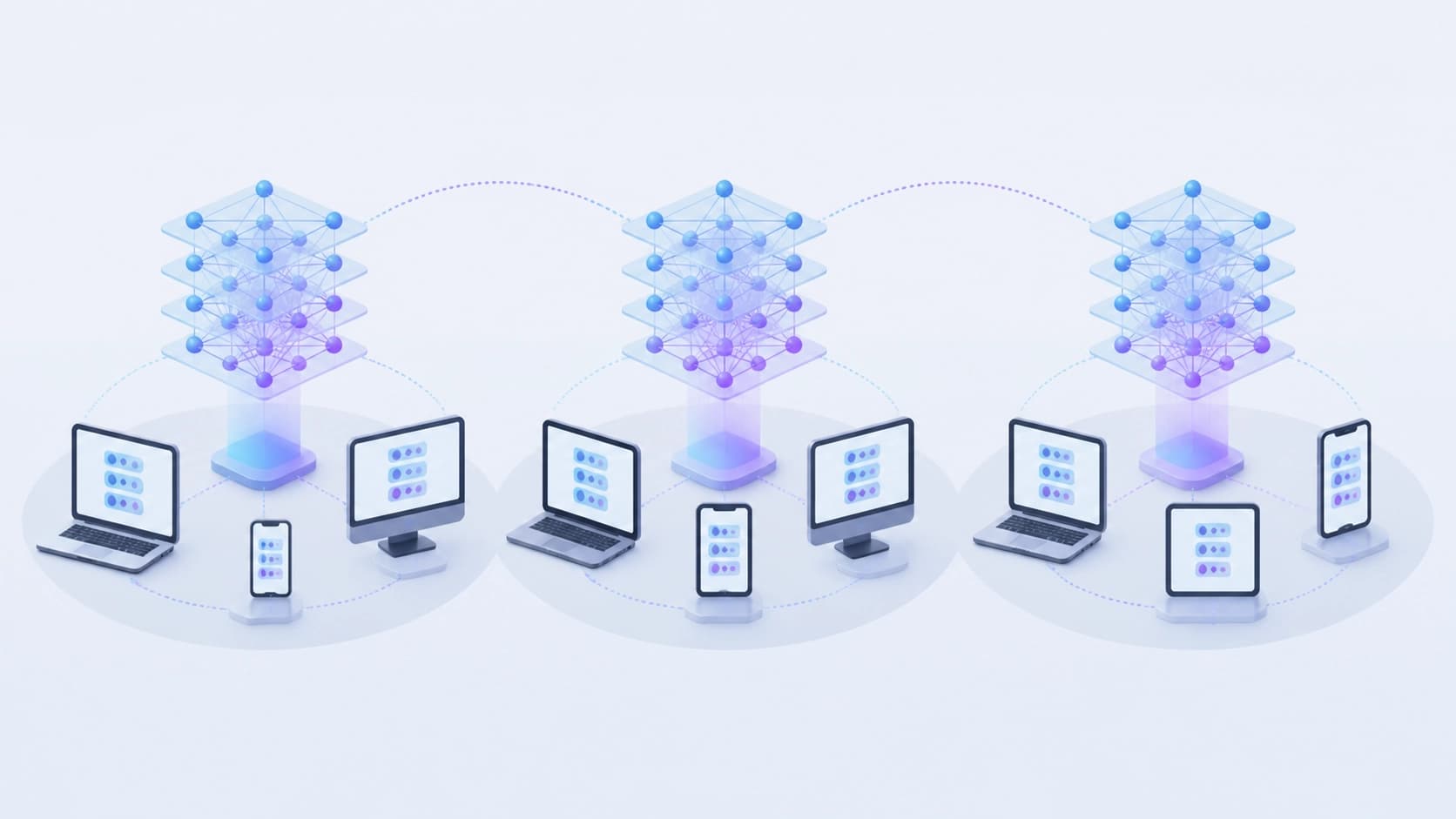
Next, knowledge about how LLM inference works comes into play. It has two phases with different load profiles: prefill, when the model actively processes input tokens and builds the attention cache, and decode, when it generates output tokens. These phases require different resources: prefill is sensitive to peak compute power, while decode depends on memory bandwidth and data transfer latency.
Instead of forcing each group to handle both, E2LLM assigns specialized roles to replicas. Some become prefill replicas and process incoming requests faster, while others become decoder replicas responsible for smooth generation. This separation avoids wasting resources on the phase that is "inconvenient" for a particular piece of hardware.
How device groups are formed
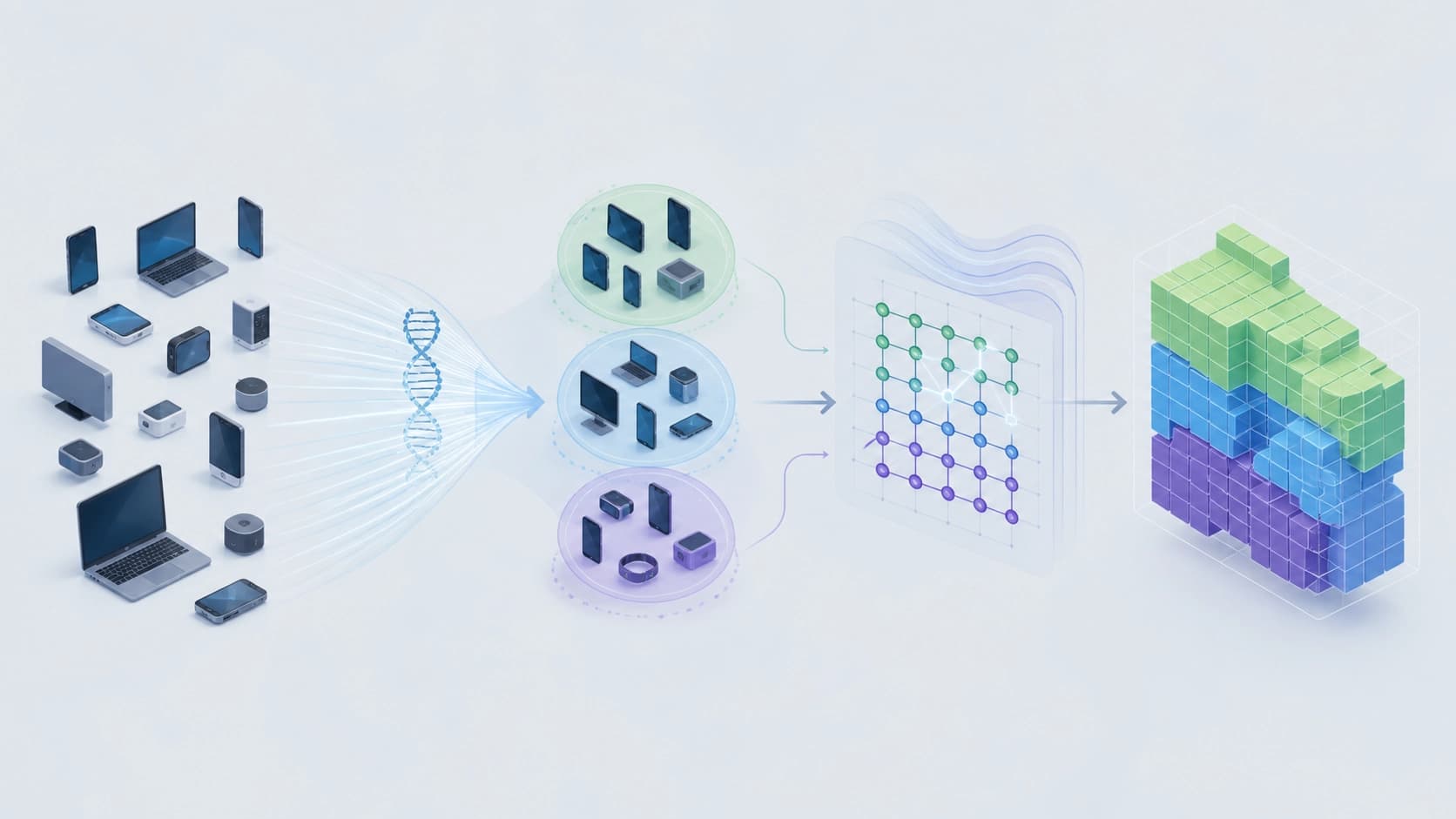
You can't just take the first available devices and call them a replica. E2LLM first decides which nodes are worth grouping at all. For this, it uses a genetic algorithm: it iterates over cluster options and gradually improves them based on the system's overall performance.
Once a cluster is defined, the next step is figuring out how to partition the model among its members. Here, dynamic programming comes into play: it searches for a partitioning strategy that minimizes "bottlenecks" in data transfer between devices. In other words, the upper level handles replica composition, while the lower level handles optimal model slicing for the specific hardware setup.
What this delivers in practice
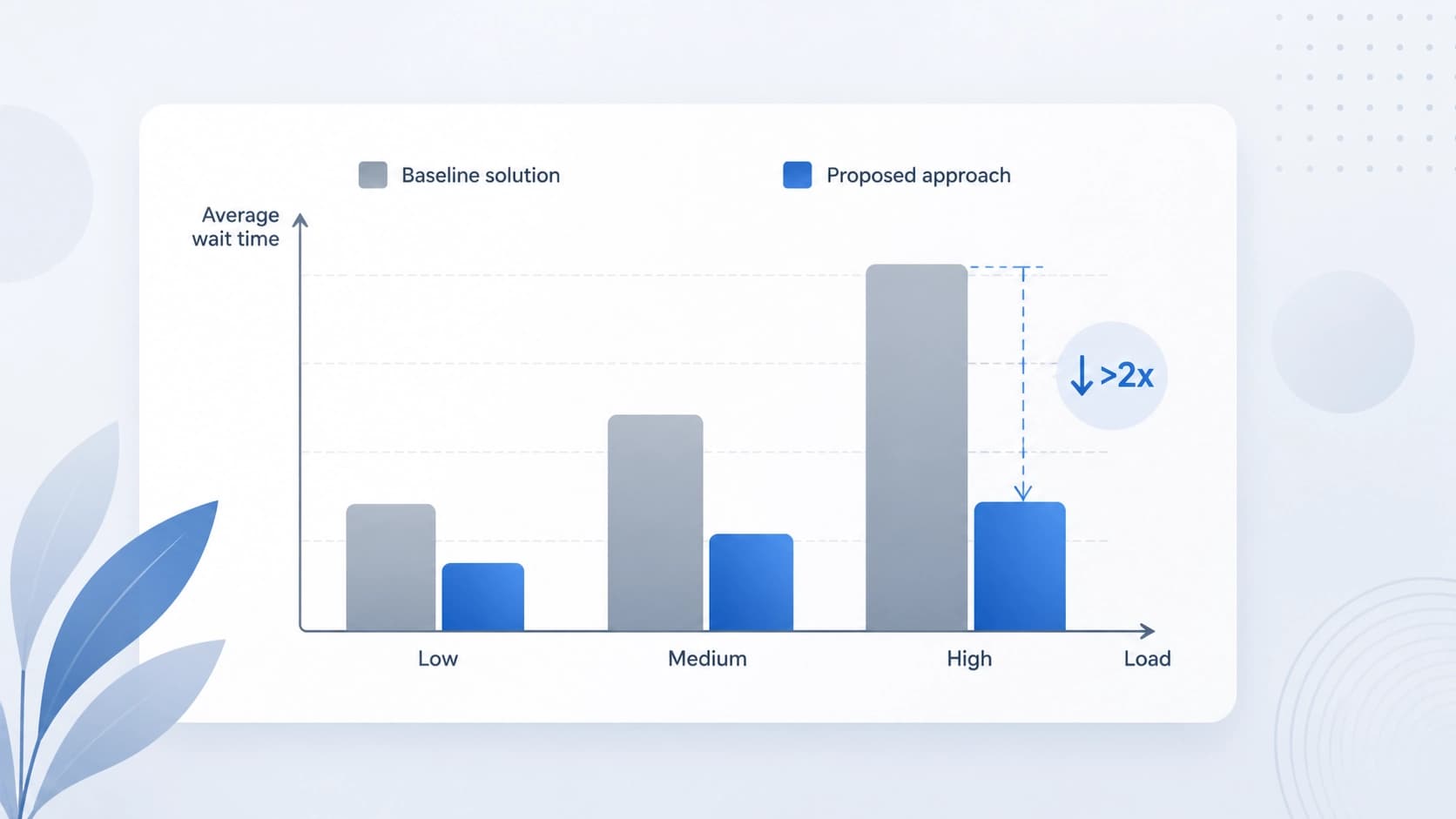
The authors tested the approach against the baseline solution Splitwise, which also separates prefill and decode but handles heterogeneous environments less flexibly. Experiments showed that E2LLM adapts well to changes in workload. This is especially noticeable when input and output token lengths differ significantly: for example, short requests arrive but require long responses, and then the load shifts abruptly.
Under high load, the new approach reduces average wait time by more than 50% compared to Splitwise. This means users spend less time queued for generation, and edge/fog devices work more purposefully instead of trying to serve both inference phases equally.
Summary
E2LLM shows that efficiently running LLMs at the edge depends not only on the power of individual devices, but also on how devices are grouped and assigned roles. Duplicating the full model at the replica level, combined with separating prefill and decode, is a deliberate trade-off: memory is sacrificed in places, but in return, the system gains stable performance and lower latency.
The key takeaway for applied scenarios: in a heterogeneous environment, don't try to squeeze the entire model into one node or spread it evenly across all of them. Instead, build specialized groups from available hardware and decide how to distribute computation within them. That's how LLM inference becomes truly practical beyond large cloud clusters.
Frequently asked questions
Related materials
All materials
Canonical Polynomial Invariants for Diagnosing RL Simulator Failures: Where Are They Actually Useful?
The study examines whether incorporating physical laws into learnable dynamics models is justified: invariants extracted from trajectories and reduced to canonical form using Gröbner bases yield modest forecasting gains, but prove powerful for diagnostics, enabling the localization of violated constraints and identification of specific erroneous parameters.
10 November 2026
AURA-Eval: How to Check Whether an LLM Agent Recognized a Risk and Changed Its Next Step
The framework evaluates LLM agents’ behavior not by their final verdict, but by how they respond to risk at key decision points: tool-call trajectories are interrupted, after which the model must continue reasoning and acting, while a panel of LLM judges assesses risk detection, the nature of the step, and its safety. Across 1,249 tasks drawn from 157 R-Judge trajectories, unsafe actions become more frequent among 20 models when no safe path is available, and removing oversight before execution turns 52.3% of initially safe cases into unsafe ones.
10 November 2026
Chern–Simons Reservoir Memory: Autonomous Connectivity Dynamics and Density Transport
The article explores how a reservoir preserves the history of input signals both in its density distribution and in its geometric degrees of freedom. A comparison of four mechanisms shows that current creates a separate connected component that alters the subsequent density response, while accounting for all measured features yields a small improvement in decoding pulse order.
10 November 2026