
Meeting the Competitors
In the world of generative graphics, two names stand out above the rest: DALL-E 3 from OpenAI and Stable Diffusion 3 from Stability AI. Both models launched just a few months apart — one in late 2023, the other in early 2024 — and both have already gathered a loyal following. But choosing between them isn't as simple as it seems. One tool promises ease and predictability, the other — freedom and flexibility. Let's figure out which one handles which task.
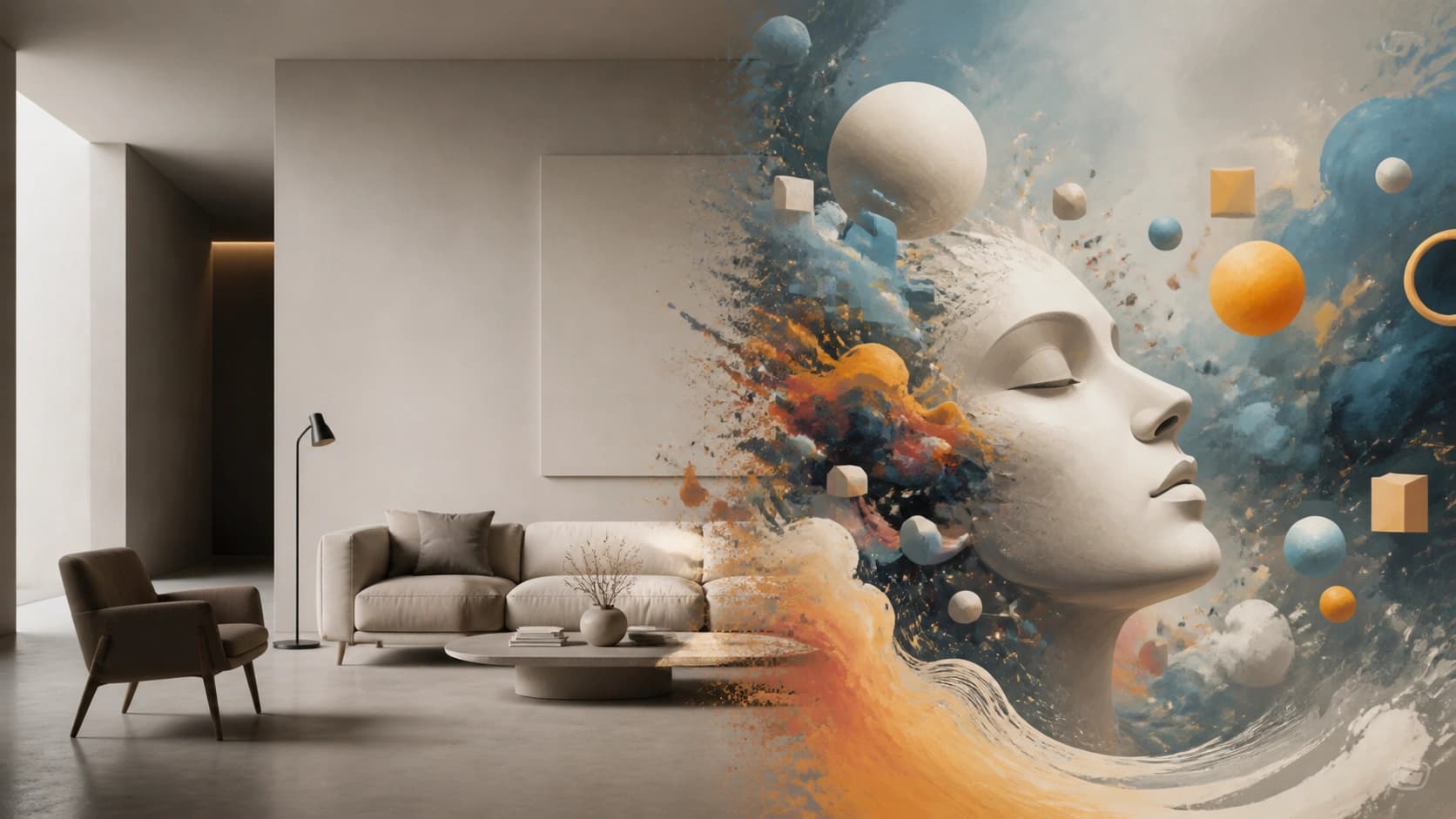
Image Quality: Realism vs. Imagination
If you need photographic accuracy — lighting, shadows, skin and fabric textures — DALL-E 3 most often delivers an image that's hard to tell apart from a real photo. The model handles coherent scenes brilliantly and doesn't fall apart on details, even when there are many objects in the frame.
Stable Diffusion 3 excels elsewhere: its forte is artistic styles, abstractions, and unexpected visual solutions. It doesn't try to copy reality — it interprets it, and that's exactly what illustrators and designers seeking unique imagery value most.
It's important to understand: "better" in this case doesn't mean "more versatile." The models simply have different personalities, and you should approach the choice based on what matters more to you — authenticity or expressiveness.
Prompts, Speed, and Control
Text description is another point of divergence. DALL-E 3 understands complex, multi-layered prompts with nuances and hidden meanings almost flawlessly. You can describe mood, lighting, composition — and the model will bring it all together into a single image.
Stable Diffusion 3 also follows instructions quite well, but if a prompt is overloaded with details, it may interpret it too literally. You have to be more specific: add clarifications, separate with commas, sometimes rewrite the phrasing. However, this gives the user more precise control over the process through word weights or switching sampling methods.
When it comes to speed, direct comparison is tricky. DALL-E 3 takes 10–15 seconds per generation at standard resolutions — and these are stable numbers that don't depend on your hardware. Stable Diffusion 3 fits into 5–10 seconds on high-performance GPUs, but on weaker graphics cards the time can multiply. If you work in the cloud or on a powerful machine — Stable Diffusion wins; if you rely on an online service — DALL-E 3 is more predictable.
Speaking of control, DALL-E 3 offers intuitive tools like inpainting and outpainting — you can extend or remove a fragment in just a couple of clicks. Stable Diffusion 3 offers far greater flexibility: fine-tuning on your own data, switching samplers, precise adjustment of every stage. But this takes time and skill. A beginner will likely get lost here, while an experienced developer gains virtually unlimited possibilities.

Safety and Ethics
OpenAI bets on a responsible approach: DALL-E 3 has strict content filters and protection against generating images of real people without their consent. This reduces the risk of misuse but also limits artists working with political or provocative themes.
Stable Diffusion 3 is open-source, so its filters are basic, and much of the responsibility falls on the user. Open code is both a plus (you can fine-tune the model to your needs) and a minus (harder to control how others use it). For businesses and personal projects, this approach offers more freedom but requires mindfulness.
What to Choose?
The conclusion is simple. If you need fast, high-quality results without diving into technical details, prioritize ethical guarantees and realistic images — choose DALL-E 3. It's ideal for content creators, marketers, and anyone who values their time.
If you're a developer planning to integrate generation into applications or want to explore unique artistic styles — Stable Diffusion 3 will be a solid foundation. Yes, the learning curve is steep, but the reward for patience is nearly unlimited creative potential.