

Agentic capabilities become the baseline
Anthropic has officially introduced Claude Sonnet 5 — a new version of its mid-sized model that makes agentic workflows accessible to a wider range of users. According to the company, the model can independently make plans, use a browser and terminal, and complete tasks without constant supervision — a level of autonomy that until recently required flagship and expensive solutions. With the release of Sonnet 5, it is clear that agentic features are no longer the prerogative of top-tier models and are becoming the standard for every price segment. Competition is now shifting toward price and reliability, rather than simply the presence of "agentic" capabilities.

Performance and pricing
The developers promise that Claude Sonnet 5 delivers results close to Opus 4.8, but at a much lower cost. Starting June 30, the model becomes the default model in free and Pro plans, and is also available in all subscriptions. At launch, a special price is in effect: $2 per million input tokens and $10 per million output tokens until August 31, after which the price will rise to $3 and $15, respectively.
According to Anthropic, the new model significantly outperforms its predecessor — Sonnet 4.6, released in February — in reasoning, tool use, code writing, and knowledge work. On the agentic coding benchmark, Sonnet 5 scores 63.2%, while Opus 4.8 scores 69.2% and Sonnet 4.6 scores 58.1%. At the same time, in knowledge tests, Sonnet 5 even slightly outperforms Opus 4.8. Anthropic emphasizes that Opus 4.8 remains the choice for maximum accuracy, but Sonnet 5 gives developers much better low-cost options. Users can adjust the level of effort between the two models, choosing the right balance of performance and budget.
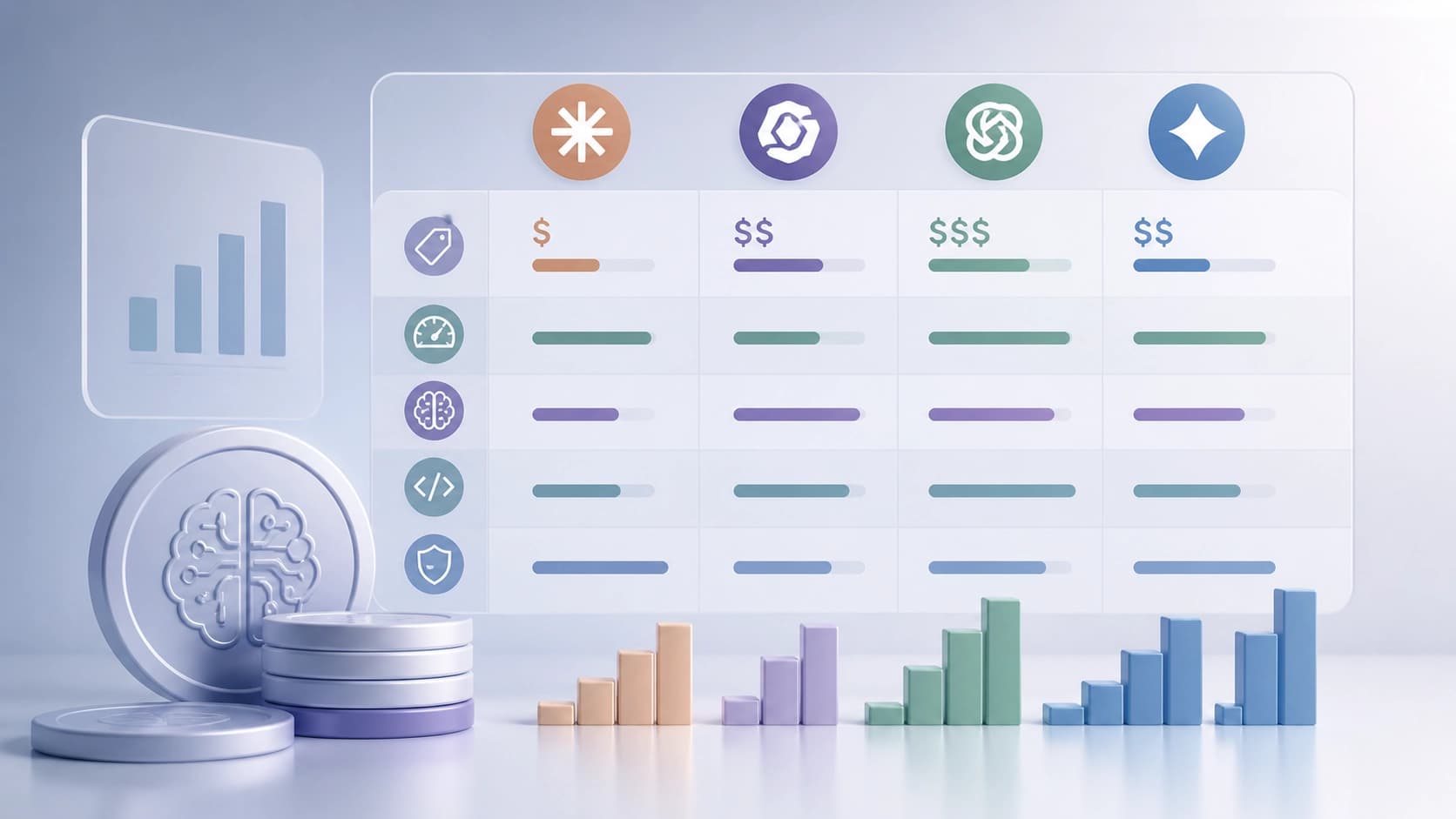
In terms of price, Sonnet 5 is cheaper than GPT-5.5 from OpenAI and Gemini 3.1 Pro from Google, but more expensive than Gemini 3.5 Flash.
Safety and developer impressions
Testers whose feedback Anthropic cites note that Claude Sonnet 5 is better at carrying complex tasks through to completion, whereas previous versions often stopped halfway. The model also checks its own results on its own, even when not asked to. For example, Daniel Shepard, a senior engineer at Zapier, said that Sonnet 5 completed a two-part task from start to finish: it updated accounts in Salesforce and sent an announcement to enterprise contacts. Previously, according to him, similar scenarios would "get stuck."
As for safety, the new model exhibits undesirable behavior less often: it is better at refusing malicious requests, is more resilient to prompt injections, hallucinates less frequently, and is less prone to sycophancy compared with Sonnet 4.6. At the same time, it still trails Opus 4.8 and Claude Mythos Preview in its ability to resist misaligned behavior. Anthropic also notes that Sonnet 5 has a significantly lower capability to perform dangerous cybersecurity tasks than the current Opus models. Fabian Hedin, co-founder of Lovable, confirmed that Claude Sonnet 5 "cleanly and consistently refuses unsafe requests."