Why a "smart" planner is needed
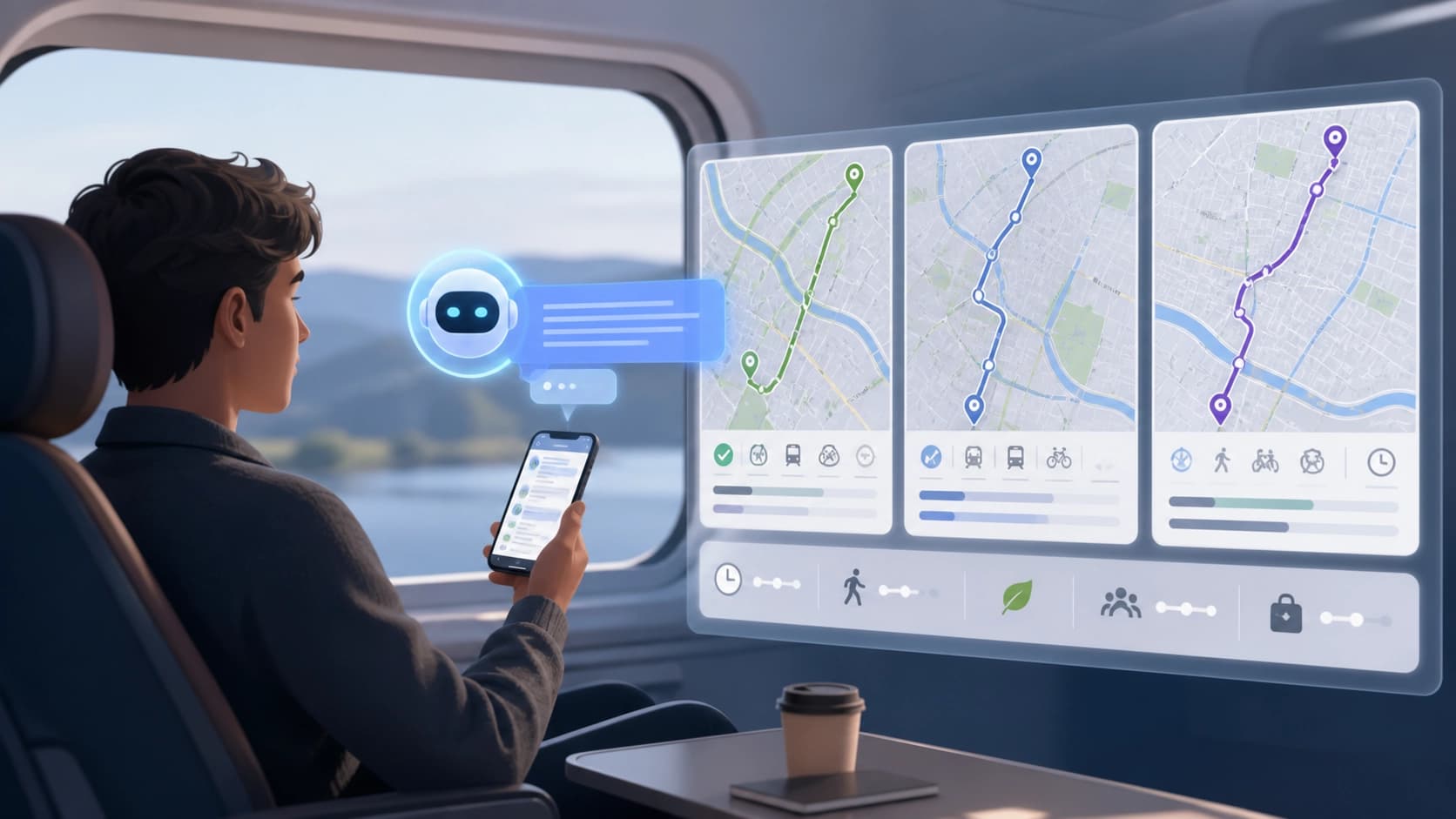
Every passenger chooses a route in their own way. For one, the main thing is to get there faster; for another, to make fewer transfers; a third deliberately avoids buses or wants to reduce walking segments. Standard navigation apps usually offer only a few impersonal options, sorted by time or price. Individual preferences remain out of the picture.
The ChatPlanner framework, described in the arXiv preprint arXiv:2606.15315, aims to change that. The authors — Tingting Yang, Chenhao Xue, and Jun Chen — have developed an approach in which the user explains their wishes in plain words, and the system translates them into route requirements. This significantly expands the boundaries of classical routing: the dialogue with the passenger becomes just as important an input signal as the transit schedule and map.
The solution is built around large language models and has already been submitted to the journal Transportation Research Part C. Judging by the text of the paper, this is not just another chatbot: the model directly influences the optimization logic of route search.
Solution architecture
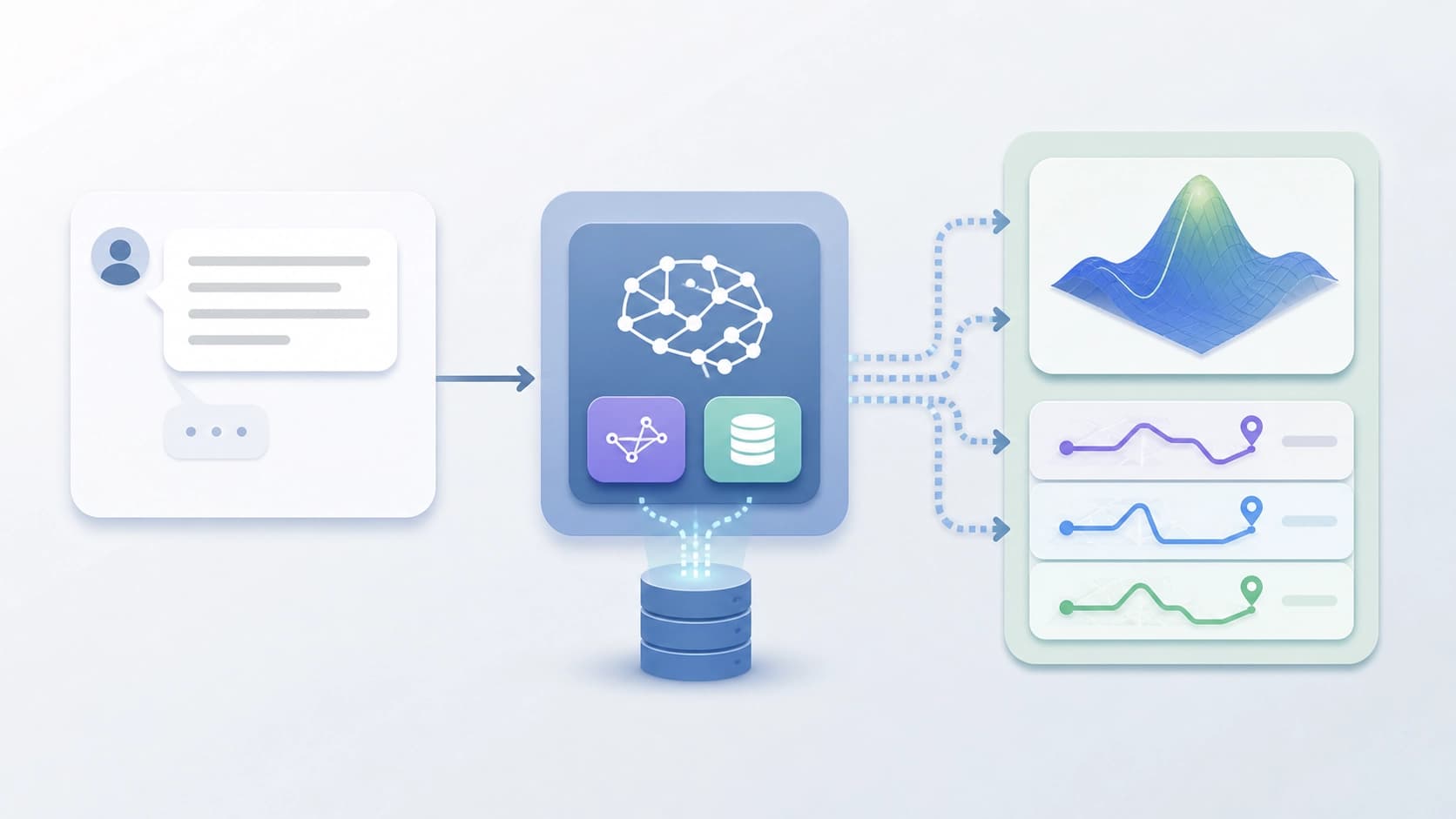
At the heart of ChatPlanner is a dialogue interface that processes natural language requests. The user can write something like "I want faster, but no metro" or "I can't stand long waits." The framework's task is not only to recognize the words but also to extract routing parameters from them: priorities for time, number of transfers, modes of transport, and other characteristics.
For this, a combination of two mechanisms is used:
- Fine-tuned LLM — responsible for structured output and trained to recognize typical preference patterns. It "understands" how wishes are usually phrased and brings them into a unified format.
- Retrieval-Augmented Generation (RAG) — adds relevant context to the request. This helps resolve ambiguous or colloquial expressions and more accurately calibrate continuous estimates — for example, the degree of aversion to transfers.
The result of processing is a set of preference scores across different criteria. These scores are then integrated into the objective function of the public transit routing algorithm. In other words, the LLM does not paraphrase a ready-made route but actively participates in its construction, tailoring the optimization to a specific passenger.
Training: personas and contexts
To give the model something to learn from, the authors created datasets that include eight personas and five contexts. Personas are generalized passenger types with different priorities and habits: for example, a student for whom price matters, an elderly person with limited mobility, or a business traveler who values every minute. Contexts describe typical situations — a trip to the airport, rush hour, a sightseeing tour, and so on.
This annotation is important not only for training. It is also used to establish reference evaluation standards — "rubrics" against which the system's responses are compared. This makes it possible to objectively judge how correctly the framework extracted preferences and route parameters from the dialogue.
Experiments and results
To confirm the viability of the approach, the researchers conducted four experiments. Each tested a separate aspect:
- Feasibility of solutions — whether the system always offers real, executable routes.
- Information extraction — how accurately routing parameters and preferences are recognized.
- Quality and completeness of the solution set — how many suitable alternatives the framework generates and how good they are.
- Latency and computational feasibility — whether the system can respond in acceptable time.
The results showed that ChatPlanner consistently generates feasible solutions. Fine-tuning provided the required output structure and allowed the system to learn general preference patterns. RAG, in turn, supplied the context of a specific request — with its help, the system managed to handle imprecise and colloquial phrasings and correctly calibrate estimates. The best accuracy is achieved when both approaches are used together: information extraction becomes not only more accurate but also consistent with the rubric.
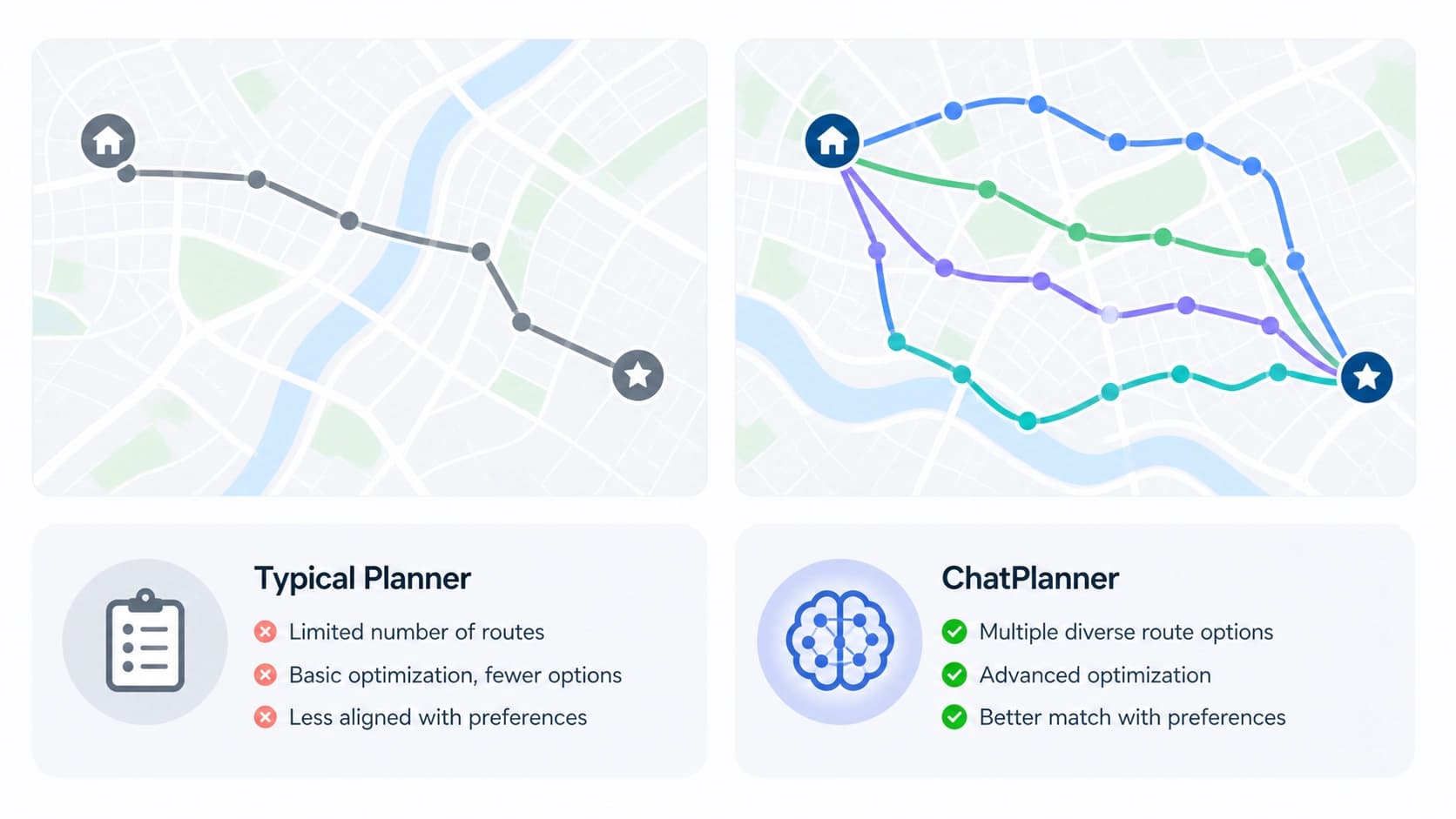
In case studies, the framework found solutions that met different passenger wishes and touched on a wide variety of trip aspects. At the same time, such routes were missed by existing planners. Moreover, ChatPlanner produced more alternatives, giving the user a meaningful choice.
Performance
The authors paid special attention to practical applicability. Latency measurements confirm that the framework is computationally feasible: despite the involvement of heavy language models and additional RAG mechanisms, the system can operate in real time. This is an important argument that the approach will not remain in the laboratory but can serve as the foundation for real trip-planning services.
Conclusions
The ChatPlanner research is a step toward a new paradigm in which natural language understanding and transport optimization no longer exist separately. Instead of requiring the passenger to clearly specify parameters, the system itself extracts them from the conversation. Dialogue becomes a full-fledged part of the optimization process, and route search becomes a personalized service.
For now, this is a research development, but its results look convincing: the combination of fine-tuning and RAG achieves high accuracy, while performance remains acceptable. Likely, such interfaces will soon appear in urban transit apps, and choosing a route will become as natural as talking to a concierge.