
Cute animals under suspicion: AI fakes undermine trust in animals online
Cats, bears, and rescued calves are increasingly turning out to be synthetic, and viewers are starting to distrust even genuine footage. Pet owners, animal advocates, and photojournalists are looking for ways to restore trust: from watermarks and metadata to new rules for labeling AI content.
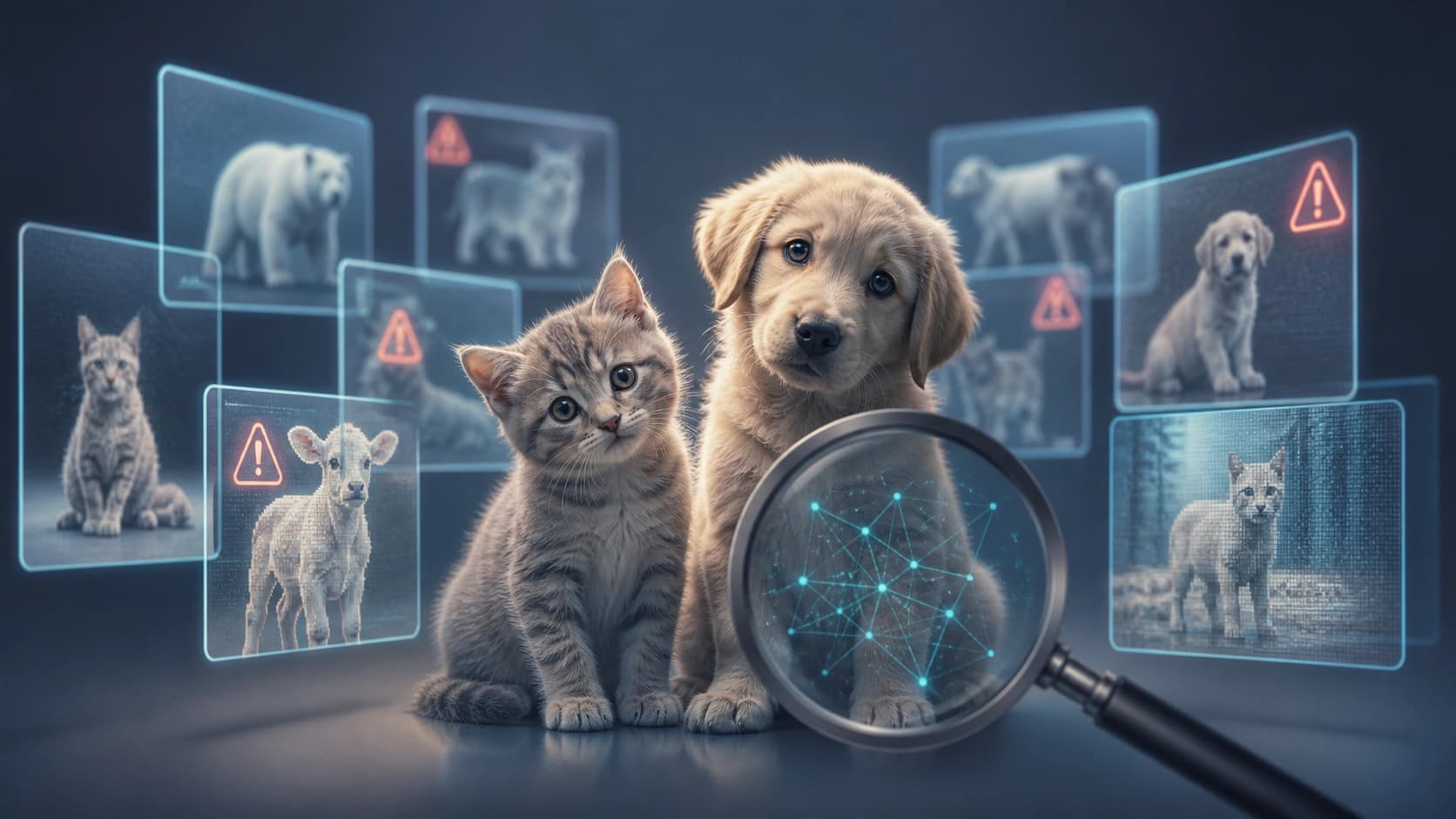
Cute animals under suspicion: a brief look at the problem
Animals are perhaps the most reliable source of warm emotions on the internet. Kittens, rescued chicks, calves, polar bears: entire generations of users have grown up on such footage, and for animal welfare projects they have long been a working tool for fundraising. And it is precisely this genre that has been hit hardest by the wave of synthetic content.
In recent years, generative models have learned to produce images and videos of animals so convincingly that telling them apart from real ones is nearly impossible without a magnifying glass. Feeds have filled with bears rescued from drifting ice floes, touching stories about found pets, calves separated from their mothers. Part of the audience has arrived at a simple conclusion: any touching shot of an animal now needs verification, because you can no longer trust your own eyes.
What exactly breaks
Fraud built on real grief
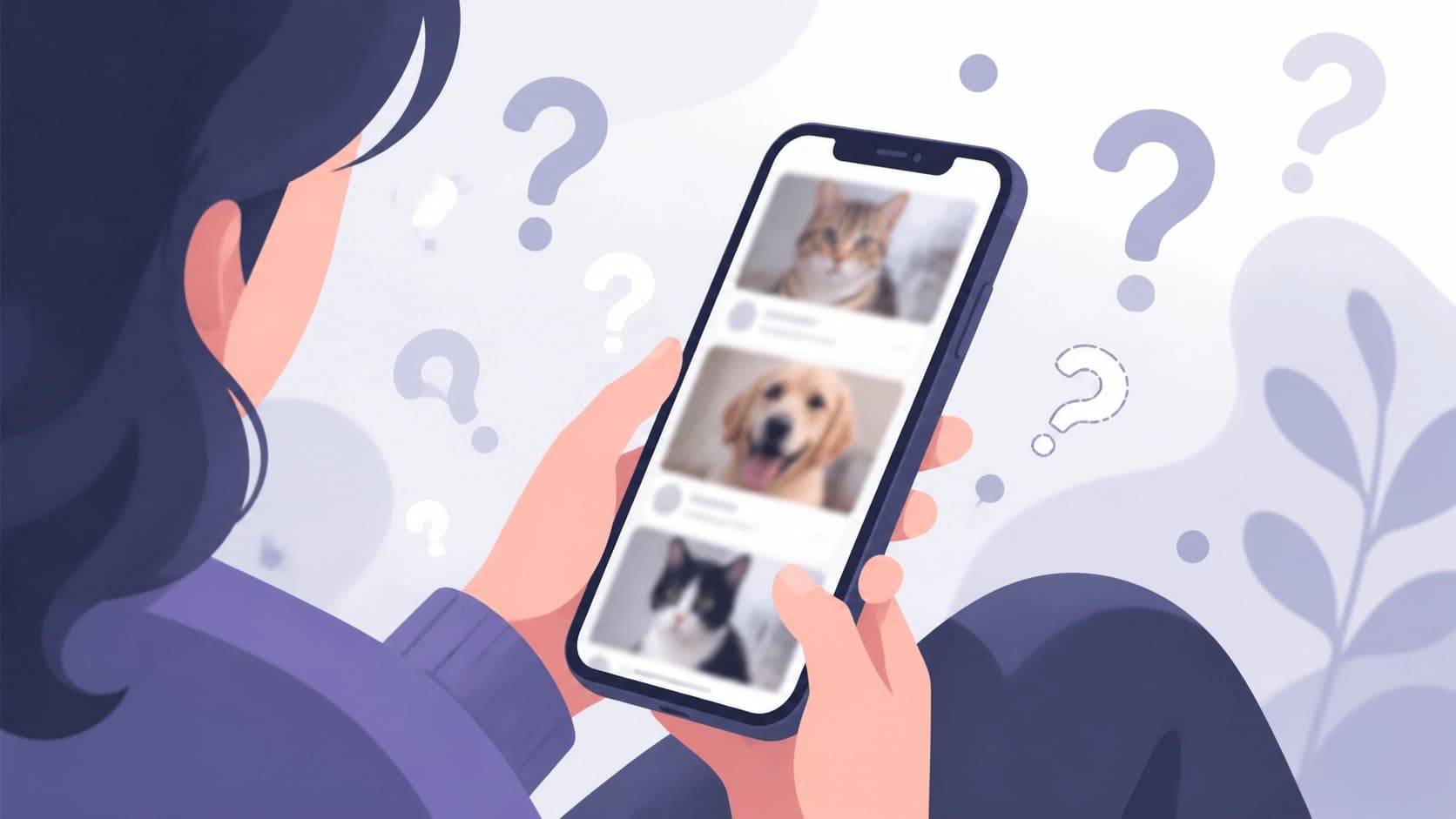
Scams involving fake animals are not an abstract threat but a fully functioning business. A telling example: a woman received a message that her missing cat had been found. The photograph looked convincing — the pet on a kitchen countertop, a child nearby. The owner had time to rejoice and tell her roommate about the discovery before she realized that money was wanted: the stranger was asking for payment upfront for "temporary care."
What put her on guard was not the demand for money but the details. The animal's pose in the sent image repeated the one from the photo in the missing-pet listing. The background matched too — the same objects in the kitchen. But the text on the label of a syrup bottle turned out to be garbled, which has long been considered one of the classic signs of image generation. The woman did not pay. She did not go to the police, since she was not sure a crime had actually occurred. Months later, the cat was never found.
A blow to those who show the truth
The hardest hit are organizations that document real problems. The nonprofit group We Animals has published the work of dozens of photojournalists who captured the conditions in which animals are kept on farms, in circuses, and in laboratories. Such material by definition provokes shock and resistance in the viewer — and even before, authors were accused of staging and manipulating their shots.
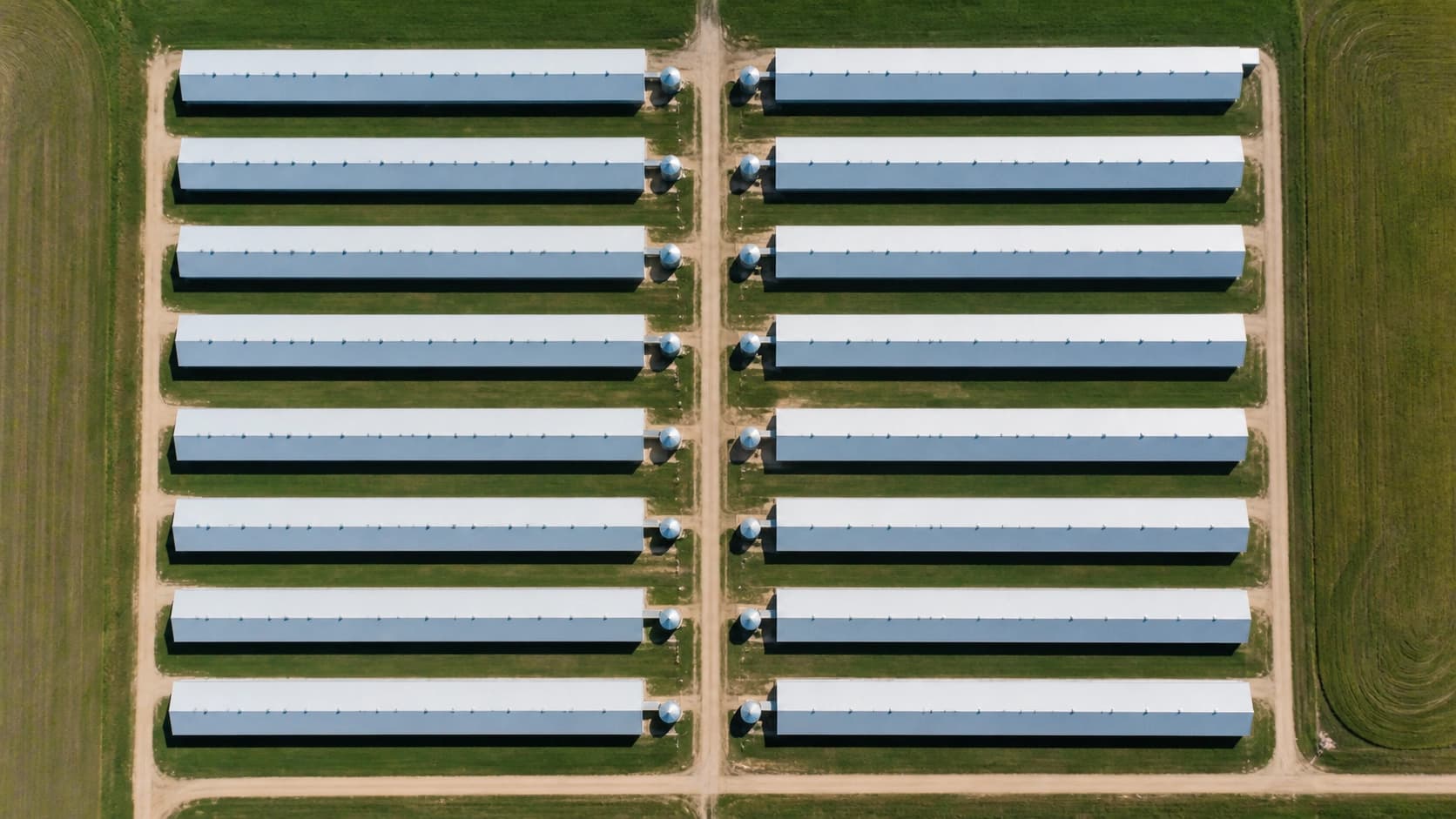
Now a new accusation has been added to the old ones: "this is AI-generated." A telling case is drone footage from a dairy farm: endless rows of stalls look so geometrically neat that this very neatness is perceived as fake. Similar comments appear under videos regularly, even though the organization explicitly forbids its photographers from using generative tools. Its leadership admits that proving the absence of AI after the fact is nearly impossible, so it plans to publish behind-the-scenes material, explain verification methods, and embed metadata about origin and editing history into files.
Why fakes win in the feed
The economics here are simple. Real wildlife footage means expeditions, equipment, days of waiting, and risk. A synthetic shot costs pennies and is created in minutes. For owners of accounts filled with AI junk, such images offer a fast path to likes, reach, and ad revenue, and since they are cheaper to produce, they are increasingly crowding out genuine videos in search and on social media. This is pointed out by Oscar Horta — a philosopher and animal rights activist who took part in filming a short documentary about AI's impact on wildlife.
What worries him is not only fakes made for traffic but also scenes that look like heroic rescues: animals pulled from fire or water. The trouble is that such fakes erode trust in real rescue operations — which means they will make fundraising for them harder in the future. This is especially troubling against the backdrop of increasingly frequent extreme weather events, when real help is needed more and more often.
When a fake pushes people toward dangerous actions
There is a more alarming effect as well. If a viewer believes in implausible rescue scenarios, they may try to repeat them in reality — at risk to themselves and with direct harm to the animal. Horta cites footage of drowning polar bears and people in boats rushing to save them, and calls such scenes absurd: they have nothing in common with what helping animals actually looks like.
What is being tried: rules, labels, verification tools
Hints inside the models themselves
Some researchers propose solving the problem at the developer level. This month, Jeff Sebo, director of the Center for Mind, Ethics, and Policy, began urging companies to include wording in model guidelines that would keep them from generating content potentially harmful to animals. The point is not to ban everything indiscriminately but to emphasize the importance of evidence and common sense where possible suffering of living beings is concerned, without slipping into preachiness and without denying users reasonable requests.
Mandatory labels
Regulation is working in parallel. New rules require that popular image generators embed invisible labels in their output signaling the synthetic origin of the content. Social networks, in turn, must read these labels and publicly mark such images and videos.
Verify — but who has the time
Another reserve is growing audience literacy and the availability of verification tools. ChatGPT, Gemini, and Meta AI can determine whether an image was created by the corresponding chatbot, which in theory gives everyone a simple way to verify. In practice, it is more complicated: few people will upload every cat photo they scroll past into a chatbot, and the tools themselves have limitations — from caps on the number of requests to incomplete coverage of models from different generations.

The bottom line
The problem with AI-generated animal fakes is not about someone being touched for no reason. It is about the destruction of a channel through which animal welfare and conservation projects spent years speaking to people and raising money for real work. When trust in a visual image disappears, it is not only the creators who suffer but also the animals themselves, for whose sake all of this is done.
There is no universal "turn off the fakes" button. It seems the work will have to be done on several fronts at once: transparency from creators, built-in origin labels, requirements for model developers, and the audience's habit of verifying what stirs strong emotions. A touching shot of an animal will not disappear — but now there is a bit more behind it than before.
Frequently asked questions
Related materials
All materials
Checking LLM Hallucinations via SQL-Based Source Representation Without Fine-Tuning
The study examines whether an LLM can apply a basic symbolic skill—building a SQL database from source documents—to ground its outputs in sources without supervision when detecting hallucinations. On RAGTruth and DiaHalu, this neuro-symbolic pipeline proves more accurate than direct prediction and comparable to state-of-the-art methods, without requiring domain-specific fine-tuning.
9 November 2026
MathAdv: What the Final Accuracy of Machine-Generated Proofs Conceals
A diagnostic suite of tasks spanning 13 undergraduate and graduate mathematics topics evaluates machine-proving systems in Lean 4 not only by their final results, but also by their subject-matter mastery, the quality of their informal reasoning, and their robustness to rephrased conditions. A component-by-component analysis shows that translating a problem into formal form remains the main obstacle, and that success depends heavily on the area of mathematics and how the problem is framed.
9 November 2026
Presentation Editing as Controlled Operations: The EditPPT Framework and DeckEdit-Bench Benchmark
The authors break down slide editing into specific objects, permitted actions, and checks to ensure unrelated content remains untouched, rather than relying on free-form code generation. To measure quality, they created DeckEdit-Bench (183 tasks across 28 human-made presentations), and the multi-agent EditPPT framework achieves a 66.7–74.9% task success rate across five base models while preserving over 97% of the content.
8 November 2026