

SciSpace
AI platform for searching, analyzing, and understanding scientific articles and working with PDF documents.
Overview
SciSpace
Description of the SciSpace AI
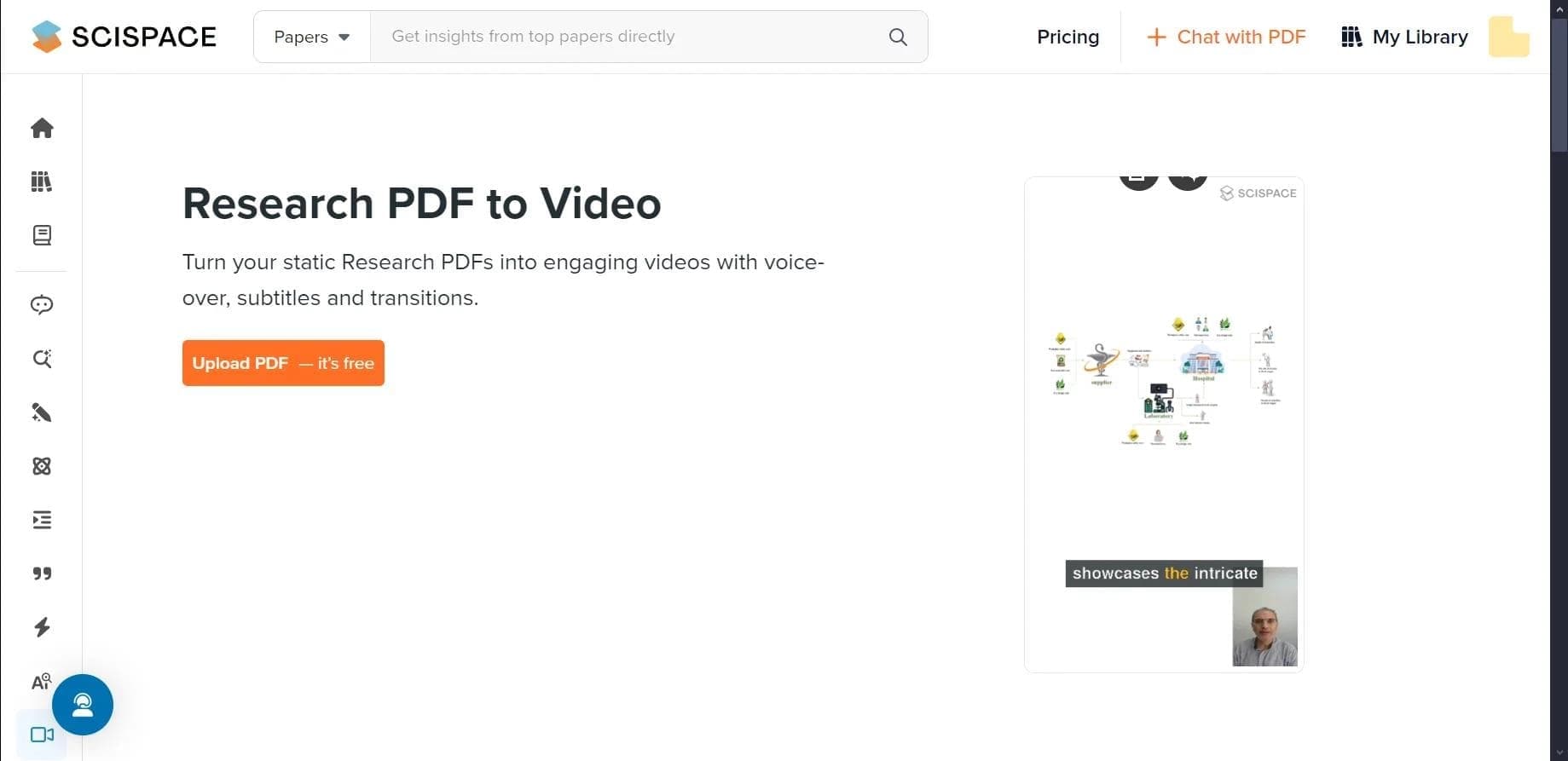
SciSpace is an AI-powered platform designed for searching, analyzing, and understanding scientific articles. The service provides access to millions of scientific publications and also allows users to upload their own PDF documents and interact with them via chat. Users can ask questions about the document's content and receive answers with specific sources cited within the text.
Beyond basic analysis, SciSpace can summarize articles, generate citations, paraphrase text, and create videos from PDF files. An AI agent is also available that autonomously conducts literature reviews on a given topic, working with the arXiv, PubMed, and Google Scholar databases. The platform is aimed at researchers, students, and educators looking to speed up the scientific workflow.
SciSpace Features
| Feature | Value |
|---|---|
| Type | AI platform for working with scientific texts and PDF documents |
| Category | Education, Research, PDF Processing, Summarization, AI Assistants |
| Transformation | Text to text |
| Tasks | Create text, Analyze content, Improve text, Search |
| Free plan available | Yes (free version with basic access and limited AI features) |
| API available | Yes |
| Access to articles | More than 270 million articles |
| Distribution model | Freemium |
| Integration | Mendeley, Zotero |
Who is SciSpace AI suitable for?
Students
For students writing term papers, theses, and research papers, SciSpace helps quickly find relevant sources, understand complex texts, and format citations. The platform is especially useful in the early stages of research, when a large amount of literature needs to be reviewed.
Educators and scientists
For educators and researchers, SciSpace automates routine stages of work: article search, content analysis, and bibliography generation. This allows them to focus on substantive conclusions and hypotheses rather than on technical formatting details.
Anyone working with scientific PDFs
The tool is suitable for anyone who regularly reads and analyzes scientific articles in PDF format. The built-in chat and summarization features significantly reduce the time spent studying a document.
How to use SciSpace AI?
Getting started and registration
To use SciSpace, you need to register on the official website scispace.com (or typeset.io). The free version provides basic access and limited AI features. Once you've created an account, you can start working right away.
Working with PDFs and searching for articles
There are two main usage scenarios. The first is to upload your own PDF document and start asking questions via "Chat with PDF". The second is to use smart search across a database of more than 270 million articles to find the publication you need without specifying exact keywords.
Using the AI agent
The "Agent" feature allows you to set up a task for an autonomous literature review. SciSpace independently searches for articles in arXiv, PubMed, and Google Scholar, analyzes them, and prepares a report. This is convenient for a systematic review on a given topic.
Main features of SciSpace
Chat with PDF
One of the platform's key capabilities is interactive engagement with a scientific article. Users can ask questions about the text, request explanations of complex tables, formulas, or hypotheses, and receive answers with citations from the document. This makes it possible to quickly understand the material without reading it in full.
AI agent for literature review
The agent autonomously searches for and analyzes articles on a given topic using multiple scientific databases. The result is a structured report that helps researchers assess the current state of the field and select the most relevant publications.
Citation and bibliography generator
SciSpace automatically creates excerpts from articles and formats them in more than 9,000 citation styles. The reference list can be exported to BibTeX or Clipboard. This eliminates manual formatting and reduces the risk of errors.
Additional tools
Other features include: AI-generated text detection (with a detailed report); converting PDFs into videos with voiceover; data visualization in the form of interactive charts and diagrams; translation of scientific texts from various languages; extraction of tables and structured data from articles; and a built-in paraphraser for rewriting text.
Advantages of SciSpace
Saving time on routine tasks
The platform automates article search, content analysis, citation generation, and bibliography formatting. Instead of keeping dozens of tabs open, users get all the necessary tools in one place.
Access to a huge database of scientific publications
SciSpace provides access to more than 270 million scientific articles. Smart search finds relevant materials even without precise queries, which greatly simplifies literature review.
Simple interface and interactivity
The platform's interface is intuitive even for beginners. The ability to ask questions about the text and get instant answers with cited sources makes working with scientific articles more visual and efficient.
Disadvantages of SciSpace
The free version has limitations on access to AI features, which may not be enough for full-fledged research work. A paid subscription is required for full unrestricted access to articles and advanced text analysis capabilities. In addition, like any AI tool, SciSpace can make inaccuracies when interpreting complex, highly specialized texts, so analysis results should always be double-checked.
What tasks does SciSpace solve?
Search and analysis of scientific literature
The tool simplifies searching for articles on a given topic, allowing users to find relevant publications without exact keywords. The AI agent can independently conduct a systematic literature review and prepare a report.
Understanding complex texts
With the help of the chat and explanation features, you can quickly understand complex scientific concepts, tables, and mathematical expressions. SciSpace translates complex academic language into a simple, understandable level.
Formatting academic works
The platform helps generate citations, create bibliographies in the required format, paraphrase text to avoid self-plagiarism, and provides ready-made templates for formatting articles.
Data verification and visualization
SciSpace allows you to check text for signs of AI generation, extract tables and data from PDFs, and create interactive charts and diagrams based on the analyzed information.
SciSpace Pricing
SciSpace operates on a Freemium model. A free version is available with a basic set of features and limited AI capabilities. For full unrestricted access to articles and advanced text analysis features, paid plans are available starting from $10 per month. It is recommended to check the exact prices and current promotions on the platform's official website, as they may change.
Terms of use for SciSpace
Registration (creating an account) is required to use the platform. The free version has limitations on access to artificial intelligence features. SciSpace integrates free of charge with the bibliography managers Mendeley and Zotero, allowing users to synchronize their article libraries. Detailed terms of use and data processing policy are available on the service's website.
SciSpace Availability
The platform works online via a web browser at scispace.com (also available through typeset.io). SciSpace supports working with texts in different languages. No information about regional restrictions or the need to use a VPN is provided on the service's pages.
How SciSpace differs from alternatives
Difference from ResearchGate and Academia.edu
ResearchGate and Academia.edu are primarily focused on communication between researchers, creating profiles, and sharing publications. SciSpace, in contrast, emphasizes intelligent text analysis — searching, summarizing, and answering questions about the content of articles — rather than acting as a social network for scientists.
Difference from Mendeley
Mendeley is convenient for managing bibliographies and organizing a personal article library, but it significantly lags behind SciSpace in artificial intelligence capabilities for deep text analysis. SciSpace offers broader access to articles and more advanced tools for working with document content.
Difference from Semantic Scholar
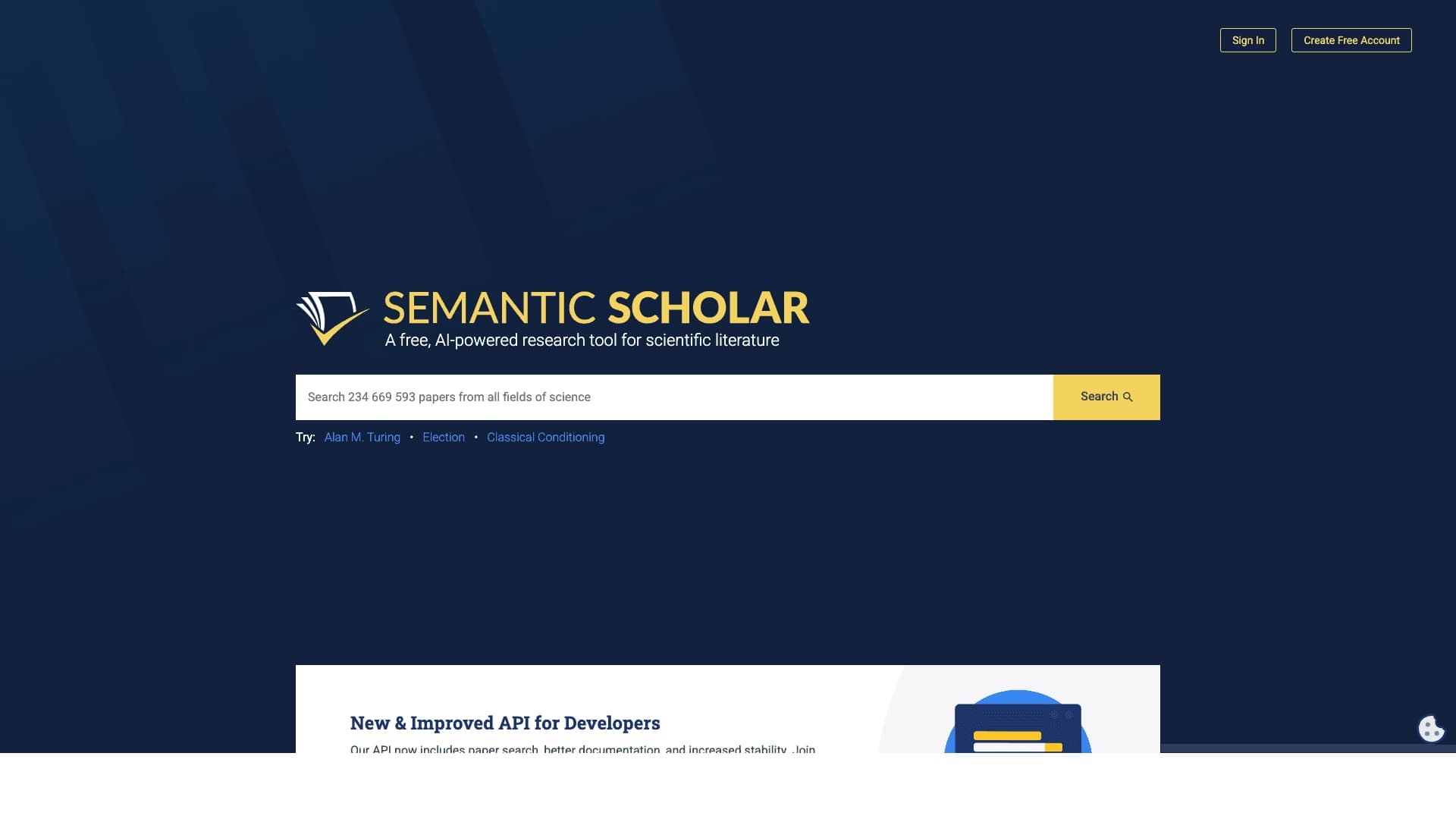
Semantic Scholar is an academic search engine that uses AI to rank and recommend articles. SciSpace goes further by offering not only search but also full interactive engagement with text through chat, citation generation, video creation, and autonomous literature review via an AI agent.
Conclusion
SciSpace is an effective tool for academic work that combines literature search, PDF document analysis, citation generation, summarization, and other functions in a single platform. The platform is suitable for students, educators, and researchers, helping to automate routine stages of working with texts and speed up the research process. Thanks to the freemium model, users can evaluate the basic capabilities for free and, if necessary, expand the functionality with a paid subscription.
Frequently asked questions
See also
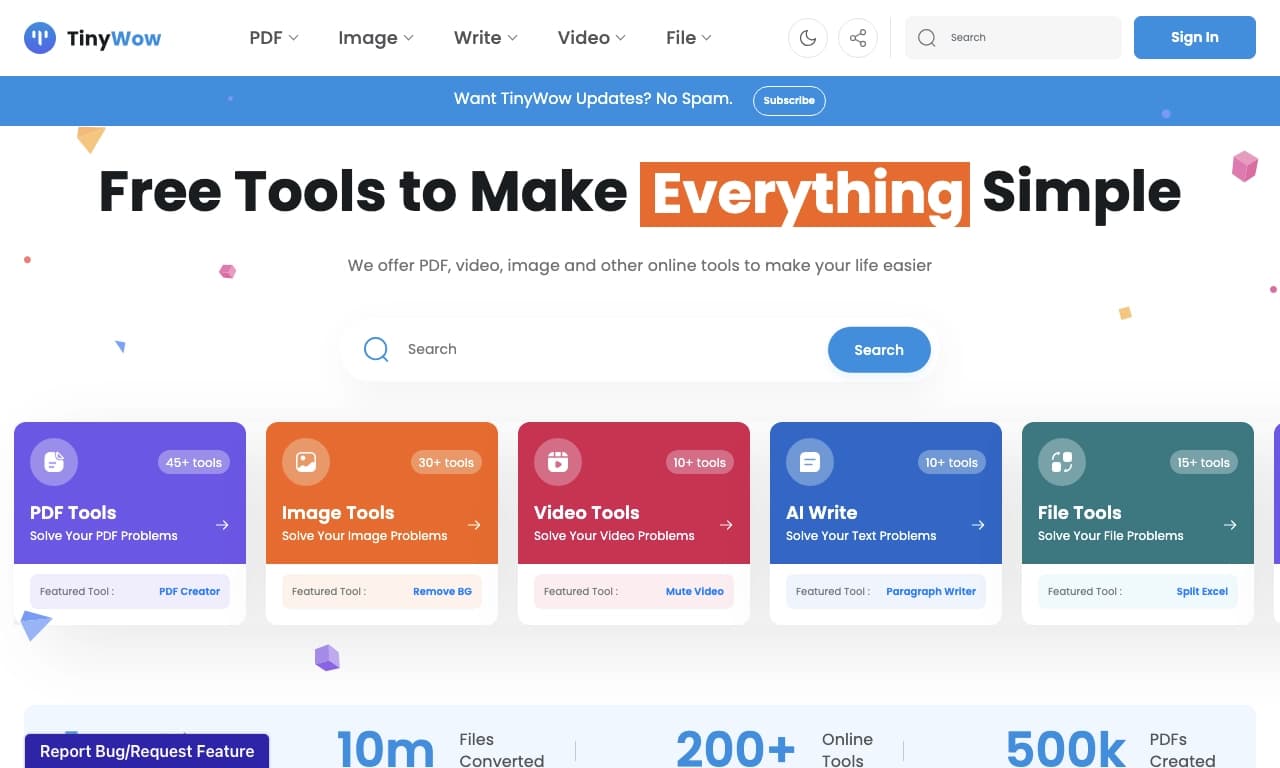

Free online platform with over 150 AI tools for working with PDFs, images, videos, and text.
A sales automation platform that combines customer prospecting, deal management, and AI-powered forecasting.
AI editor for creating, editing, and publishing content with templates and prompts.

Financial platform with an AI assistant for managing accounting, taxes, and budgets.
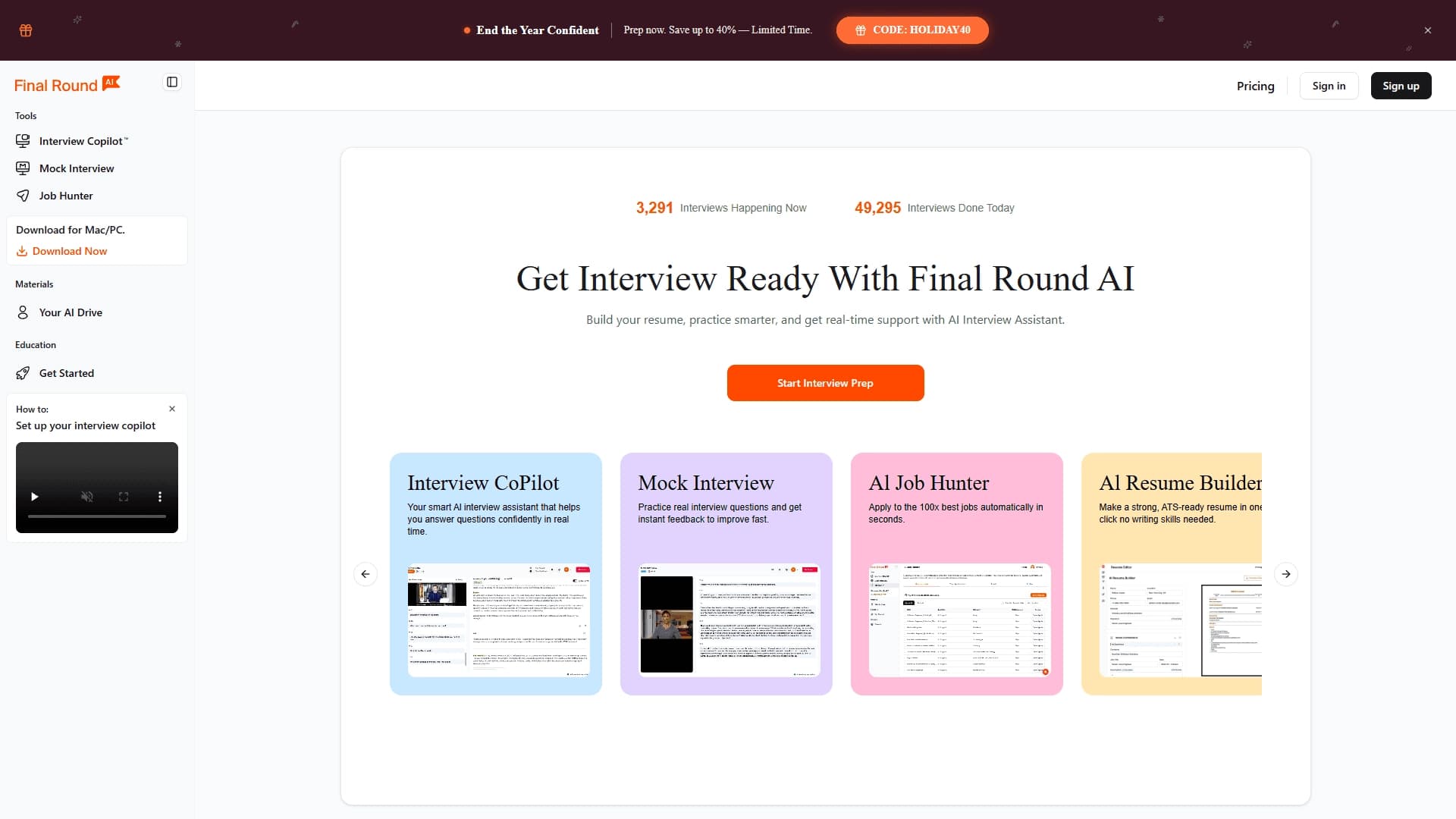
Platform for interview preparation with AI mock interviews and real-time support.
Enterprise language model platform focused on privacy and on-premise deployment.

An app for solving math problems using a smartphone camera and step-by-step explanations.

An online detector that determines whether text was created by a human or generated by neural networks.