
PartyRock
A platform for creating entertainment AI applications without code.

Overview
PartyRock is a platform developed by Amazon Web Services (AWS) that lets you quickly build interactive apps powered by generative AI models. Its standout feature is that it requires absolutely no coding. The builder works like a visual editor: you assemble an app from ready-made blocks and connect them together.
The service is primarily aimed at creating entertainment products: games, chatbots, text and image generators, and interactive stories. PartyRock emphasizes experimentation and rapid idea launch, letting you test a concept in minutes rather than days. No programming or machine learning experience is needed — you just need to know what outcome you want.
The tool is a hybrid of a builder and a sandbox: you can create apps from scratch or take apart other people's projects to understand how they work inside. This makes PartyRock a convenient entry point into the world of generative AI for non-technical users.
PartyRock Features
| Feature | Value |
|---|---|
| Developer | Amazon Web Services (AWS) |
| Platform type | No-code AI app builder |
| Primary purpose | Creating entertainment interactive apps |
| Distribution model | Freemium (free basic access) |
| Coding required | None |
| Target models | Generative AI (language, image) |
| Use cases | Games, chatbots, content generation |
| Entry barrier | Low (suitable for beginners) |
| Working format | Visual builder / sandbox |
Who is PartyRock for?
AI beginners without a technical background
PartyRock is built for those who want to try generative technology but lack programming skills. The builder lets you focus on the creative side rather than technical implementation. It suits marketers, designers, entrepreneurs, and enthusiasts who need quick access to AI capabilities.
Educators and students
The platform can be used for educational purposes: it's a great way to explain how generative models and interactive systems work. Students can create a project prototype in a short time without getting sidetracked by learning programming languages.
Product managers and startups
For those who want to quickly test an idea before full development, PartyRock is a tool for building MVPs. You can assemble a working prototype, show it to users or investors, gather feedback, and only then decide whether to invest in professional development.
How to use PartyRock
Building an app from scratch
To get started, simply go to the platform's website and choose the "Create app" option. A visual editor opens where you add widgets (like a text input field or a button) and connect generative models to them. Blocks are linked with mouse clicks — no coding required.
Working with existing projects
PartyRock's catalog includes example apps created by other users. You can open any project, look at its structure, break it down to see how it works, and use it as a basis for your own. This is an effective way to learn and speed up development.
Iterative experimentation
Since an app is assembled from blocks, it's easy to modify: change parameters, add new elements, connect different models. PartyRock supports rapid iteration — you test the result and make edits on the spot, literally within minutes.
Key PartyRock Features
Visual builder
The platform's main function is creating interactive apps by dragging widgets and linking their logical chains. You control the interface, inputs, and outputs without touching code.
Connecting generative models
Inside the builder, you can use various language and image models to generate text, images, and responses to queries. The models act as "engines" inside your assembled app.
Collection of ready-made apps
The platform includes a library of examples and templates you can use as references, starting points, or learning materials. This helps you master the service faster and adapt solutions from others.
PartyRock Advantages
Zero entry barrier
No development skills, API knowledge, or machine learning expertise are needed to get started. Anyone who can use a browser can build a working app in a single session.
Prototyping speed
An idea turns into a working prototype in an extremely short time. This is valuable for testing hypotheses and experiments: you can quickly see whether an idea is worth pursuing without spending resources on hiring developers.
Learning by doing
Thanks to the ability to take apart other people's projects, the service acts as a learning environment. Users pick up the principles of building conversational systems and generative pipelines without reading technical documentation.
PartyRock Limitations
Limited control over the output
Generative models are inherently unpredictable, and a no-code builder doesn't offer fine-tuning, access to model parameters, or ways to intervene in data processing logic. This limits the complexity and precision of the apps you can create.
Unclear terms for commercial use
Since the service is freemium, details on limits, paid plans, and rules for commercial use need to be checked on the official website. Publicly available data doesn't include the full terms.
Focus on the entertainment segment
The platform is geared toward simple interactive scenarios — games, bots, content generators. For serious business tasks (large-scale data processing, complex integrations), these tools aren't suitable.
What Problems Does PartyRock Solve?
PartyRock is used in three key areas. First, creating entertainment products: simple text games, interactive quests, dialogue simulations, or joke and story generators. Second, developing chatbots and assistants: you can build a bot on a specific topic that answers user questions. Third, content generation: the platform can serve as the foundation for apps that create texts, scripts, headlines, or images on demand. In addition, the service tackles an educational and research goal: it helps people quickly and without deep knowledge understand what generative AI can do.
PartyRock Pricing
The service operates on a freemium model, meaning there's a free basic tier with certain limitations. Public sources don't disclose the details of the pricing structure: limit sizes, paid subscription costs, or overage pricing beyond free quotas. For up-to-date information on available plans, their contents, and prices, you need to check the official PartyRock website — that's the only place where trustworthy data is published.
PartyRock Terms of Use
The exact list of terms, including privacy rules, data handling, and restrictions on content types, isn't available in public sources. What's known is that PartyRock is provided as an AWS cloud service, which means Amazon Web Services' base policies apply. You should also keep in mind that the service targets entertainment content, so there may be restrictions on using materials that violate laws or ethical norms. Before getting started, it's recommended to review the platform's official documents and user agreement yourself.
PartyRock Availability
PartyRock is a web service accessed through a regular browser on a computer or mobile device. The platform runs on AWS infrastructure, which implies high service availability as long as you have a stable internet connection. Details on geographic availability (the list of countries where the service is fully open, or regional restrictions) aren't described in public sources, so it's worth checking availability on the official website before use. Given its AWS backing, you can expect a high level of hosting reliability and infrastructure security.
How PartyRock Differs from Alternatives
The key difference between PartyRock and other similar AI app builders is the balance between ease of use and quickly producing a finished product without any code. Many competing no-code platforms either require learning a visual programming language and configuring business logic, or are limited to building simple chatbots. PartyRock stands out with its focus on creativity and experimentation: you can quickly assemble a functional app from a few blocks and then increase its complexity iteratively. Another distinctive feature is the ability to take apart other people's projects — something rarely found in other services — which turns the platform into an educational tool. A direct comparison with competitors on the number of features, supported models, or widget types isn't possible without current information from the official website, but PartyRock's approach to user experience leans heavily toward a playful, experimental side.
Conclusion
PartyRock is an accessible entry point into the world of generative AI for people without a technical background. The service's core value lies in its simplicity and speed: any user can assemble a working interactive app in minimal time. This makes the platform useful for prototyping, learning, and entertainment projects. At the same time, the service has objective limitations: insufficient configuration flexibility, a focus on lightweight content, and incomplete information about commercial terms that you'll need to clarify separately. As a result, PartyRock is more of a tool for quick experiments and getting familiar with generative technology than a universal environment for industrial-scale development.
Frequently asked questions
See also
Unified API access to more than 500 AI models, including GPT-5 and Claude 4.5, with the ability to save on costs.
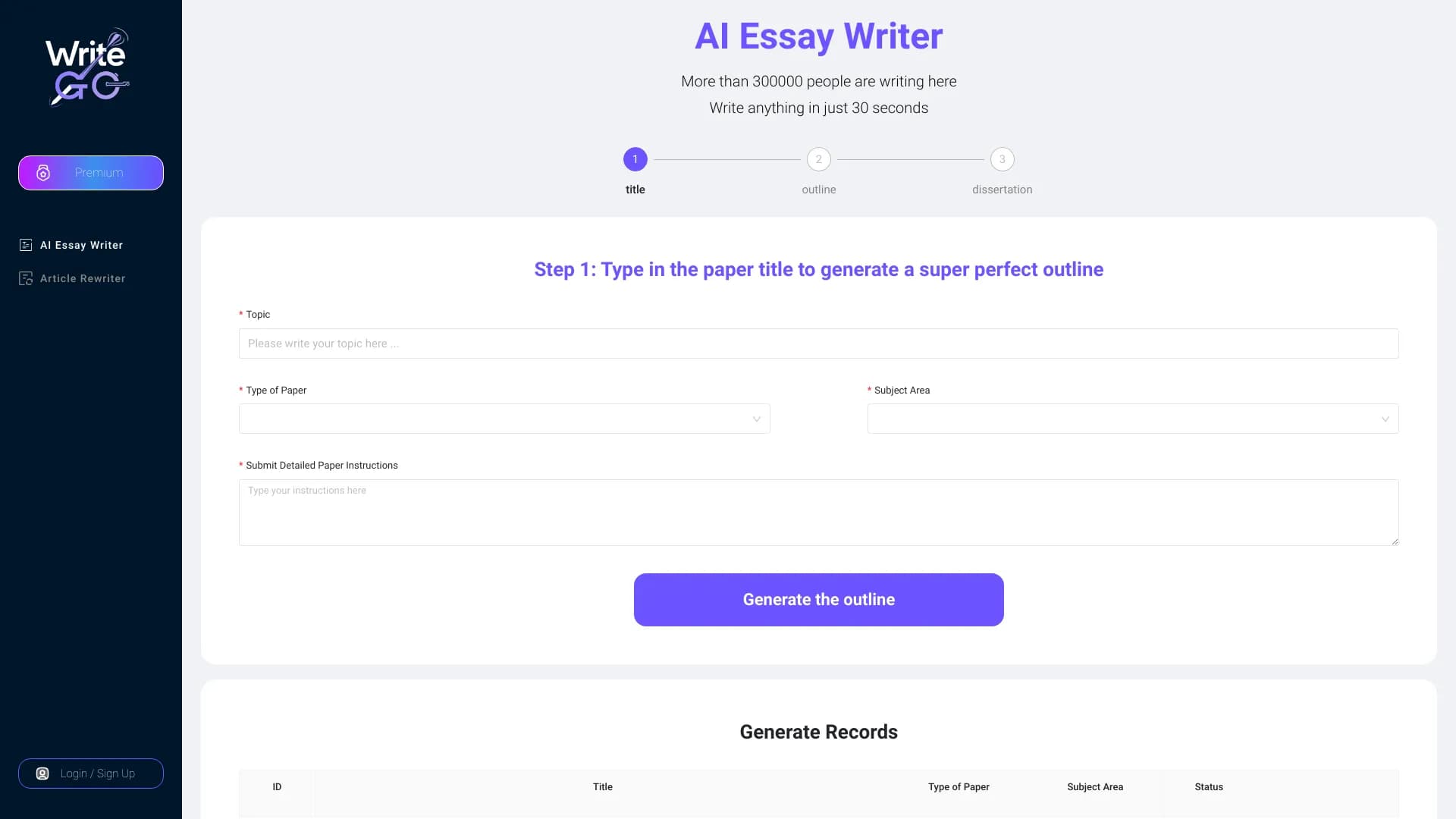

WriteGO.AI is an AI writing platform improvement academic texture and the content for different targets.

A universal AI platform for creation editing and animations of images and videos.
AI assistant for academic writing that helps create essays and research papers with proper citations.

AI platform for automatic workday planning, task management, and prioritization.

A multifunctional AI assistant for generating texts, images, and audio.

A platform for communicating with virtual AI characters that supports text, voice and multimedia interactions.

Generation service realistic speech and cloning AI voices.