

LangWatch
Platform for testing, evaluating, and monitoring AI agents on large language models.
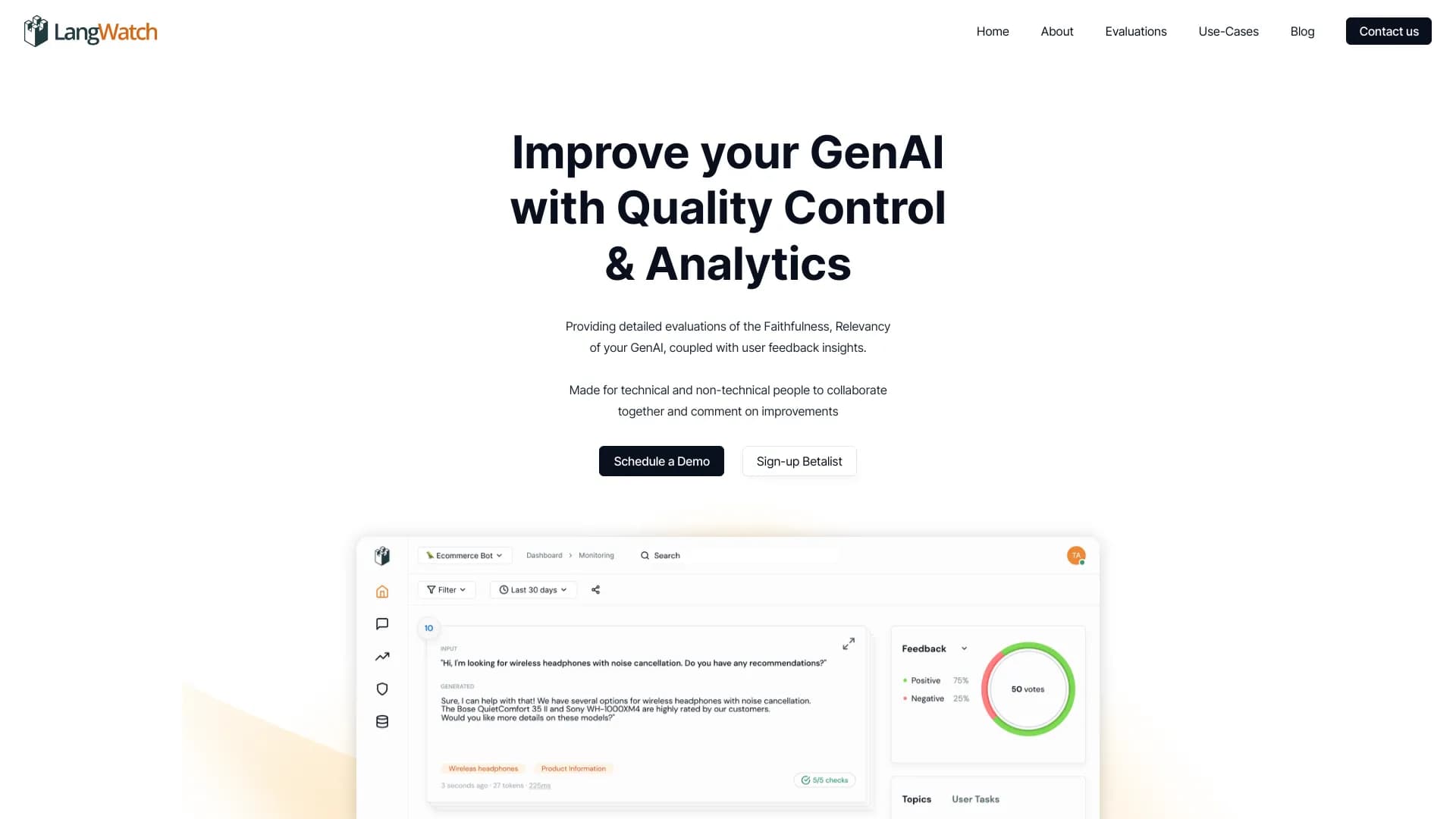
Overview
LangWatch AI Description
LangWatch is a specialized platform for developers building AI agents based on large language models (LLMs). The service covers the full product quality lifecycle, from automated testing to production monitoring. LangWatch's core mission is to enable teams to run agents against simulated user scenarios, track key response metrics, and quickly identify regressions that occur when models are updated or prompts are changed.
The platform addresses the "black box" problem faced by developers of complex multi-step agents. Instead of guessing why an agent behaved unexpectedly, LangWatch provides complete logs with a breakdown of the entire call chain, the context used, and the prompts sent. This transforms debugging of LLM applications from a chaotic process into systematic engineering work.
At its core, LangWatch is observability for LLM applications, enhanced with automated evaluation tools. The solution is suitable both for the development and QA stages and for continuous quality control of agents already in production.
LangWatch Features
| Feature | Value |
|---|---|
| Tool Type | Platform for testing, evaluating, and monitoring AI agents and LLMs |
| Category | Logs and monitoring; Testing and test cases |
| Primary Audience | Developers of AI agents and LLM applications |
| Key Capability | Running simulated user scenarios to test agents |
| Evaluation Function | Regression analysis of response quality between versions |
| Debugging Function | Complete logs of call chains, context, and prompts |
| Website | langwatch.ai |
Who Is LangWatch For?
Machine Learning Engineers
LangWatch is designed for professionals who develop and maintain AI agents. For this category of users, the platform serves as a bridge between model training and practical application, allowing them to verify agent behavior in controlled scenarios and track quality degradation after configuration changes.
QA Engineers and LLM Application Testers
Teams responsible for the quality of LLM-based products gain a tool for automating checks. Instead of manually testing each conversation, specialists can configure agent runs against multiple virtual users, speeding up the process of identifying errors and edge cases.
Technical Leaders and AI Product Owners
For those managing LLM development teams, LangWatch provides objective metrics for comparing different product versions. This simplifies release decisions — it's easy to see whether a new update has degraded accuracy or stability.
How to Use LangWatch
Getting Started
To start using the platform, visit the official website at langwatch.ai. The tool's page in the catalog includes an "Open AI" button that provides a direct link to the resource. Detailed step-by-step instructions are not published on the overview page, so after visiting the site, you'll need to explore the interface and project documentation on your own.
Practical Application
Working with LangWatch revolves around two key processes. The first is setting up automated tests with simulated users that run the agent through various conversational scenarios. The second is using dashboards and logs to analyze quality metrics, compare results between model versions, and identify failure points in conversational chains.
Key LangWatch Features
Automated Testing with Simulated Users
LangWatch allows you to run test sessions for agents involving virtual users. This feature is designed for accelerated validation of new AI agent versions without needing to involve real people. Simulations help uncover typical interaction errors before an update reaches production.
LLM Quality Evaluation and Regression Analysis
The platform automatically collects metrics related to response quality: accuracy, adherence of the output to instructions, and behavioral stability. A key feature is the ability to compare these metrics across different model versions and prompt configurations, making it possible to pinpoint when quality degraded and link it to a specific change.
Observability and Dialogue Debugging
LangWatch stores the complete interaction history of agents. Developers can open a log at any time and trace the entire call chain: see which prompts were sent, what context was used, and what final response the model returned. This significantly simplifies incident analysis and the search for systemic errors.
LangWatch Advantages
Iteration Speed
Having an automated testing tool allows teams to validate hypotheses and ship updates faster. There's no need to wait for manual review — simulations with virtual users provide immediate initial feedback.
Deep Process Transparency
Unlike many tools that only provide the final answer, LangWatch shows the entire internal process of the agent. This level of detail at the context and prompt level is extremely valuable when developing complex multi-step dialogue systems.
Systematic Approach to Regression Control
One of the main problems with LLM applications is output instability when settings change. LangWatch makes it possible to track regressions between releases, providing teams with objective data on which update led to a decline in specific metrics.
LangWatch Drawbacks
Steep Learning Curve for New Users
Detailed getting-started documentation is absent from overview materials, which can create obstacles for quickly getting familiar with the tool. New users will likely need to spend time learning the platform's functionality on their own.
Narrow Specialization
The tool is intended exclusively for developers of AI agents and LLM applications. The product is not suitable for regular users or companies that don't do their own development on large language models and lack specialized technical expertise.
Unclear Distribution Model
The platform's distribution model is currently not clearly defined, which may raise questions about the availability of certain pricing plans and terms for specific categories of developers.
What Problems Does LangWatch Solve?
Tracking AI Agent Behavior
The platform handles the task of continuously monitoring agent actions during operation or testing. This allows real-time detection of behavioral deviations and timely response to failures.
Finding Regressions in Model Quality
LangWatch automates the process of comparing metrics between versions. Instead of manually searching for degradations, the platform itself signals when a new model or prompt version performs worse on specific indicators (accuracy, stability, instruction adherence).
Analyzing Problematic Dialogues at the Request Level
The tool provides the ability to perform detailed analysis of each individual conversation. Developers can see at which step of the call chain a failure occurred, what context was passed to the model, and which specific prompt led to an incorrect response.
Optimizing Prompt Engineering
By comparing prompt configurations and the resulting quality metrics, LangWatch helps identify systemic errors and select more effective instruction formulations for the model.
LangWatch Pricing
Official information about LangWatch's pricing policy is not presented in the available source data. Current rates and paid subscription terms should be checked directly on the service's website at langwatch.ai, where developers publish their commercial offers.
LangWatch Terms of Use
The platform's terms of use are not described in detail in overview sources. As with pricing, the full rules, license agreement, and usage restrictions are posted on the tool's official website. Developers interested in using the sandbox and production monitoring are advised to refer to the primary source.
LangWatch Availability
LangWatch is provided as a cloud service, accessible via a web interface on the official website langwatch.ai. The "Open AI" button in the catalog leads directly to the resource. No regional availability restrictions are mentioned in the source data, nor is there any mention of a mobile version or desktop client. It is noted that the exact publication date of the overview information about the tool is December 16, 2025.
How LangWatch Differs from Alternatives
Combining Testing and Observability
LangWatch's main distinction from narrowly focused solutions is that the platform unites two key disciplines. Most monitoring tools can only log and display charts, while standalone testing frameworks lack mechanisms for continuous quality control in production. LangWatch combines simulated user runs with deep log analysis.
Focus on Regression Analysis for LLMs
While many systems merely record the fact of an error, LangWatch specializes in systematic version comparison. The ability to trace how a change in context or prompt affected quality metrics sets the platform apart from simple log collection systems.
Focus on the Call Chain
LangWatch pays special attention to process detail: tracking prompts, context, and the call chain within the agent. This is a level of detail rarely found in standard APM solutions, making it a specialized tool specifically for LLM development teams.
Conclusion
LangWatch is a specialized platform for developers working with AI agents based on large language models. The tool covers key stages of the product lifecycle: automated testing with simulated users, metric-based quality evaluation, regression analysis between versions, and detailed dialogue debugging with the ability to trace the entire call chain. For teams facing issues with response instability or difficulties in prompt configuration, LangWatch can become a foundational solution. However, it's worth noting that the tool is intended exclusively for technical specialists, and details on pricing and terms of use need to be clarified on the project's official website.
Frequently asked questions
See also
A presentation creation service that uses multiple AI agents for information gathering, design, and data analysis.
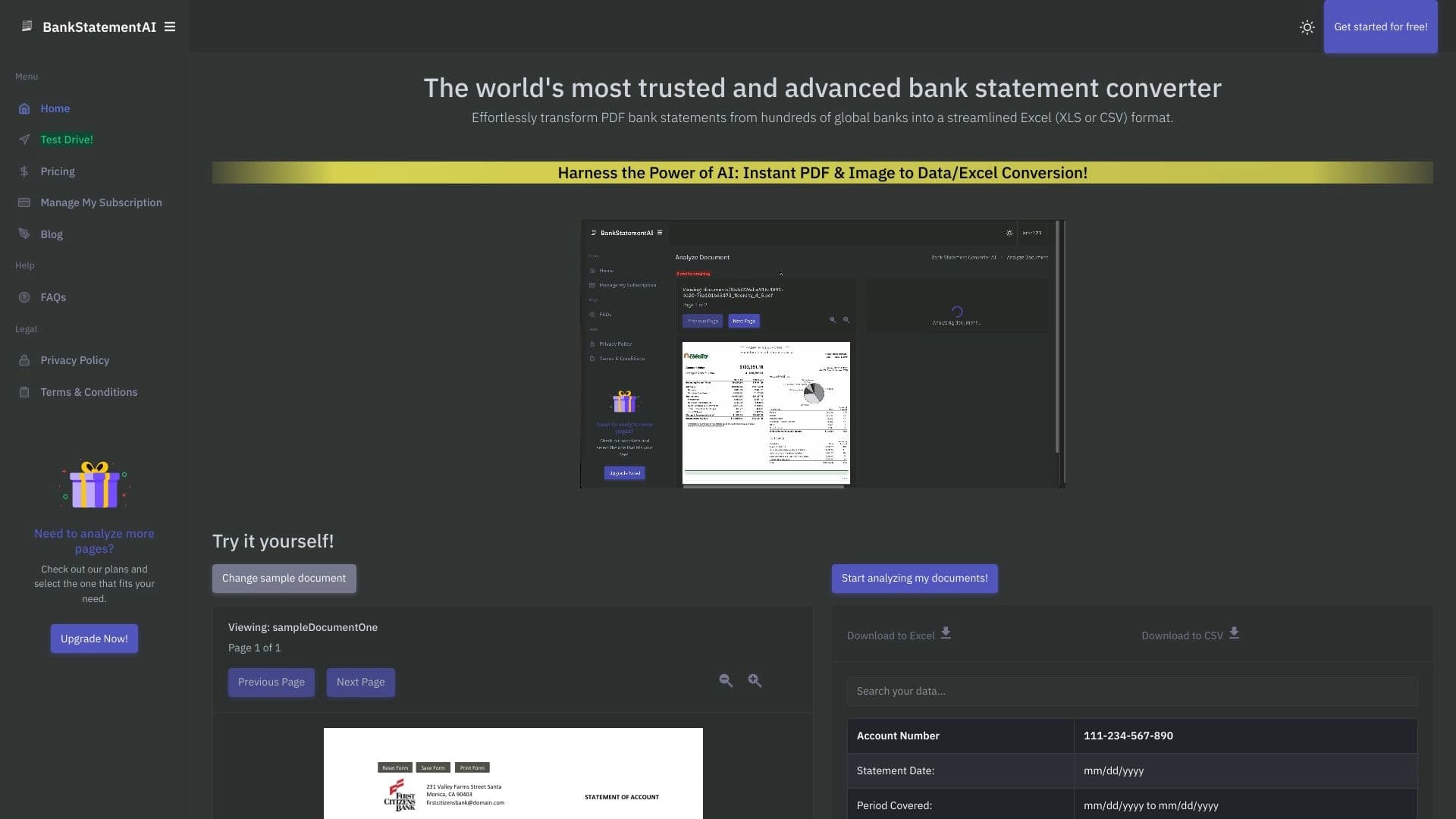
AI-powered online service that automatically converts bank statements from PDF into structured CSV files.
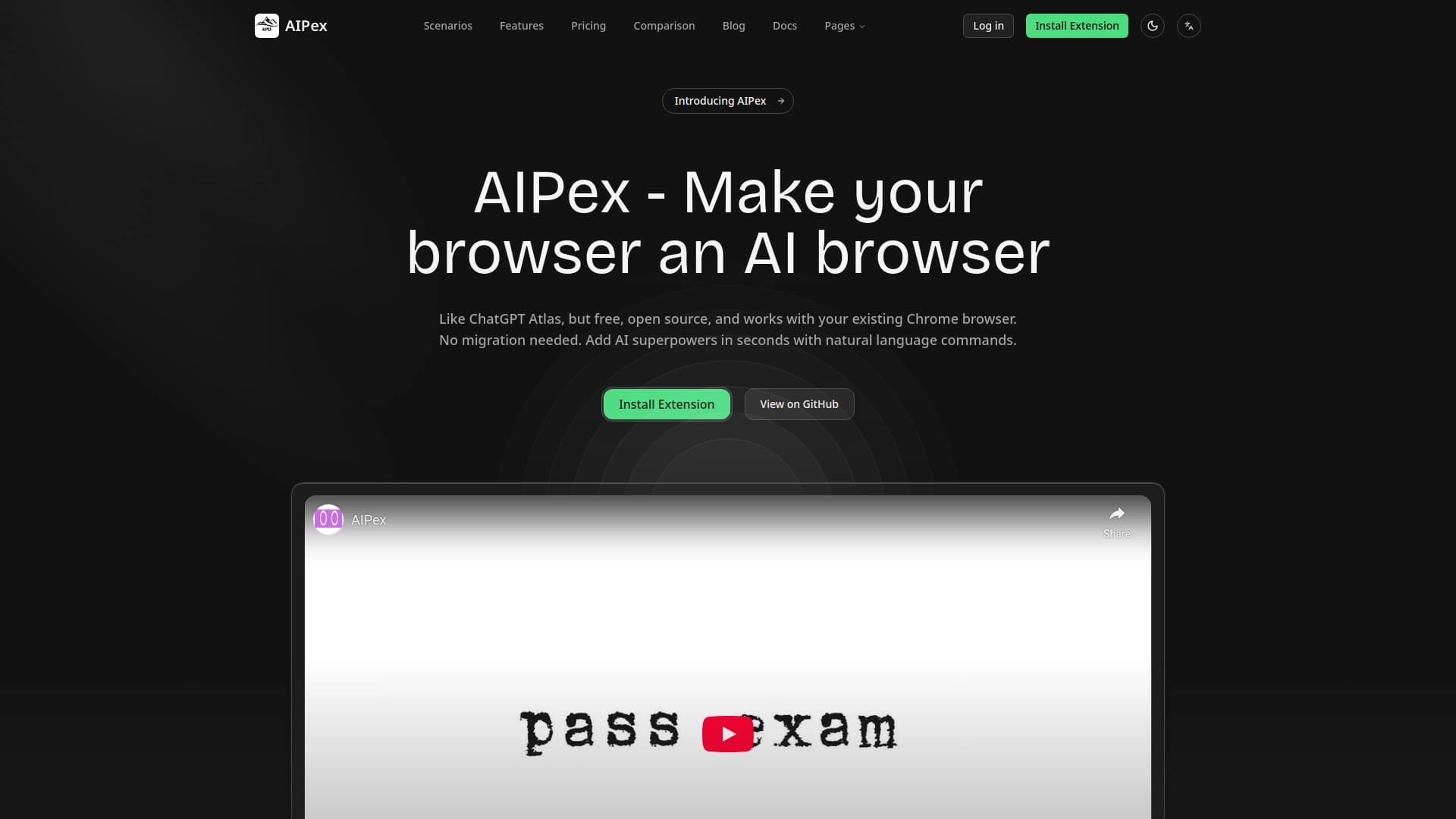

Chrome extension that helps manage tabs, history, and bookmarks with an AI assistant.
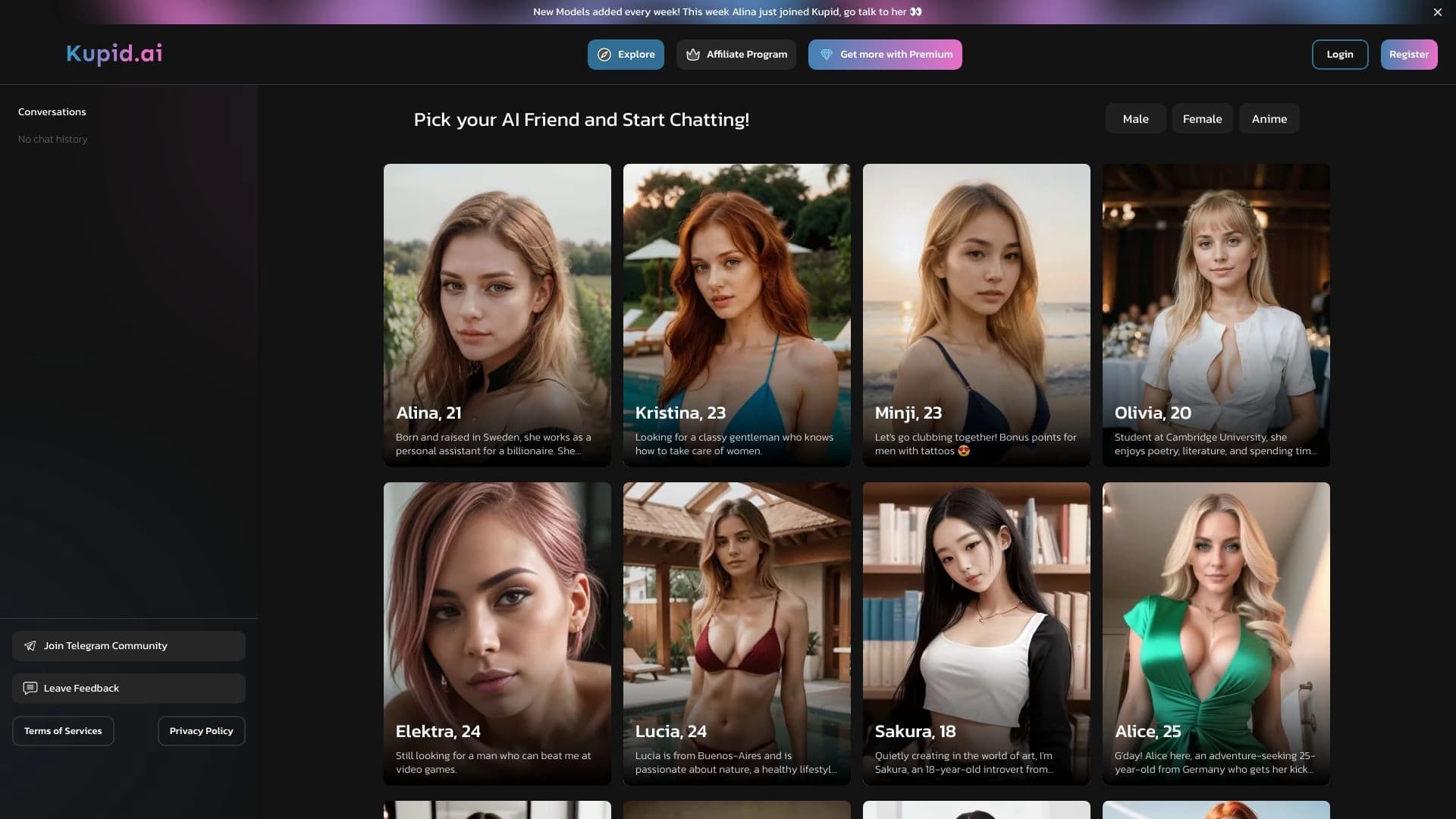
Platform for creating and communicating with personalized virtual companions.
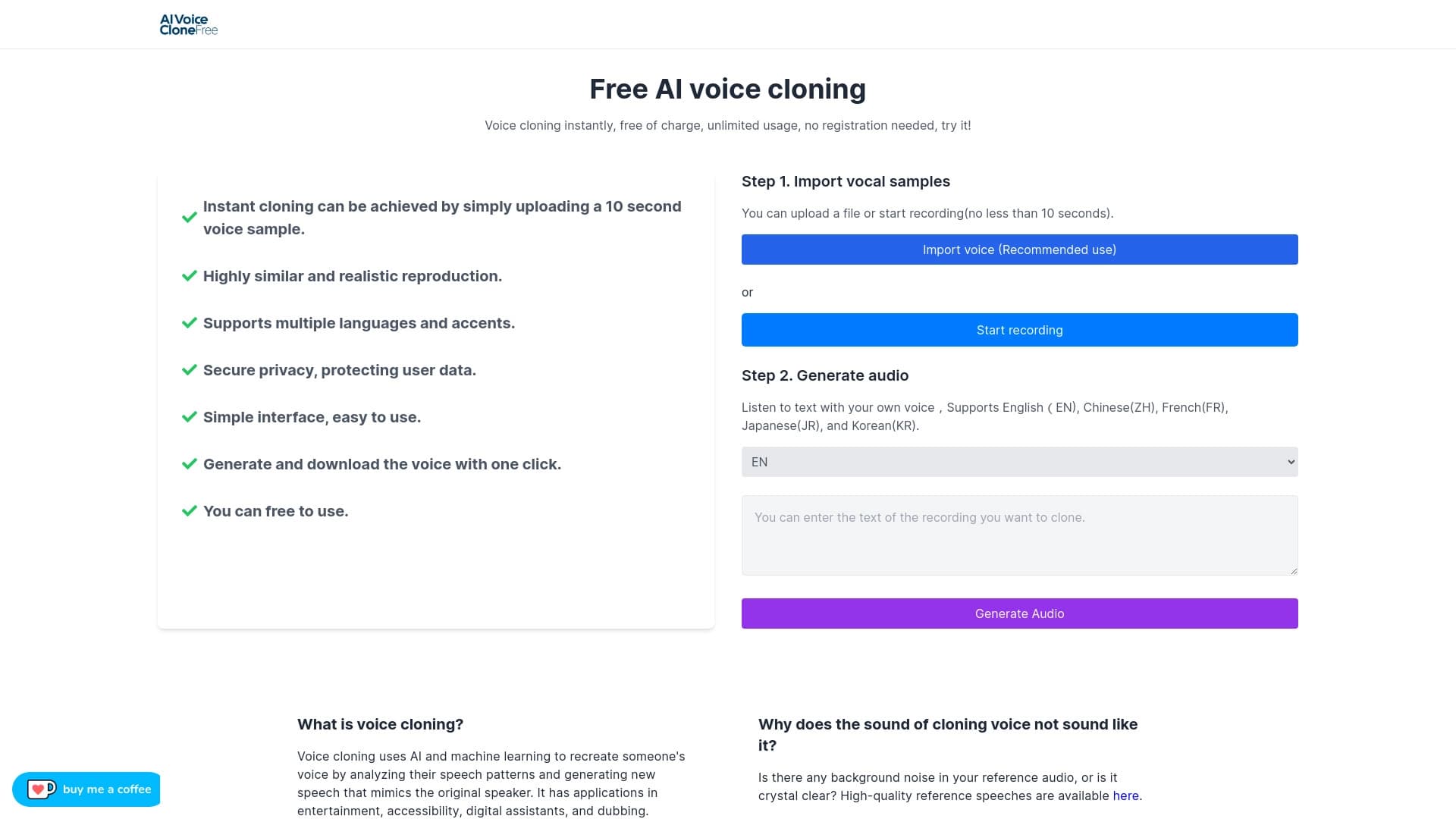
Online service for creating a realistic voice clone from a short audio recording and text-to-speech.
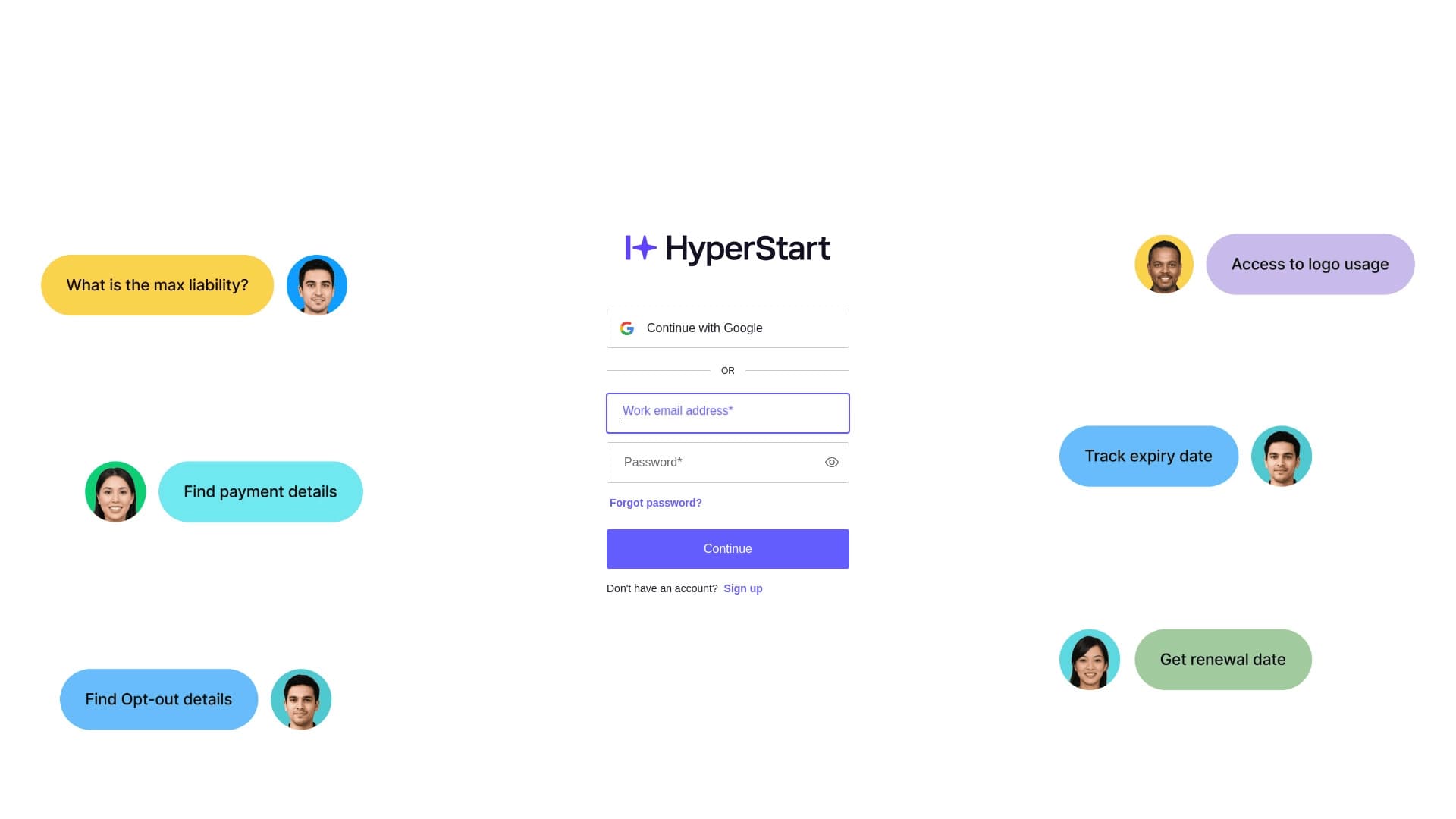
AI tool for automating contract lifecycle management.
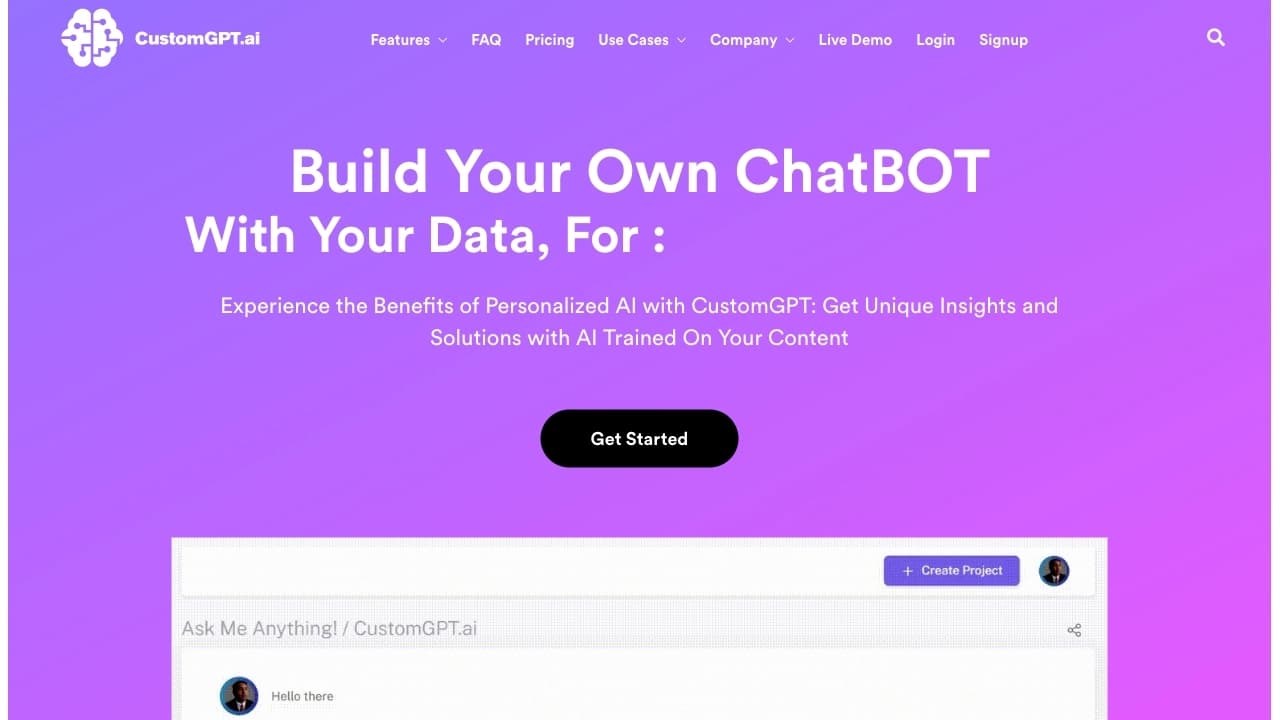

A platform for creating corporate chatbots based on your own documents without coding.

Russian-language GPT-based AI chatbot for information retrieval and text generation.