

FluxAPI.ai
API access to FLUX.1 models for image generation and editing.
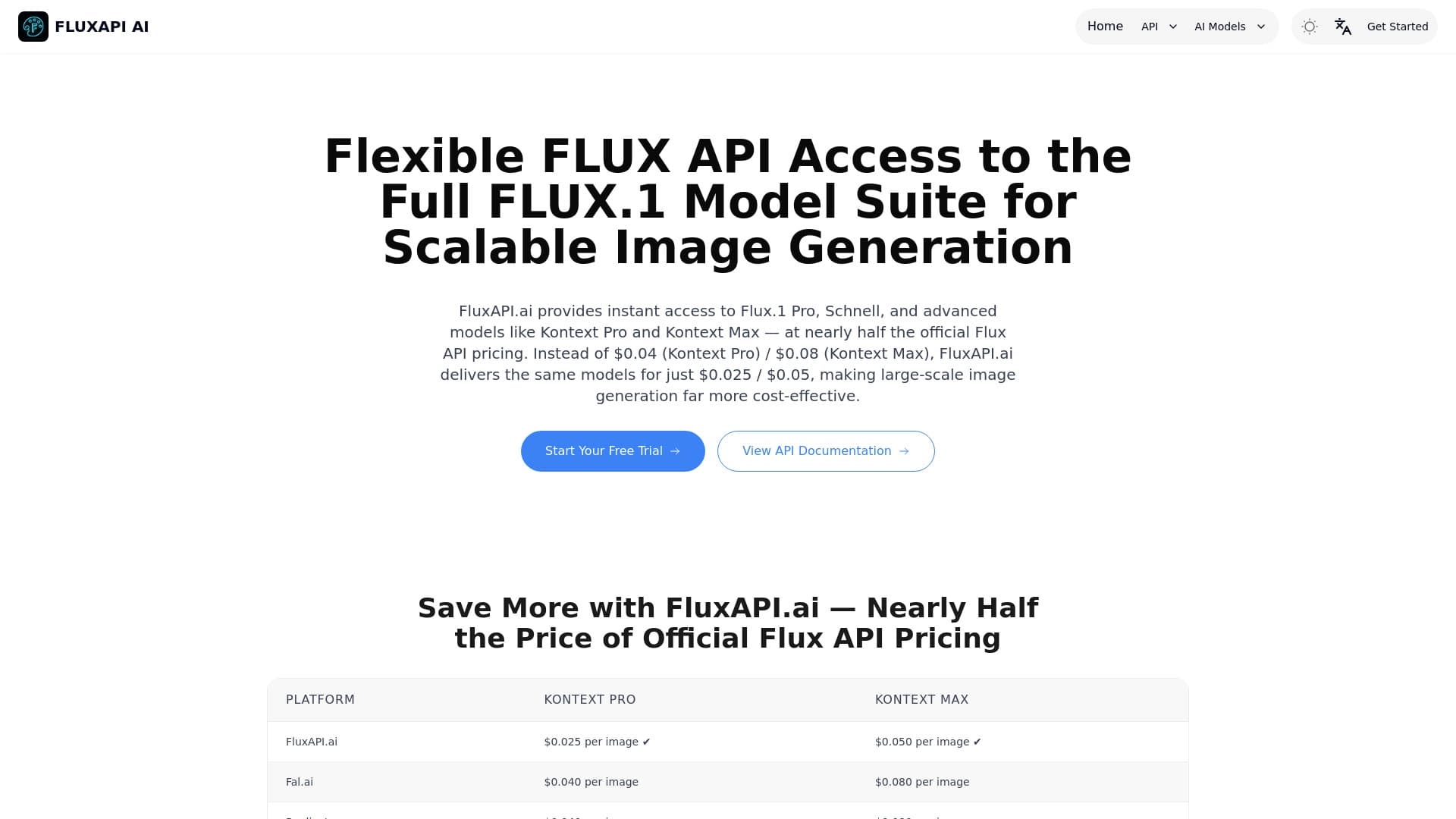
Overview
FluxAPI.ai Description
FluxAPI.ai is a service that provides developers with access to FLUX.1 family models through a programming interface (API). Instead of deploying and maintaining heavy machine learning models on their own, users can send requests to remote servers and receive ready-made results. This makes it possible to embed image generation and editing capabilities into your own products, web applications, or internal workflows without diving into the details of how neural networks work.
The platform is focused on making modern image processing technologies accessible to a wide range of professionals — from individual developers to teams working on commercial projects. The main emphasis is on scalability and ease of integration.
FluxAPI.ai Characteristics
| Characteristic | Value |
|---|---|
| Access Type | Via API (programming interface) |
| Target Models | FLUX.1 family of models |
| Main Tasks | Image generation and editing |
| Distribution Model | Paid |
| Key Scenarios | Integration into applications and services by developers |
| Target Audience | Development teams and individual professionals |
Who is FluxAPI.ai suitable for?
Developers and Programmers
The service is primarily designed for developers who need to add image processing features to their projects. This can include creators of mobile applications, web platforms, or desktop software.
Technical Teams and Studios
Teams working on products that require automatic generation of visual content can use the API to embed the neural network into their pipelines. This eliminates the need to purchase and maintain expensive server hardware.
Individual Professionals and Startups
Thanks to its positioning as an accessible solution, the service is also suitable for small projects. Individual developers or small startups can rent computing power via the API and pay only for actual usage, instead of investing in their own infrastructure.
How to use FluxAPI.ai?
Integration via Code
To get started, you need to register with the service and obtain a unique access key (API key). Then, by sending HTTP requests to the endpoints provided by the service, you can submit text descriptions or source images and receive a generated or edited result in response.
Iterative Development
The process typically involves testing various request parameters, such as image style, resolution, or generation steps. Developers can experiment with settings to achieve the desired visual quality before implementing the chosen parameters into a stable version of the application.
Embedding into User Scenarios
Once configured, API calls can be embedded into the application's logic: for example, a user enters a text prompt, the program sends it to FluxAPI.ai, receives an image, and displays it. The service is designed for real-time use with automatic scaling to handle load.
Key Features of FluxAPI.ai
Image Generation from Scratch
The core capability of the service is creating entirely new images based on text descriptions. The user describes the desired scene or object, and the FLUX.1 model interprets the request and generates the corresponding image. This is applicable for creating illustrations, concept art, design mockups, and other visual materials.
Editing Existing Images
In addition to generation from scratch, the API supports working with user-uploaded images. Developers have access to modification functions: they can change individual elements, stylize an image to fit a specific genre, extend the image beyond its original boundaries, or change the surrounding background.
Modern Model Architecture
The service is powered by models from the FLUX.1 family, which represent cutting-edge developments in image synthesis. The performance of these models allows for detailed and realistic results that match the current state of the art.
Advantages of FluxAPI.ai
- Ease of Integration: The service handles the technical maintenance of the models. Developers don't need to install complex software or have deep knowledge of machine learning — understanding how to work with APIs is sufficient.
- Scalability: The service infrastructure can handle both one-off requests and large volumes of traffic. An application can suddenly increase the number of calls without worrying about server performance.
- Cost Effectiveness: For many teams, purchasing their own GPU servers can be unprofitable, especially during the prototyping stage. Paying for actual usage via the API is often a more flexible and affordable alternative.
Disadvantages of FluxAPI.ai
Since the service is commercial and does not publish detailed technical documentation in open sources, potential drawbacks include dependence on third-party infrastructure. This means that the application's operation directly depends on the stability of the provider's servers and connection quality. Additionally, the paid distribution model may be a barrier for developers with minimal budgets or for non-commercial experimental projects.
What problems does FluxAPI.ai solve?
The main goal of the service is to bridge the gap between complex neural network technologies and the end product. FluxAPI.ai solves the problem of a high entry barrier by providing access to advanced models without the need for your own hardware. For businesses, this means faster development of features related to visual content: automatic creation of banners for advertising campaigns, generation of design variations, and preparation of images for product catalogs.
For tool and platform developers, this is a way to expand the functionality of their products. By embedding the API, developers can offer users unique capabilities — from instantly generating ready-made illustrations for articles, presentations, or social media posts from a simple text description.
FluxAPI.ai Pricing
Exact rates and pricing plans for the service were not disclosed in the provided source data. It is known that FluxAPI.ai follows a "paid" distribution model, meaning it is a fully paid service. Potential users should likely expect a pay-per-use pricing principle, which is standard for such API services; however, specific figures and tariff breakdowns are currently unknown.
FluxAPI.ai Terms of Use
Information about the terms of use was not provided in the source data. Typically, such platforms have a standard set of rules, including a service level agreement, privacy policy, and data processing regulations. Additionally, such services usually impose restrictions on generating prohibited content. The exact legal details of cooperation, including billing procedures and contract termination conditions, should be clarified in the service documentation or during registration.
FluxAPI.ai Availability
The provided materials lack information about the geographic availability of the service, regional restrictions, or a web interface for account management. It can be assumed that providing an admin panel for managing keys and viewing usage statistics is standard practice; however, there is no confirmed data on this. Access to the platform is likely possible through the official website, but registration details and the list of supported countries remain unknown.
How FluxAPI.ai differs from alternatives
The main difference between FluxAPI.ai and many competitors is its focus on providing API access specifically to the current FLUX.1 model lineup. While many services offer a graphical interface for direct work with the neural network, FluxAPI.ai is designed for those who want to automate the process and integrate generation into their own code.
This approach involves some trade-offs. Unlike services with a full-featured web editor, users here do not have the ability to manually fine-tune images in detail using brushes or layers. However, in exchange, the developer gains flexibility, allowing the use of the neural network's capabilities in unlimited user scenarios — from batch photo processing to creating dynamic content on a website. This distinguishes FluxAPI.ai from closed applications that only provide results within their own environment.
Conclusion
FluxAPI.ai positions itself as a technological tool for developers aiming to integrate image generation and editing features into their products. The service offers a scalable and accessible way to work with advanced FLUX.1 models, making it an attractive solution for teams and professionals looking to optimize costs and accelerate development. Nevertheless, due to the lack of detailed public information about pricing and terms, potential clients are advised to carefully review the service documentation or contact its representatives before making a decision.
Frequently asked questions
See also
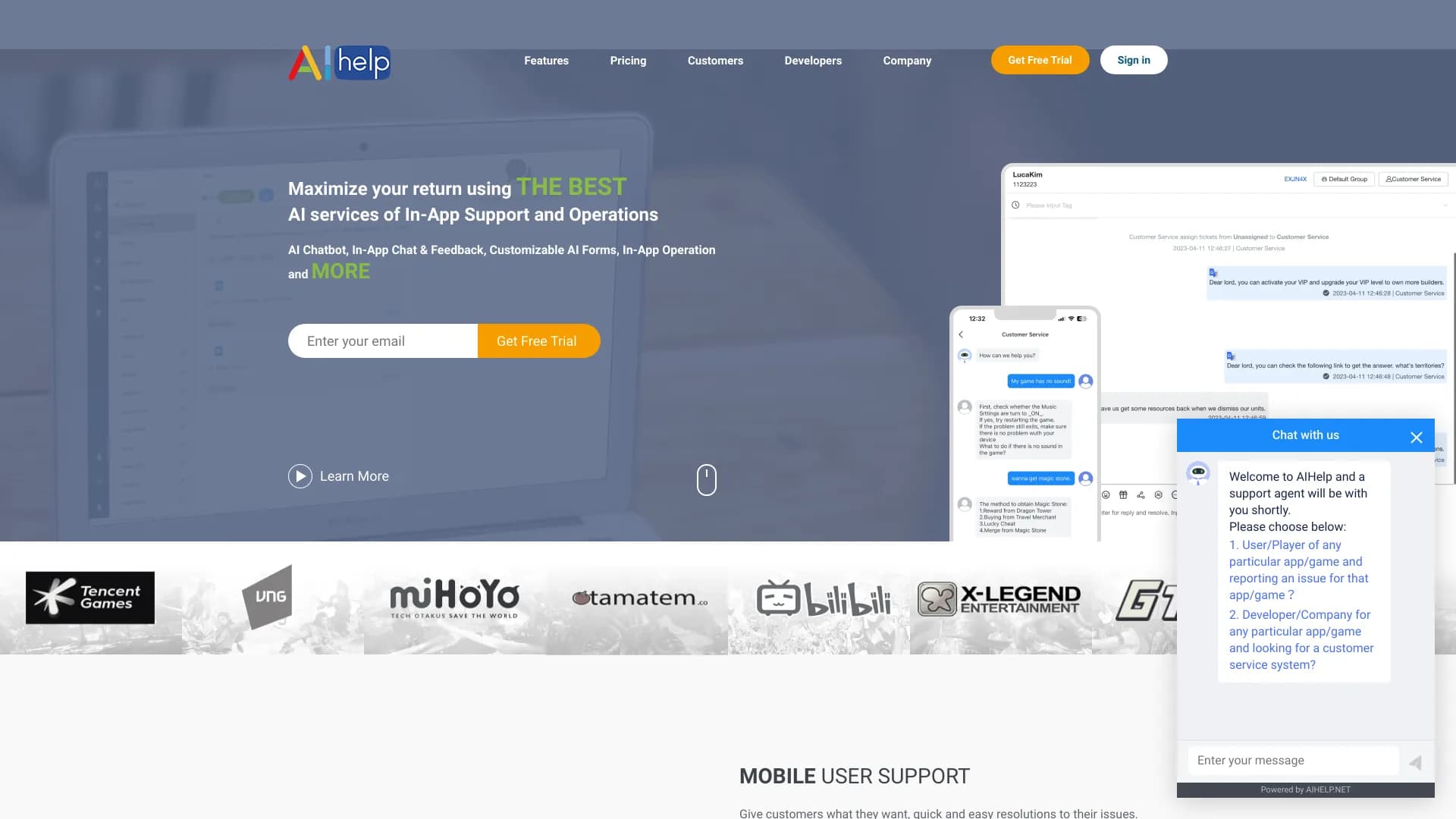

AI platform for user support in applications, including a chatbot and ticketing system.

Mobile app for photo editing and creating stylized avatars using AI.
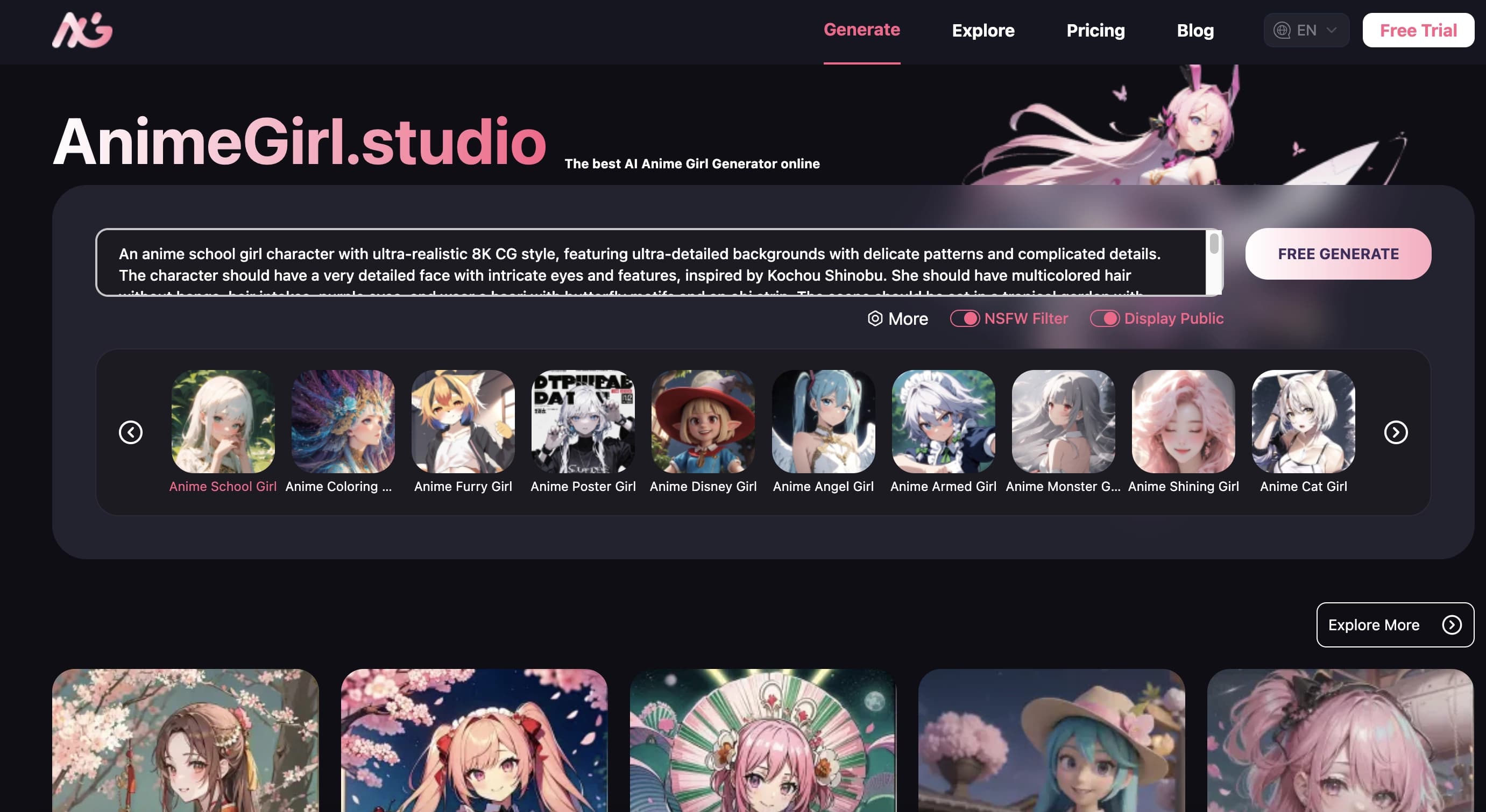

AI anime image generator from text descriptions with template selection.
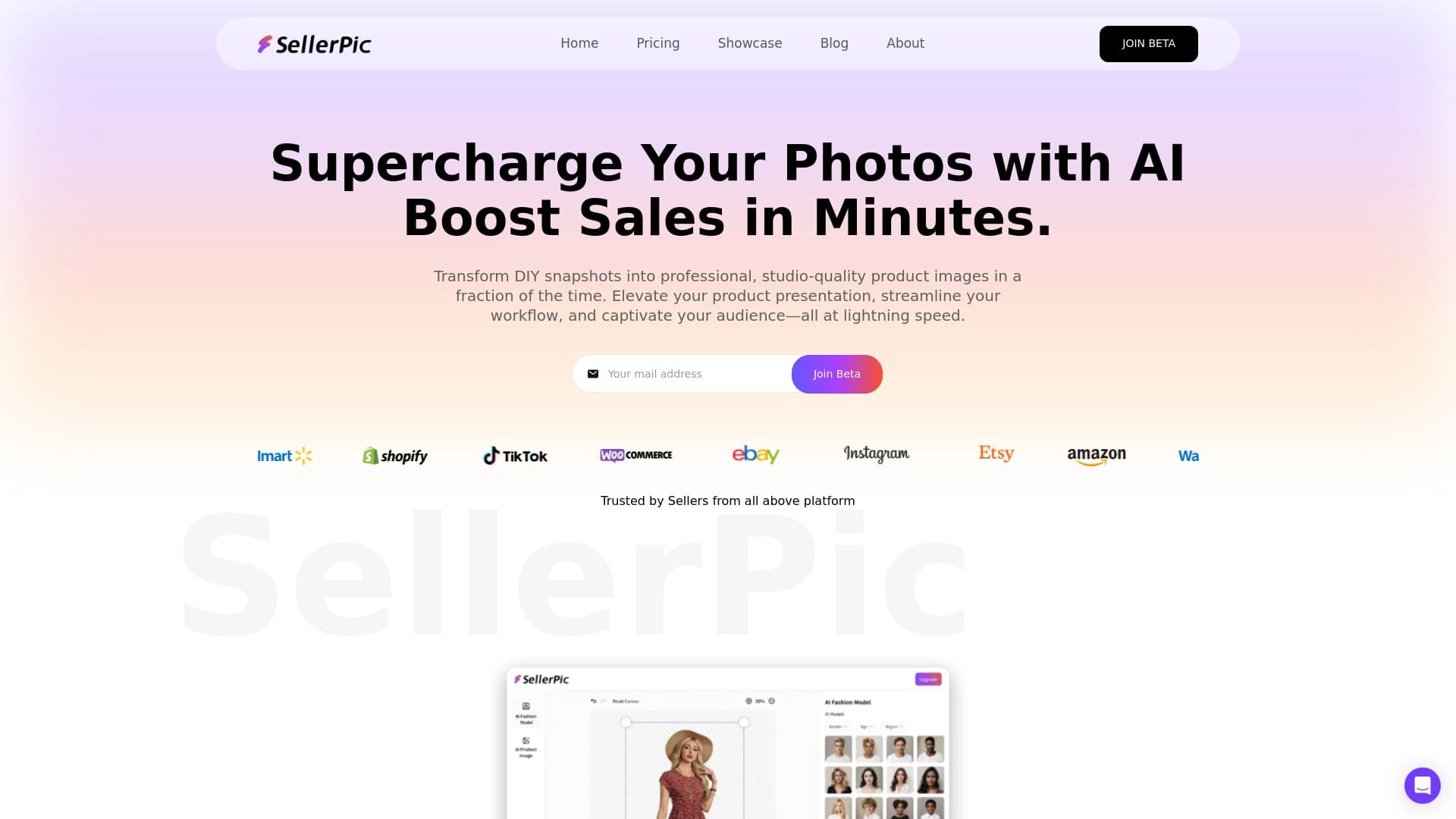

AI-based platform for creating and editing product images and videos for e-commerce sellers.

AI toolkit for video generation and editing, including avatars, lip-sync, and voice cloning.
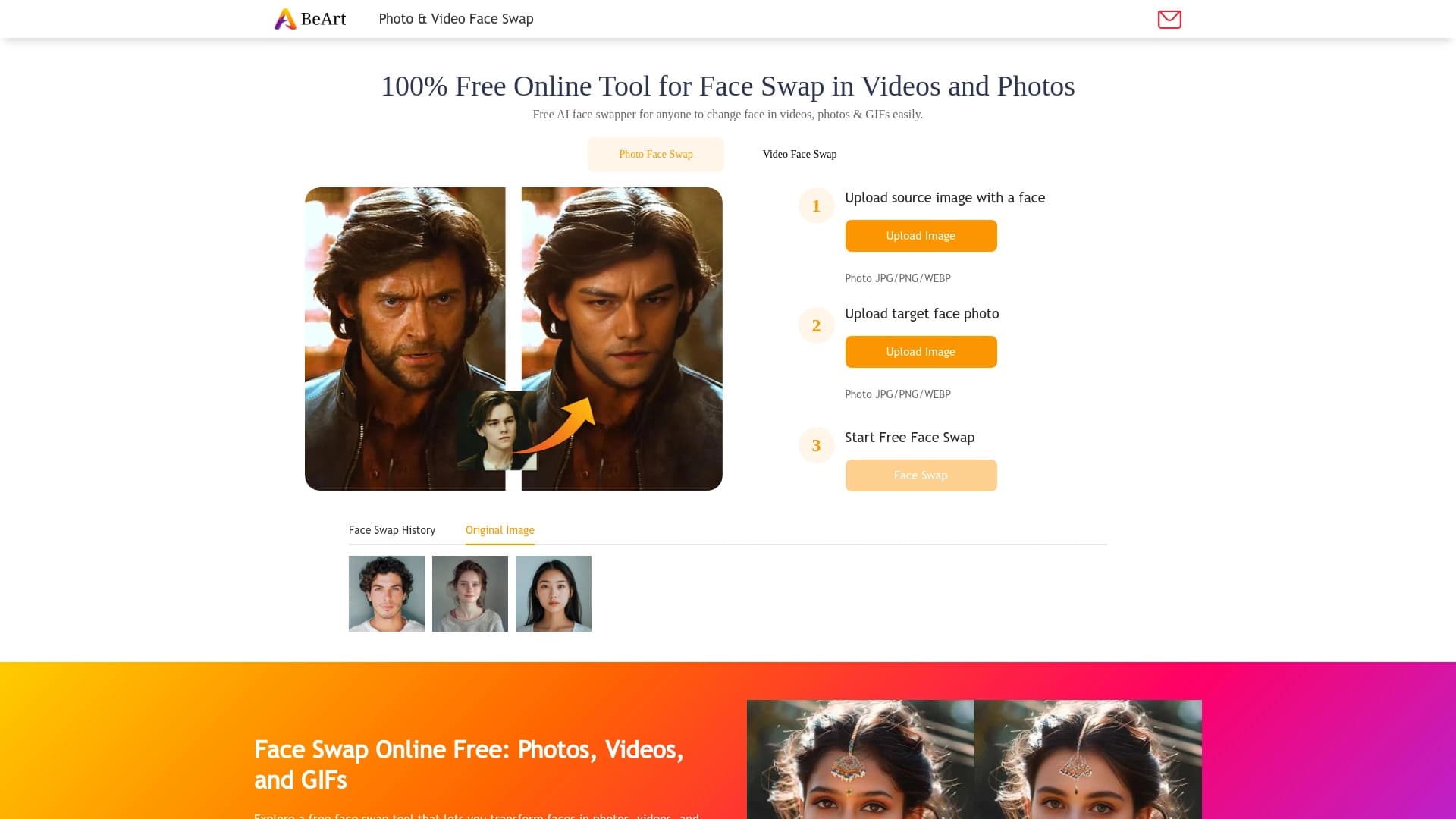
Online tool for swapping faces in photos, videos, and GIFs without registration or watermarks.

BannsAi is an AI-powered service for quickly creating ad banners based on a text description or reference.

A multifunctional AI assistant for generating texts, images, and audio.