Flux 1
Нейросеть для быстрой генерации фотореалистичных изображений по текстовому описанию.
Обзор
Flux 1
Описание нейросети Flux 1
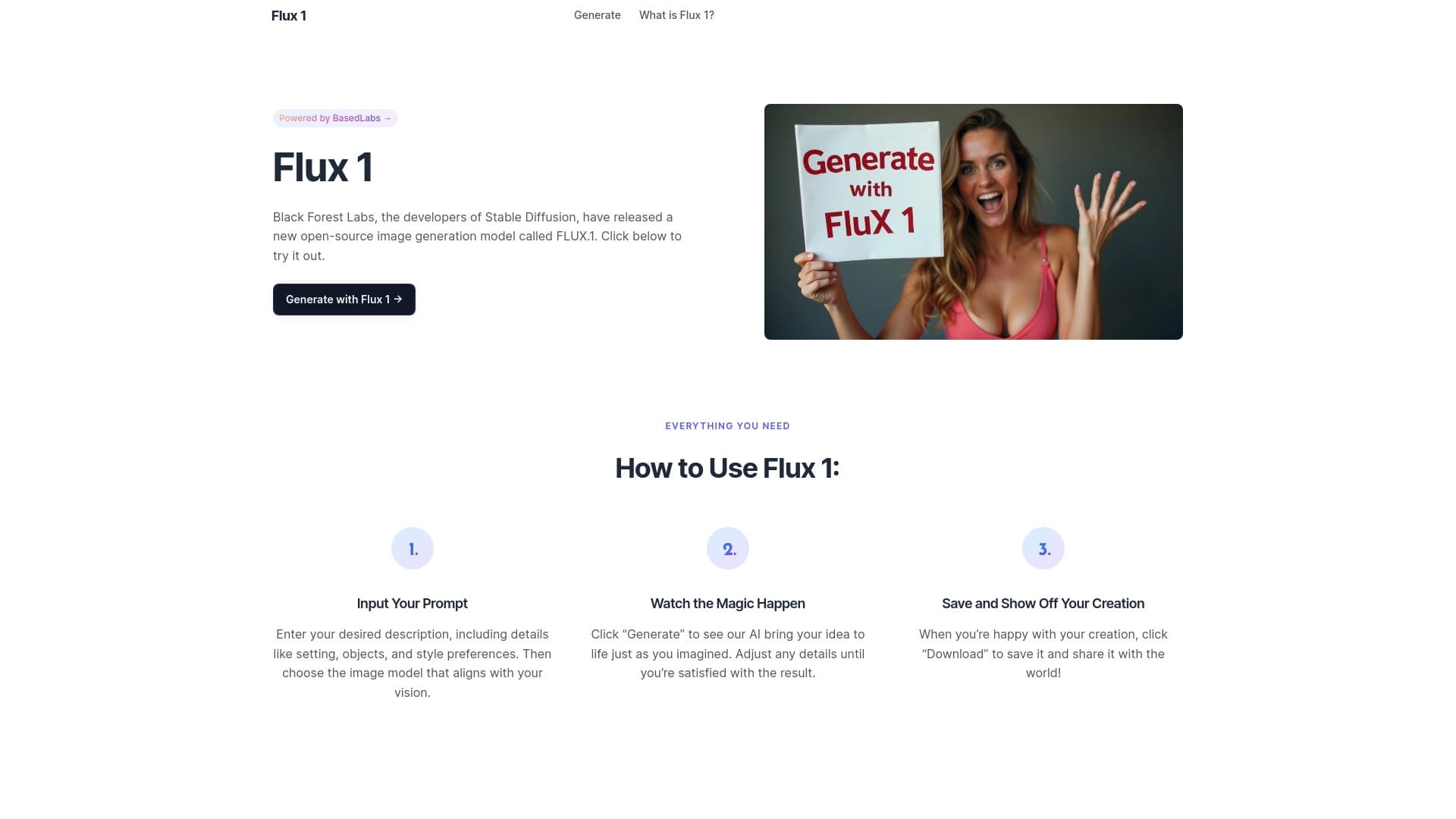
Flux 1 (полное название — FLUX.1) — это модель генерации изображений, разработанная компанией Black Forest Labs. Инструмент ориентирован на создание фотореалистичных картинок по текстовому описанию. Главный акцент сделан на том, чтобы результат выглядел как настоящая фотография: с естественным освещением, проработанными текстурами и высокой детализацией.
Модель распространяется с открытым исходным кодом (open source) и доступна для коммерческого использования. Flux 1 подходит для задач, где важна правдоподобность изображения, а не художественная стилизация. Пользователь вводит текстовый запрос, нейросеть генерирует изображение, и при необходимости его можно доработать через повторные запросы.
Характеристики Flux 1
| Характеристика | Значение |
|---|---|
| Тип | Генератор изображений |
| Категории | Генераторы изображений по тексту, Генераторы обоев, Генераторы иконок, Генераторы обложек, Генераторы аватаров, Инструменты для создания фонов, Генераторы баннеров |
| Ежемесячные посещения | 129M |
| Бесплатный тариф | Есть (ограниченные генерации) |
| Платный тариф от | $10+ (больше генераций и выше качество) |
| API/интеграции | По запросу |
Для кого подходит нейросеть Flux 1?
Маркетологи и специалисты по рекламе
Flux 1 помогает быстро создавать реалистичные визуалы для рекламных кампаний, баннеров и посадочных страниц. Инструмент позволяет тестировать визуальные концепции без привлечения дизайнера или фотостудии.
Дизайнеры
Дизайнеры используют Flux 1 для генерации референсов, фоновых изображений и предметной графики. Модель подходит для задач, где нужна «фотографическая» точность, например, при создании макетов упаковки или прототипов интерфейсов.
Создатели контента и специалисты e-commerce
Для интернет-магазинов Flux 1 помогает генерировать изображения товаров, когда провести настоящую фотосъёмку невозможно или нецелесообразно. Также инструмент подходит для создания контента для соцсетей, обложек и аватаров.
Как использовать нейросеть Flux 1?
Ввод текстового запроса
Пользователь описывает желаемое изображение в интерфейсе сервиса. В запросе можно указать детали сцены, стиль, освещение и ракурс. Начинать можно с простых описаний, но чем подробнее запрос, тем точнее результат.
Генерация и доработка
После отправки запроса нейросеть создаёт несколько вариантов изображения. Если результат не устраивает, можно перегенерировать его или уточнить, добавив новые детали в текст. Повторные запросы помогают добиться нужной точности.
Отсутствие сложных настроек
Инструмент не требует глубокого понимания промптов или сложных технических настроек. Достаточно ввести описание на естественном языке — модель сама обработает запрос и выдаст результат.
Основные функции Flux 1
Создание фотореалистичных изображений
Flux 1 генерирует картинки с высоким уровнем реализма: естественное освещение, проработанные текстуры и мелкие детали, которые делают результат похожим на фотографию. Это основное преимущество модели перед аналогами с художественным уклоном.
Генерация сцен под конкретные задачи
Модель справляется с разными типами изображений: от предметной съёмки товаров до сложных композиций с несколькими объектами. Инструмент подходит как для простых фонов, так и для детализированных сцен.
Уточнение результата через повторные запросы
Если первая генерация не совпала с ожиданиями, пользователь может уточнить запрос и запустить повторную генерацию. Это позволяет постепенно приближать результат к нужному виду без ручного редактирования.
Преимущества Flux 1
Максимальная реалистичность
Изображения, созданные Flux 1, максимально близки к фотографиям. Это главное преимущество модели: она даёт правдоподобный результат, который сложно отличить от снятого на камеру.
Предсказуемый результат
В отличие от художественных моделей, Flux 1 выдаёт стабильный и предсказуемый результат, соответствующий текстовому описанию. Пользователь получает именно то, что запросил, без неожиданных стилизаций.
Простота использования
Инструмент не требует сложных настроек или глубоких знаний промптов. Можно начать с простого описания — модель обработает его и выдаст изображение. Это снижает порог входа для новичков.
Коммерческая пригодность
Flux 1 подходит для коммерческого использования: реклама, сайты, визуальный контент для бизнеса. Особенно хорошо модель работает с предметной съёмкой — товарами, объектами и сценами для e-commerce.
Недостатки Flux 1
Ограниченная художественная выразительность
Модель делает упор на реализм, поэтому для креативной графики, абстрактных изображений или необычных стилей она подходит хуже. Если нужен художественный эффект, лучше выбрать другую нейросеть.
Зависимость от формулировки запроса
Для идеального результата приходится уточнять детали в текстовом описании. Неудачная формулировка может дать неточный или неполный результат, который потребует перегенерации.
Ограниченные возможности настройки стиля
Flux 1 не даёт гибких инструментов для тонкой настройки стиля и деталей. Пользователь может влиять на результат только через текстовый запрос, что снижает контроль над финальным изображением.
Лимиты бесплатной версии
Бесплатный тариф имеет ограничения по количеству генераций. При активной работе или коммерческом использовании потребуется платный доступ.
Сложности со сложными сценами
Модель не всегда справляется со сценами, где присутствует большое количество объектов или сложные взаимодействия между ними. В таких случаях результат может быть менее точным.
Какие задачи решает Flux 1
Создание визуалов для рекламы и сайтов
Flux 1 генерирует реалистичные изображения для рекламных баннеров, посадочных страниц и промо-материалов. Это экономит время и бюджет на фотосъёмку.
Генерация изображений товаров
Инструмент помогает создать качественные фото товаров, если провести настоящую фотосессию невозможно. Это особенно актуально для интернет-магазинов с большим ассортиментом.
Контент для соцсетей
Flux 1 подходит для создания визуального контента без лишней стилизации. Изображения выглядят естественно и правдоподобно, что хорошо воспринимается аудиторией.
Тестирование визуальных концепций
Модель позволяет быстро проверить, как будет выглядеть рекламная кампания или дизайн-проект, до запуска в производство. Это снижает риски и ускоряет процесс принятия решений.
Цены Flux 1
Flux 1 предлагает бесплатный тариф с ограниченным количеством генераций. Для активной работы доступны платные тарифы от $10+, которые дают больше генераций и более высокое качество изображений. Также доступны API и интеграции по запросу — точные условия уточняются индивидуально.
Условия использования Flux 1
Подробные условия использования на сайте flux-1.ai не указаны. Известно, что бесплатная версия имеет ограничения по числу генераций, а для активной работы требуется платный доступ. Конкретные лицензионные ограничения и правила коммерческого использования рекомендуется уточнять на официальном ресурсе.
Доступность Flux 1
Инструмент доступен через веб-сайт flux-1.ai. Для работы требуется только браузер и интернет-соединение. API и интеграции предоставляются по отдельному запросу.
Чем отличается Flux 1 от аналогов
Главное отличие Flux 1 от конкурентов, например Midjourney, — фокус на реализм. Midjourney делает упор на художественный стиль и креативность, тогда как Flux 1 стремится к максимальной фотографической точности. Если пользователю нужно изображение «как фото», чаще выбирают Flux 1.
По сравнению с другими open-source моделями вроде Stable Diffusion, Flux 1 предлагает более простой и интуитивно понятный интерфейс, не требующий глубоких технических знаний. Однако он уступает в гибкости настройки и возможности экспериментировать со стилями.
Заключение
Flux 1 — это специализированная модель генерации изображений, ориентированная на реализм и точность. Инструмент подходит для коммерческих задач, где важна правдоподобность результата: создание визуалов для рекламы, генерация изображений товаров, подготовка контента для соцсетей. Простота использования и предсказуемый результат делают Flux 1 хорошим выбором для маркетологов, дизайнеров и специалистов e-commerce. Однако для художественных экспериментов и креативной графики модель подходит хуже — в этих случаях стоит обратить внимание на аналоги с более выраженной стилизацией.