
Eraser
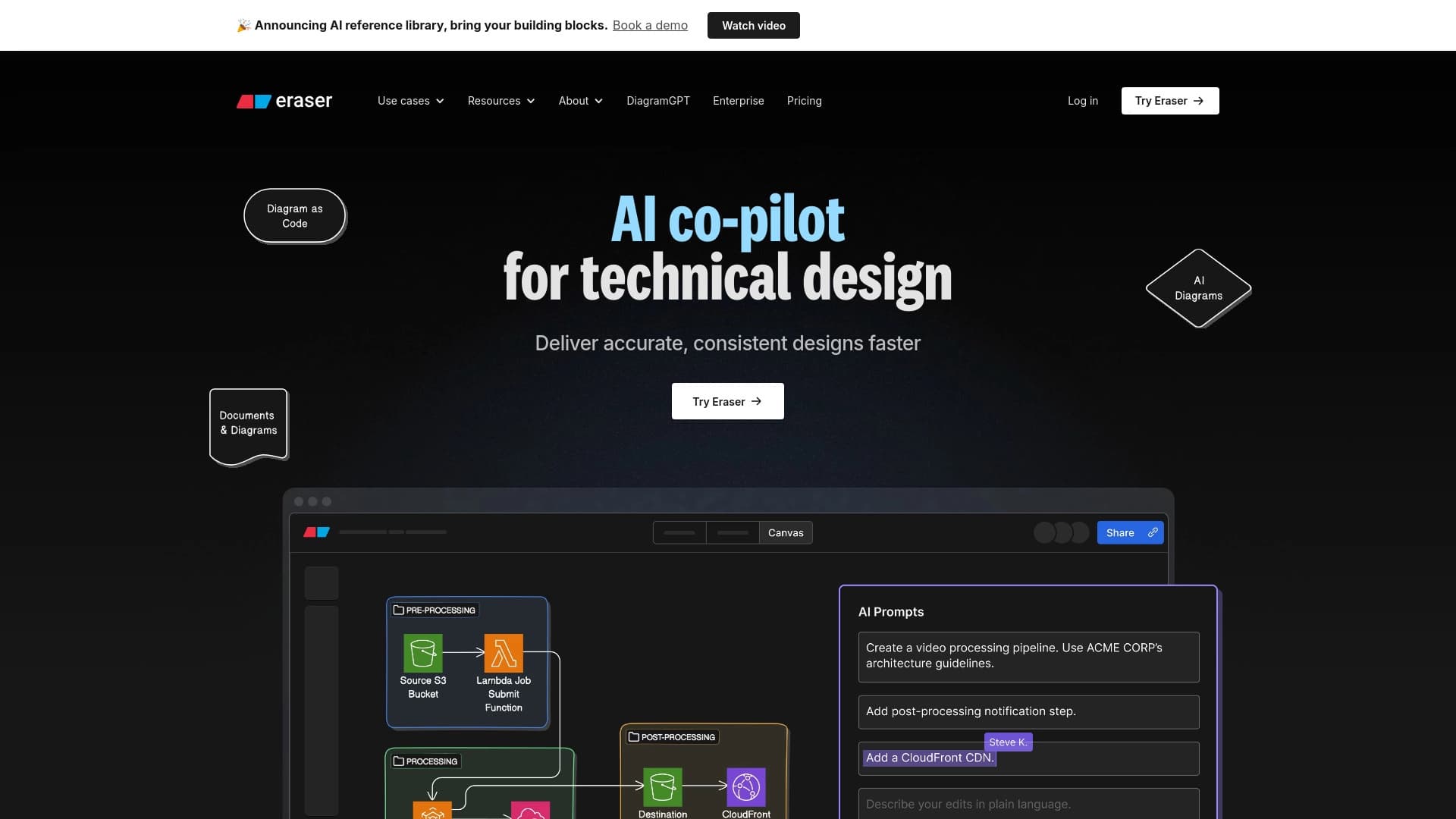
Eraser is an AI-powered tool for creating technical diagrams and documentation from text or code.
Ranked in
Overview
Eraser is an online tool that uses artificial intelligence to automatically create technical diagrams and documentation. Instead of manually drawing flowcharts or architecture diagrams, you can describe the desired structure in text, upload a document, or even paste a code snippet — and the neural network will transform it into a clear visual diagram. Unlike many other generators that only create an image, Eraser lets you immediately edit the resulting diagram in its own editor. This makes it a practical tool for teams that want to speed up the process of documenting engineering and product workflows.
Eraser Features
| Feature | Value |
|---|---|
| Type | AI diagram and chart generator |
| Categories | Diagrams and charts, Visual boards and collaboration, Maps and diagrams |
| Platforms | Website |
| Free tier | Not specified |
| Distribution model | Freemium |
Who is Eraser suitable for?
Developers and engineers
Eraser is primarily aimed at technical professionals. Engineers often need to explain service architecture, data processing sequences, or query structures. With Eraser, they can quickly turn their text notes or code into clear diagrams without having to switch to complex graphic editors.
Product teams and technical writers
Product managers and technical writers will also find the service useful. When you need to quickly document a new user scenario, describe a business process, or create a diagram for a technical specification, it's sometimes easier to give the neural network a text description and get a visual result than to figure out the settings of visual boards.
How to use Eraser?
The workflow with Eraser is built around natural language. The main usage scenario looks like this:
To create a diagram, you need to formulate a prompt — a text description of what you want to get. For example, you can describe the stages of a business process, list the architecture components and the connections between them, or paste a code snippet that the service will analyze and turn into a diagram.
Once Eraser generates the diagram, it automatically opens in the built-in editor. In this editor, you can modify elements, labels, block positions, and connections to adapt the result to your needs. The generated artifact becomes a fully editable document, not just a static image.
Key Eraser Features
- Creating flowcharts and process flows: Eraser can build classic flowcharts and process diagrams by describing a sequence of steps.
- Building BPMN and swimlane-like diagrams: the service supports building BPMN models and diagrams visually divided into participant "lanes," which is convenient for modeling business processes.
- Generating data flow and architecture diagrams: the neural network lets you visualize data flows and create software architecture diagrams, laying out system components and their relationships.
- Creating diagrams from requirements, notes, or code: you can input not only prompts but also text documentation or code — the tool will process this data and offer a visual interpretation.
Eraser Advantages
Strong focus on engineering processes
Eraser's main advantage is its focus on technical tasks. Unlike universal diagram generators, this tool understands the specifics of engineering and product processes. This is reflected in its support for architecture diagrams and data flow diagrams, which generators adapted for "user" tasks don't always build correctly.
Fast visualization and editing
The ability to immediately edit the resulting diagram in the service saves time. You don't need to export the result as an image and redraw it in another application — all edits are made directly in Eraser. This speeds up the cycle of creating and approving documentation.
Eraser Disadvantages
The available source data does not list any explicit limitations or drawbacks of the service. Based on general principles of how such tools work, it can be assumed that generation complexity depends on the quality and detail of the source text description: the more complex the request, the more carefully you need to formulate the prompt so the neural network understands the structure of the future diagram. However, there is no confirmed data on critical shortcomings.
What tasks does Eraser solve?
Eraser's main purpose is creating technical documentation. It helps solve the following tasks:
- Visualizing workflows: turning text instructions or regulations into clear sequence-of-action diagrams.
- Building data flow diagrams: showing how data moves between systems, modules, or departments.
- Modeling BPMN: describing business processes in BPMN notation, understandable to all team members.
- Creating architecture diagrams: displaying the structure of software products, their components, and relationships.
- Documenting development processes and product scenarios: quickly capturing the current state of a project or planning new features in a visual form.
Eraser Pricing
The source data does not contain exact information about subscription costs, pricing plans, or free usage terms. It is known that the distribution model is freemium, meaning the service has a free basic tier and paid advanced features. Specific figures and the list of features available under the free tier should be checked on the official Eraser website.
Eraser Terms of Use
Information about legal terms, restrictions on commercial use, data storage rules, or the service's privacy policy is not available in the provided sources. As with most cloud services, it is recommended to review the user agreement and data processing policy directly on the company's website before starting to use the service. The freemium model often implies free usage with limitations on quantity or functionality, but the details of these limitations are not disclosed in the available data.
Eraser Availability
Eraser is available as a web application that runs in a browser. This means no additional software installation is required to use the service. As with pricing, information about mobile versions or desktop applications is absent from the source data, so it can be concluded that the primary and possibly only platform is the website.
How Eraser differs from alternatives
There are many diagramming tools on the market, such as Mermaid Chart, Lucidchart AI, Miro AI Flowchart, and others. Eraser's key difference is its deep specialization in technical and engineering tasks.
Many universal services (e.g., Miro or Lucidchart) offer broad functionality for various visual boards, meetings, and capturing ideas. Eraser, on the other hand, is positioned specifically as a tool for building logical and architecture diagrams from text descriptions. It creates diagrams that are primarily understandable to developers: flowcharts with correct logical branching, BPMN models, and data flow diagrams.
Unlike tools like Mermaid Chart, which work primarily with declarative markup languages, Eraser understands natural language queries and lets you edit the result visually without diving into the generation code. Thus, Eraser occupies a niche between manual drawing tools and code generators, offering the fastest way to get an engineering diagram.
Conclusion
Eraser is a specialized AI tool for developers and product teams that solves the problem of quickly visualizing technical processes. Its main value lies in its ability to generate complex architecture diagrams, data flow diagrams, and BPMN models from simple text descriptions or code, with the ability to immediately edit the result. Thanks to its freemium model, it's accessible for getting started, though pricing details and limitations should be checked on the official website. For those looking for an alternative to manually drawing diagrams in Lucidchart or Miro, Eraser offers a more specialized and efficient solution specifically for engineering tasks.
Frequently asked questions
See also
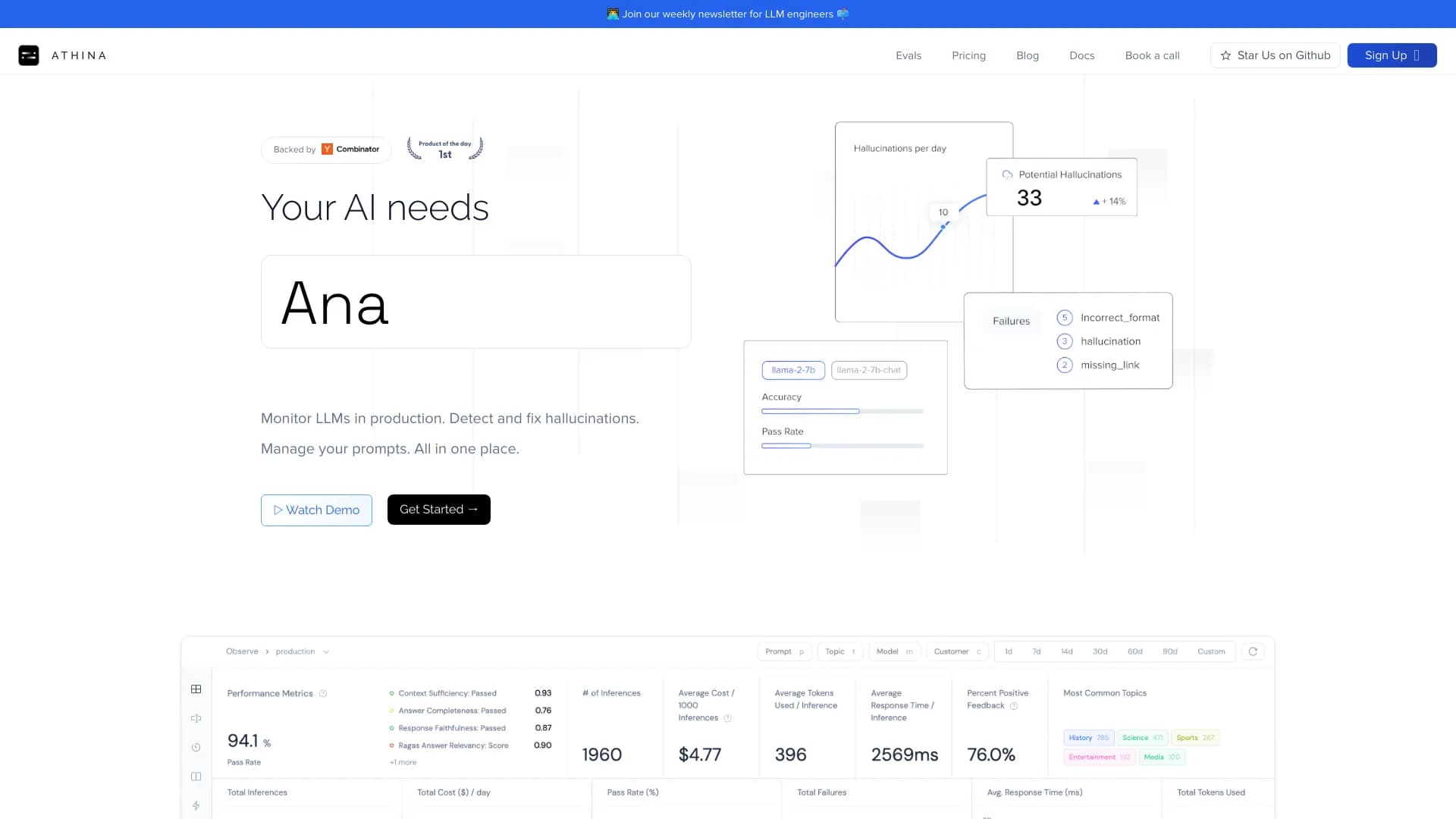

Platform for developing, monitoring, and evaluating AI applications based on large language models.

AI tool for automated code review that analyzes changes in real time and suggests fixes.
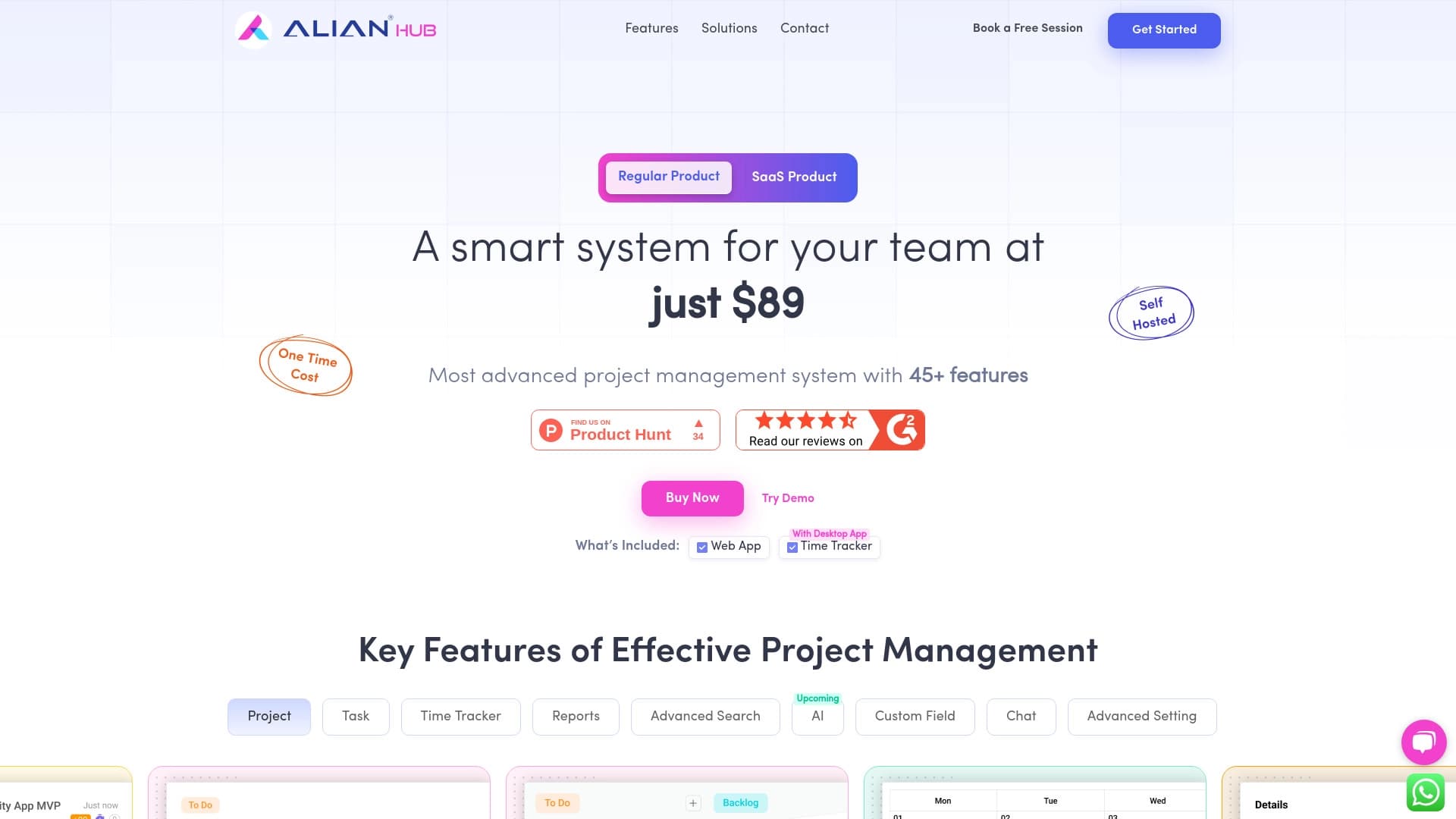

Project management platform with task assignment, time tracking, and employee workload monitoring features.
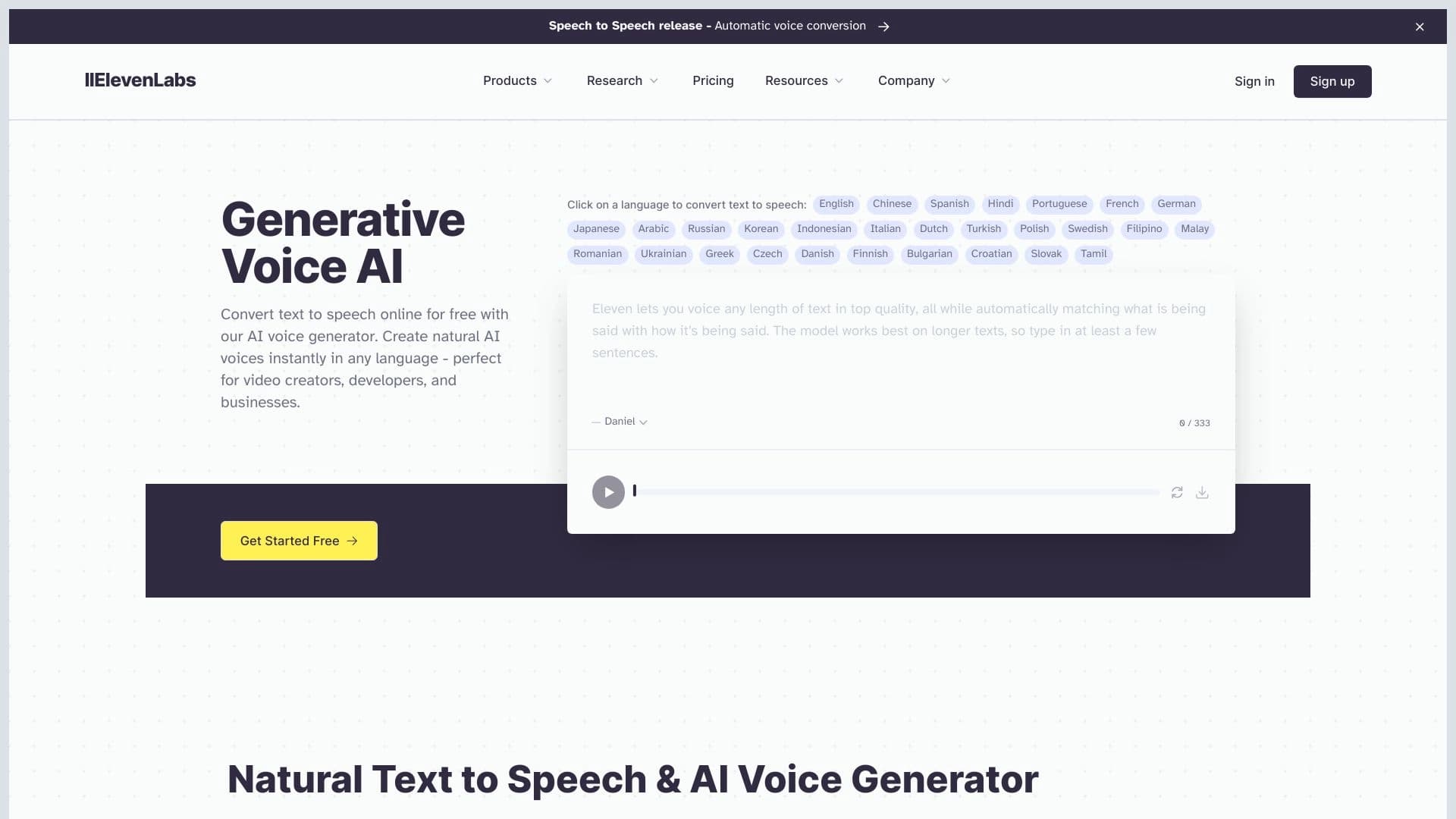
AI platform for voice synthesis and cloning that converts text into realistic speech.
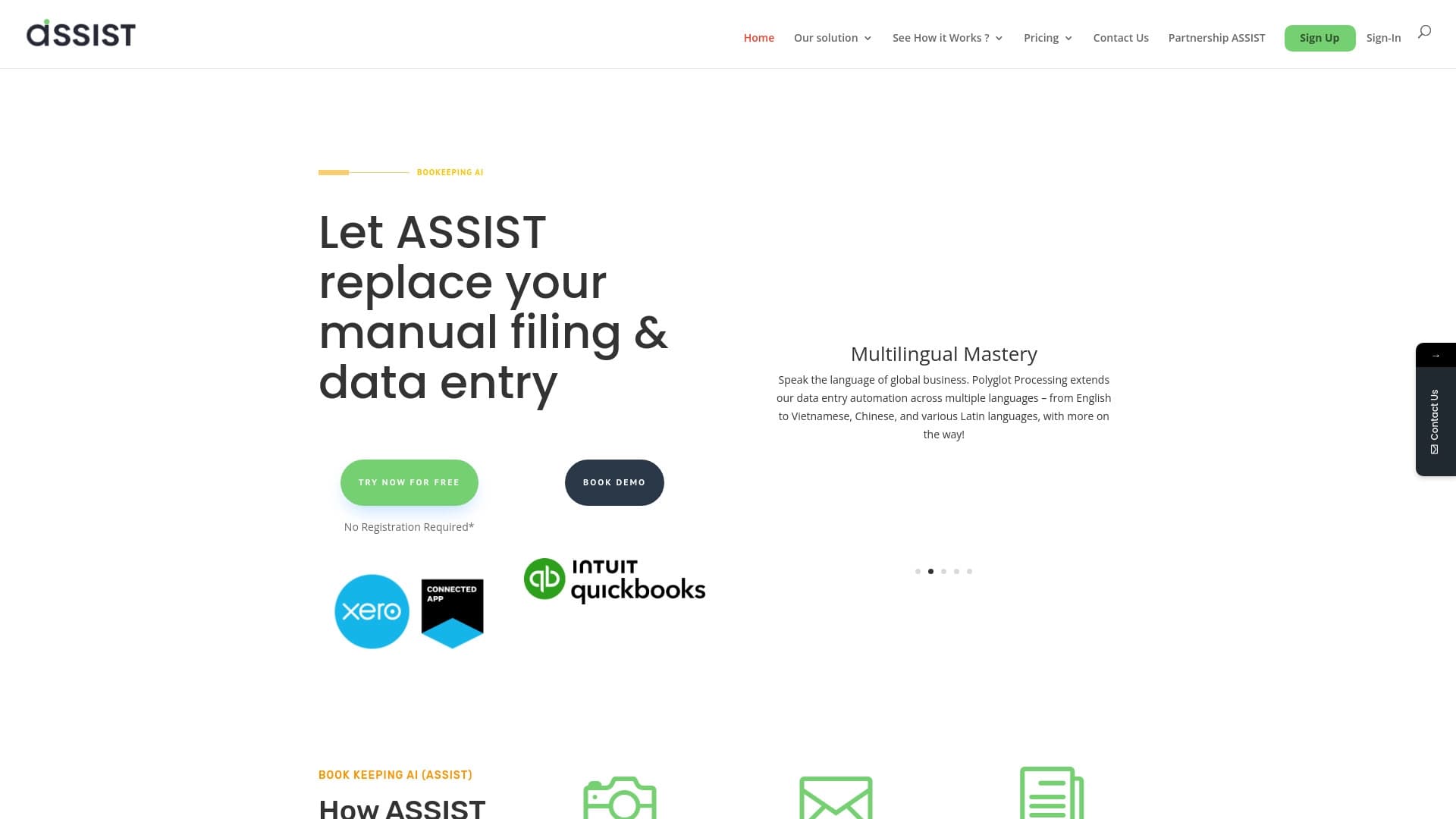

AI tool for automatic data extraction from financial documents and integration with accounting systems.
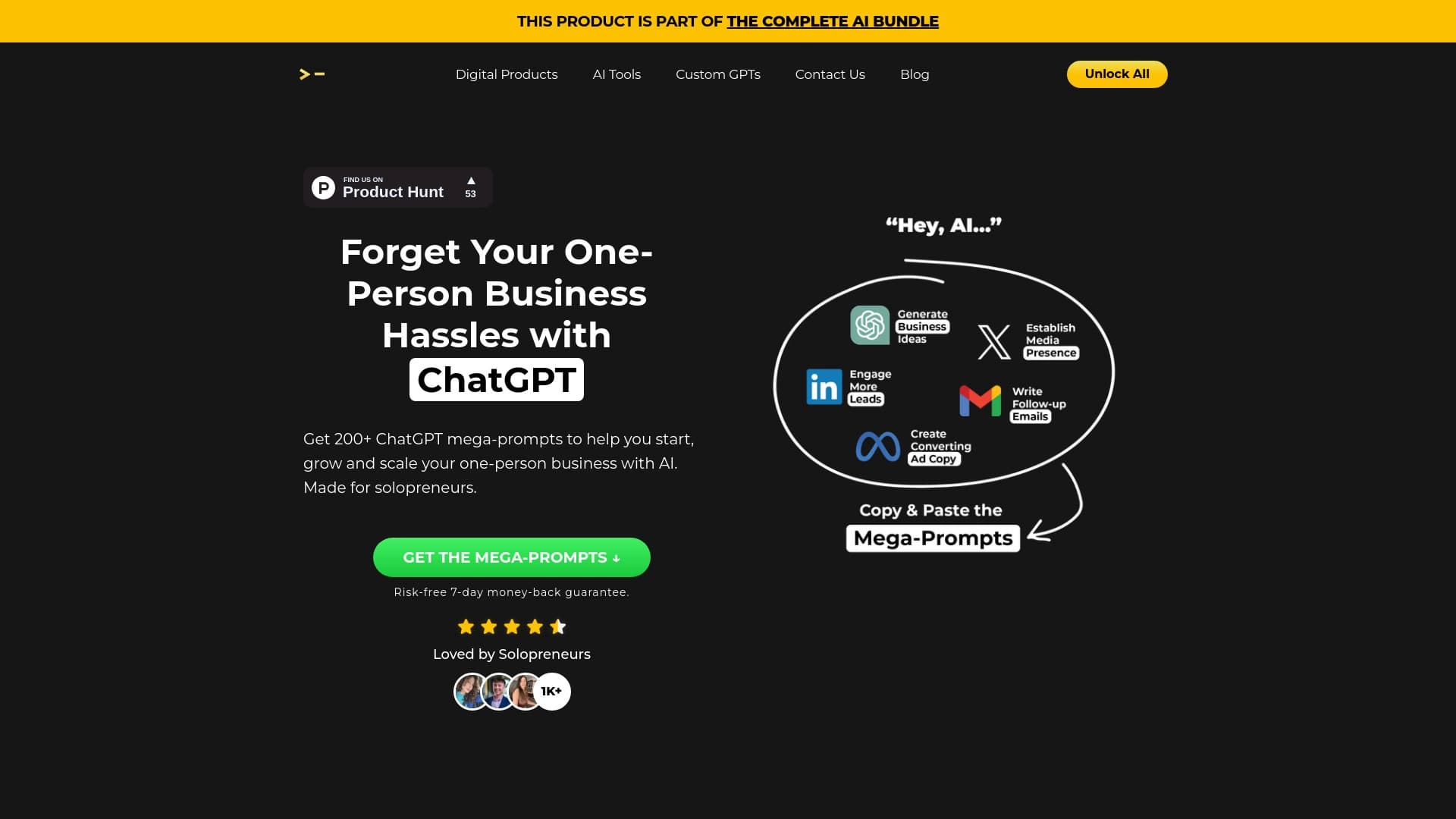

A set of more than 200 ready-made prompts for business and SEO, adaptable to ChatGPT, Claude, and Gemini.

AI agent for automating customer communications and support.

A web service that automates job search using artificial intelligence.