

Deep Research
OpenAI search function built into ChatGPT that performs multi-step analysis of web pages, PDFs, and images to produce structured reports.
Overview
Deep Research
Description of the Deep Research neural network
Deep Research is a search feature developed by OpenAI and built into ChatGPT. The tool is designed for multi-step analysis of web pages, PDF documents, and images. Deep Research can process hundreds of sources in 5–30 minutes and generate structured reports with citations. It is powered by the o3 model. The feature is available to users of the paid Pro and Plus subscriptions, with monthly limits on the number of requests.
Deep Research characteristics
| Characteristic | Value |
|---|---|
| Type | Search feature for deep data analysis |
| Category | PDF and documents, Reports, Search and analysis |
| Developer | OpenAI |
| Model | o3 |
| Accuracy on Humanity's Last Exam | 26.6% |
| Execution time | 5–30 minutes |
| Interface language | English |
| Free plan available | No (paid subscriptions only) |
Who is the Deep Research neural network suitable for?
Researchers and analysts
Deep Research suits professionals who need in-depth analysis of large volumes of information from open sources: research scientists, marketing analysts, journalists, and content authors. The tool makes it possible to quickly collect and structure data, saving hours of manual work.
Documentation specialists
The feature will be useful for those who regularly work with PDF files, reports, and images: lawyers, consultants, and procurement department staff. Deep Research processes documents in various formats, highlighting key points and generating final reports.
ChatGPT users with a paid subscription
Since the feature is only available under the Pro and Plus subscriptions, it is aimed at active ChatGPT users who are willing to pay for expanded functionality. To get access, you need to register on the OpenAI website and choose the appropriate plan.
How to use the Deep Research neural network?
Registration and subscription selection
To get started, you need to register on the OpenAI website. After registration, you need to choose one of the paid subscriptions — Pro ($200 per month) or Plus ($20 per month). Free access to Deep Research is not provided.
Launching and configuring a request
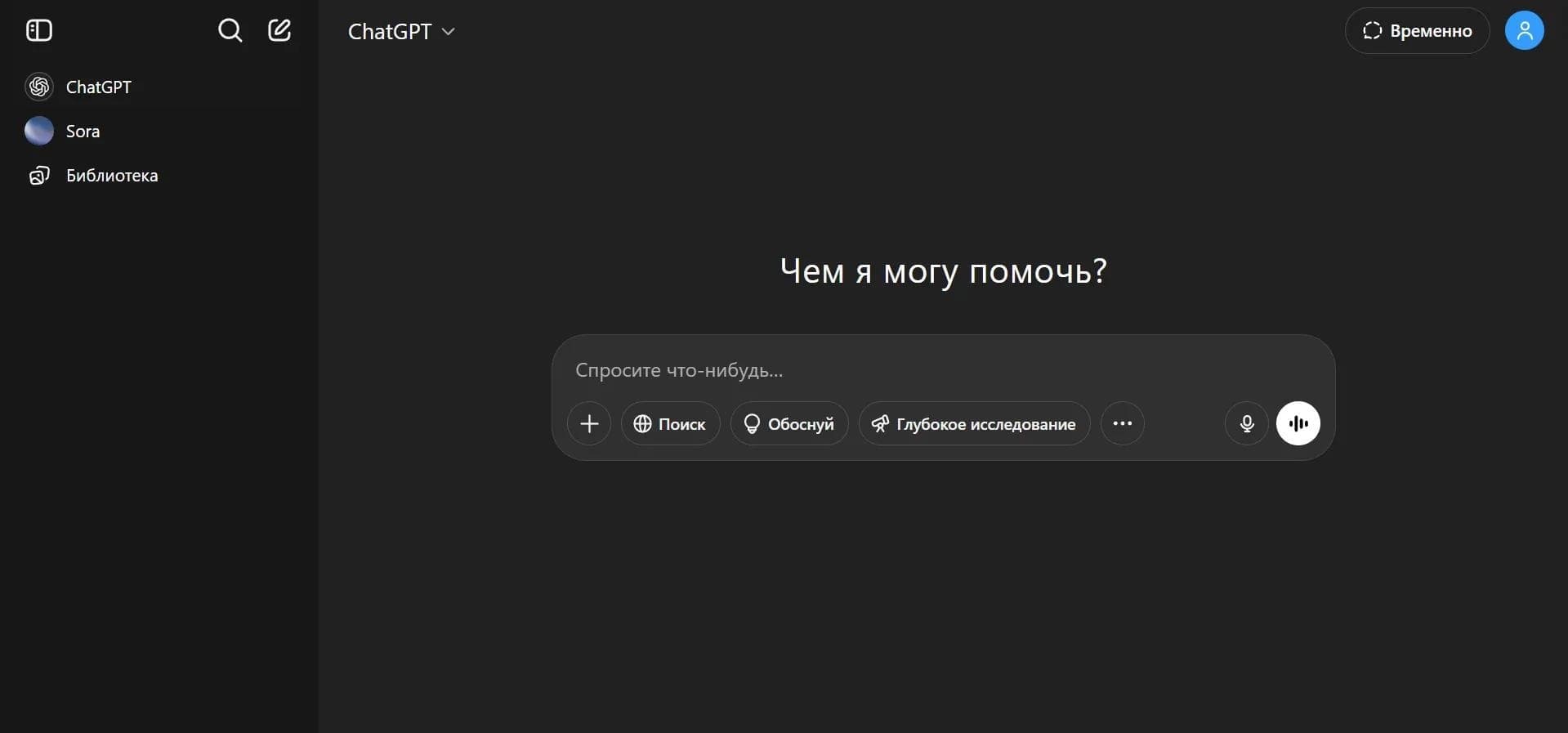
After logging into ChatGPT, the user enters a query, selects Deep Research mode, and, if necessary, specifies additional research parameters. The tool supports complex multi-step queries, allowing you to refine the analysis details.
Receiving the report
After the analysis, which takes from 5 to 30 minutes, is completed, Deep Research generates a structured report with citations. The user can view the results, check the sources, and, if necessary, adjust the query and run it again.
Key features of Deep Research
Analysis of web pages and documents
The tool processes hundreds of web pages, PDF files, and images, extracting relevant information. Deep Research works with text data and visual content, which expands the search scope.
Creating reports with citations
Based on the research results, a structured report is generated. All data is accompanied by transparent citations, allowing the user to verify the reliability of the information and return to the original sources.
Handling complex multi-step queries
Deep Research supports iterative search: the tool refines the query as data arrives, which improves the accuracy of the final report. This is especially valuable when comparing data from different sources or searching for niche information.
Advantages of Deep Research
High accuracy
Deep Research achieved 26.6% accuracy on the Humanity's Last Exam test, significantly outperforming DeepSeek-R1 (9.4%). The high accuracy is achieved through the use of the o3 model, optimized for web search and analysis.
Automatic report structuring
The tool independently creates a logical structure for the final document, saving the user from having to manually organize the collected data. Reports contain clear sections and links to sources.
Query processing speed
Deep Research performs multi-step analysis in 5–30 minutes, which is significantly faster than manually collecting and processing information. Iterative search further improves accuracy without substantially increasing the time required.
Disadvantages of Deep Research
Limitation on private sources
Deep Research works with open web pages and documents but does not have access to private or corporate databases. This limits the tool's applicability for tasks involving confidential information.
Possible factual errors
Despite its high accuracy, the tool is not immune to occasional factual errors. Users are advised to double-check critical data against the original sources cited in the report.
What tasks does Deep Research solve?
Deep multi-step analysis of internet data
The tool is designed for tasks that require comprehensive analysis of information from dozens or hundreds of sources. Deep Research collects data, compares it, and formulates well-reasoned conclusions.
Creating detailed reports in 5–30 minutes
Deep Research replaces hours of manual work on collecting and structuring information. In 5–30 minutes, the tool produces a ready-made report with citations, suitable for use in professional and research contexts.
Processing hundreds of sources in different formats
The feature works with texts, images, and PDF documents simultaneously, enabling comprehensive analysis across a wide range of topics without switching between different tools.
Deep Research pricing
Deep Research is available under two paid subscriptions: the Pro plan costs $200 per month and includes 250 requests to the feature; the Plus plan costs $20 per month and provides 10 requests. There is no free plan with access to Deep Research.
Terms of use for Deep Research
To work with Deep Research, you need to register on the OpenAI website and subscribe to one of the paid plans — Pro or Plus. The feature is not available to users on the free plan. The number of requests is limited depending on the selected plan.
Deep Research availability
Deep Research works through the web interface on the openai.com website. Currently, the tool's interface is available in English. The feature is built directly into ChatGPT and does not require installing additional software.
How Deep Research differs from alternatives
The main difference between Deep Research and alternatives such as DeepSeek-R1 lies in accuracy. On the Humanity's Last Exam test, Deep Research scored 26.6%, while DeepSeek-R1 scored 9.4%. Deep Research uses the o3 model, optimized for web search and analysis, which allows it to process hundreds of sources in 5–30 minutes and create structured reports with transparent citations.
Conclusion
Deep Research is a search feature from OpenAI for deep multi-step analysis of internet data, built into ChatGPT. The tool creates detailed reports in 5–30 minutes, processing hundreds of sources, including web pages, PDFs, and images, and can replace hours of manual work. Deep Research is available through the Pro ($200 per month, 250 requests) and Plus ($20 per month, 10 requests) subscriptions and outperforms alternatives in accuracy on the Humanity's Last Exam test.
Pricing
Frequently asked questions
See also
AI editor for creating, editing, and publishing content with templates and prompts.

Financial platform with an AI assistant for managing accounting, taxes, and budgets.

Platform for interview preparation with AI mock interviews and real-time support.
Enterprise language model platform focused on privacy and on-premise deployment.


AI assistant for creating short summaries of videos, PDF documents, and web pages.


AI email assistant that helps quickly draft messages, adapting to the user's style.


Marketplace where users buy and sell ready-made prompts for popular AI models.
A sales automation platform that combines customer prospecting, deal management, and AI-powered forecasting.