
Connected Papers
Service for visual analysis of scientific publications through citation graphs.
Ranked in
Overview
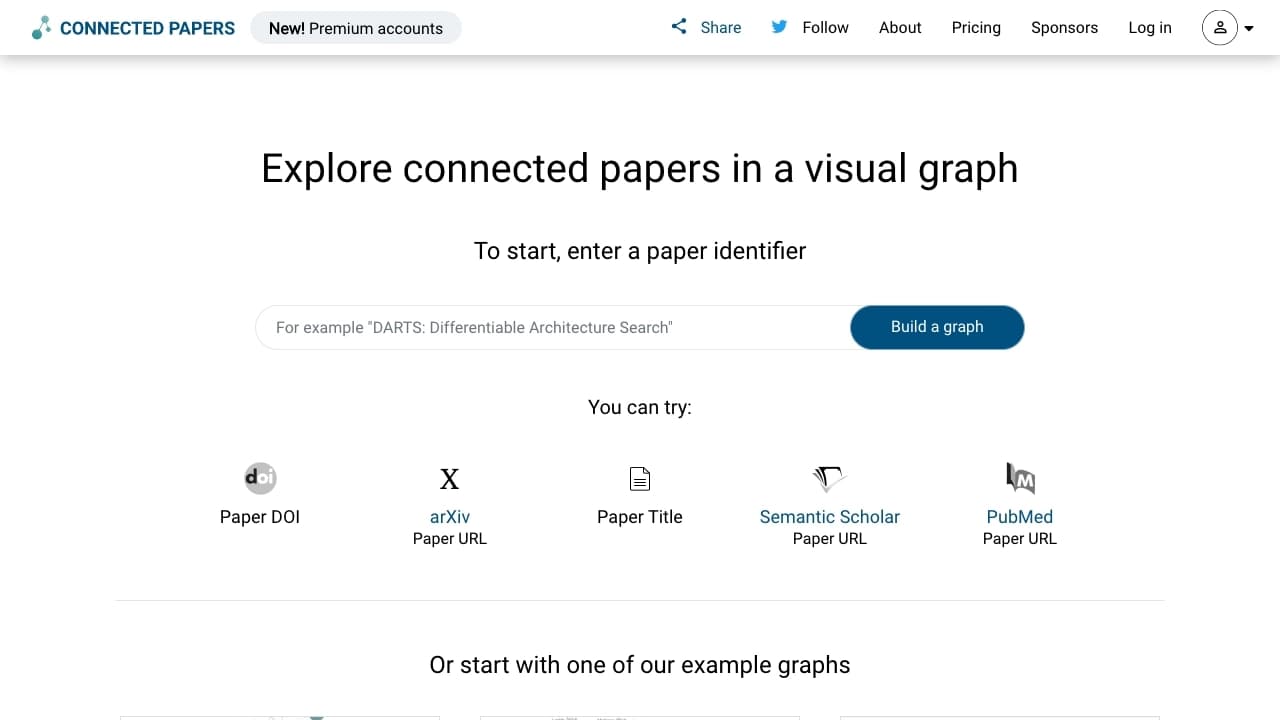
Connected Papers is an online service designed for visual search and analysis of scientific publications. Instead of the usual list of links, the tool offers the user an interactive graph that clearly demonstrates connections between scientific works. All you need to do is enter the title of an article of interest or provide a link to it. The system will build a visual map showing which publications are thematically close to each other, how they cite one another, and which ideas are key in the research area.
This approach helps researchers not just find individual articles, but see the overall structure of a scientific field. It allows tracking the development of ideas over time, discovering non-obvious overlaps between different works, and getting up to speed faster in unfamiliar topics. In essence, Connected Papers turns the process of studying literature into a visual exploration of connections, rather than just sifting through texts.
Characteristics of Connected Papers
| Characteristic | Value |
|---|---|
| Type | Online tool for searching and analyzing scientific articles |
| Categories | Search and search engines, Research |
| Business model | Freemium |
| Pricing | From $3/month |
| Catalog publication date | 07-03-2023 |
| Database | Semantic Scholar (hundreds of millions of publications) |
| Availability | Web interface, works through a browser |
Who is Connected Papers suitable for?
Researchers and scientists
The main audience of the service is researchers who regularly work with scientific literature. The tool is useful at different stages of work: from finding relevant sources for a literature review to checking which recent works cite well-known articles. The graph built by Connected Papers saves a lot of time during initial familiarization with a new scientific field — instead of long and tedious reading of reference lists, it becomes possible to see the structure of the field as a whole.
Senior students and graduate students
For those preparing coursework, theses, or dissertations, Connected Papers can also be extremely useful. With its help, it is easy to select key publications on a topic, understand which authors and works are considered foundational, and find recent research that continues classical works. This makes preparing scientific reviews more meaningful and structured.
How to use Connected Papers?
Search by title or link
To get started, it is enough to have the title of an article of interest or a direct link to it (for example, from the Semantic Scholar database). The user enters this data into the search field on the website. No complex settings or preliminary steps are required — the service is designed for the simplest possible interaction.
Building a publication graph
After entering the initial data, the system analyzes a database of approximately 50,000 scientific works to select dozens of the most thematically close ones. The result of this analysis is a graphical representation where each article is displayed as a point. The position of a point on the graph is not random: similar works are located nearby, while less related ones are farther apart. The graph also shows which works are cited more often than others, and which represent adjacent but less popular research.
Key features of Connected Papers
Visualization of the connection map
The key capability of the service is building a clear map of connections between scientific articles. The virtual graph shows how works depend on each other through citations and thematic affinity. Such visualization allows quickly assessing the scale of a scientific field and the roles of individual publications in its development.
Determining thematic proximity
Connected Papers algorithms analyze the texts of publications and their reference lists to assess the semantic closeness of works. This is displayed on the graph: the closer the points are to each other, the more the corresponding articles have in common. Such detail helps identify groups of studies addressing similar problems.
Identifying hidden connections
The tool can find connections between works that do not directly cite each other. Finding such interconnections allows discovering non-obvious overlaps of ideas, which is useful for interdisciplinary research and finding inspiration in related fields of knowledge.
Advantages of Connected Papers
- Clear structure of the scientific field. Instead of an abstract list of articles, the user gets a visual map that immediately shows how works relate to each other and which of them are central to a given area.
- Finding non-obvious connections. Through thematic proximity analysis, the service finds links between works that do not directly reference each other. This helps discover unexpected overlaps of ideas from different fields.
- Simplified comparative analysis. The graph allows quickly comparing different authors' approaches to the same problem, tracking the development and changes in research methodologies.
Disadvantages of Connected Papers
The official materials about the service do not list any obvious drawbacks. However, based on its specifics, it can be assumed that after the user visually explores the publication graph, full work with article texts will still require turning to other resources or databases. Also, the quality of found connections likely directly depends on the completeness and relevance of the Semantic Scholar database on which the tool is based.
What tasks does Connected Papers solve?
- Finding scientific articles related to a given publication. Selecting relevant literature becomes significantly faster thanks to the visual representation of data.
- Visualizing the structure of interconnections in scientific literature. The service helps clearly see how the knowledge system in a specific field is organized.
- Identifying current topics and trends in research. Graph analysis allows judging which directions are developing most actively and what scientists are currently focusing on.
- Comparing different scientists' approaches to the same problem. Presenting articles on the graph simplifies analyzing how different authors solve similar scientific tasks.
Connected Papers pricing
The service distribution model is freemium, meaning basic features are available for free, while extended functionality requires payment. The cost of a paid subscription starts from $3 per month, making the service quite affordable for a wide range of users. More precise pricing tiers and limitations of the free plan are not detailed in the available data.
Terms of use for Connected Papers
To start using Connected Papers, it is enough to visit the service website and enter the title of an article or a direct link to it. This simple entry condition allows starting work instantly, without complex registration procedures or setup. All graph building is performed on the service side, so the user does not need to install any additional software.
Availability of Connected Papers
Connected Papers is a fully online tool. It works through a web browser and is accessible from any device with internet access. This approach ensures mobility and the ability to work with the service from different computers — for example, in a university laboratory and at home. The lack of installation requirements makes the service convenient for quick one-off use.
How Connected Papers differs from alternatives
The main difference between Connected Papers and traditional search systems for scientific publications (such as Google Scholar or PubMed) lies in the principle of presenting results. Instead of a list-based output, the service builds an interactive graph that visualizes the entire network of interconnections between works.
This allows assessing the structure of a scientific field, seeing citation "cores" and thematic clusters of research. Connected Papers also emphasizes finding semantic proximity of articles, not just formal citations. This makes it possible to find works that are similar in content but do not cite each other, which is a significant difference from traditional search methods.
Conclusion
Connected Papers is a convenient and clear tool for visual analysis of scientific publications. It noticeably speeds up the search for relevant research and helps see the structure of a scientific field that would otherwise have to be reconstructed manually when using regular search engines. The service will be a useful addition for researchers working with large volumes of literature and seeking to quickly navigate new topics.
Frequently asked questions
See also
AllChat is a universal platform that combines several popular language models in a single interface for communication, image generation, file analysis, and code execution.

Catalog of AI tools with educational materials and guides for selecting neural networks.
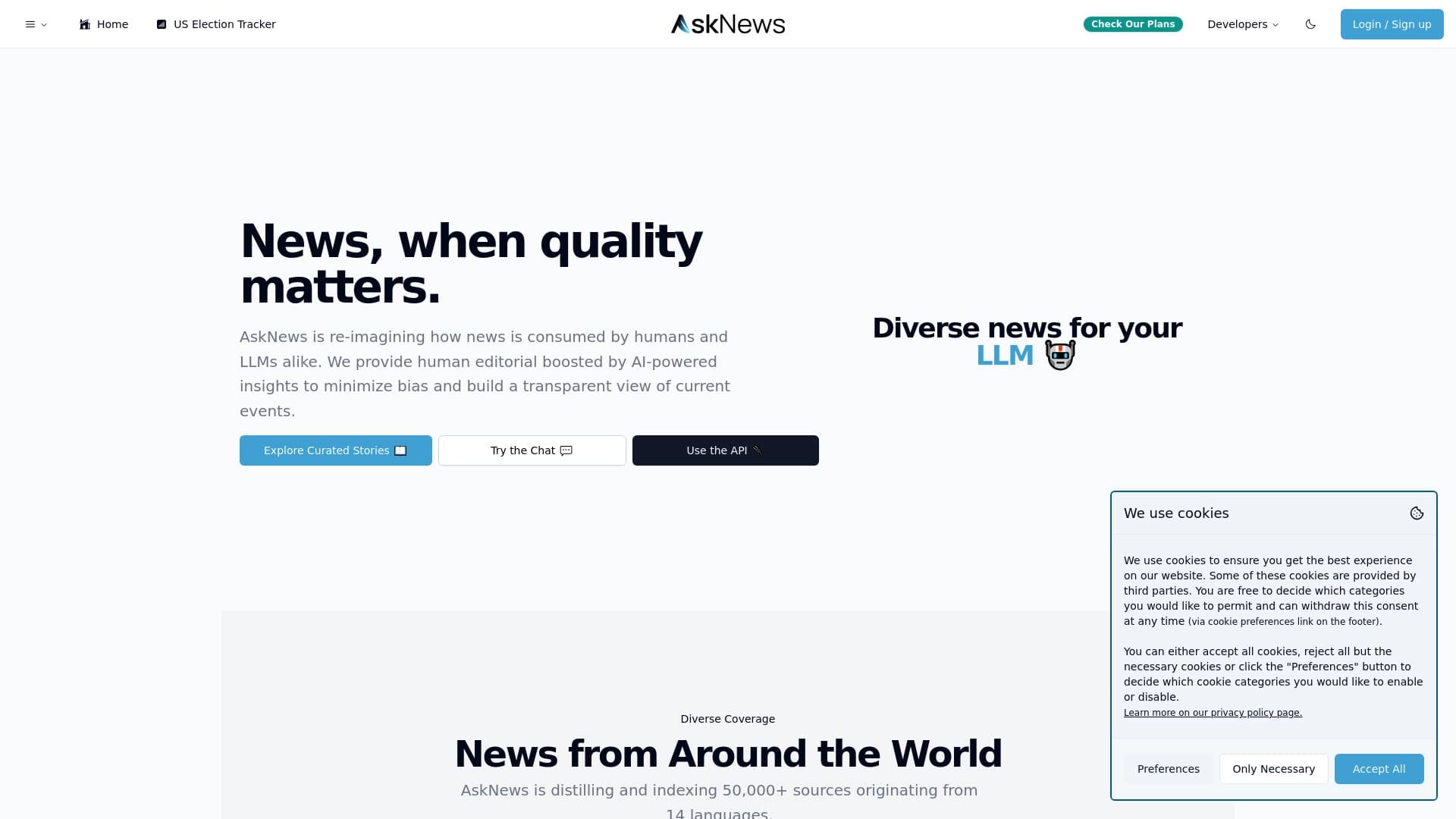
A platform for aggregating world news using AI to analyze and reduce bias.

Cloud platform for creating videos using AI avatars, synthesized speech, and automatic translation of clips into dozens of languages.

A multimedia AI toolkit for editing and enhancing photos, videos, and PDF documents.

Multifunctional AI platform for content creation, combining speech synthesis, text generation, avatar creation, and video editing.
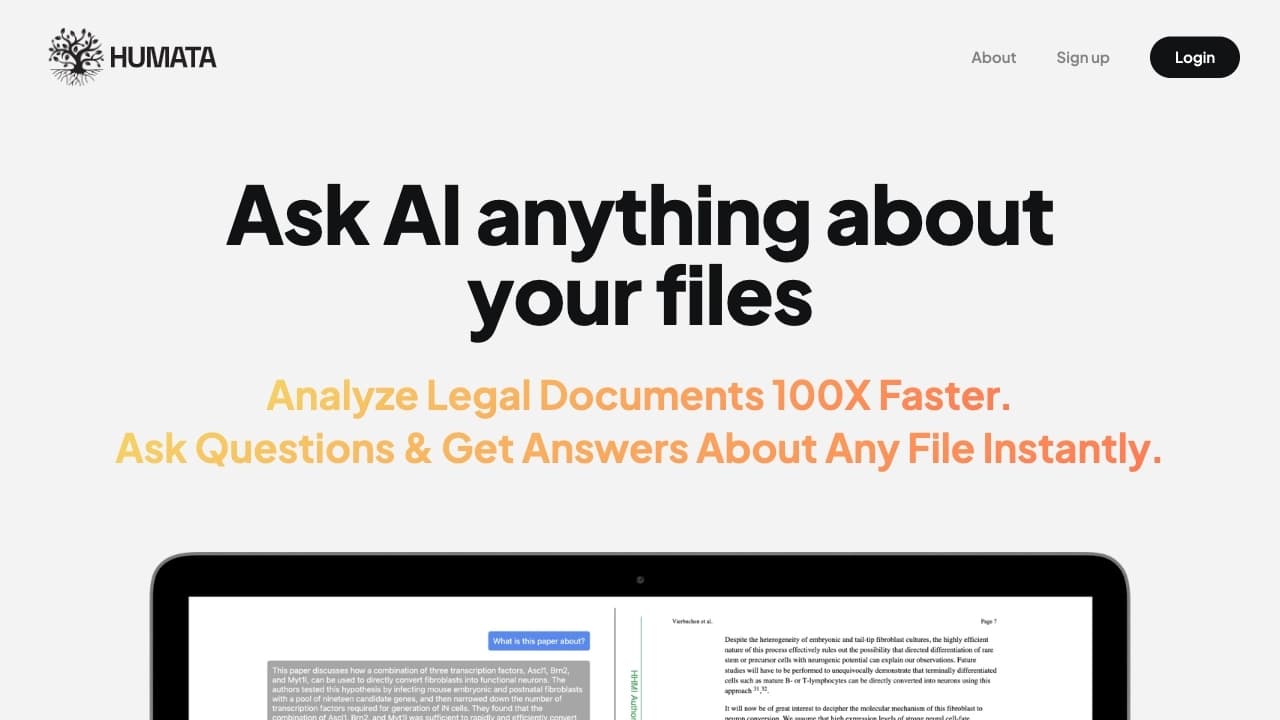
A neural network for document analysis that extracts key information, creates summaries, and answers questions about the contents of uploaded files.

AI agent for automating routine browser actions, such as filling out forms and collecting data.