

Cerebras
Platform for high-performance training and inference of AI models based on the unique Wafer Scale Engine architecture.
Ranked in
Overview
Cerebras AI Description
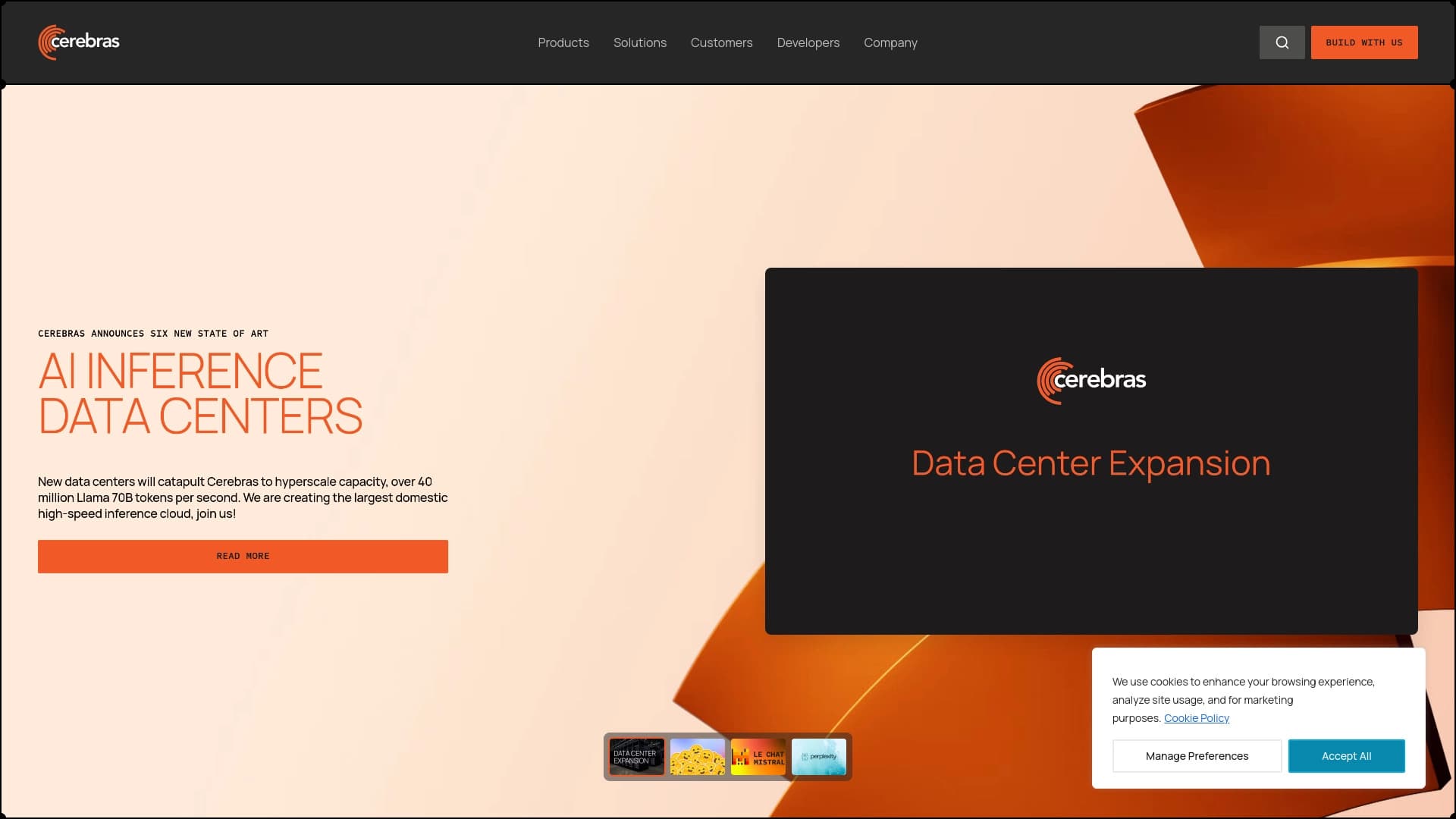
Cerebras is a computing platform designed to accelerate the training and inference of artificial intelligence models. The solution is built on a unique hardware architecture called the Wafer Scale Engine (WSE), which fundamentally differs from traditional GPU clusters. Instead of connecting multiple individual chips, Cerebras uses a single giant silicon wafer, significantly reducing data transfer latency and increasing overall system performance.
The platform is positioned as a provider of AI models and infrastructure for working with them. Users have access to ready-made models, including Llama 3.3 70B Instruct and Llama 3.1 70B Instruct. In addition to basic inference, the solution supports advanced development scenarios: Function Calling, structured output generation, code execution, built-in web search, batch processing, and the ability to fine-tune models for specific tasks.
Cerebras Characteristics
| Characteristic | Value |
|---|---|
| Type | AI agent for deep learning and inference |
| Platforms | Web, Linux, Windows |
| Company | Cerebras Systems |
| Key Architecture | Wafer Scale Engine (WSE) |
| Supported Models | Llama 3.3 70B, Llama 3.1 70B |
| Categories | AI API, AI OCR, AI Image Combiner, Whiteboard AI |
| Date Added to Catalog | May 24, 2025 |
| Target Audience | Researchers, data scientists, AI engineers, large enterprises |
Who Is Cerebras AI For?
Researchers and Academic Groups
The platform enables experiments with large language models without spending months on training. Thanks to high computing speed, researchers can test hypotheses faster and iteratively improve neural network architectures.
Machine Learning Engineers and Data Scientists
For professionals working with large volumes of information, Cerebras offers tools for accelerated data processing and model fine-tuning. Fast inference capabilities allow for quicker integration of AI features into existing products.
Large Enterprises
Organizations that need to process massive datasets or implement AI into critical business processes can use the platform as an alternative to deploying their own expensive GPU clusters. The trust of organizations such as Mayo Clinic and AlphaSense confirms the solution's applicability at an industrial scale.
How to Use Cerebras AI?
Registration and Access
To get started, you need to register on the Cerebras platform. After creating an account, the user gains access to computing resources and a management interface.
Upload and Configuration
Next, you should upload the selected model (e.g., Llama) to the platform and prepare datasets for training. An important step is configuring training parameters: learning rate, number of epochs, architecture, and other hyperparameters.
Launch and Monitoring
After configuration, the training process is launched. The platform provides performance monitoring tools that allow tracking metrics in real time (loss, accuracy, processing speed). Upon completion, the results are analyzed and can be used to refine the model or deploy it.
Key Features of Cerebras
High-Performance Computing
The key feature is the use of the Wafer Scale Engine. This chip provides extremely high data processing speed, which is critical for training large models.
Advanced Developer API
The platform supports modern methods of interacting with models: function calling allows the model to use external tools, structured outputs simplify software integration, and code execution and web search expand the capabilities of AI agents.
Training Flexibility
In addition to standard inference, fine-tuning functionality is available. This allows adapting base models to specific domains or response styles. Batch Inference is useful for processing large volumes of requests without losing speed.
Scalability
The architecture allows scaling computing power to work with models that exceed the capabilities of individual GPUs.
Advantages of Cerebras
Record-Breaking Speed
The Wafer Scale Engine processor is positioned as the fastest AI processor, outperforming entire arrays of GPUs in performance. According to developers, inference and training speeds can be up to 20 times higher compared to competing solutions.
Flexible Deployment Options
The platform supports several usage scenarios: public cloud (SaaS), private cloud for companies with special security requirements, and on-premises deployment on the enterprise's own infrastructure.
Trust of Market Leaders
The solution is already used by large organizations, confirming its reliability and effectiveness in real-world projects.
Disadvantages of Cerebras
B2B Focus
The main product is hardware. This requires significant investment (purchasing equipment or subscribing to powerful cloud resources) and engineering expertise for integration into existing infrastructure.
Closed Ecosystem
The platform has no open-source code or public community projects. This creates vendor lock-in and limits opportunities for independent auditing.
Lack of Pricing Transparency
There is no direct calculator or price list on the official website. Pricing is likely calculated individually based on configuration, but this information is not publicly disclosed.
No Consumer Applications
The product is not aimed at end users: there are no mobile apps or browser extensions.
What Problems Does Cerebras Solve?
- Training deep learning models: Reducing training time from months to days or hours.
- Large-scale research projects: Processing data that does not fit into the memory of a single GPU.
- Neural network optimization: Quickly testing different architectures and hyperparameters.
- Industrial data processing: Analyzing massive datasets in healthcare, finance, or search services.
Cerebras Pricing
At the time of writing this review, information about the cost of using the Cerebras platform is not available in public sources. The company's website and tool catalog contain neither price lists nor pricing plans. Most likely, the price depends on the selected configuration (resource volume, rental time, required SLA level) and is calculated individually after contacting the sales department.
Terms of Use for Cerebras
Registration on the official Cerebras website is a mandatory condition for using the platform. Data on limits for the number of requests, storage volume, or computing time is not publicly disclosed. Access to the full functionality is provided after signing an appropriate agreement, the details of which are not published publicly.
Cerebras Availability
The platform has a web interface, providing access through any modern browser, and also supports Linux and Windows operating systems. No information about regional restrictions or the need to use a VPN is presented in official sources. On-premises deployment will likely require specialized hardware and a Linux environment.
How Cerebras Differs from Alternatives
The key difference from traditional solutions (e.g., NVIDIA DGX clusters or Google Cloud TPUs) lies in the processor architecture. Traditional systems combine thousands of individual chips that exchange data through slow external interfaces. Cerebras WSE places all computing cores and memory on a single wafer-scale silicon die. This eliminates the bottleneck of inter-chip connections.
This approach achieves unprecedented data exchange speed and scalability. However, it also means users are tied to a single vendor's technology. While NVIDIA and Google offer more flexible ecosystems with a vast number of software libraries and frameworks, Cerebras focuses on extreme out-of-the-box performance. For comparison, AWS SageMaker is a managed service that runs on top of standard GPUs and offers a broader MLOps toolkit, but does not provide a speed advantage at the hardware level.
Conclusion
Cerebras is a high-tech, highly specialized solution aimed at accelerating the training and inference of large language models. It offers impressive performance metrics thanks to its innovative Wafer Scale Engine architecture. The tool will be useful for researchers, data scientists, and large enterprises working on complex AI projects that require reduced computation time. However, before deciding to adopt it, one should consider the lack of open pricing, the need for significant investment, and limited flexibility compared to more open competitor ecosystems. For teams that prioritize maximum speed and are willing to integrate a proprietary solution into their stack, Cerebras is a powerful and reliable choice.
Frequently asked questions
See also

AI toolkit for video generation and editing, including avatars, lip-sync, and voice cloning.

Chrome extension that helps manage tabs, history, and bookmarks with an AI assistant.

Project management platform with task assignment, time tracking, and employee workload monitoring features.
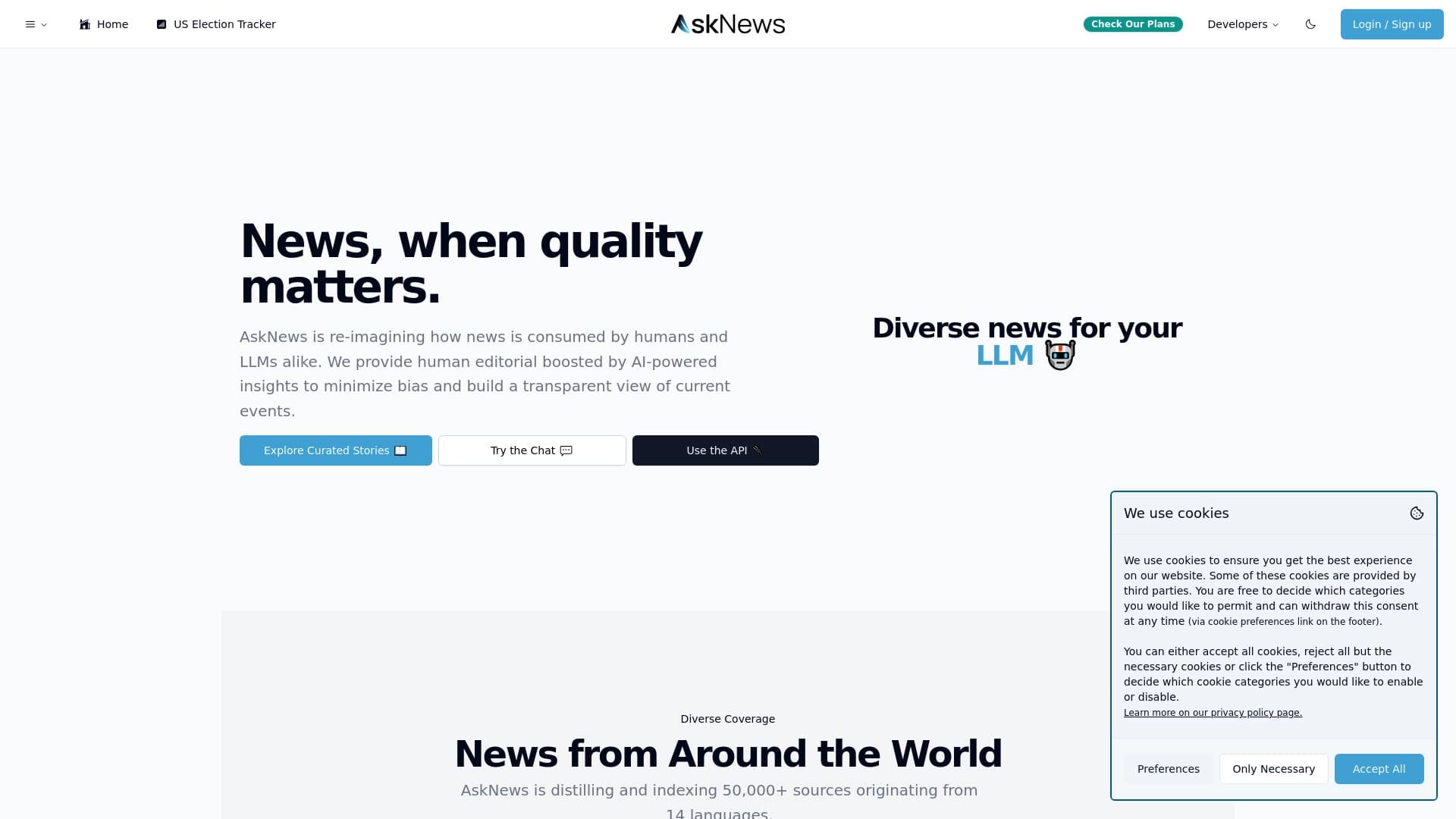
A platform for aggregating world news using AI to analyze and reduce bias.


Platform for creating multi-agent AI systems and chatbots to automate customer support and lead generation.
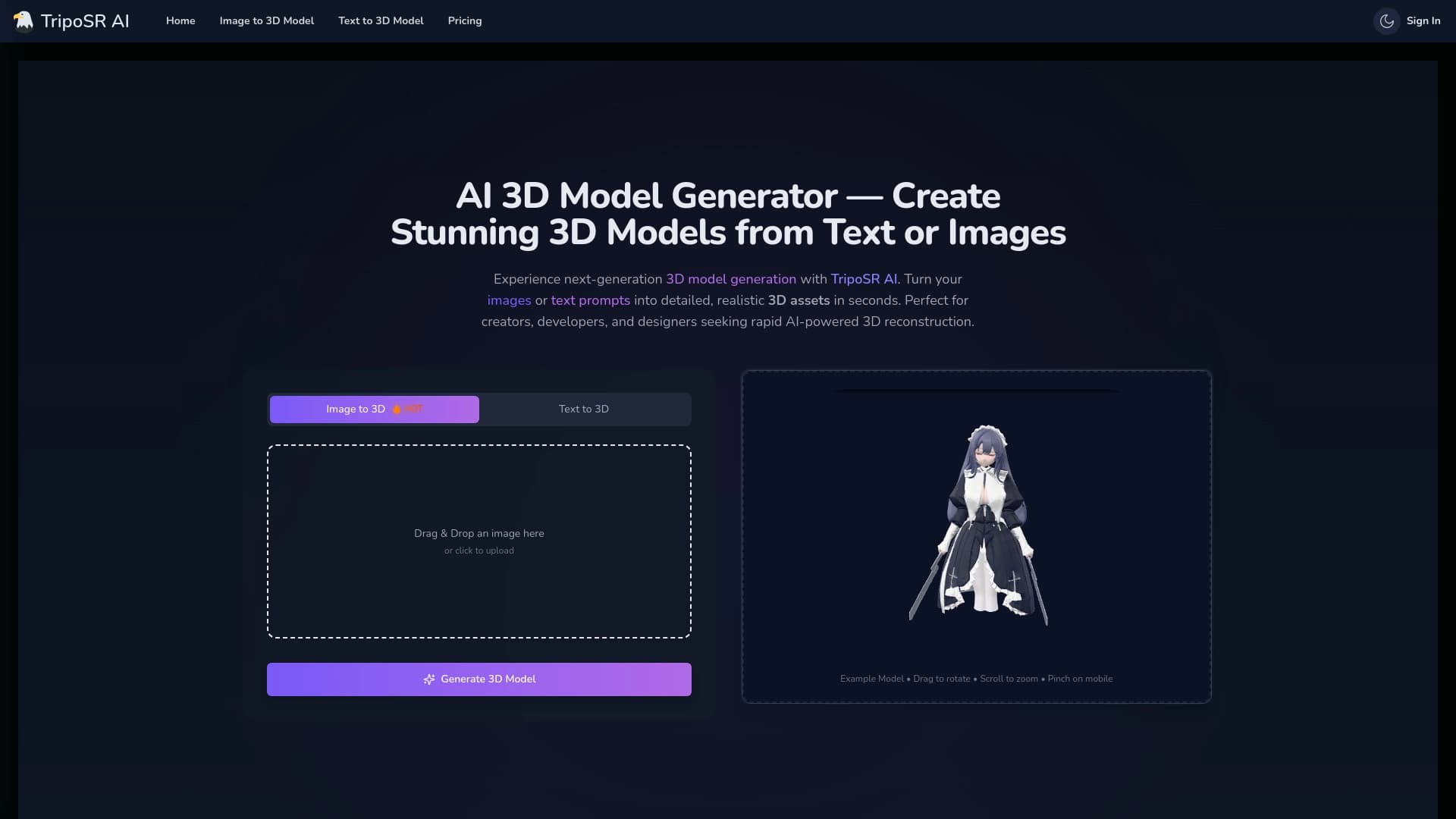

Open-source tool for quickly converting a single image into a 3D model.
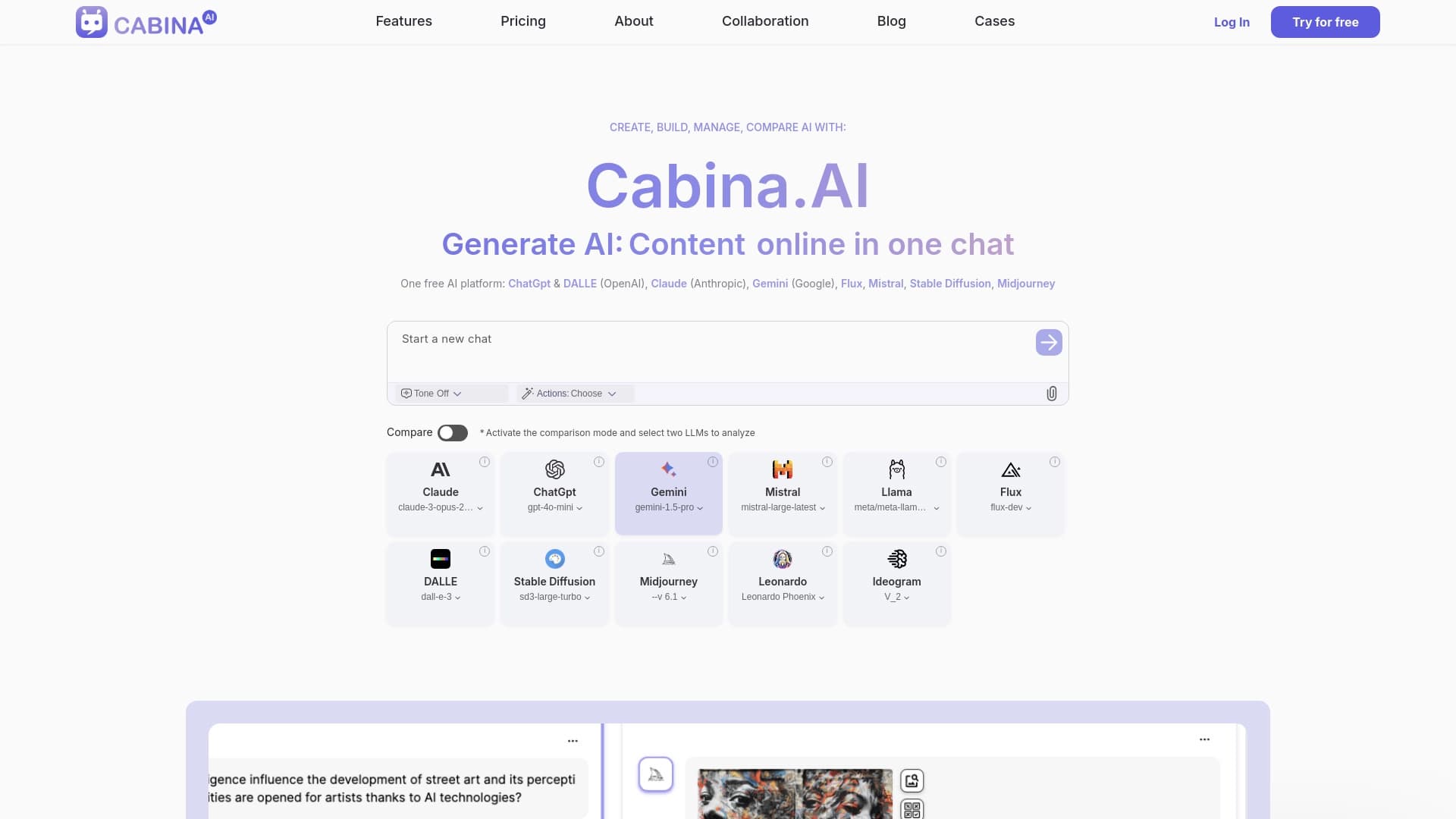
Cabina AI is a unified platform for working with various generative neural networks, enabling you to create texts, images, and videos.
AllChat is a universal platform that combines several popular language models in a single interface for communication, image generation, file analysis, and code execution.