
Camel AI
Open-source framework for orchestrating AI agents, enabling the creation of multi-component workflows with tool integration and planning.
Overview
Camel AI Neural Network Description
Camel AI is an open-source framework for orchestrating AI agents, designed for developers who need to build and manage complex automation scenarios. The tool enables organizing interactions between multiple AI agents, integrating them with external tools and APIs, and using knowledge graphs to improve response accuracy.
Instead of simply calling a language model, Camel AI provides an abstraction layer that simplifies LLM call chains, memory management, and task planning. Developers can build both simple linear data processing pipelines and multi-component autonomous systems where agents exchange results and collaboratively solve the task at hand. This approach makes the framework a flexible solution for automating routine processes.
Camel AI Characteristics
| Characteristic | Value |
|---|---|
| Type | Open-source framework for AI agent orchestration |
| Implementation Language | Python |
| Runtime Environment | Docker |
| License / Distribution Model | Free |
| LLM Provider Support | Swappable (different providers can be connected) |
| Extensibility | Support for custom plugins and tools |
| Management Interface | CLI (command line) and web interface |
| Key Capabilities | Multi-agent interaction, knowledge graphs, memory management, task decomposition |
Who Is Camel AI Suitable For?
AI Solution Developers
The tool is primarily aimed at programmers and engineers who build automated assistants, chatbots, or data processing systems. The framework handles the routine work of integrating models and tools, allowing developers to focus on business logic.
Technical Teams Working with Data
Camel AI will be useful for data professionals who build data pipelines with artificial intelligence elements. The ability to decompose large tasks into subtasks and distribute them among agents accelerates the development of prototypes and production solutions.
AI Researchers and Enthusiasts
Thanks to its open source code and support for custom plugins, the framework is suitable for experiments in building autonomous multi-agent systems. It allows quickly testing hypotheses about LLM collaboration without writing complex infrastructure from scratch.
How to Use Camel AI?
Installation and Environment Setup
Since the framework is written in Python and uses Docker, the first step is deploying the environment. The developer needs to clone the repository, install dependencies, and configure access to the chosen LLM provider. The architecture makes it easy to switch providers depending on project requirements.
Creating a Multi-Agent Scenario
The main work with Camel AI revolves around defining agent roles and goals. Using built-in abstractions, the programmer describes what tasks each agent performs, how they exchange data, and which external tools (APIs, plugins) are available to them. The system itself breaks down the large goal into subtasks and distributes them.
Monitoring and Execution
After writing the code, the scenario is launched, and the execution process can be tracked via the command line (CLI) or a visual web interface. This allows real-time observation of agent actions, verification of step correctness, and intervention in the process when necessary.
Key Features of Camel AI
- Multi-agent orchestration: coordinating the work of multiple agents to achieve a common goal.
- Task planning and decomposition: automatic breakdown of complex requests into simpler subtasks.
- Tool and API integration: connecting external services, plugins, and custom functions to agents.
- Knowledge graphs: managing structured knowledge to improve the accuracy and contextuality of model responses.
- Memory management: storing and using interaction context for long-term scenarios.
- Flexible LLM provider switching: the ability to switch between different language models without rewriting the core logic.
- Execution monitoring: observing processes via CLI or web interface.
Advantages of Camel AI
Flexibility and Extensibility
Open source code and support for custom plugins make the tool adaptable to specific tasks. The developer is not limited to built-in functionality and can expand the system's capabilities as needed.
Development Time Savings
Ready-made abstractions for working with LLMs, tools, and memory eliminate the need to reinvent the wheel. This significantly accelerates time-to-market for MVPs and prototypes of automated solutions.
Transparency and Control
Thanks to monitoring capabilities via CLI or web interface, the developer always sees what each agent is doing. This simplifies debugging and increases trust in autonomous systems.
Vendor Independence
The absence of a hard tie to a single LLM provider offers freedom of choice and allows optimizing costs or response quality depending on the task.
Disadvantages of Camel AI
Steep Learning Curve
The tool requires users to have Python programming skills and an understanding of how LLMs work. Beginners without a technical background will find it difficult to use the framework right away.
Self-Deployment Required
Being an open-source solution, Camel AI does not provide a ready-made cloud service out of the box. Users need to set up their own infrastructure using Docker and manage it.
No Guaranteed Support
Like most open-source projects, the framework does not guarantee commercial support or updates. Developers have to rely on documentation and the user community.
What Problems Does Camel AI Solve?
The tool is designed to automate processes that require the involvement of intelligent agents. Typical use cases include:
- Developing automated assistants: building complex chatbots that not only answer questions but also perform actions (e.g., booking or searching for information via APIs).
- Building data processing pipelines: automating the stages of collection, cleaning, analysis, and report generation based on unstructured data.
- Creating autonomous workflows: implementing systems where multiple agents interact with each other without constant human involvement, for example, for market research or writing technical documentation.
- Prototyping complex AI systems: quickly testing ideas for collaboration between multiple language models with external tools.
Camel AI Pricing
Based on available data, the distribution model of Camel AI is marked as free. There is no cost for using the framework itself. However, it is important to note that working with it requires paying for third-party language model (LLM) provider services, as well as incurring costs for computing resources to deploy Docker containers. Exact pricing for additional services, if any, is not specified in public sources.
Camel AI Terms of Use
Camel AI is distributed as an open-source project. This means its source code is available for free download, study, modification, and use. Users can adapt the framework to their needs and contribute their own improvements. The exact licensing terms must be checked in the project's official repository, but the open distribution model implies no license fees and no restrictions on commercial use, provided the license terms are met.
Camel AI Availability
As an open-source project, Camel AI is available to all interested developers. To use it, you need to download the source code from the public repository. The tool is not a cloud SaaS service, so availability directly depends on the user's ability to deploy a Python environment and Docker containers on their own infrastructure or on rented server capacity. The relevance and support of the framework depend on the activity of the developer community.
How Camel AI Differs from Alternatives
The main difference between Camel AI and most commercial platforms for building AI agents is its open source code and flexibility. Instead of using a limited set of tools with a monthly subscription, the developer gets full control over the architecture. This allows creating highly specialized solutions without paying for "extra" functionality. Unlike proprietary builders, Camel AI requires more technical skills but offers much greater freedom in customization and integration with your own systems.
Additionally, the framework emphasizes multi-agent interaction and knowledge graphs as built-in mechanisms, which is suitable for building complex autonomous systems. Many alternatives offer these features as add-ons or paid extensions. In Camel AI, they are part of the core architecture, simplifying the design of scalable solutions. The ability to flexibly switch LLM providers also sets it apart from tools tied to a single model.
Conclusion
Camel AI is a powerful open-source framework for developers building complex systems involving AI agents. It provides extensive capabilities for organizing multi-agent interaction, integrating with external services, and managing knowledge. Thanks to its flexibility, free distribution, and community-driven development, the tool is a strong alternative to commercial platforms. The main limitations are the need for technical skills for self-deployment and the lack of official support, which is a typical feature of open-source solutions. For technical teams seeking full control over the architecture of their AI solutions, Camel AI can serve as a reliable foundation for development.
Frequently asked questions
See also
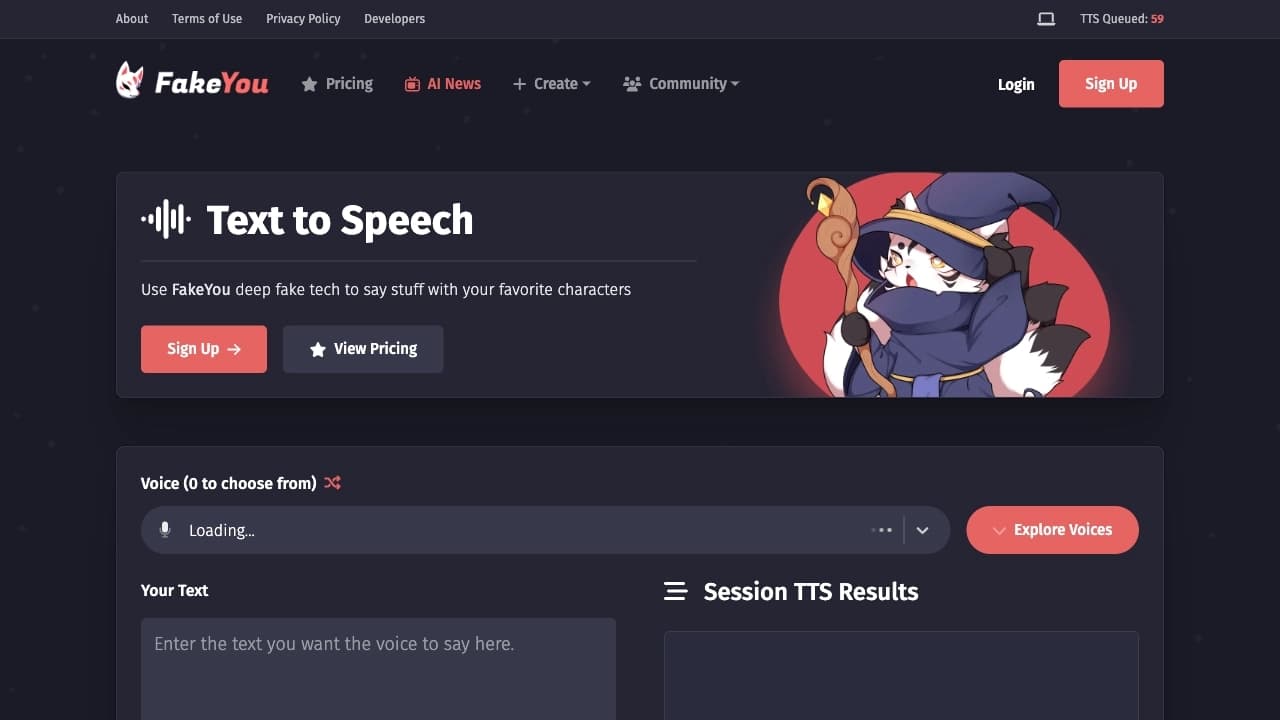

Online AI speech synthesis platform that allows generating audio with voices of famous characters and celebrities.

AI travel planner that creates personalized itineraries and helps you choose flights, accommodation, and activities in a chat.
Unified API access to more than 500 AI models, including GPT-5 and Claude 4.5, with the ability to save on costs.


An open platform for generating images and other visual content from text descriptions using AI.
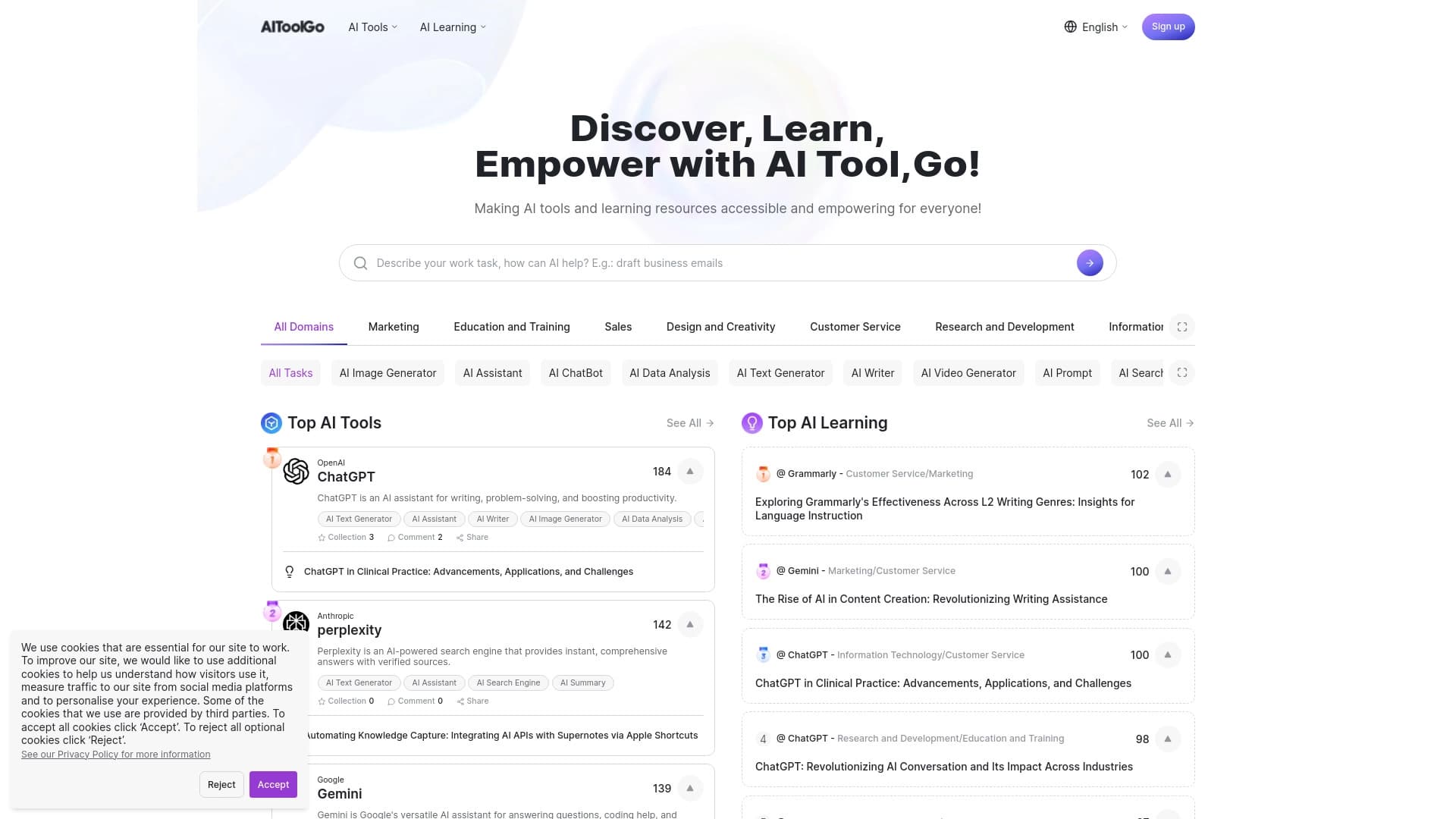
Catalog of AI tools with educational materials and guides for selecting neural networks.
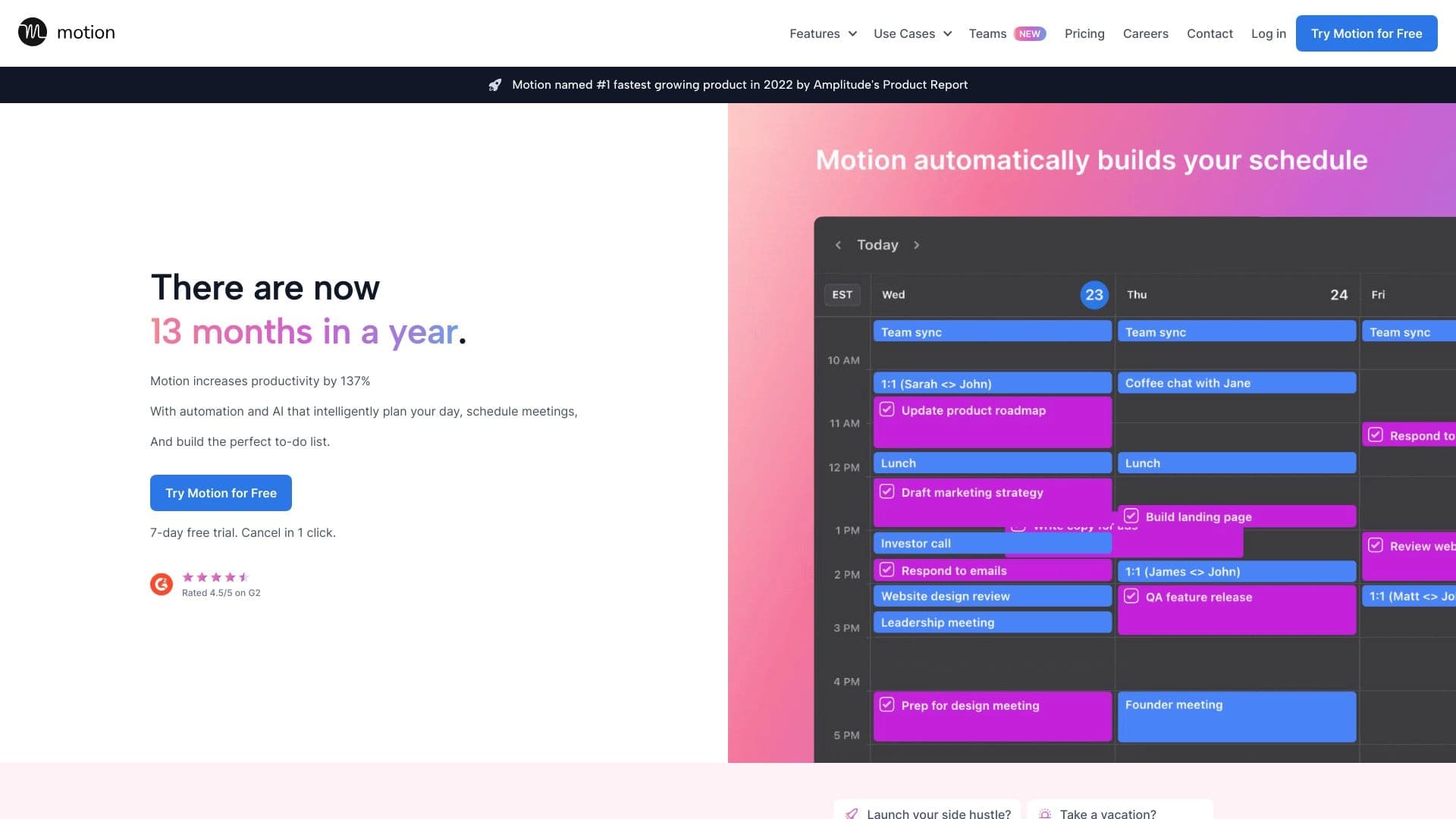

AI platform for automatic workday planning, task management, and prioritization.

A multifunctional AI assistant for generating texts, images, and audio.

AI platform for creating and editing videos, working directly in the Chrome browser.