

Banani
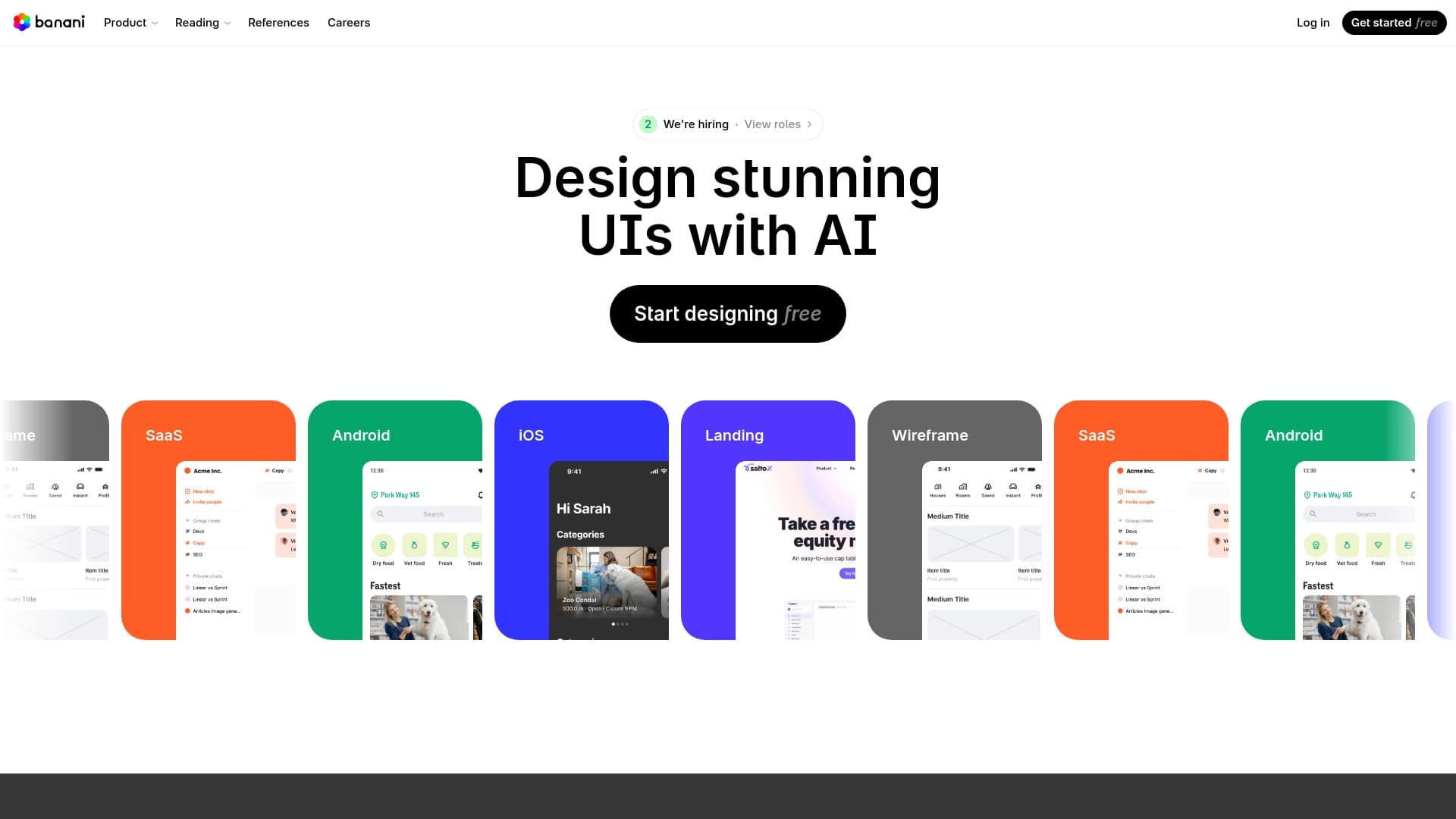
Banani is a neural network for generating UI mockups and interactive prototypes from text descriptions.
Ranked in
Overview
Banani Neural Network Description
Banani is an online neural network that takes over the routine part of a designer's work: it converts text descriptions into wireframes, full-fledged UI mockups, and interactive prototypes. Instead of spending hours drawing screens in a graphic editor, you simply describe what you want in words, and the system assembles the visual structure itself.
The tool is designed as a bridge between an idea and its implementation. It understands not only direct text but can also work with references: uploaded screenshots, images, or links from Figma. From these materials, the neural network extracts key interface elements and transfers them into a new project. The finished result can be exported to Figma for further work or directly into code — this shortens the path from concept to working prototype.
Key Feature
The main value of Banani is that it generates not a static image but a connected set of screens. You can describe a scenario (for example, "onboarding, registration, main app screen"), and the system will build a logical sequence of pages with clickable transitions. This allows you to test user scenarios right away without spending time on manual navigation.
Limitations
It's important to understand that Banani is a tool for a quick start, not a final designer. Generated mockups often look templated, require manual refinement, and don't always account for all the details of the technical specification. The quality of the result directly depends on how clearly you formulated your request.
Banani Characteristics
| Characteristic | Value |
|---|---|
| Type | Interface generator |
| Category | Design assistants, Graphic design tools, Design generators |
| Platforms | Website (online service) |
| Free plan | Yes (free access available) |
| Monthly visits | ~55.4K |
| Developer | Banani |
| Publication date | November 7, 2025 (updated December 18, 2025) |
| Export results | Figma, code |
| Reference support | Images, screenshots, Figma links |
Who is Banani neural network suitable for?
Designers and Product Managers
The main audience of the service is those who work daily on creating digital products. Designers use Banani for quick generation of draft options to evaluate the direction before detailed refinement. Product managers can visualize their ideas and hypotheses on their own without waiting for the design team to be available, which speeds up discussion and concept approval.
Students and Beginners
For those just entering the design field, Banani becomes a convenient training tool. It allows you to see how a text description turns into an interface and understand the logic of building mockups without deep knowledge of professional tools.
Managers and Entrepreneurs
Anyone who needs to quickly convey their idea to a team or investor can use Banani to put together a visual prototype in minutes. This solves the communication problem: a picture is clearer than any words, and creating such a picture takes minimal effort.
How to use Banani neural network?
Step 1: Formulating the Request
Everything starts with text. You need to describe the desired design in plain language. This can be a simple instruction ("a minimalist button"), a description of an entire screen, or even a scenario for a multi-screen application. The more precise and detailed the formulation, the better the result will be — Banani is sensitive to context and details.
Step 2: Generation and Refinement
After sending the request, the neural network assembles the wireframe and mockup within seconds. If something isn't right, there's no need to start over — you can adjust the result with text commands: change styles, structure, add or remove elements, refine the color palette and typography.
Step 3: Using References
In addition to plain text, Banani accepts references as input. You can upload an image, a screenshot, or paste a link to a Figma mockup. The neural network will analyze the uploaded material, extract key components, and build a new interface based on them, preserving the desired visual direction.
Step 4: Exporting the Result
The finished prototype can be exported to Figma for further professional refinement or converted into code for developers. This allows Banani's work to be seamlessly integrated into the team's existing workflow.
Key Banani Features
UI Mockup Generation from Text
This is the service's core function: turning a verbal description into a visual wireframe. The system understands structure — headings, buttons, input fields, navigation — and assembles everything into a coherent composition.
Creating Interactive Prototypes
Banani generates not just static images but full-fledged clickable prototypes. You get a connected set of screens that you can "walk through" in preview mode, testing the logic of transitions and interactions.
Working with References and Screenshots
Uploading an image or a Figma link allows you to use an existing visual language. The neural network extracts the main interface elements from the reference and adapts them to the new task while preserving the style.
Export to Figma and Code
Work results can be transferred to Figma for detailed refinement or immediately converted into code, significantly speeding up the handoff to development.
Editing with Text Prompts
Making changes doesn't require mechanical actions — you can simply write what needs to be changed, and the neural network will apply the edits to the mockup.
Banani Advantages
Time Savings
This is the key argument for the service. A prototype that used to take half a day can now be obtained in about half an hour. This is especially noticeable in the early stages when you need to quickly test several concepts and choose one.
Low Entry Barrier
No skills in complex graphic editors are required to work with it. It's enough to be able to articulate your thoughts in writing. This opens up interface creation to a wide range of specialists, from managers to analysts.
Flexibility of Customization
Despite the templated nature of basic solutions, Banani allows you to flexibly change the appearance for specific tasks. Colors, fonts, buttons, and structure are easily adjusted through text commands, allowing you to adapt the result.
Banani Disadvantages
Templated Design
Algorithms often produce standard, predictable solutions that can look uniform. For projects requiring a unique visual style, the mockup will almost certainly need manual refinement.
Dependence on Formulation
The result heavily depends on how accurately you described the task. A vague request will yield a corresponding result — the neural network can't fill in what you didn't specify.
Ignoring Technical Specification Details
Generated mockups don't always account for the nuances of the technical specification and the specifics of the target audience. The system works with general templates that may not reflect your product's specifics.
What tasks does Banani solve?
Quick Creation of Draft Mockups
Banani is ideal for tasks where you need a "picture for discussion": preparing materials for presentations, aligning a concept with a client, or internal team communication.
Generating Interactive Prototypes from Descriptions
You can describe an entire application (for example, "a food delivery service with restaurant selection, cart, and payment") and get a working prototype with transitions between screens. This helps quickly test hypotheses without lengthy manual layout.
Transferring Old Solutions to New Products
Thanks to reference support, Banani helps adapt existing designs or their elements to a new project. This speeds up the process and helps align the visual style within a team or product line.
Banani Pricing
The service has several pricing plans:
- Free plan — available to all users, includes basic generation and export features.
- Basic plan — includes expanded UI generation and export capabilities.
- Professional plan — includes premium features, team collaboration, and unlimited projects.
The choice of plan depends on the intensity of use and the number of team members. For one-off tasks, free access is sufficient; for regular professional work, it makes sense to opt for a paid subscription.
Banani Terms of Use
The service works through a web interface and doesn't require installing additional software. To get a quality result, you need to formulate requests clearly: specify the style, structure, and desired interface elements. If the request is too general, the result may fall short of expectations.
Information about the need for registration is not available in public sources, which suggests the possibility of use without creating an account. All operations are performed online, making the service accessible on any device with an internet connection.
Banani Availability
The tool is hosted on the banani.co website and works as an online service. No data on regional restrictions or the need to use a VPN has been found in public sources — the service is positioned as global.
How Banani differs from alternatives
Focus on Prototyping
Unlike many AI image generators (such as Midjourney, Kandinsky, Stable Diffusion), which create static pictures, Banani focuses specifically on interfaces and interactive prototypes. It's not just a "pretty picture" but a structure of screens ready for testing user scenarios.
Working with Figma References
The ability to upload links to Figma mockups and use them as a basis for generation is a rare feature among alternatives. This makes Banani a tool integrated into a designer's professional workflow, not a separate "sandbox."
Export to Code
Not all competitors can convert mockups into code. Banani provides this capability, further bridging the gap between design and development and setting it apart from services like AutoDraw or Yandex Art, which solve entirely different tasks.
Ease of Entry
Compared to professional tools, Banani wins with its low entry barrier. You don't need to learn an interface to get started — being able to write text is enough. This is the main difference from traditional design tools and a number of niche alternatives.
Conclusion
Banani is a practical AI tool for quickly creating wireframes, UI mockups, and interactive prototypes based on text descriptions. It suits designers, managers, students, and entrepreneurs, helps save time at the early stages of design, and supports working with references, including Figma links, as well as export to Figma and code. However, you shouldn't expect unique designs from the service: basic solutions are often templated and require manual refinement. The optimal strategy is to use Banani as an auxiliary tool for quickly generating ideas and draft versions, which are then refined to production quality by specialists.
Pricing
Frequently asked questions
See also
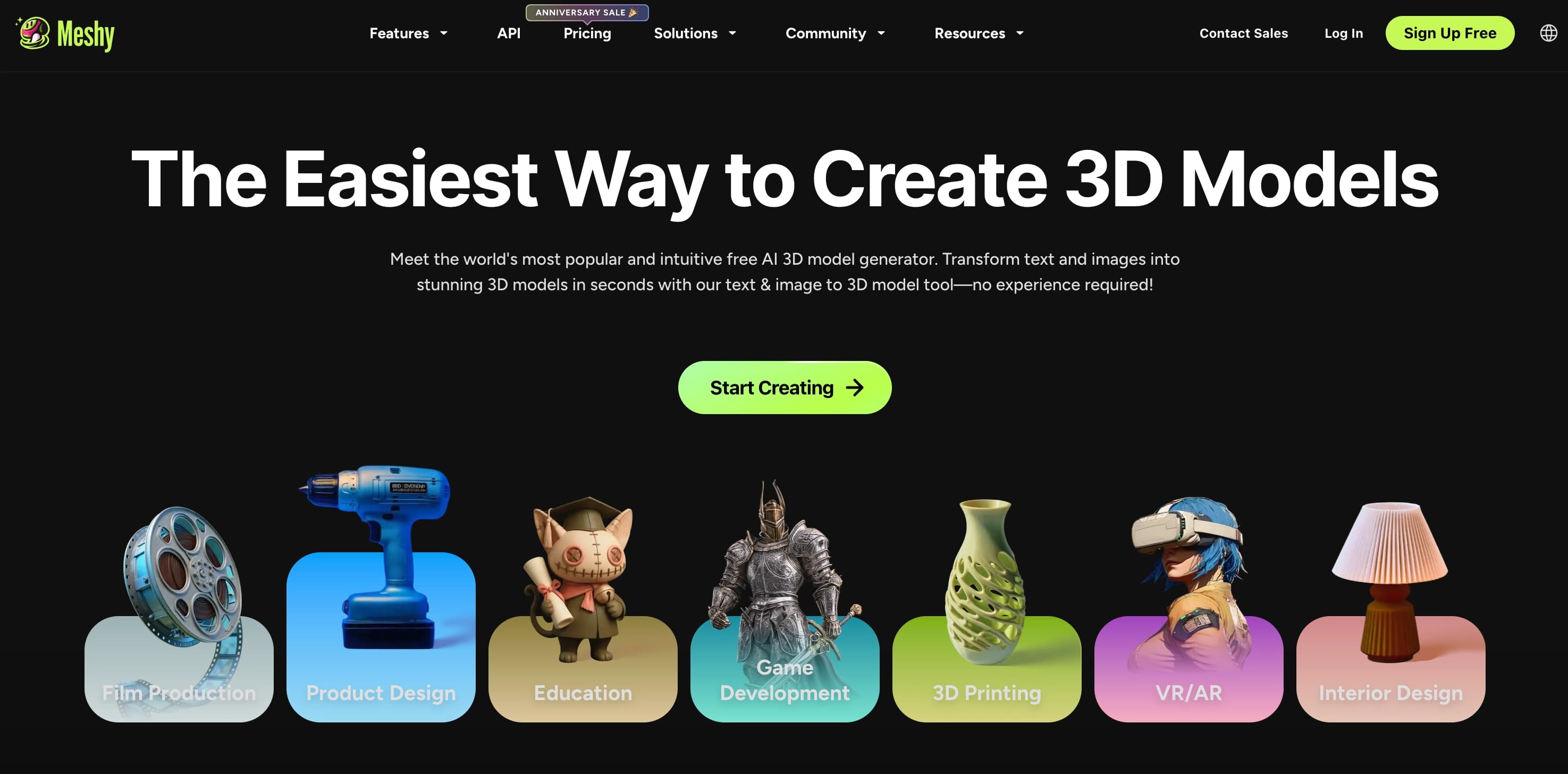
A neural network-powered cloud service for generating 3D models, textures, and animations from text descriptions or images.


Averi is a marketing platform that brings campaign planning, content creation, and analytics together in a single interface.

Universal AI assistant that analyzes videos and web pages, answers questions, and creates summaries.
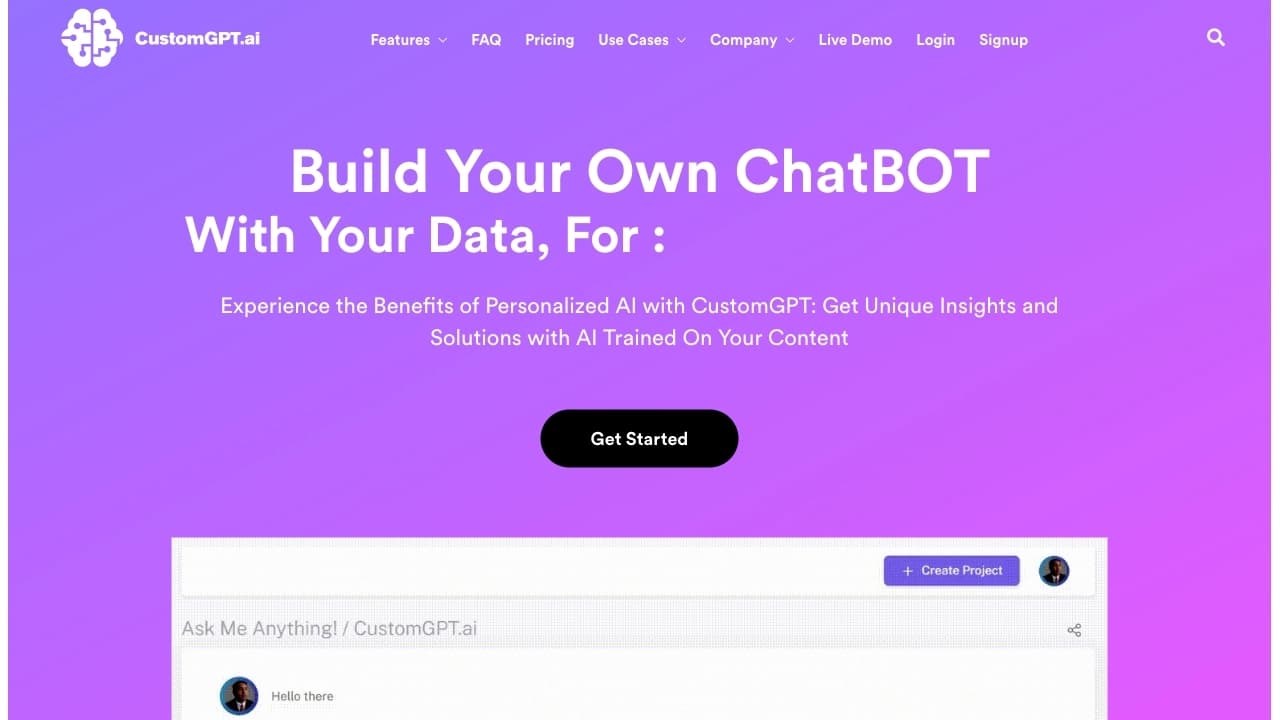

A platform for creating corporate chatbots based on your own documents without coding.
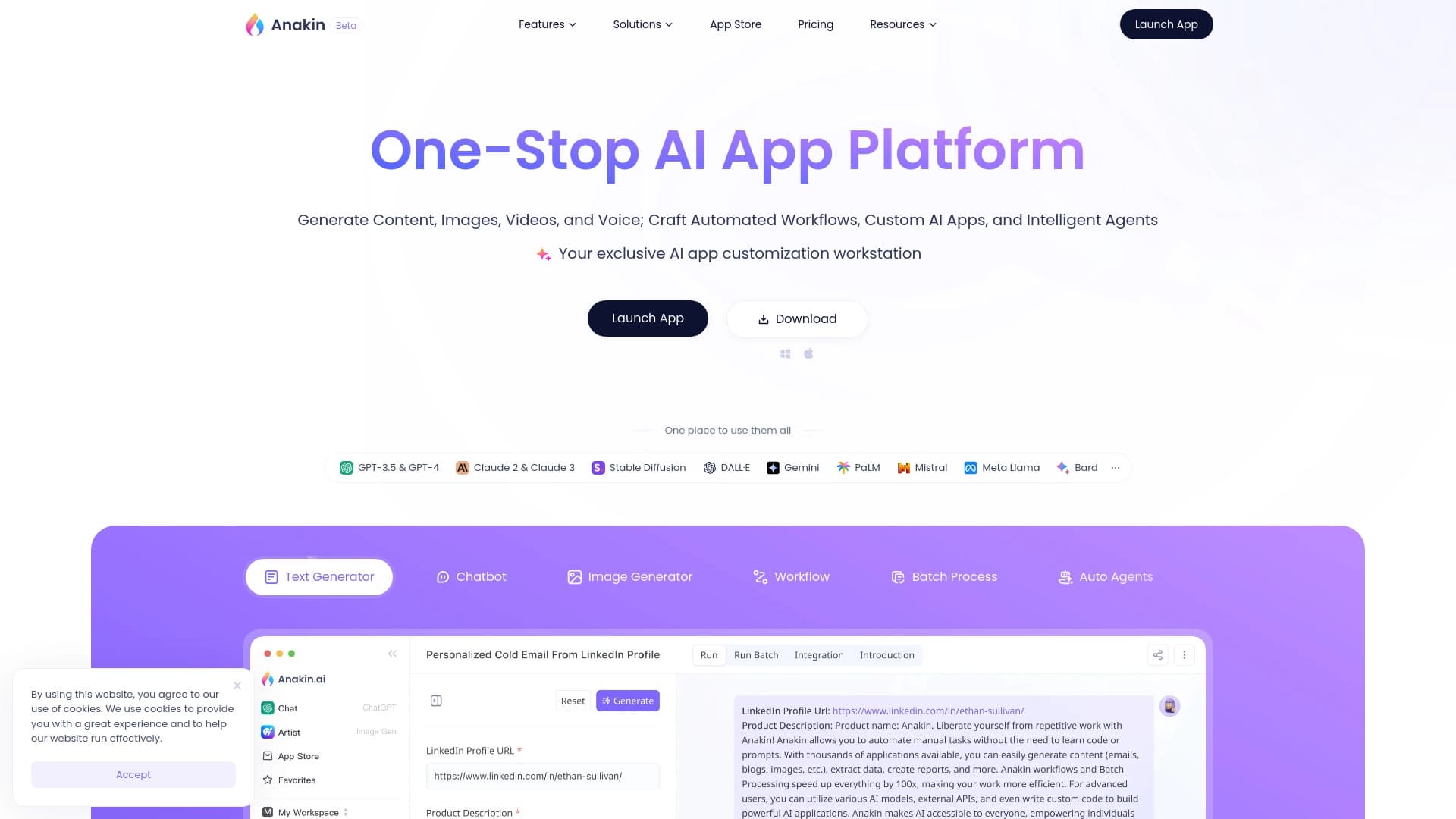
Anakin.ai is a low-code platform that combines various AI models for content creation and workflow automation without coding.
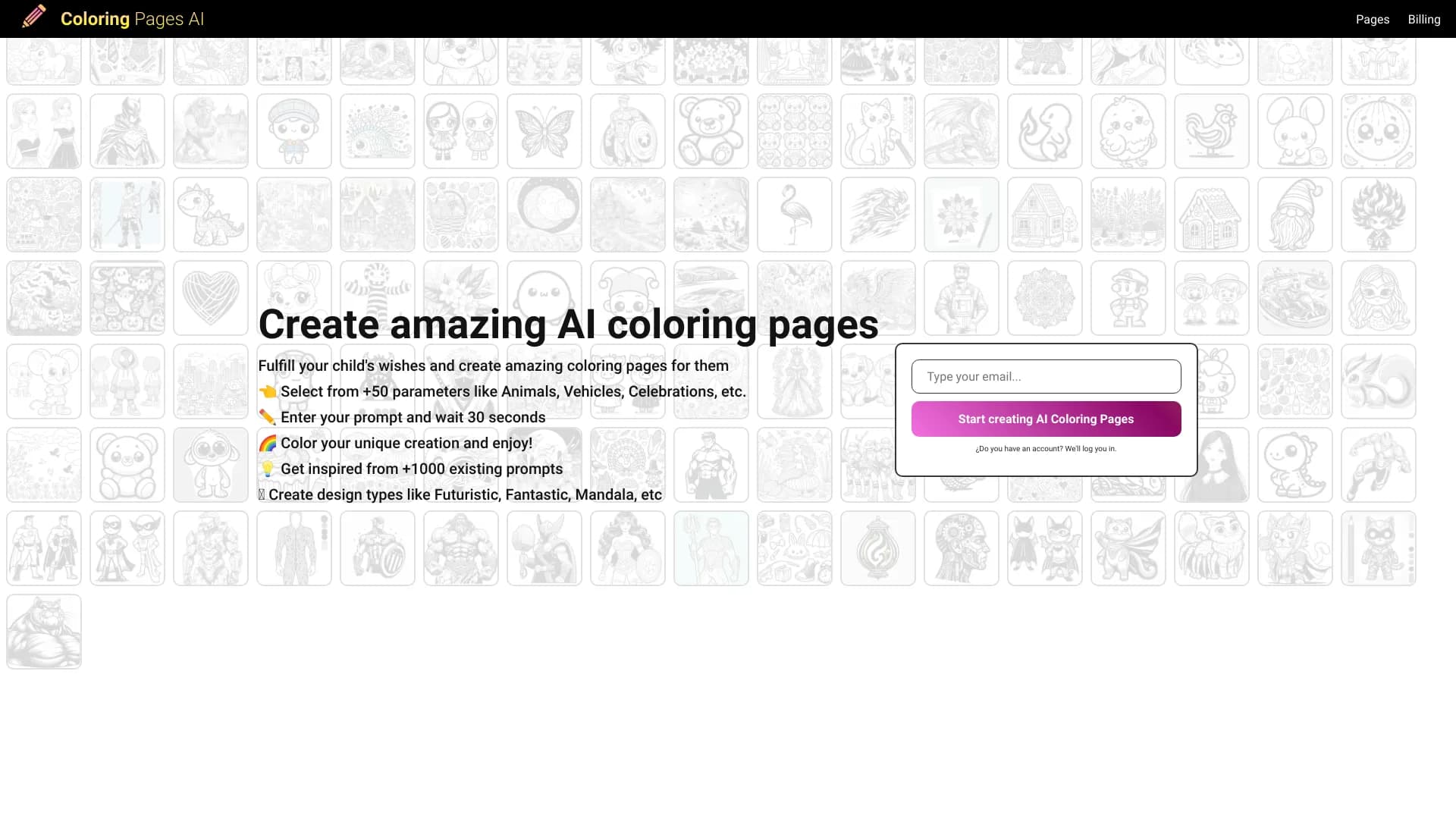

Coloring book generator that creates outline drawings from photos or text descriptions.
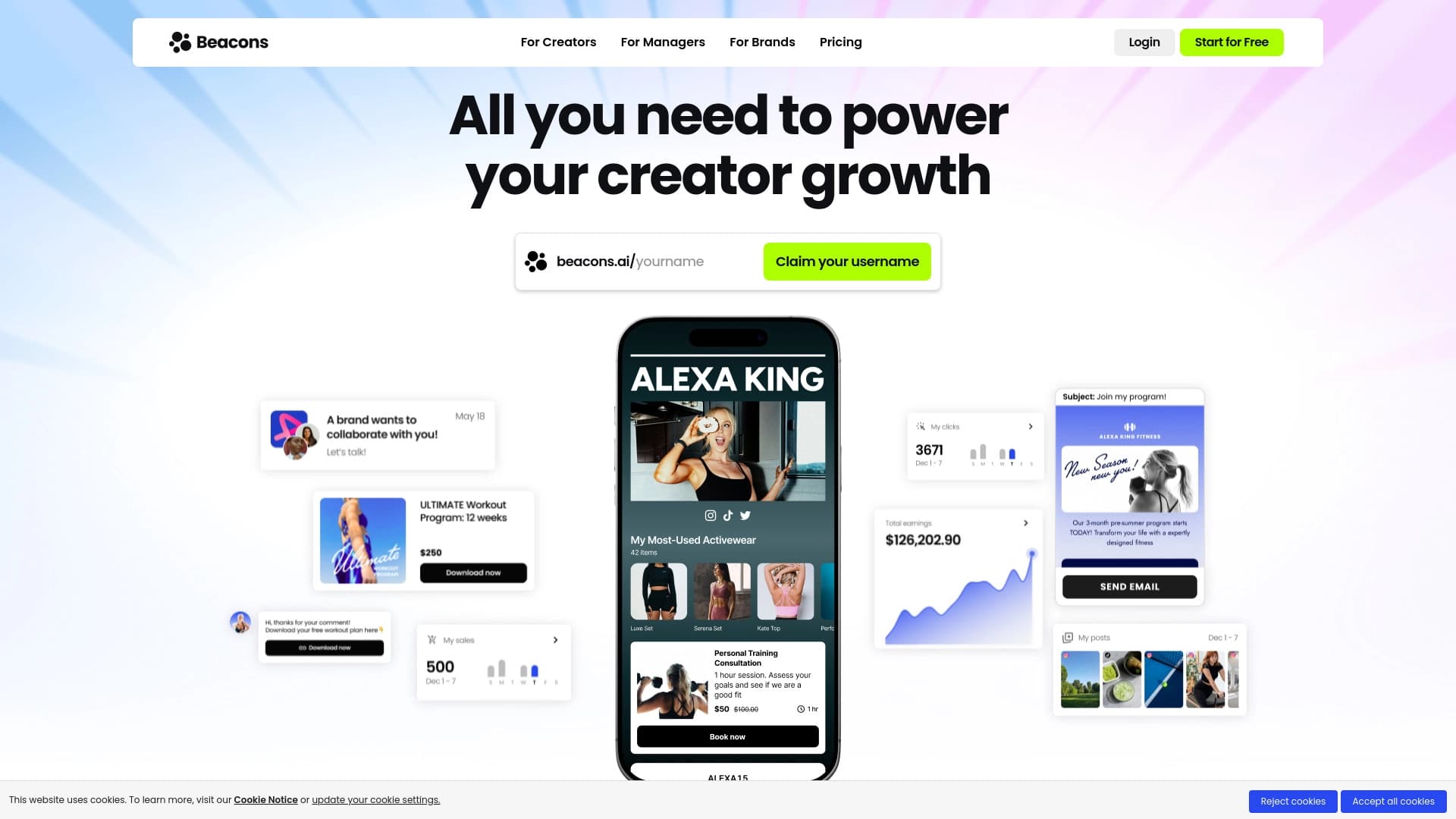
A platform for content creators that combines link management, email marketing, an online store, and analytics in a single visual editor without coding.
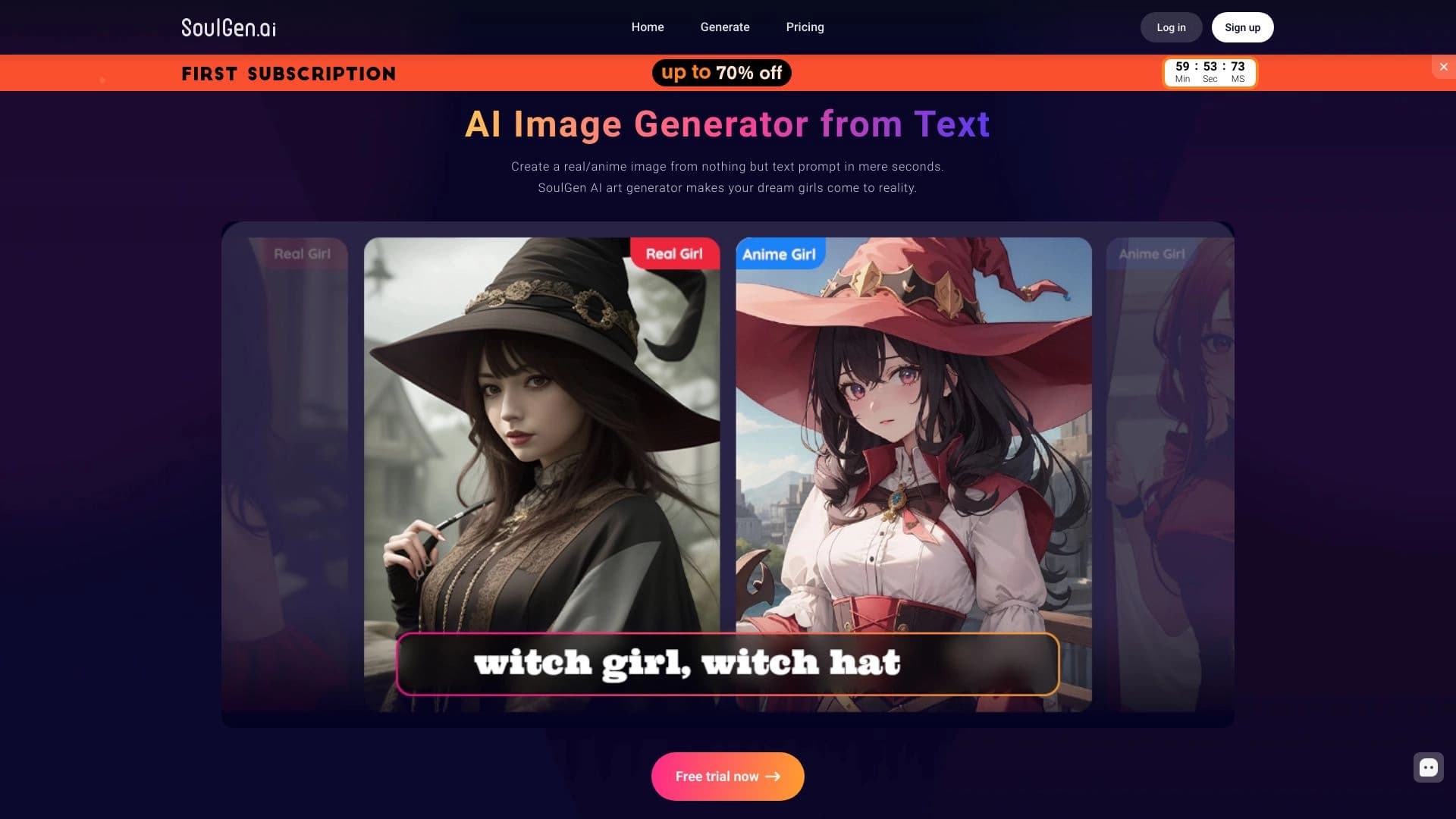

Web service for generating images from text descriptions and communicating with virtual characters.