
Bahama
Platform for business process automation.
Overview
Bahama is a platform designed to automate business processes. The tool is aimed at companies that want to eliminate routine operations and simplify internal document flow or sequences of actions. The key idea of Bahama is to give users the ability to configure workflow logic on their own without writing code.
Easy entry into automation
Instead of bringing in developers for every minor task, company employees can use visual scenarios. This speeds up the adoption of automation and makes it accessible to departments that previously depended on IT specialists. The platform takes over control of repetitive steps, reducing the impact of human error.
Focus on efficiency
Bahama's main goal is not just to replace manual work, but to build a more streamlined operating system. The tool helps synchronize the actions of different employees and departments, leading to more predictable results. Companies that adopt such solutions typically report reduced time spent on operational activities.
Bahama Characteristics
| Characteristic | Value |
|---|---|
| Pricing model | Price not specified |
| Date added | 13.05.2025 |
| Categories | Productivity |
| Key task | Business process automation |
Who is Bahama suitable for?
Bahama is aimed at teams that want to systematize their work without significant investment in development. The tool will be useful in several types of organizations.
Companies with repetitive operations
Businesses where the same type of tasks are performed daily (processing requests, filling out reports, approving documents) will find in Bahama a way to speed up these processes. The platform allows you to build a pipeline where tasks move from stage to stage without human involvement.
Small and medium-sized businesses
For small teams that cannot afford to keep a staff of programmers, Bahama becomes an alternative to expensive development. Employees will be able to independently adapt scenarios to the changing needs of the business, saving budget and time.
Managers and project managers
Managers interested in process transparency will be able to standardize task execution using the platform. This helps control work quality and avoid downtime associated with tasks getting "stuck" at some stage.
How to use Bahama?
A precise step-by-step guide to working with the platform is not currently detailed, but the logic of using such automation systems implies a certain order of actions.
Exploring the interface
The first step is to familiarize yourself with the platform's interface. The user will need to understand where the scenario builders are located and what the workspace for managing processes looks like. Usually, such platforms offer a set of ready-made templates or elements for creating logic.
Creating a scenario
The essence of using Bahama comes down to visually constructing a business process. Instead of writing code, the user connects blocks representing specific actions. This allows you to describe the route of a task from the moment it is created to its final completion.
Main features of Bahama
The platform is focused on solving productivity tasks, and its functionality revolves around process management.
Setting up automation scenarios
The main function is the ability to configure automation scenarios. This means the user sets the rules by which the system executes chains of operations. This approach reduces the need for manual control.
Optimizing workflows
The tool allows you to look at current workflows from a different angle. Bahama helps eliminate unnecessary steps and speed up standard operations, making the team's work more cohesive.
Advantages of Bahama
Using Bahama provides businesses with a number of tangible benefits in operational activities.
Reducing the likelihood of errors
Automation of routine tasks minimizes risks associated with the "human factor." The system performs actions according to a given algorithm, making work results more stable and predictable.
Accessibility without technical knowledge
You don't need to be a programmer to set up the platform. Bahama allows employees with basic digital skills to manage automation independently, which speeds up the implementation of changes in companies.
Accelerating operations
Delegating routine tasks to the program frees up employee time for more complex issues. Processes start to run faster, which directly affects overall business efficiency.
Disadvantages of Bahama
Open sources do not provide information about critical shortcomings of the platform. However, given the nature of the data, potential difficulties can be assumed.
Lack of pricing information
The absence of public data on pricing may hinder a quick assessment of the economic feasibility of implementation. Companies will have to contact representatives directly, which slows down the purchasing decision process.
Limited information on integrations
Based on available data, it is difficult to judge how easily Bahama integrates with other popular services (CRM, ERP). Full operation within a complex IT infrastructure may require clarifying the platform's technical capabilities with official representatives.
What problems does Bahama solve?
Bahama's main task is to relieve employees of routine and streamline internal processes.
Business process automation
Bahama solves the problem of moving routine operations into automatic mode. Business processes cease to depend on the speed of a particular employee or their willingness to complete work on time, becoming standardized.
Improving team efficiency
The platform helps teams focus on the end result rather than intermediate actions. Process optimization allows goals to be achieved with less resource and time expenditure, ultimately increasing the productivity of the entire organization.
Bahama Pricing
Currently, information about the cost of using Bahama is not available in open sources. The platform has the status "Price not specified," which may mean individual pricing for each client depending on the scale and needs of the business.
To obtain accurate information about commercial terms, interested companies are advised to contact the developers or official partners of the platform directly. The absence of a public price list is a common practice for B2B solutions focused on automating complex processes.
Terms of Use for Bahama
The specific terms of use for Bahama are not disclosed in detail. Based on the general logic of cloud platforms and automation services, standard rules for this segment can be assumed.
Access features
Access to the platform is likely provided via subscription or contract. The distribution model is listed as unknown, so the exact licensing parameters and the number of users per plan will be clarified upon purchase.
User requirements
To work with the system, the user only needs basic computer skills. Since the platform's positioning does not require deep technical knowledge, no serious requirements are placed on employee training. The main thing is understanding the logic of your own business processes.
Availability of Bahama
Information about the availability of Bahama in different countries and regions is currently not officially confirmed. There is no data on support for specific languages other than Russian, in which the description is written.
Users may assume that the platform is available as a web service, providing access from any device via a browser. However, there is no official confirmation of this. It is recommended to clarify information about regional availability and technical environment requirements with the official Bahama representative before starting use.
How Bahama differs from analogues
There are many automation tools on the market, so it is important for the user to understand the specifics of Bahama.
No entry barrier for employees
The main difference between Bahama and complex corporate systems (such as Bitrix24 or SAP) is the stated ease of setup. The platform is designed so that business users can independently change process logic without involving programmers. This makes it more flexible at the operational management level compared to heavy ERP systems.
Focus on process rather than communication
Unlike project management services (for example, Trello or Asana), which focus on collaboration and task statuses, Bahama emphasizes the automation of sequential actions. It is not just a task tracker, but a process builder that should perform actions for the user, not just remind them of them.
Conclusion
Bahama is a solution for companies seeking to increase productivity through the automation of routine business processes. The platform stands out from analogues with its stated accessibility of scenario configuration without the involvement of programmers. The tool is aimed at accelerating operations and reducing the likelihood of errors, making it useful for small and medium-sized businesses. Despite the limited public information about pricing and terms, it is important to emphasize that Bahama can become an effective solution for standardizing and optimizing workflows. It is recommended to follow official announcements from the developers to obtain more detailed data about the product.
Frequently asked questions
See also
AI assistant for automating retail tasks and optimizing call center operations.
AI platform for fast resume screening that helps recruiters select suitable candidates.

BannsAi is an AI-powered service for quickly creating ad banners based on a text description or reference.


Neural network for generating SEO-optimized articles and automating blog management.

AI email assistant that integrates with Gmail and Outlook.


AI-based platform for creating and editing product images and videos for e-commerce sellers.


A web service that automates job search using artificial intelligence.
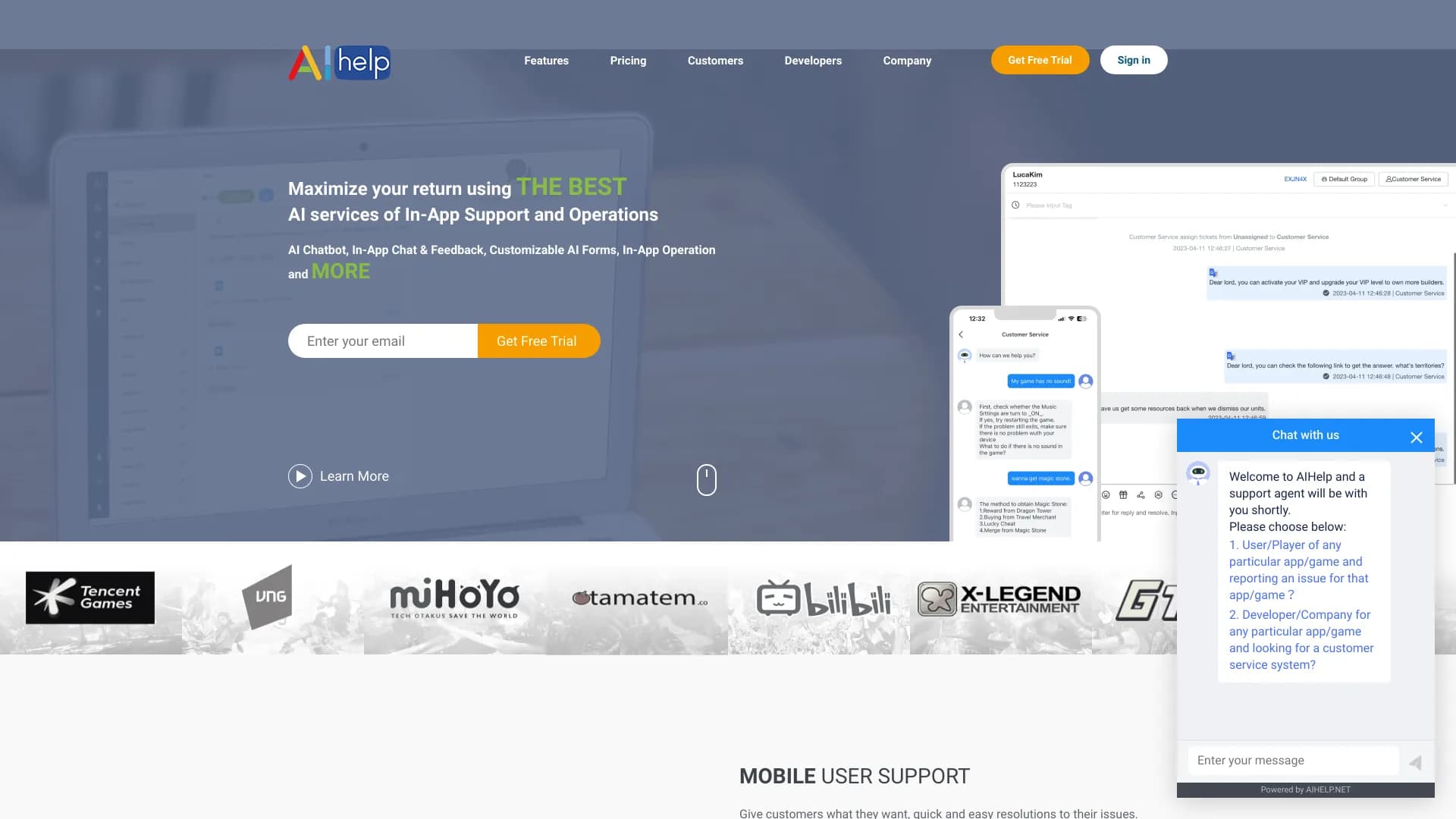

AI platform for user support in applications, including a chatbot and ticketing system.