

Autonoma
Open-source framework for building autonomous agents on the blockchain that perform DeFi and governance tasks.
Ranked in
Overview
Autonoma Neural Network Description
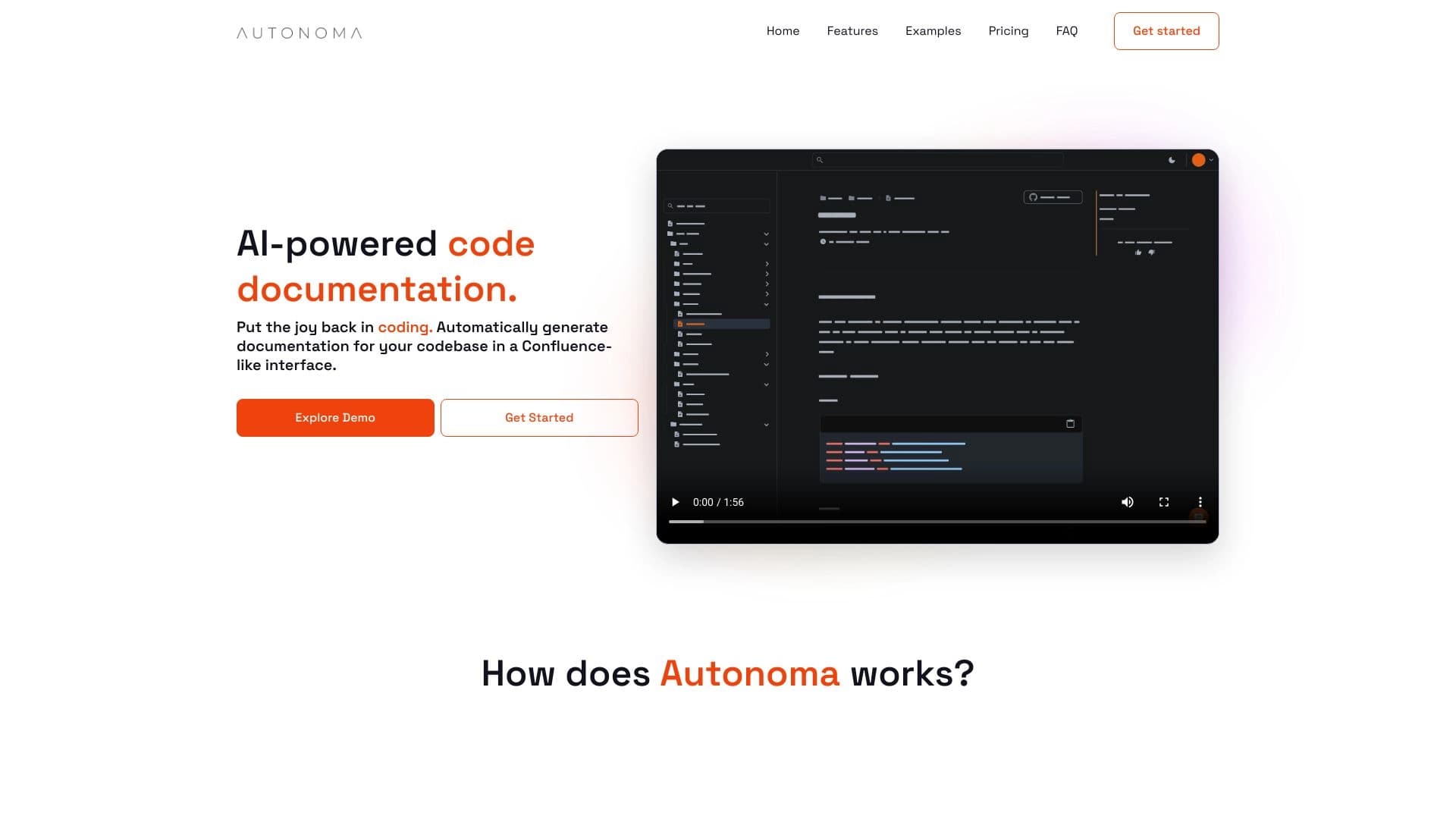
Autonoma is an open-source framework designed for creating autonomous agents that operate on blockchain networks. The primary specialization of such agents is automating operations in the decentralized finance (DeFi) sector and decentralized governance (DAO) processes. More broadly, Autonoma provides developers with a toolkit for building software entities that can independently perform tasks on the blockchain.
The project is also known as an AI assistant for code documentation, which is one of the applied implementations of the framework's technologies. In this capacity, it analyzes project files, creates descriptions for each of them, and generates installation instructions and usage guides. The tool is positioned as a solution for technical professionals, requiring programming skills and an understanding of blockchain system architecture.
Autonoma Characteristics
| Characteristic | Value |
|---|---|
| Type | AI assistant for code documentation |
| Categories | Code explanation tools, Product description generators, AI developer documentation services, Programming assistance tools |
| Platform | Website (online service) |
| Developer | Autonoma |
| Monthly visits | 84.2K |
| Publication date | November 7, 2025 |
| Distribution model | Free |
Who is Autonoma suitable for?
Autonoma is aimed at several categories of users united by their work with code and technical documentation.
Developers and development teams
The main target audience is programmers working individually or as part of teams. The framework automates routine code documentation processes, freeing up time for solving more complex tasks. For teams working on large projects, the tool is especially useful as it supports integration with popular repositories.
Technical writers
Specialists creating technical documentation can use Autonoma as an auxiliary tool for draft generation of descriptions. This speeds up the preparation of materials and allows focusing on fine-tuning and reviewing already generated content instead of writing from scratch.
Blockchain development specialists
Given the framework's original focus on blockchain and DeFi, smart contract and decentralized application developers occupy a distinct niche. For them, Autonoma is interesting both for code documentation and for the potential of building agents to automate on-chain operations.
How to use Autonoma?
The process of working with the service is divided into several logical steps that allow you to quickly connect the tool to an existing project.
Registration and connection
The first step is creating an account on the platform. After registration, you need to connect your organization or create a new one directly in the service interface. This is a standard procedure for online development tools.
Repository setup
Next, you should install the Autonoma app to your code repository. After installation, you need to select the specific project the neural network will work with. This step is critical as it determines the scope of analysis.
Automatic analysis
Once setup is complete, the AI independently analyzes the code of the selected project and generates documentation. The user does not need to manually specify the document structure or key points — the neural network determines them based on the codebase analysis.
Main Autonoma Features
Autonoma's functionality is focused on code processing and generating related materials.
File documentation
The key feature is automatic documentation generation for each file in the codebase. The neural network analyzes the content and creates a description explaining the purpose and logic of each module. This is especially useful for large projects with many files.
Instruction generation
In addition to describing individual files, Autonoma generates project installation instructions and function descriptions. This allows new team members to quickly understand the project structure and start working without a lengthy immersion into details.
Code synchronization
An important feature is automatic synchronization of documentation with the current state of the code. When changes are made to the repository, the documentation updates without human involvement, eliminating the risk of discrepancies between the actual code and its description.
Autonoma Advantages
Using Autonoma provides users with several tangible benefits related to optimizing development processes.
Routine automation
The main advantage is fully automated documentation generation. Developers no longer need to manually write comments and descriptions, significantly saving time and effort. The system takes on the most labor-intensive part of the work.
Structured information
Generated documentation is clearly structured. This makes it convenient for reading and navigation, which is especially important when working with large projects where chaotic documentation can create additional problems.
Documentation relevance
Thanks to automatic synchronization, documentation always matches the latest code. This eliminates situations where developers rely on outdated descriptions and make mistakes due to discrepancies between documentation and the actual state of the project.
Autonoma Disadvantages
Like any tool, Autonoma has certain limitations that should be considered when deciding whether to use it.
Language limitations
The neural network may make errors when working with exotic or rare programming languages. It shows the highest accuracy with popular and widespread languages on which the model was trained. For rare languages, documentation quality may be lower than expected.
Template-based documentation
Generated documentation does not always account for the unique code style of a specific team. This leads to descriptions being template-based and potentially not reflecting the specific conventions adopted in the project. Additional manual editing is required to bring the documentation to the desired form.
Security concerns
There are questions regarding data security when uploading private code to an online service. Despite developer assurances, transmitting confidential code to a third-party service always involves certain risks that each team must assess independently.
What tasks does Autonoma solve?
Autonoma aims to solve several key tasks that arise during the software development process.
Automating documentation writing
The main task is to eliminate manual labor in creating documentation. The system handles both initial generation and subsequent updates, reducing the burden on the team and minimizing the likelihood of errors related to human factors.
Accelerating onboarding of new developers
Up-to-date and complete documentation significantly speeds up the process of introducing new developers to a project. Instead of figuring out the code structure on their own, they can rely on ready-made descriptions and start completing work tasks faster.
Maintaining documentation relevance
With frequent code changes, keeping documentation up to date becomes a challenging task. Autonoma automates this process, ensuring documentation updates as code changes, without the need to allocate separate resources for this.
Saving developers' time
Being freed from routine documentation tasks allows developers to focus on their main work — writing code and solving business problems. This increases overall team productivity.
Autonoma Pricing
The service offers several pricing plans aimed at different scales of use.
Plans for individual developers
For individual developers, a plan is available with a basic set of features for working on personal projects.
Plans for teams
Plans for small teams and larger organizations are available, with pricing scaled according to team size.
Custom terms
For large enterprise clients, a custom plan is available, with pricing calculated upon request. Please note that a free tier is not listed in the official description.
Autonoma Terms of Use
Registration on the platform is required to start working with the service. Creating an account provides access to the functionality and allows you to connect repositories.
An important condition is the privacy policy regarding uploaded data. The service promises not to use user-uploaded code and data for AI training. This ensures that confidential code does not become part of the training dataset for models.
Additionally, uploaded code is not stored on Autonoma's servers. Documentation exists only while working with it, after which the data is deleted. This provides an additional level of security for users concerned about the confidentiality of their intellectual property.
Autonoma Availability
Autonoma is available as a website (online service). This means that no additional software installation on a local machine is required to work with it — just internet access and a modern web browser are sufficient.
This approach ensures ease of use and accessibility from any device, and also simplifies the update and maintenance process for developers. The platform's monthly traffic is 84.2K visits, indicating an active user base.
How Autonoma differs from alternatives
There are many tools with similar functionality on the market, but Autonoma has several distinctive features.
Specialization in blockchain technologies
Unlike universal AI programming assistants, Autonoma was originally developed as a framework for creating autonomous agents on blockchain networks. This leaves its mark on the functionality and makes the tool especially useful for developers working with DeFi and DAOs.
Automatic documentation synchronization
Many alternatives offer documentation generation but do not provide automatic synchronization with code. Autonoma automatically updates documentation when changes are made to the codebase, which is an important advantage for teams with high release frequency.
Data processing policy
Autonoma stands out from competitors with its user data handling policy. The promise not to use uploaded code for model training and automatic data deletion after processing may attract companies with high information security requirements.
Distribution model
An important difference is that Autonoma is distributed under a free model, making it accessible to a wide range of developers. While many alternatives, such as GitHub Copilot, AskCodi, Replit, Cursor AI, Qwen AI, or Tabnine, operate on a subscription model with a higher entry threshold.
Conclusion
Autonoma is a multifunctional tool combining the capabilities of an open-source framework for creating blockchain agents and an AI assistant for automatic code documentation generation. The main value of the project for developers is saving time on routine documentation tasks and keeping documentation up to date without additional effort. Despite certain drawbacks, such as possible errors with rare programming languages and template-based documentation, a clear data processing policy and automatic synchronization make Autonoma an attractive option for teams seeking to optimize development processes.
Frequently asked questions
See also


Platform for creating multi-agent AI systems and chatbots to automate customer support and lead generation.
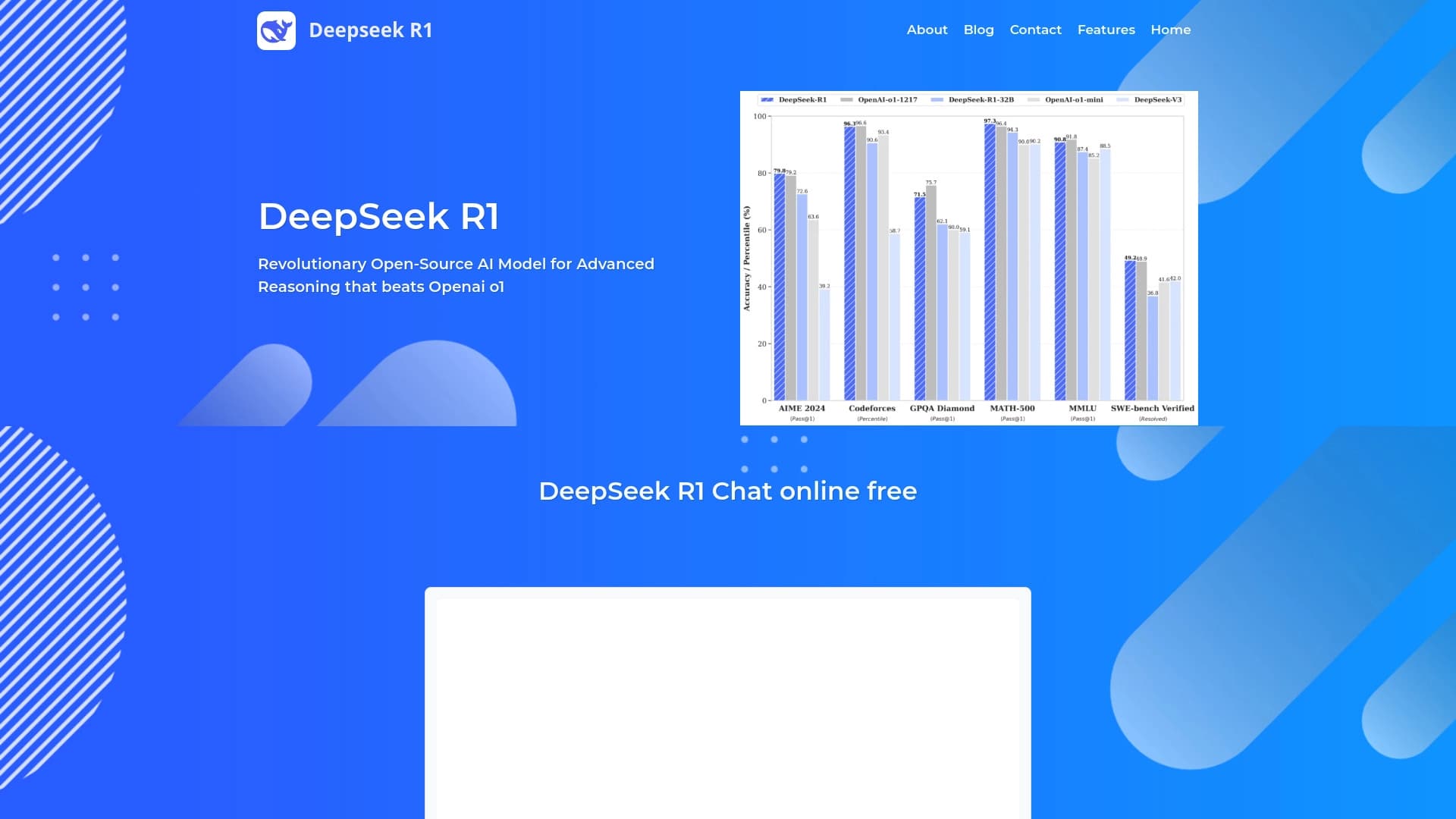

Open neural network for solving complex problems in mathematics, programming, and logic.
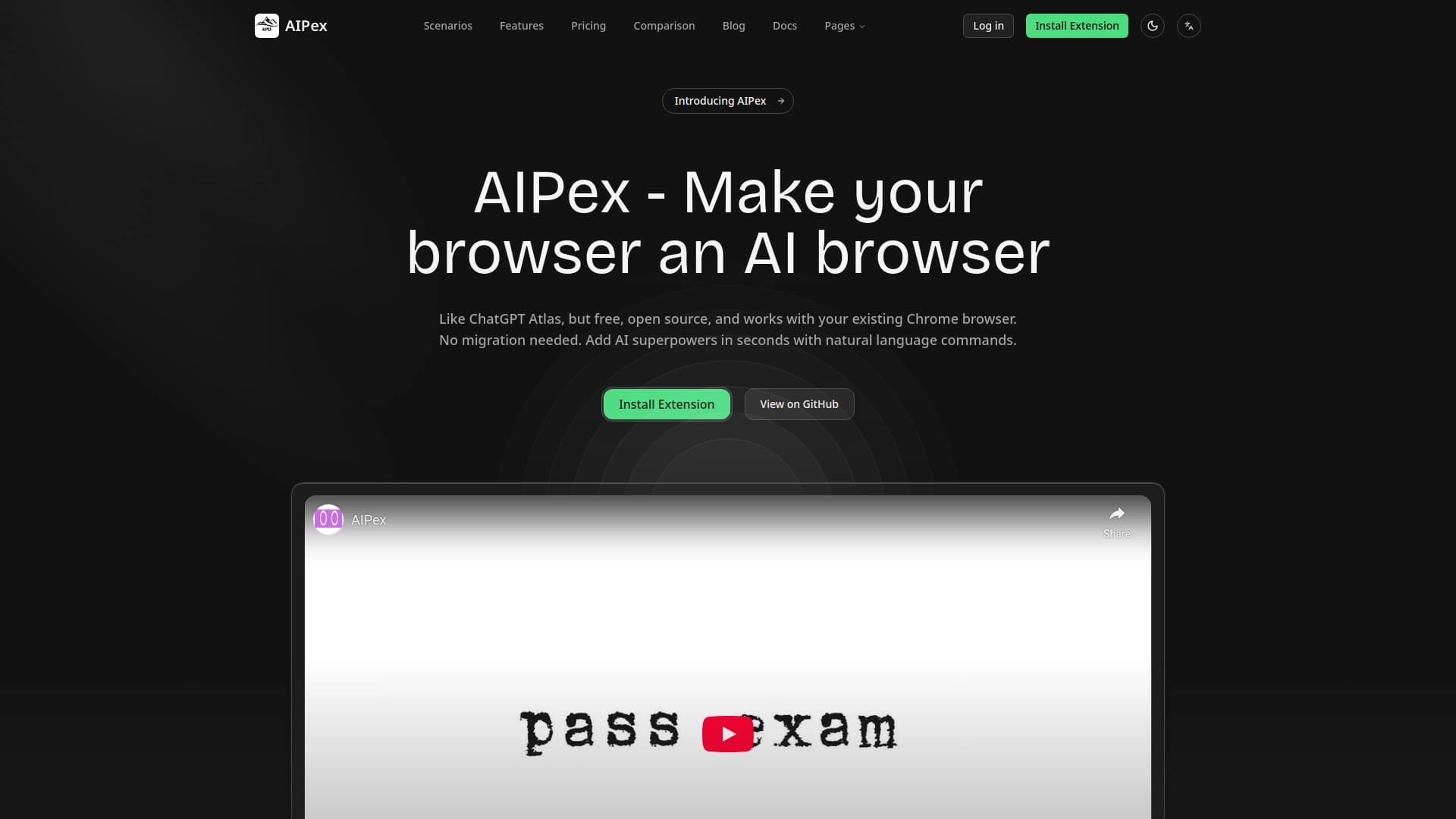

Chrome extension that helps manage tabs, history, and bookmarks with an AI assistant.
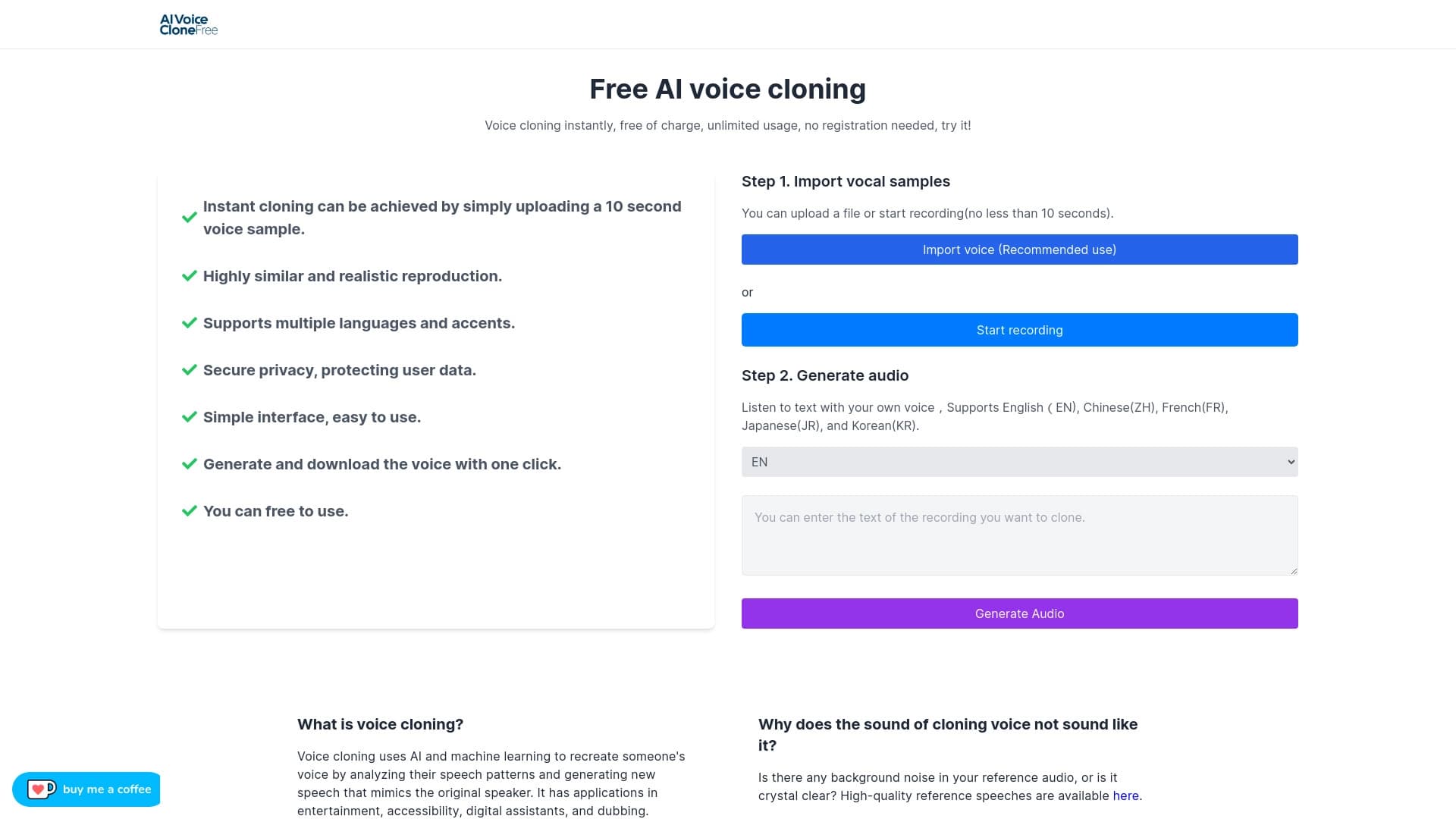
Online service for creating a realistic voice clone from a short audio recording and text-to-speech.

A platform for automating software development using a visual builder for AI agents.
Cloud platform for launching AI applications directly in the browser without installation.

A platform for creating corporate chatbots based on your own documents without coding.
Free open-source language model specializing in reasoning, mathematics, and programming.