

Anyscale
Platform for scaling Python applications and AI workloads based on the Ray framework.
Ranked in
Overview
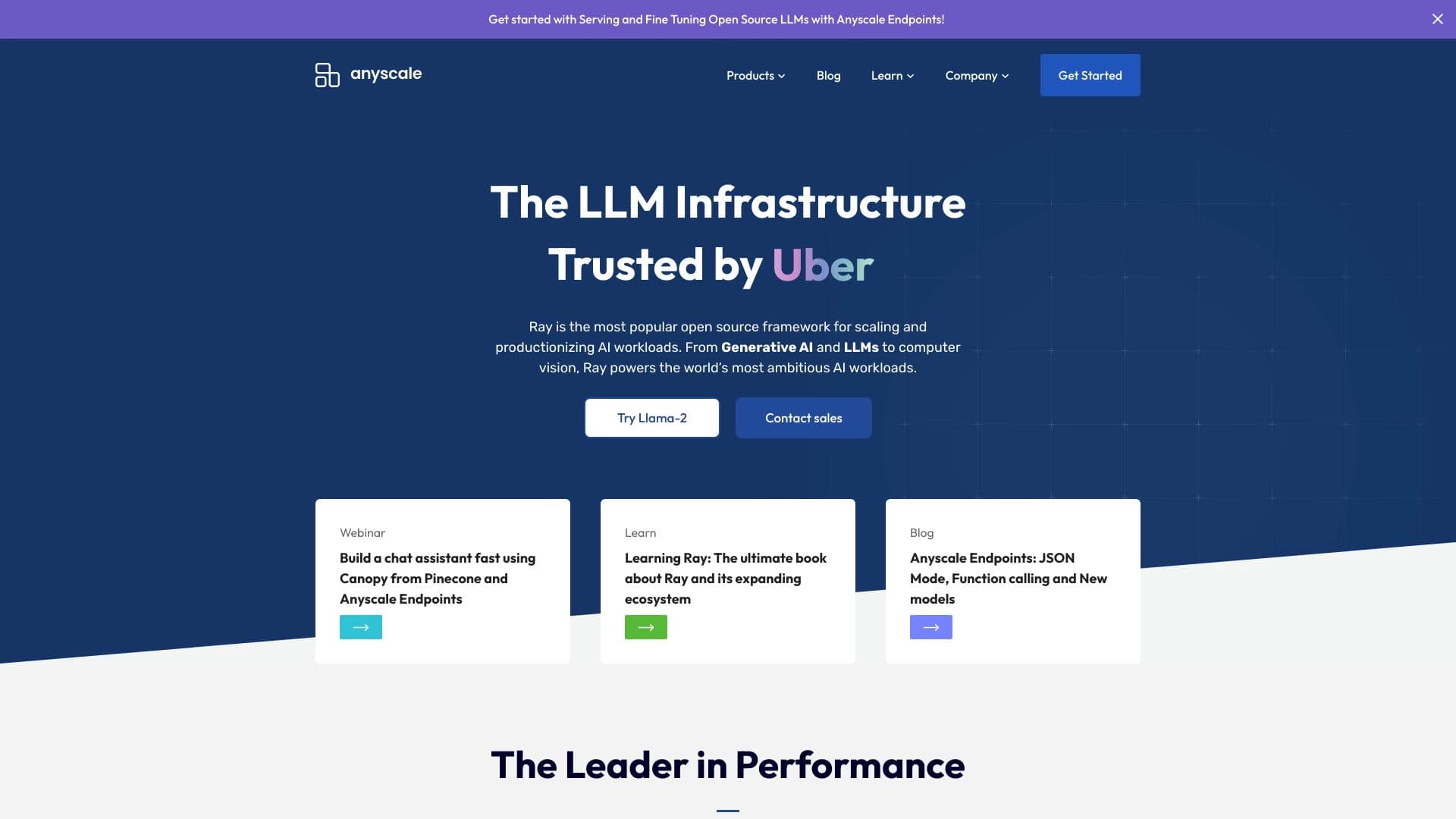
Anyscale is a managed platform that lets you run distributed Python applications and machine learning tasks without having to manually configure and maintain server clusters. The service is built on the open-source Ray framework, which has been used for parallel computing in Python for several years. Anyscale handles all the infrastructure: node creation, load balancing, memory allocation, and monitoring, leaving the developer with just the code.
The product is positioned as a solution for teams that need to move quickly from prototype to production. If your local code is written with Ray, almost nothing needs to be rewritten to move to Anyscale — the platform picks up the existing logic and automatically distributes it across available resources. The focus is on working with large language models and generative AI, including fine-tuning and running inference from pre-built endpoints.
Anyscale Features
| Feature | Value |
|---|---|
| Core technology | Ray framework (open source) |
| Product type | Managed cloud platform (PaaS) |
| Primary language | Python |
| Target workload | Distributed computing, AI model training and inference |
| Infrastructure management | Fully automated, no manual administration |
| Integrations | Standard Ray ecosystem, ML and Python libraries |
| Distribution model | Paid |
Who is Anyscale for?
Data engineers and data scientists
Anyscale suits professionals who work with large data volumes daily and often hit the limits of a single machine. The platform lets you scale data processing across dozens or hundreds of nodes without needing to learn DevOps tools or write complex cluster-management code.
ML engineers and researchers
For those training models — from classic gradient boosting to large transformers — the platform offers automatic distribution of compute across GPUs/CPUs. This cuts experiment time and speeds up iteration without worrying about whether local workstations or cheap instances have enough resources.
Product teams and startups
Anyscale covers the need to ship AI functionality to production quickly. Instead of hiring a dedicated SRE or paying for expensive infrastructure that no one actually has time to administer, teams can use ready-made inference endpoints. This lets them focus on business logic rather than operations.
How to use Anyscale
Preparing Ray code
The first step is writing a Python application using Ray libraries (for example, ray.remote for distributed functions). If the code already runs locally, it just needs light adaptation: replace the local executor with the Ray API. The process is described in the platform documentation and usually takes no more than a couple of hours.
Deploying to the platform
Next, you deploy through the Anyscale console or CLI. You specify which image or dependencies are needed, and the platform automatically creates the environment. Cluster startup is nearly instant: Anyscale allocates nodes, restarts them on failures, and optimizes resource counts for the current load.
Running inference via endpoints
For generative AI and working with pre-built models, Anyscale offers server-side endpoint creation. After training, you simply publish the model as a REST API, and it becomes callable from any application. The platform automatically scales endpoints to handle growing traffic.
Key Anyscale features
Automatic resource management
The platform determines how many nodes are needed at any given moment and scales the cluster from zero to hundreds of machines. When load drops, resources are automatically released, preventing overpayment for idle capacity.
Ready-made inference endpoints
Anyscale lets you quickly deploy a model to production as an API service without configuring web frameworks, Docker containers, or load balancers. Integration with Ray Serve makes the process standard across all models.
Large-scale training support
The platform is built for training large language models. It distributes the training process across clusters of dozens of GPUs, handles checkpoints correctly, and recovers from node failures.
Ray ecosystem support
Since Anyscale is "wrapped" Ray, users get access to all framework libraries: Ray Tune for hyperparameter tuning, Ray Data for dataset processing, and Ray Train for model training. This provides a single entry point for all compute tasks.
Anyscale advantages
No manual DevOps
The key benefit is the complete absence of infrastructure management. There are no Kubernetes setups, SSH access to nodes, or memory-leak monitoring. The system handles it all, and developers only see the working environment.
Scalability without rewriting code
Thanks to Ray, applications can scale with virtually no changes to the source code. What ran on a single laptop runs without issue on a 200-node cluster.
Fast startup
The platform can spin up a working cluster in minutes. This is critical for handling traffic spikes or urgent training runs without waiting for server allocation.
Built-in monitoring and logging
Anyscale provides tools for tracking cluster health. You see CPU/GPU load graphs, log errors, and task execution times — all in a single console.
Anyscale limitations
Lock-in to a specific tech stack
The platform is built exclusively for Python and the Ray framework. If a project requires other languages (such as Go, Java, or C++) for parts of the compute, integration becomes either impossible or extremely difficult.
Cost at scale
There is no flat fee — pricing is based on consumed resources. Under sustained high loads (for example, 24/7 inference on 100 GPUs), the bill may exceed the cost of renting dedicated servers directly.
Ray learning curve
While Ray is popular in the ML community, newcomers need time to learn its paradigm (actors, tasks, remote functions). For simple scripts that run on a single machine, it is overkill.
What problems does Anyscale solve?
Key scenarios covered by the platform include:
- ML model training: from small experiments to fine-tuning large language models (LLMs) on clusters requiring hundreds of gigabytes of memory.
- Batch data processing: parallelizing ETL processes and transforming terabyte-scale datasets much faster than in single-threaded mode.
- Real-time inference: publishing trained models as endpoints to serve requests from user applications with high throughput.
- Compute-intensive workloads: any distributed Python tasks unrelated to ML, such as simulations, image processing, or test automation.
Anyscale pricing
Specific subscription pricing figures are not available in the provided source data. The distribution model is known to be paid. The platform uses a pay-as-you-go approach, where the final bill is based on the volume of compute resources consumed (number of vCPUs, memory, and GPU hours). For a current price list, refer to the provider's official website or commercial documentation.
Anyscale terms of use
Anyscale is offered under a commercial license with mandatory account registration. The platform uses a cloud deployment model: all computing happens on the provider's servers. Users cannot download and deploy a full-featured version on their own hardware without a corporate contract. The terms include standard data processing policies and a service-level agreement (SLA), detailed in the service's official documentation.
Anyscale availability
The service is delivered as SaaS, meaning you need a web browser and a stable internet connection. Anyscale is available through a web interface and CLI tools. There are no offline versions or local installation packages for personal computers. The platform runs on public cloud data centers, so it can be used from anywhere with network access.
How Anyscale differs from alternatives
Level of abstraction
Unlike Kubernetes or AWS Batch, Anyscale operates at the Python application level. You don't need to write pod manifests or configure Docker images. The platform "sees" code written with Ray and decides on its own how best to parallelize it.
Vertical integration with ML
Most cloud providers offer pipeline tools (Airflow, Kubeflow), but Anyscale is purpose-built for the model lifecycle. From hyperparameter tuning to endpoint deployment, the entire lifecycle is standardized within a single platform — something general-purpose systems lack.
No need for SRE
Alternatives (such as a self-managed Kubernetes cluster) require constant oversight and tuning. Anyscale sells not just resources but managed code execution as a service, which dramatically lowers the total cost of ownership for small teams. By comparison, most IaaS providers shift monitoring and fault-tolerance responsibilities onto the user.
Conclusion
Anyscale is a practical solution for teams on the Python stack that want to forget about manually managing server clusters. The platform effectively covers distributed training, batch processing, and low-latency inference, especially with large language models. The main limitations are the lock-in to the Ray ecosystem and a paid model with variable pricing based on consumed resources. Still, for those already using Ray or willing to migrate to it, Anyscale significantly lowers the barrier to entry into distributed computing.
Frequently asked questions
See also

A platform for accountants that combines task management, file sharing, and client communication in a single interface.

AI platform for analyzing financial data and supporting investment decisions.
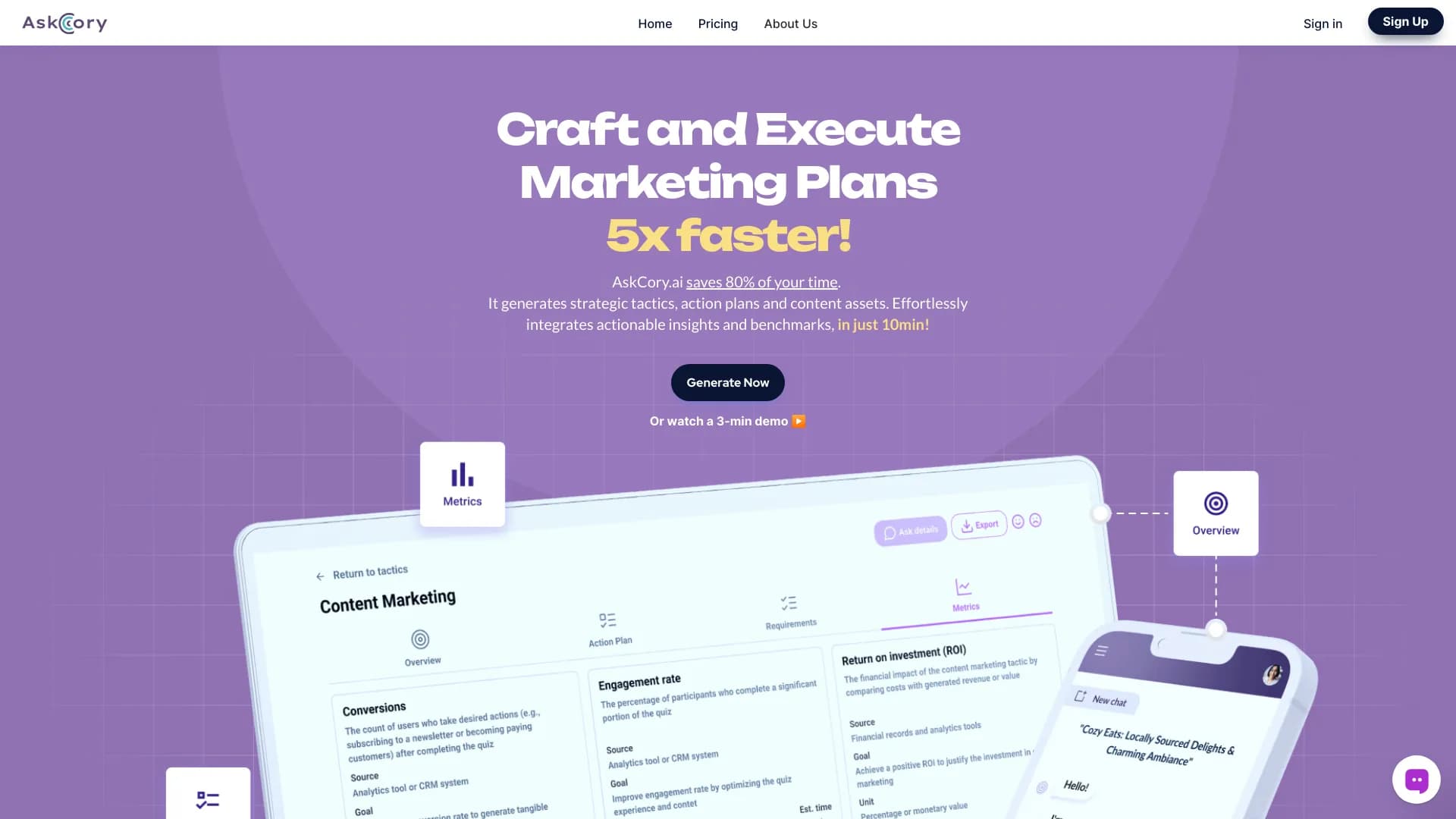

AI marketing assistant that helps create promotion strategies and optimize advertising campaigns.

Service for tracking brand mentions in generative AI responses.

AI-powered platform for automated API security testing and vulnerability discovery in code and cloud infrastructure.
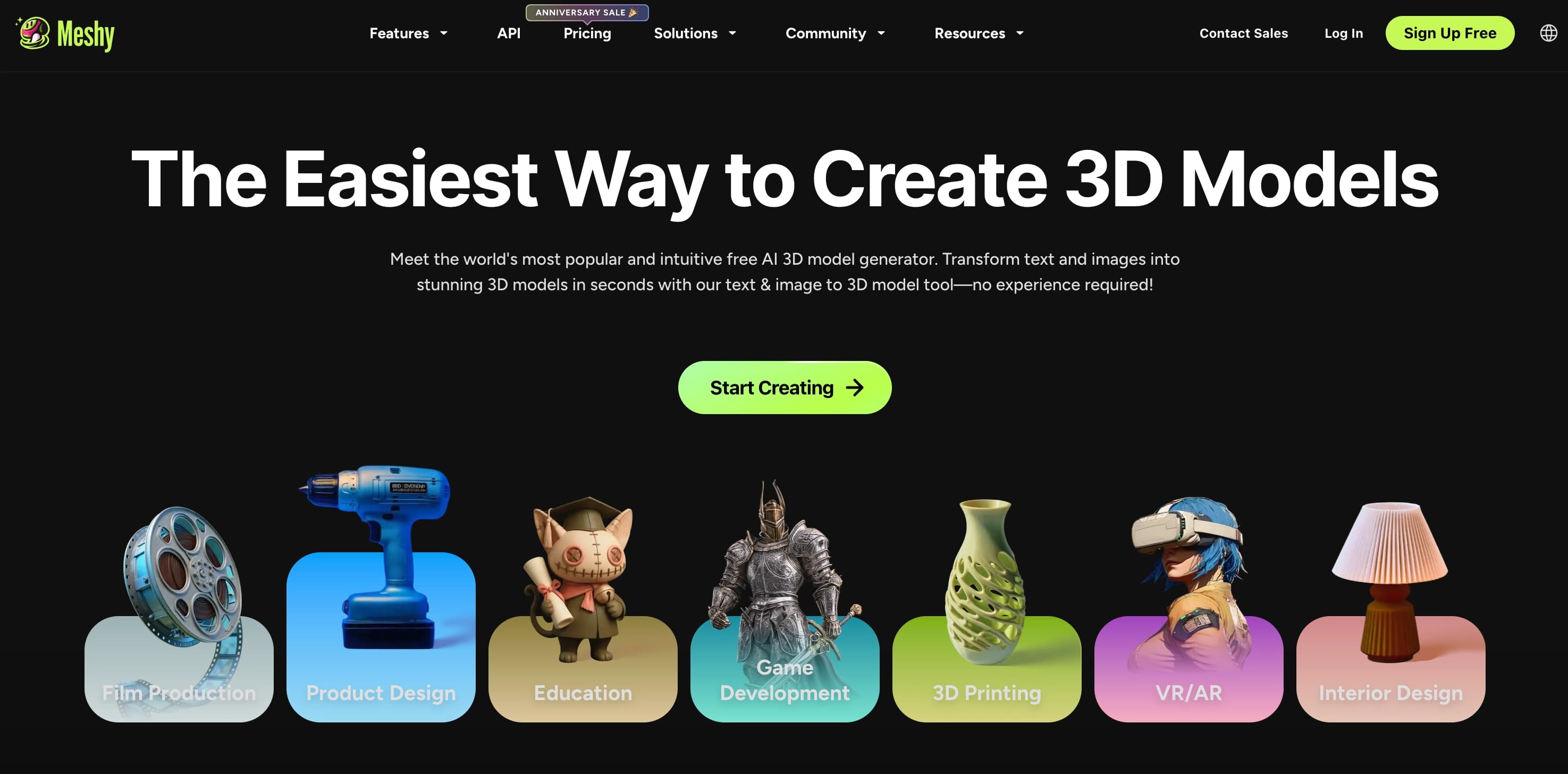
A neural network-powered cloud service for generating 3D models, textures, and animations from text descriptions or images.
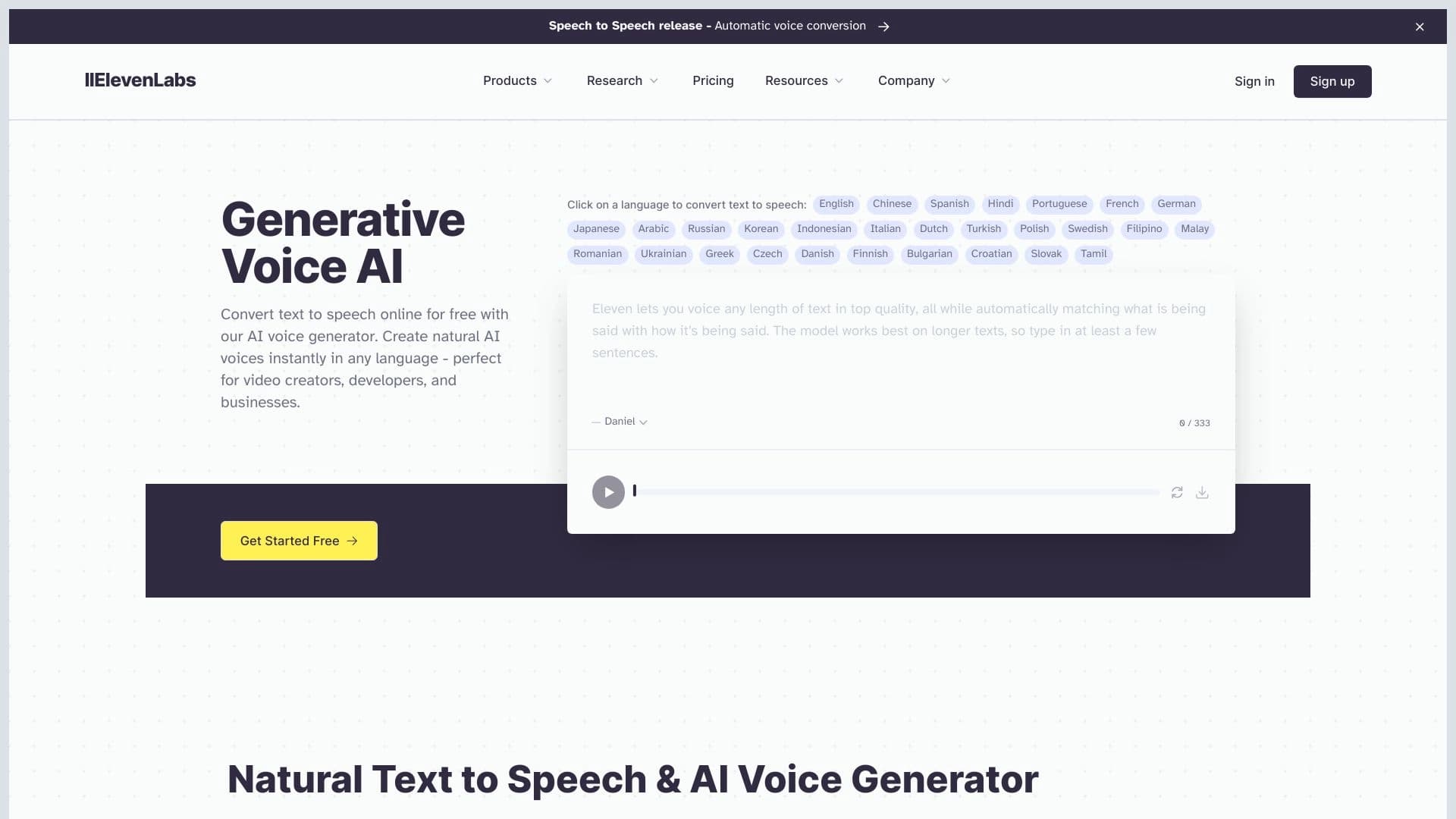
AI platform for voice synthesis and cloning that converts text into realistic speech.


AI-based platform for creating logos and brand identity.