
Animate Stable Diffusion
Tool for creating animation based on Stable Diffusion by interpolating between two text prompts.
Overview
Animate Stable Diffusion is a specialized tool designed to create animation sequences based on the popular Stable Diffusion model. Its key feature is the ability to smoothly transition (interpolate) between two different text prompts that describe the initial and final state of an image.
How It Works: Interpolation as the Foundation of Animation
Instead of generating individual frames manually, the neural network uses an interpolation method in the latent space of images. The user provides two text descriptions, and the system automatically creates a series of intermediate images that visually transform one image into another. The resulting sequence of frames is combined into a short video clip demonstrating an organic metamorphosis.
What Makes the Tool Unique?
The main advantage of this approach is that the user does not need video editing skills or knowledge of complex computer graphics. It is enough to formulate two text queries to get a ready-made animated result. This opens up new possibilities for rapid prototyping of ideas and creating content that would be difficult to obtain with traditional generative graphics methods.
Animate Stable Diffusion Characteristics
| Characteristic | Value |
|---|---|
| Purpose | Generating animation from text descriptions |
| Core mechanism | Interpolation between two text prompts in the Stable Diffusion model |
| Primary output | Short video sequences showing the transformation of one image into another |
| Editing complexity | No video editing skills required |
| Input format | Two text descriptions (prompts) |
| Distribution model | Not specified (unknown) |
Who Is Animate Stable Diffusion For?
The tool is aimed at a wide range of users whose work or interests are related to creating visual content. However, due to its specific nature, it is particularly useful for certain categories of professionals.
Artists and Designers
For creative professionals, this tool serves as a source of inspiration and an idea generator. They can quickly visualize how one concept flows into another, exploring the dynamics of form and color without having to draw intermediate sketches by hand.
Social Media Content Creators
Bloggers, SMM specialists, and video editors who use neural networks to fill their feeds will find in this tool a simple way to create unusual transitions and effects for short clips. This allows them to diversify their visual content without lengthy work in specialized software.
How to Use Animate Stable Diffusion?
The process of working with the tool is built on the simple principle of "describe and get results." Given that interpolation is at its core, the user's main task is to correctly formulate the starting and ending points of the transformation.
Step 1: Formulating the Initial Prompt
You need to clearly describe the original image. This can be an object, character, landscape, or abstract form in a static state. The more detailed the description, the more accurate the starting frame of the animation.
Step 2: Setting the Endpoint
The second prompt describes the target image. The logic of interpolation assumes that there should be something in common between the two descriptions, or the user wants to see a radical transformation. The degree of difference between the descriptions determines the duration and smoothness of the transition.
Step 3: Generating the Sequence
After entering both texts, the model starts generating intermediate frames. The system automatically builds a visual sequence, which is then converted into the final animated file.
Key Features of Animate Stable Diffusion
An analysis of the available information about this tool allows us to highlight a set of its core capabilities.
Video Transition Generation
The key function is the automatic creation of a video sequence that smoothly transitions from one image to another, defined by text. This eliminates the need for frame-by-frame rendering.
Working with Text Prompts
The tool is entirely built on the text-to-image generation paradigm. Control over the parameters of the future animation is achieved exclusively through linguistic constructs — prompts.
Creating Short Video Clips
The result is a short video clip that can be used in presentations, on websites, or on social media. This format is suitable for quickly demonstrating ideas or adding to a media library.
Advantages of Animate Stable Diffusion
The main strengths of the tool stem from its architecture and approach to animation generation.
Low Barrier to Entry
The lack of need to work with timelines, keyframes, and other professional video editing tools makes the neural network accessible to beginners. The entire control process is reduced to writing text.
Speed of Prototyping
The ability to quickly get an animated version of an idea from a simple text query is a powerful tool for brainstorming. Designers can "bring their concepts to life" in minutes.
Resource Efficiency
Instead of generating dozens of images separately and then editing them together, the entire process is automated. This saves the user time and computational resources.
Disadvantages of Animate Stable Diffusion
Alongside its advantages, the tool has a number of limitations that are important to consider when choosing it.
Limited Format
The tool is designed for creating short sequences. It is not intended for producing long narrative videos, complex scenes with multiple objects, or adding soundtracks.
Heavy Dependence on Prompt Quality
The result directly depends on how correctly and in detail the text descriptions are formulated. Poor prompts can lead to visual "noise" or unnatural transitions.
Limited Control Over the Process
The user has no means for fine-tuning intermediate frames (e.g., changing the trajectory of movement or the speed of morphing). Control is only global, through text prompts.
What Problems Does Animate Stable Diffusion Solve?
The tool is designed to solve a narrow range of tasks related to the transformation of visual images.
- Visualizing Transformations: demonstrating how one object changes into another, which can be useful for educational or presentation purposes.
- Creating Dynamic Graphics: generating background screensavers or transitions between website sections without using standard video editor templates.
- Creative Experiments: searching for unexpected visual combinations and exploring how the neural network interprets the semantic connection between two texts.
Animate Stable Diffusion Pricing
Currently, the provided source data does not contain any information about the cost of using the tool. It is impossible to determine whether this service is free, freemium, or fully paid. For current pricing policy, it is recommended to refer to the official developer sources.
Animate Stable Diffusion Terms of Use
Detailed terms of service are not disclosed in available sources. Limits on the number of generations, requirements for using the generated content, and the privacy policy regarding uploaded prompts are unknown. Users should carefully review the user agreement directly on the tool's website before starting work.
Animate Stable Diffusion Availability
Information about which regions the tool is available in, whether it supports a web version, a desktop application, or an API, is missing. There is no data on hardware requirements (whether a powerful graphics card is needed or the work is done on a server). This aspect remains unclear within the scope of the available information.
How Animate Stable Diffusion Differs from Alternatives
The main difference between this tool and many other neural networks working with Stable Diffusion lies in its narrow specialization. While most services focus on generating still images (text-to-image), this service focuses on creating a sequence of frames (text-to-video) through interpolation.
The key difference can be formulated as follows: it is not an image generator, but a specialized tool for creating transitions between them. While alternatives offer many settings for post-processing a single image, the tool in question offers a minimal number of settings but a unique result format — animation based on two prompts. This makes it stand out for tasks where conveying movement or a change in an object's state is required.
Conclusion
Animate Stable Diffusion is an effective solution for those who need a simple way to animate images created by Stable Diffusion. Using the interpolation mechanism between two text prompts, users can obtain short video sequences without the labor-intensive editing process. The tool has several obvious advantages, such as a low barrier to entry and generation speed; however, its functionality is limited to creating short clips and heavily depends on prompt quality. Based on the source data, this is more of a niche solution for creative tasks than a full-fledged video editor.
Frequently asked questions
See also

Free web tool from Google that uses machine learning to turn rough sketches into neat icons and illustrations.


AI-powered platform for automated video clip creation, editing, and translation.
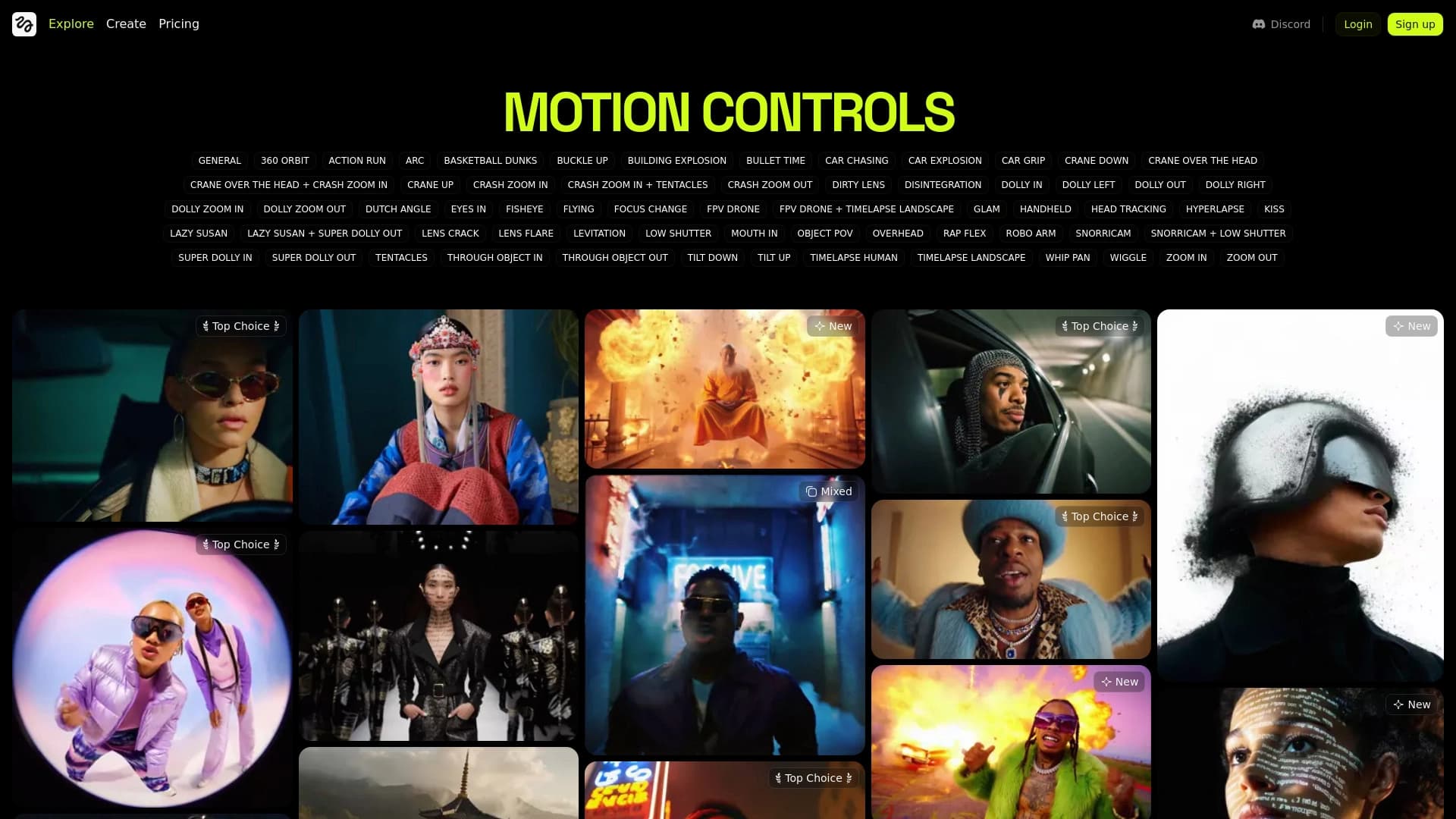

Generative platform for creating realistic images and short videos from text or images with control over style and camera movement.
Service for creating personalized avatars and photo shoots using AI based on uploaded selfies.

A community for daily discovery and discussion of new technology products.
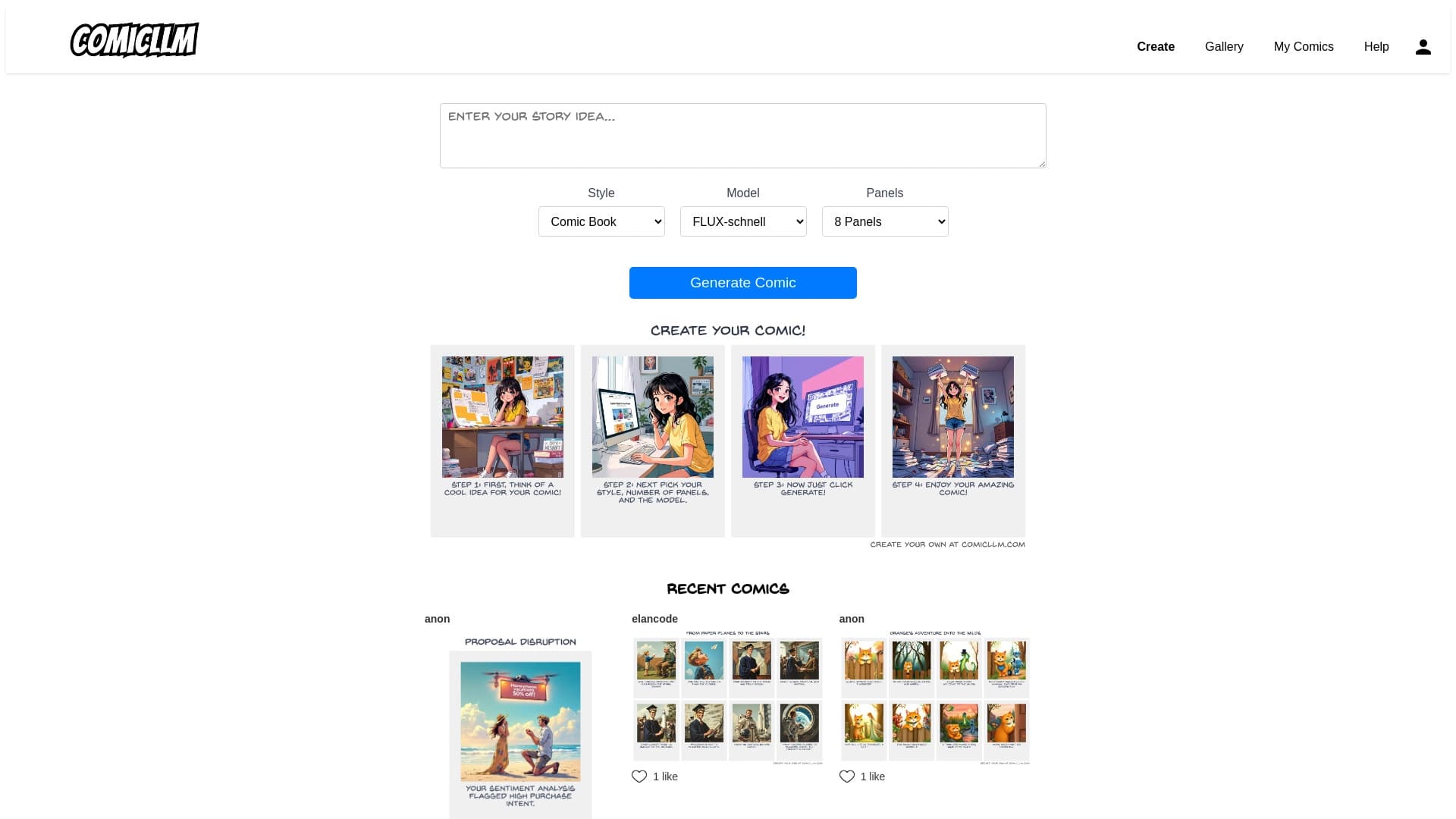

ComicLLM is an AI tool for creating comics from text descriptions or ready-made templates.

Online AI tool for creating deepfakes and editing images.

Web platform for AI-powered image and cinematic video generation, featuring studio-grade editing tools.