
Amplifier Security
AI-powered platform for protecting digital environments through threat detection and real-time monitoring.
Overview
Amplifier Security AI Description
Amplifier Security is a platform designed to protect organizations' digital environments. Its key objective is to ensure security through the application of artificial intelligence. The system is focused on proactive threat detection and continuous monitoring of what happens within a company's infrastructure.
Core Platform Concept
The main principle behind Amplifier Security is continuous activity monitoring. Instead of relying solely on periodic checks or manual log analysis, the platform analyzes events in real time. This allows it to detect not only known malware but also new, previously unseen anomalies in user or system behavior.
The Role of Artificial Intelligence
AI in Amplifier Security acts as the analytical core. It processes large volumes of security event data, identifying patterns and deviations from the norm. It is the artificial intelligence that distinguishes false positives from real threats and automates a significant portion of the routine work of security specialists.
Amplifier Security Characteristics
| Characteristic | Value |
|---|---|
| Product Type | Cybersecurity Platform |
| Core Technology | Artificial Intelligence (AI) |
| Key Function | Threat Detection |
| Operating Mode | Real-time Monitoring |
| Target Audience | Organizations and teams needing to protect digital environments |
| Distribution Model | Not specified (to be confirmed with an official representative) |
Who is Amplifier Security AI for?
Amplifier Security will be useful for professionals and organizations concerned about the state of their digital infrastructure.
Information Security Teams
The primary audience is InfoSec departments and SOCs (Security Operations Centers). The platform helps them manage large volumes of events and alerts, reducing the workload on analysts and allowing them to focus on truly important incidents.
Companies with High Security Requirements
Organizations operating in finance, healthcare, IT, and telecommunications, where data breaches or downtime are critical, can use Amplifier Security as part of their defense strategy. The tool suits those who need a proactive stance in cybersecurity.
Businesses Valuing Automation
Companies looking to reduce incident response times will find in the platform a way to automate detection and subsequent response processes, decreasing reliance on human factors.
How to Use Amplifier Security AI?
Using the platform revolves around its capabilities for continuous monitoring and analysis.
Implementation and Integration
To get started, Amplifier Security must be integrated into an organization's digital environment. Based on the description, the platform connects to activity data sources — these could be servers, workstations, network devices, and applications. Once connected, data collection and analysis begin.
Monitoring Configuration
The system starts tracking events in real time. Users can observe the current security status through dashboards and reports. An important part of the work is configuring parameters to detect anomalies specific to a particular infrastructure, minimizing errors.
Incident Response
When the AI detects a potential threat, the platform generates an alert. The security team assesses the risk level and takes action. Thanks to automation, some response processes can be executed by the platform without human intervention, speeding up threat neutralization.
Core Functions of Amplifier Security
AI-Powered Threat Detection
This is the platform's fundamental function. Artificial intelligence analyzes behavior and events, identifying suspicious activity. It can detect complex and hidden threats that may be invisible to traditional signature-based analysis methods.
Continuous Real-time Monitoring
Amplifier Security operates in a non-stop mode. The system constantly monitors the state of the digital environment, collects telemetry, and analyzes data. This approach allows anomalies to be recorded at the moment they appear, rather than after the fact, which is critical for preventing serious consequences.
Automated Response Processes
The platform doesn't just signal a problem — it helps automate response actions. This may include isolating an infected device, blocking suspicious traffic, or launching additional checks. Automation speeds up operations and reduces the risk of errors associated with delayed staff response.
Advantages of Amplifier Security
Proactive Protection
The main advantage is the preemptive approach. The platform attempts to prevent an attack or neutralize it at an early stage, rather than just recording the fact of a breach. Real-time monitoring gives organizations the necessary time to maneuver.
Detection Speed
Using AI ensures high-speed analysis of large data volumes. Threats are identified much faster than with manual analysis or traditional antivirus solutions, matching the modern pace of cyberattack development.
Reduced Workload for Specialists
By automating basic processes and sorting events, the security team can focus on complex and strategically important tasks. The platform handles the routine work of monitoring and initial analysis.
Adaptability
AI technologies allow the platform to adapt to changing IT infrastructure and new types of threats. The system learns from current activity data, improving the accuracy of detecting anomalies specific to each individual organization.
Disadvantages of Amplifier Security
Complexity of Setup and Calibration
The system's effectiveness heavily depends on proper configuration. Time and expertise from the organization's specialists are required for algorithms to accurately distinguish legitimate activity from malicious. An overly sensitive system can produce many false positives, while an overly coarse one can miss real threats.
Dependence on Data Quality
AI performance directly depends on the completeness and correctness of the data it receives from the infrastructure. If some components of the digital environment are not connected to the platform or data is transmitted intermittently, "blind spots" can negatively impact overall security.
Implementation Cost
Like any serious enterprise-class tool, Amplifier Security requires significant investment. This includes not only licensing costs (the distribution model is unknown) but also expenses for integration, staff training, and ongoing technical support. Such budgets may be unaffordable for small businesses.
Lack of Detailed Information
Official sources provide extremely limited information about the platform's capabilities and terms of use. This can cause difficulties when planning a purchase and assessing whether the tool fits specific tasks even before pilot testing begins.
What Problems Does Amplifier Security Solve?
Real-time Anomaly Detection
The platform addresses the main challenge — finding deviations from normal behavior of users, devices, or applications. This allows detecting signs of compromise, insider threats, or configuration errors before they escalate into a major incident.
Reduced Incident Response Time (MTTR)
Through rapid detection and automated response scenarios, the time between threat identification and remediation is shortened. Minimizing downtime and the financial impact of an attack is one of the key tasks solved by Amplifier Security.
Ensuring Business Continuity
Constant monitoring and rapid risk neutralization help maintain stable operation of digital services. Amplifier Security helps reduce the likelihood of business process stoppages due to malicious actors or internal incidents.
Planning Security Hardening Measures
By collecting analytics on ongoing attacks and anomalies, the platform provides data for improving the overall security strategy. The organization gains an understanding of infrastructure weaknesses and can take targeted measures to address them.
Amplifier Security Pricing
Information about Amplifier Security's pricing policy is not available in public sources. The cost of a subscription or license, as well as its structure (e.g., flat fee or pricing based on the number of users/devices), is not disclosed.
To receive a commercial proposal and clarify pricing, you must directly contact the Amplifier Security sales team or the company's official partners. You can request tariff details through contact forms on the manufacturer's official website (if available) or through resellers specializing in information security solutions.
Amplifier Security Terms of Use
Since the product's distribution model is marked as "unknown," it is also impossible to describe the exact terms of use with reference to an official document. It is unclear whether Amplifier Security is a cloud service (SaaS), on-premises software, or a hybrid solution.
Based on general software market practices, terms of use typically include licensing requirements, privacy and data processing policies, and conditions for compliance with data protection legislation. It is recommended to clarify these aspects with the vendor before starting to use the platform. Without official documentation, it is impossible to guarantee the product's security and compliance with an organization's specific requirements during the analysis phase.
Amplifier Security Availability
The platform's geographic and technical availability is currently not clearly defined in the source data. Information about which regions and countries the service operates in is also absent.
Typically, for SaaS platforms, availability depends on the location of data centers. Amplifier Security is likely offered on the global market, but for an accurate answer, you need to contact company representatives. For potential international clients, questions about data processing speed and compliance with local legal requirements may be important; these issues require individual clarification.
How Amplifier Security Differs from Alternatives
Depth of AI Usage
Unlike many classic SIEM systems or antivirus suites that may use AI only partially (e.g., for spam filtering), Amplifier Security makes AI the central element of the threat detection process. The platform uses machine learning as the primary tool for behavior analysis, not just as an addition to signatures.
Focus on Real-time Monitoring
Many products offer either periodic scanning or post-hoc analytics. Amplifier Security focuses on continuous real-time event analysis. This is comparable to an "early warning system" where signal processing speed is a critical parameter, outpacing competitors that may have delays in incident processing.
Automation as the Basis for Response
While in many other systems automation is limited to sending notifications to a chat or ticketing system, Amplifier Security aims to automate direct protective actions. This approach is focused on maximally relieving the analyst from routine operations, distinguishing the platform from tools that require mandatory human involvement in every incident handling cycle.
Conclusion
Amplifier Security is a modern cybersecurity tool built around artificial intelligence. Its core value lies in its ability to provide continuous protection of digital environments through real-time threat detection and automated response. The platform would be a valuable acquisition for organizations seeking proactive protection and looking to reduce the burden on their own InfoSec teams.
However, when considering this solution, it's worth noting that public information about the product is extremely limited. Details on pricing, licensing terms, and exact availability in various regions are absent. Before making an implementation decision, potential clients are strongly advised to conduct detailed consultations with the vendor, request pilot access, and evaluate the platform's performance at the scale of their own infrastructure to confirm it meets stated business needs.
Frequently asked questions
See also


AI platform for CRM automation, call analytics, and real-time sales training.

A multifunctional chatbot from OpenAI that works with text, images, audio, and video in a single conversation.
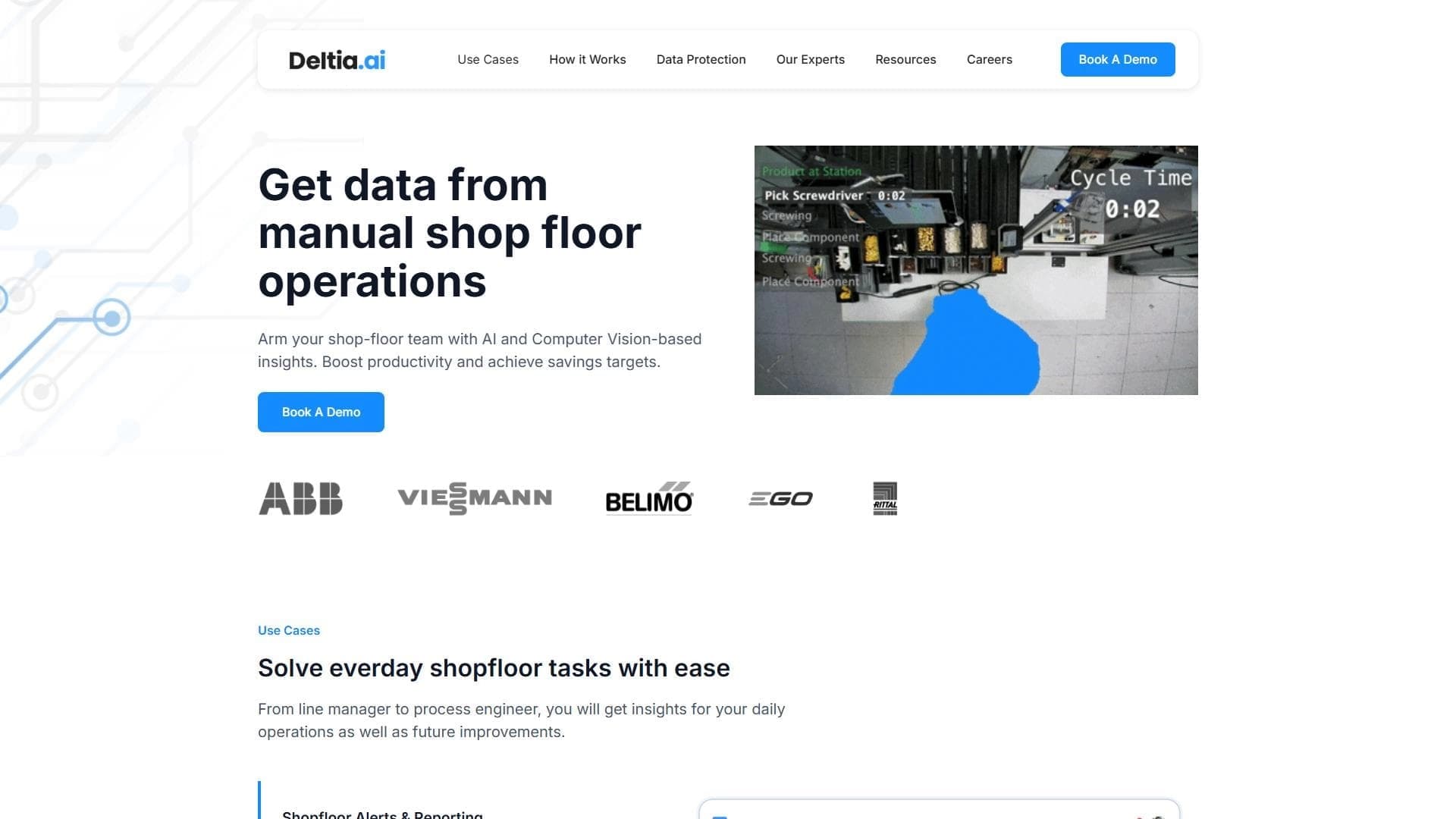

AI platform for industrial enterprises that analyzes production processes using computer vision.

A platform for deploying and scaling AI agents in business, including tools for monitoring their performance.

Marketplace where users buy and sell ready-made prompts for popular AI models.

AI-powered platform for protecting brands from phishing and counterfeits.


ClicKarma is an AI service for protecting Google Ads campaigns from click fraud.

Algorityx is an online neural network-based platform for creating and optimizing content, including text, images, and code.