
AI Dezigner
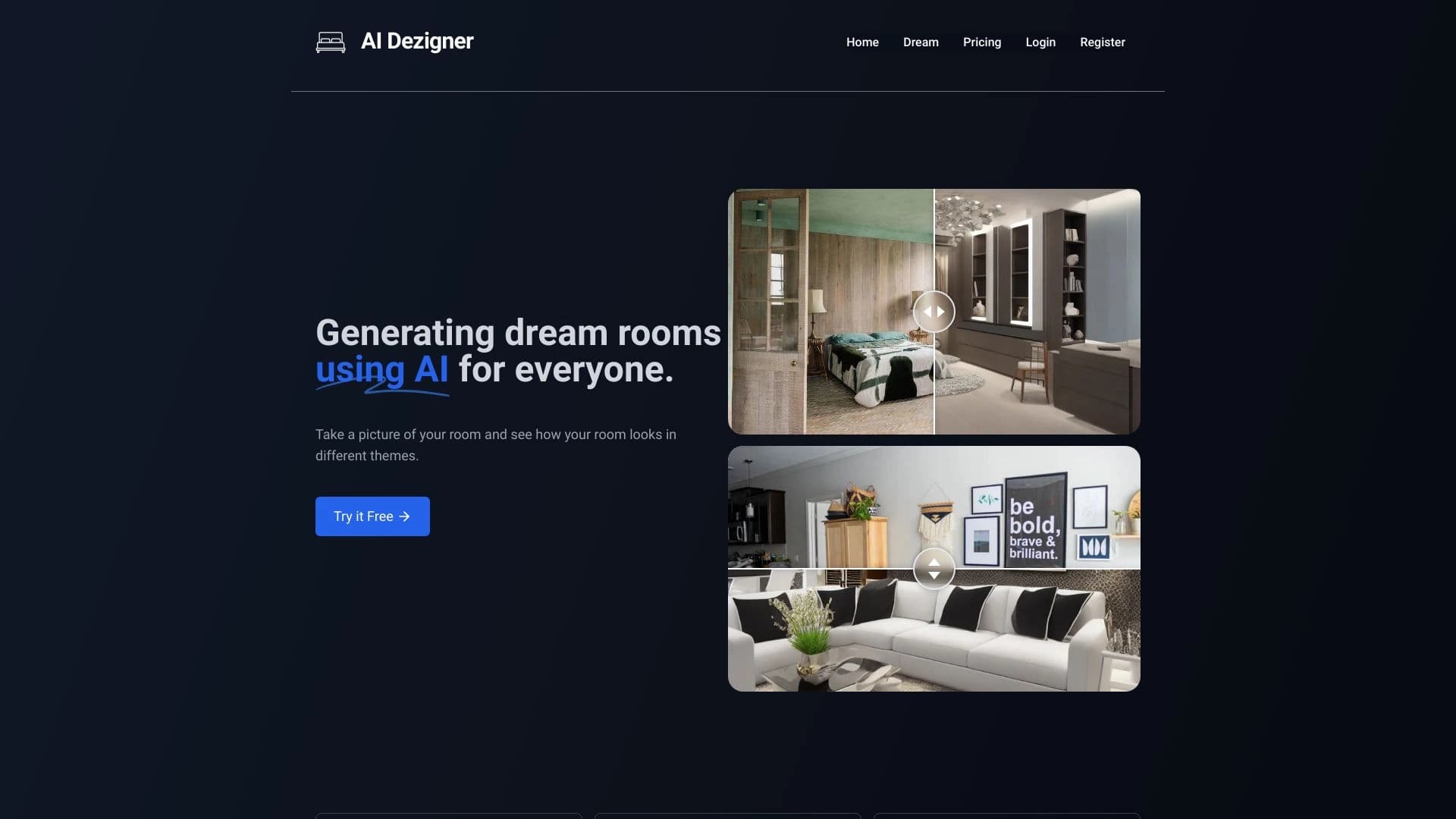
Online service that generates design options for a room in various styles from a photo, preserving the layout.
Overview
AI Dezigner Neural Network Description
AI Dezigner is a specialized web service powered by artificial intelligence, designed for virtual interior redesign. Instead of spending hours choosing finishes, furniture, and decor, users upload a regular photo of a room, select their desired style — and the neural network offers several ready-made design options within seconds.
The service's key feature is that its smart algorithm preserves the room's geometry, the placement of windows and doors, as well as key structural elements. In other words, the AI doesn't just generate an abstract picture of a "beautiful living room" — it actually restyles your specific room into a new look, whether it's minimalism, loft, or Scandinavian style. This makes the tool practical: you can see with a high degree of accuracy how your own space will look after certain changes.
The service operates entirely online in the browser, allowing you to use it from a phone, laptop, or tablet without installing any additional software. Essentially, AI Dezigner is a fast and eco-friendly way to "try on" a renovation before you commit to real expenses.
AI Dezigner Features
| Feature | Value |
|---|---|
| Type | AI-based design platform |
| Category | Design assistants, Interior design tools, Design generators |
| Platform | Online service (website) |
| Free tier | Yes (with limited access) |
| Base tier price | Starting from a monthly subscription |
| Premium tier price | Higher-tier monthly subscription |
| Developer | AI Dezigner |
| Monthly audience | 388,900 visits |
Who Is AI Dezigner Suitable For?
Private Homeowners
The tool is designed for those who want to refresh their interior but aren't ready to spend money and time on live experiments. If you're planning to repaint the walls in your bedroom or completely change the living room setup, AI Dezigner lets you see the result in advance and avoid costly mistakes. It's a kind of "fitting room" for your apartment.
Professional Interior Designers
For professionals, the service becomes a tool for fast client communication. Instead of drawing sketches by hand or assembling collages for hours, a designer uploads a photo of the actual space and shows the client several stylistic directions at once. This helps align visions at early stages and saves time on revisions.
How to Use AI Dezigner
The workflow with AI Dezigner is intuitive and consists of four simple steps:
- Select the room type. Specify which space you plan to transform: it could be a bedroom, living room, kitchen, office, or another area.
- Choose a style. From the provided catalog, select your desired design direction — from classic to high-tech.
- Upload a photo. Upload a picture of the room from your phone, laptop, or tablet. For the best results, the photo should be high-quality and well-lit.
- Review the results. The neural network will process the image and generate several design options. You can switch between them and analyze how the perception of the space changes.
Key Features of AI Dezigner
Instant Style Change from a Photo
The core of the service is fast design generation. The AI analyzes the uploaded image and changes the finishes, textures, and furnishings of the room according to the selected style. The entire operation takes just seconds, allowing you to experiment without waiting.
Preserving Layout and Key Details
During the redesign, the algorithm does not alter the architectural features of the space: the placement of walls, windows, doorways, and other structural elements remains unchanged. This means the result is not an abstract image but a realistic preview of how your specific space will look.
Multiple Options for One Room
The service generates several alternative design options based on a single photo. This lets you compare solutions within one stylistic direction or explore completely different approaches by simply toggling options on the screen.
Style Matching for Your Space
The neural network takes into account the specific characteristics of the room — its dimensions, proportions, and lighting levels. As a result, the system can suggest styles that will look most organic in your particular space, rather than in an abstract template.
Advantages of AI Dezigner
- High speed of results. You get a finished visualization just seconds after uploading a photo, whereas manual designer work would take hours or days.
- Personal adaptation to your specific home. Since the generation is based on your real photo, the final options reflect the specifics of your living space.
- Resource savings. Virtual experiments require no material purchases, create no construction waste, and carry no financial risks. It's an eco-friendly alternative to trial renovations.
Disadvantages of AI Dezigner
- Generic results. The neural network doesn't always accurately capture individual preferences and may sometimes produce template-like, generalized solutions that require further manual refinement.
- Sensitivity to photo quality. On dark, blurry, or poorly composed photos, the results will be noticeably worse. The poorer the source image, the lower the accuracy and realism of the generation.
- Difference between virtual and real implementation. The image the AI shows may differ from what actually results from a real renovation. Lighting, materials, and small details look different in real life, so the result should be treated as inspiration rather than a technical blueprint.
What Problems Does AI Dezigner Solve?
The service aims to address three key practical tasks:
- Quick visualization of interior styles. By uploading a photo of a room, you can see within minutes how various design directions — from loft to Provence — would look in it.
- Saving time and money. AI Dezigner eliminates the need for costly trial rearrangements and renovations. Instead of doing something first and possibly redoing it later, you look first and only then decide.
- Presenting options to clients. Designers use the service as a utility for showcasing ideas: there's no need to manually draw alternative versions — just upload a photo and select a few styles.
AI Dezigner Pricing
The service operates on a freemium model. Users have access to three tiers:
| Tier | Cost | What's Included |
|---|---|---|
| Free | $0 | Limited number of design redos, basic functionality |
| Base | Monthly subscription | Access to all core features, increased number of design options, technical support |
| Premium | Higher monthly subscription | Unlimited use of all features, priority support, early access to new capabilities |
The free tier is sufficient to test the service and understand its capabilities. Paid subscriptions make sense for regular use — for example, for designers working with a large number of projects.
Terms of Use for AI Dezigner
The service requires a photo of the room to function — without it, the tool cannot operate. The free tier imposes a limit on the number of generations within a certain period. Since the service works online, a stable internet connection is required.
Registration is not mentioned directly in the description, but an account will likely be needed for paid tiers and storing request history. Interface language options and regional restrictions are not detailed in the sources.
AI Dezigner Availability
AI Dezigner is accessible through any modern browser on a phone, tablet, or computer. All you need to do is open the website, select the parameters, and upload an image. No special system requirements are stated beyond an internet connection and a photo of the room. Exact details about supported interface languages and geographic availability are not disclosed in public sources.
How AI Dezigner Differs from Alternatives
The key difference between AI Dezigner and universal image generators (such as Midjourney or Stable Diffusion) is its strict adherence to the original image of a specific room. The user gets not just a pretty interior picture, but a personalized solution for their actual space with the layout preserved.
Unlike Kandinsky or Yandex Art, which are more often used for creative tasks and generating artwork, AI Dezigner is focused specifically on interior design and solves the applied task of room transformation. Compared to AutoDraw, which targets quick sketches and icons, AI Dezigner operates at a completely different level of complexity — it models a cohesive space.
It's also important to understand the limitations: while universal neural networks offer complete creative freedom, the quality of AI Dezigner's results directly depends on the quality of the source photo and the architectural features of the room.
Conclusion
AI Dezigner is a practical and fast tool for virtual interior redesign from a photo. It allows homeowners without design experience to "try on" different styles before starting a renovation, and professionals to visually present concepts to clients without lengthy manual rendering. The service's key advantages are speed, personalization for a specific space, and the absence of physical costs. The main limitations relate to the quality of the source photo and the possible discrepancy between the virtual image and the real implementation: the service is excellent for inspiration and preliminary assessment, but the final design decision should still be made with in-person consultations and material samples in mind.
Pricing
Frequently asked questions
See also
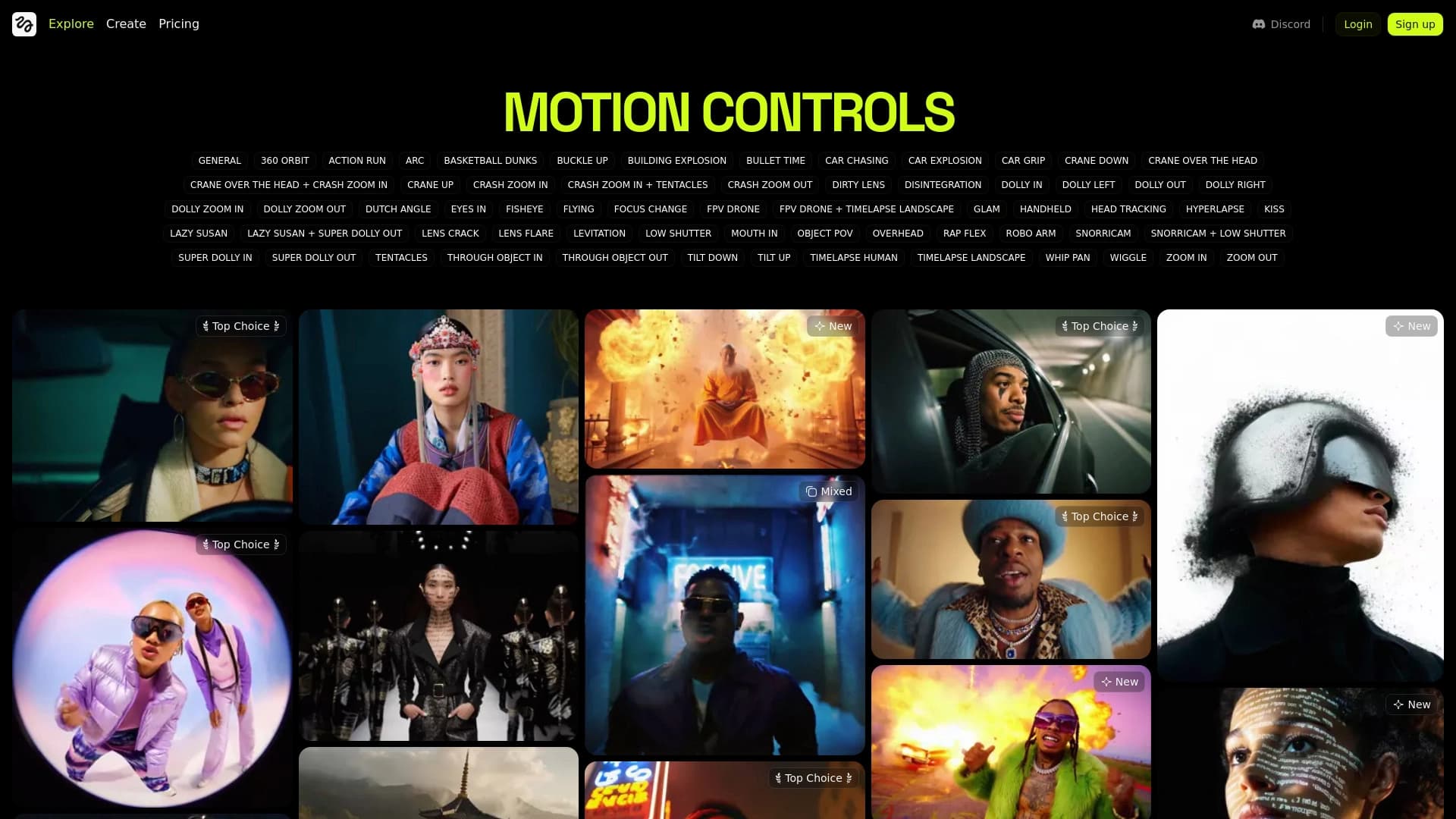

Generative platform for creating realistic images and short videos from text or images with control over style and camera movement.
A presentation creation service that uses multiple AI agents for information gathering, design, and data analysis.
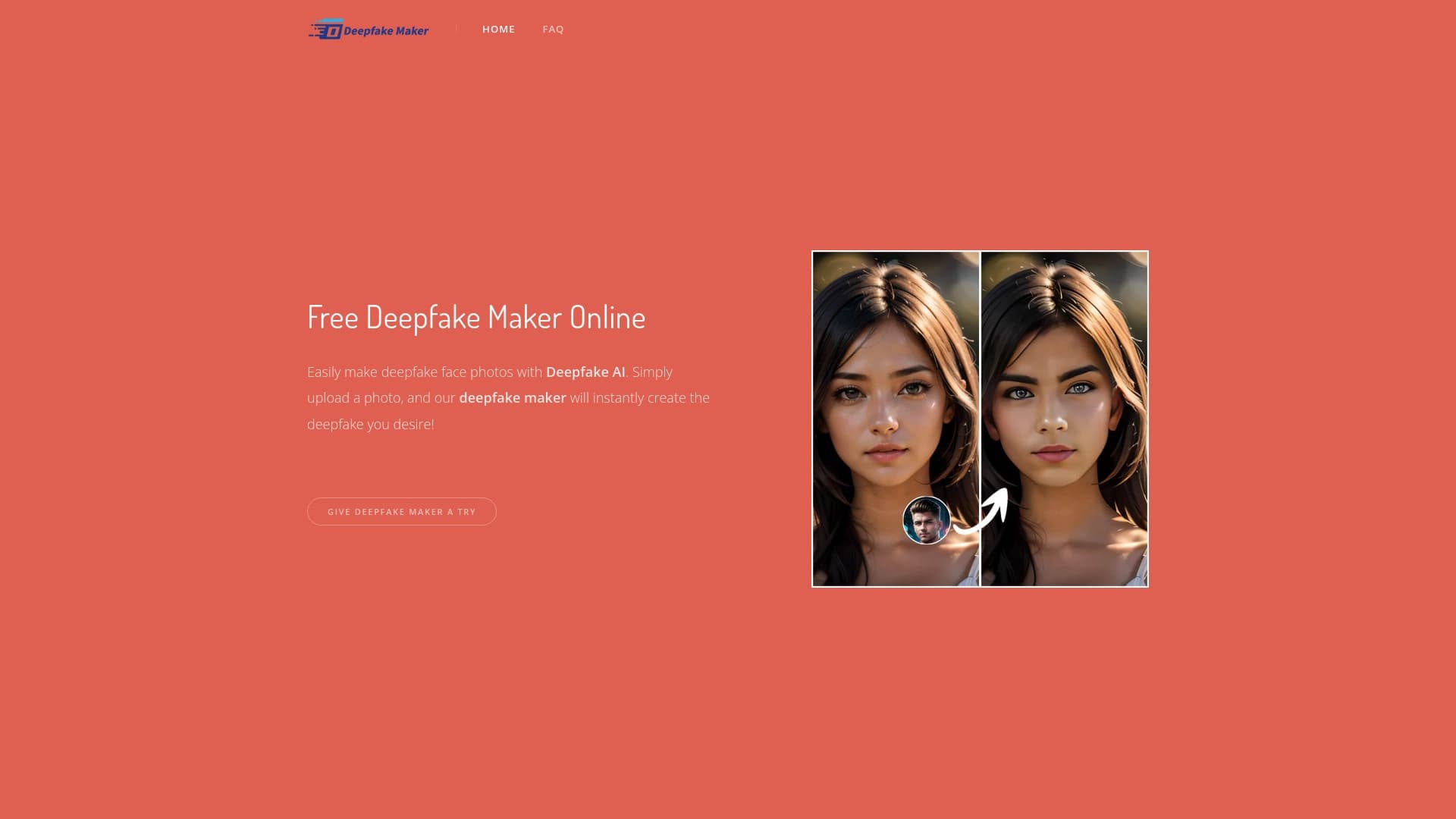

Online AI tool for creating deepfakes and editing images.
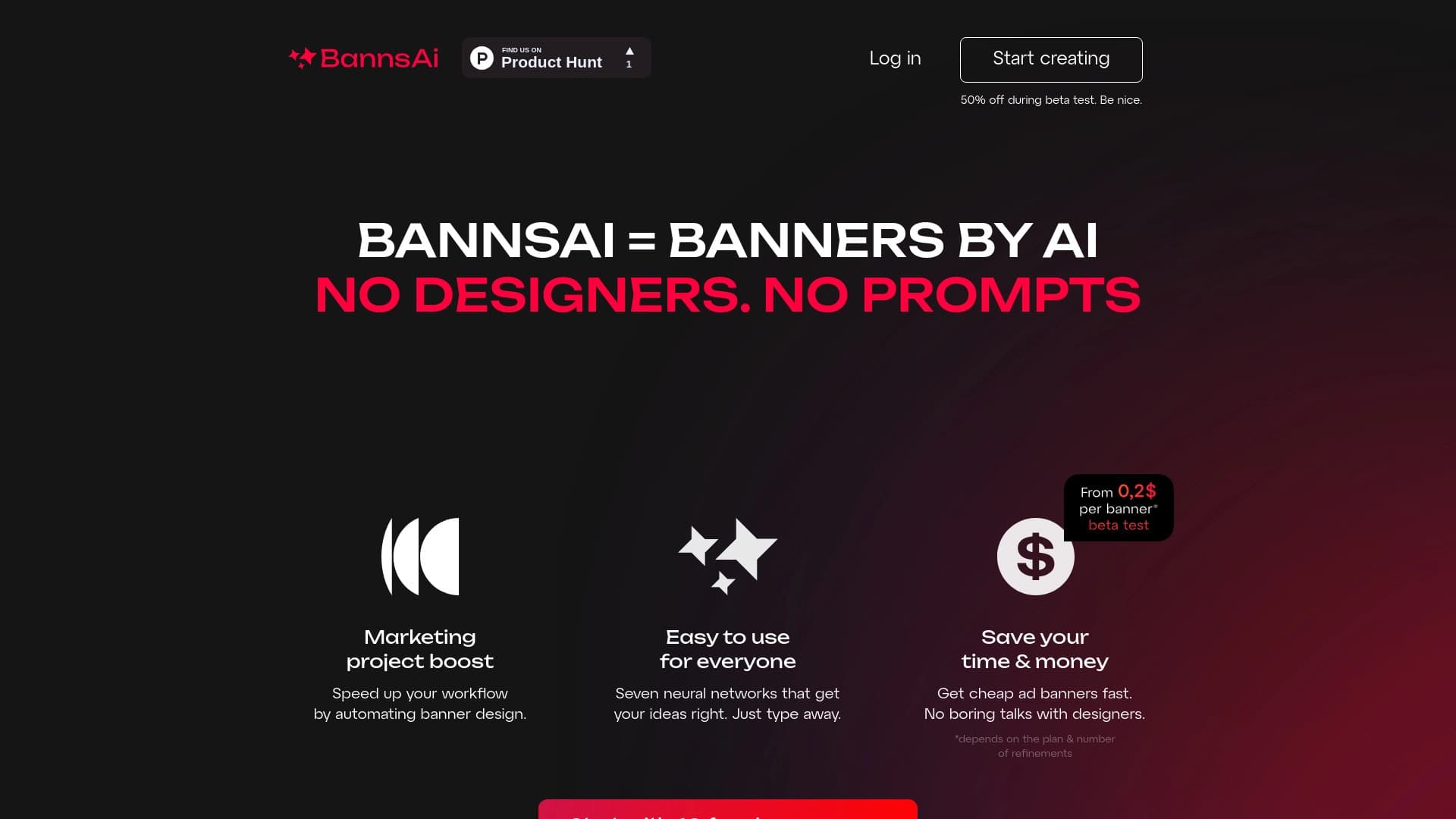

BannsAi is an AI-powered service for quickly creating ad banners based on a text description or reference.
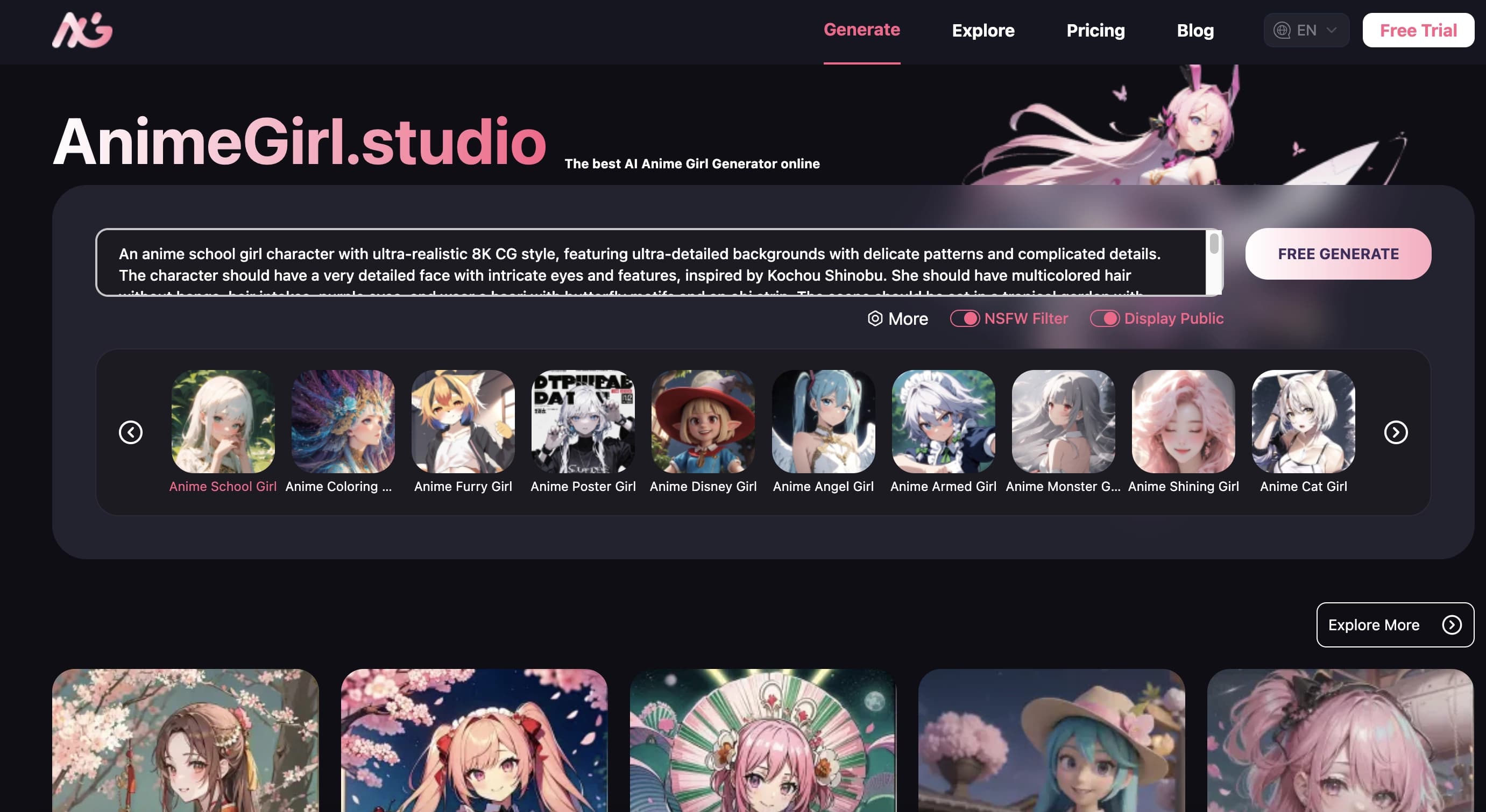

AI anime image generator from text descriptions with template selection.


A multifunctional AI assistant for generating texts, images, and audio.

An open platform for generating images and other visual content from text descriptions using AI.
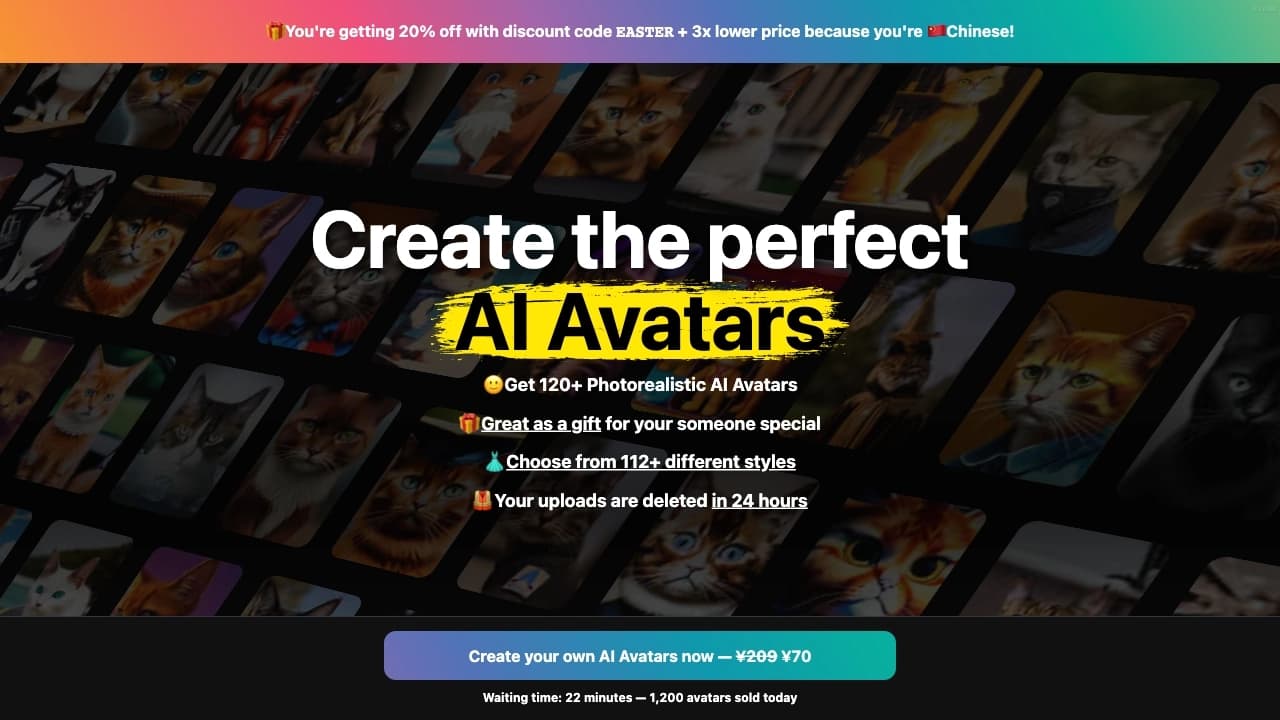
Service for creating personalized avatars and photo shoots using AI based on uploaded selfies.