
3DreamBooth
Framework for generating videos with 3D objects that preserve identity and volume.
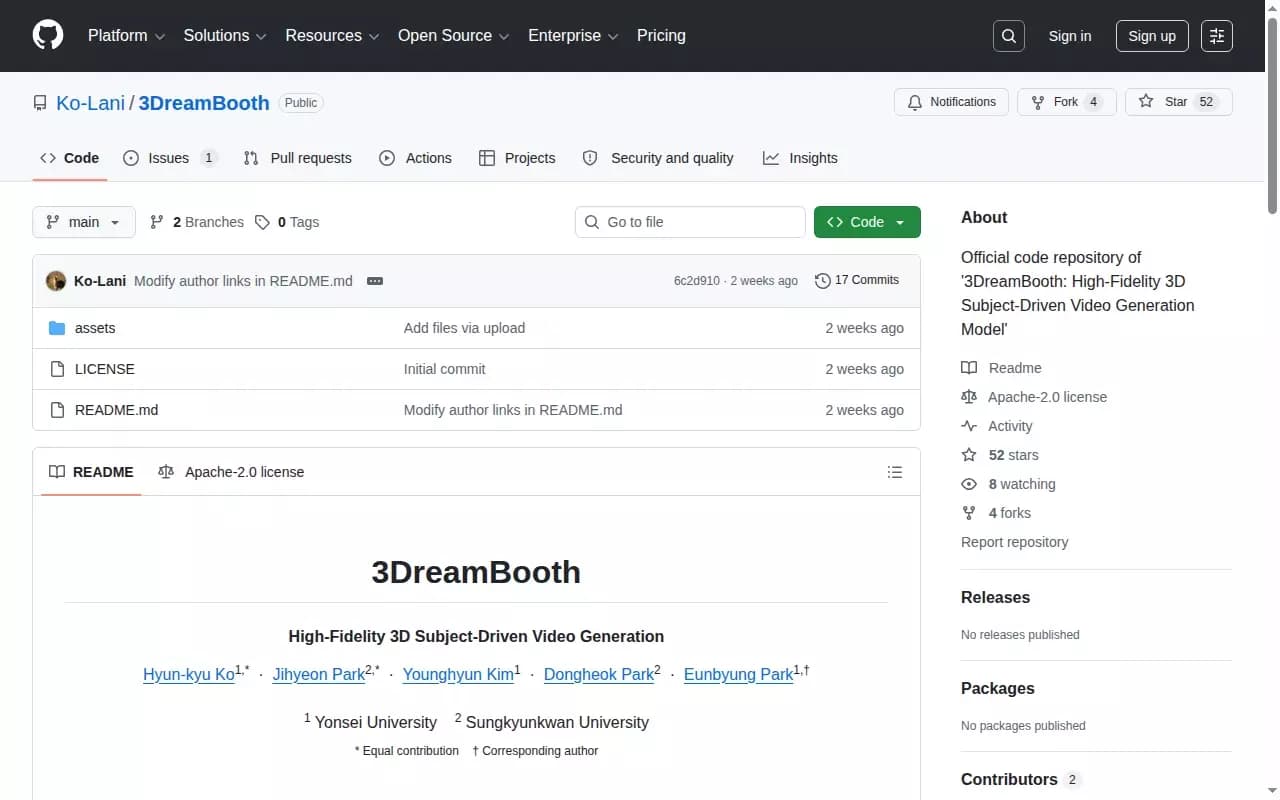
Overview
3DreamBooth is a research framework for generating videos featuring volumetric objects. Its primary goal is to create dynamic videos in which the subject retains its identity, textures, and recognizability during movement and rotation.
The user provides the system with a set of photographs of the same object from different angles. Based on these images, the neural network generates a video in which the object moves, rotates, and looks realistic while preserving all fine details and geometric integrity.
The framework's architecture contains two key components: the 3Dapter visual conditioning module and a DreamBooth-style optimization module. Together, they make it possible to separate the object's spatial characteristics from its temporal dynamics, ensuring stable results without distortions.
The project was developed jointly by researchers from Yonsei University and Sungkyunkwan University. The neural network's code is currently in preparation for publication.
3DreamBooth Features
| Feature | Value |
|---|---|
| Model Type | Framework for 3D video generation |
| Input Data | A set of photographs of an object from different angles |
| Output Data | A video with object movement and rotation |
| Key Components | 3Dapter module + DreamBooth-style optimization |
| Training Method | Single-frame training |
| Developers | Yonsei University, Sungkyunkwan University |
| Code Availability | Open release on GitHub planned |
| Distribution Model | Free |
| Example Objects | Bags, plush toys, sculptures, motorcycles, watches |
Who Is 3DreamBooth For?
AI Researchers
Since 3DreamBooth addresses the pressing challenge of combining 3D geometry with video generation, it will be useful for scientists and students studying neural network methods for content creation, multimodal learning, and computer vision.
3D Modeling and Video Specialists
The tool makes it possible to quickly turn static sets of photographs into dynamic video sequences. This can be useful for creating presentation materials, previewing 3D models, or developing animation prototypes.
Digital Content Creators
Designers and artists working with product photography may need to showcase a product in motion without conducting a full video shoot. 3DreamBooth provides this capability while preserving the object's detail and volume.
How to Use 3DreamBooth
Preparing Input Data
To get started, you will need to collect a set of photographs of the object from different angles. It is important that the object is fully visible and that the shots cover all its sides. This set will serve as the basis for model training.
Running Generation
After preparing the photographs, the system launches the generation process. Training is efficient — it runs on a single frame rather than full videos, which reduces computational requirements. The output is a video in which the object rotates and moves.
Waiting for the Tool's Release
At the moment, the framework is not yet fully open to the general public. The developers plan to release the inference code, 3Dapter module weights, the 3D-CustomBench benchmark dataset, and training code. Instructions and source files will appear on the project's GitHub page.
Key Features of 3DreamBooth
Video Generation from a Set of Photographs
The system takes multiple shots of an object from various angles as input and produces a video sequence in which the object is in motion — moving, turning, and "coming to life" in the frame.
Preserving Object Identity
The algorithm ensures high texture detail and prevents geometric distortions. In the resulting videos, the object remains recognizable and consistent throughout.
Multi-View Attention
The 3Dapter module employs a multi-view attention mechanism with shared weights. This helps train the model faster and better preserve fine surface details.
Advantages of 3DreamBooth
- Preserves volume and textures: objects look realistic with correct spatial geometry.
- Efficient training: the system trains on a single frame, eliminating the need to process heavy video data.
- High object recognizability: the resulting videos are stable and free of visual artifacts across different angles.
- Cinematic results: generated videos look high-quality and cohesive.
- Free access: the model is distributed under a free model.
Disadvantages of 3DreamBooth
- Code not yet published: the framework is currently in preparation for release, so it cannot be used independently yet.
- No public examples with precise specifications: final performance, GPU requirements, and quality metrics will appear after the code and benchmark are released.
- No information on input/output format: exact requirements for images and model settings have not yet been disclosed.
What Problems Does 3DreamBooth Solve?
3DreamBooth is designed for a complex task — transferring static images into a dynamic video scene without losing the object's shape. The framework solves the problem of preserving geometry during motion by separating spatial and temporal components. This allows the model to understand how the object looks as a whole and then render it in various positions.
The tool also addresses the problem of consistency: the object does not change its proportions or coloring when the angle changes. This makes it suitable for generating demo videos, rapid animation prototypes, and research tasks.
3DreamBooth Pricing
The exact cost of use has not been disclosed. Since the model is distributed for free (distribution model: free), basic access to the tool will likely be free after the code is published. However, computing costs (when running it independently) will depend on the user's hardware. Exact pricing and terms will be announced after the project's official release.
Terms of Use for 3DreamBooth
Official terms of use have not yet been announced, as the project is in preparation for publication. It is known that the source code and model weights are planned to be open-sourced in a GitHub repository. The model will likely be distributed under an open license for academic and non-commercial use, but the exact license text will appear with the release.
Availability of 3DreamBooth
The 3DreamBooth project is an academic work created at two South Korean universities. Currently, access to the tool is limited: the code is being prepared for publication. The developers plan to provide open access to the following materials:
- inference code;
- pre-trained 3Dapter model weights;
- the 3D-CustomBench benchmark for quality evaluation;
- training code for reproducing the experiment.
All additional information will be posted on the project's GitHub page.
How 3DreamBooth Differs from Alternatives
The main difference of 3DreamBooth is its training approach. Instead of using full video data, which requires significant computing power, the model trains on a single frame. This simplifies the process and allows for a solid 3D prior — an internal understanding of the object's volume and structure.
The second key difference is the 3Dapter module, which is responsible for preserving fine textures. The combination of multi-view attention with shared weights and DreamBooth-style optimization makes it possible to separate geometry from motion. As a result, objects in videos retain their identity and volume at any angle.
This hybrid approach delivers cinematic and stable results without the need to work with heavyweight video datasets, which sets the framework apart from many existing solutions in this field.
Conclusion
3DreamBooth is a promising research framework for generating videos with three-dimensional objects. It solves the important problem of preserving geometry and texture during dynamic motion by offering an efficient single-frame training method. Although the code has not yet been published, the project is generating significant interest thanks to its approach to separating spatial form from temporal dynamics. Once the code is released and all components are made available, the tool will become useful for researchers and developers in the field of generative AI and 3D content.
Frequently asked questions
See also

An open-source AI development agent that helps generate, refine, and debug code directly in the IDE.
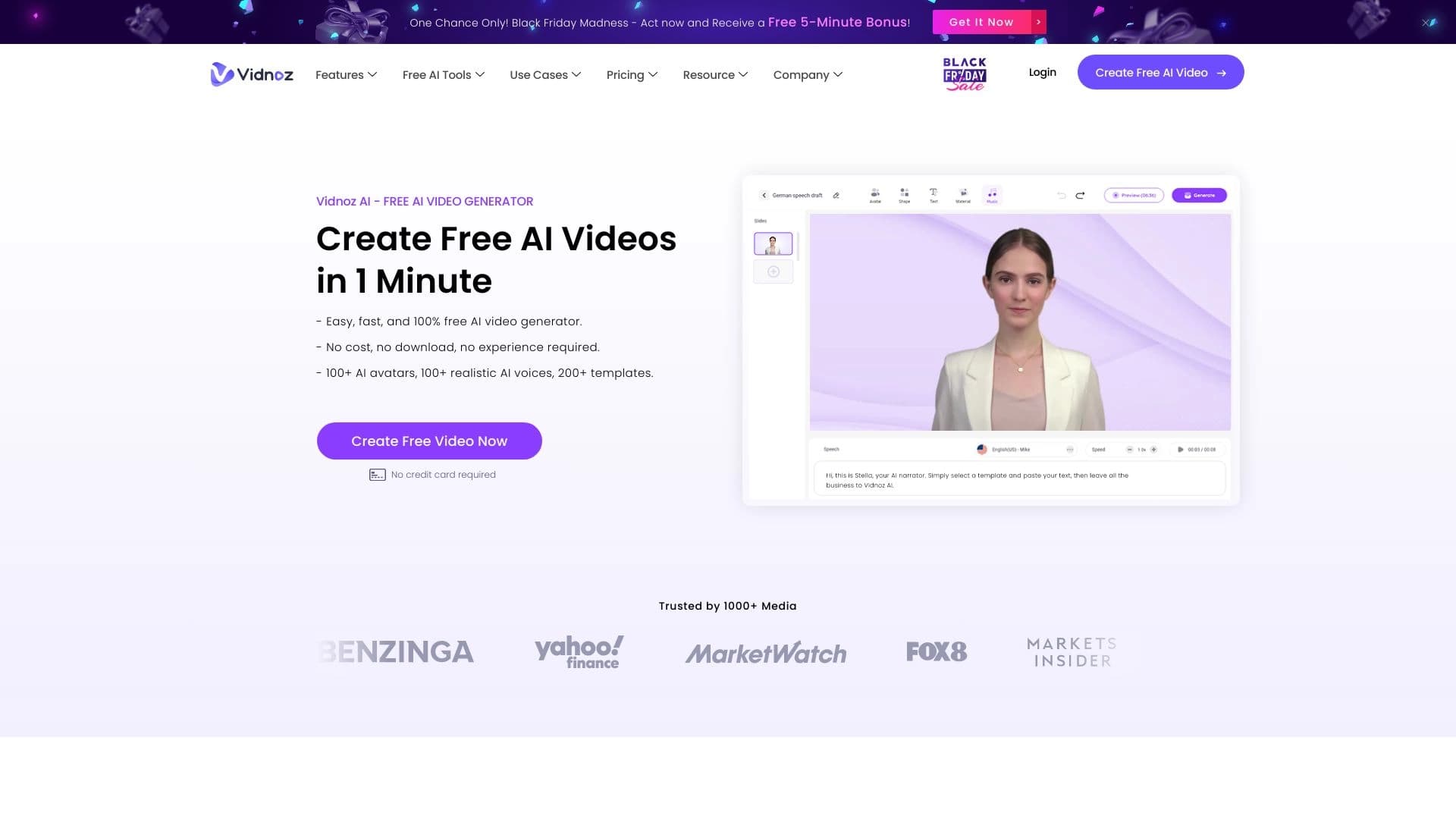
Cloud platform for creating videos using AI avatars, synthesized speech, and automatic translation of clips into dozens of languages.

Video editor with neural network support for video editing on Windows and Mac.

Multifunctional AI platform for content creation, combining speech synthesis, text generation, avatar creation, and video editing.

Open-source tool for quickly converting a single image into a 3D model.

Neural network that generates images and illustrations based on a text description.

A platform for chatting with virtual AI characters that you can create and customize to suit yourself.

AI-powered platform for generating, editing images, and creating advertising creatives.